Enhancing Security for Houston’s Healthcare Facilities
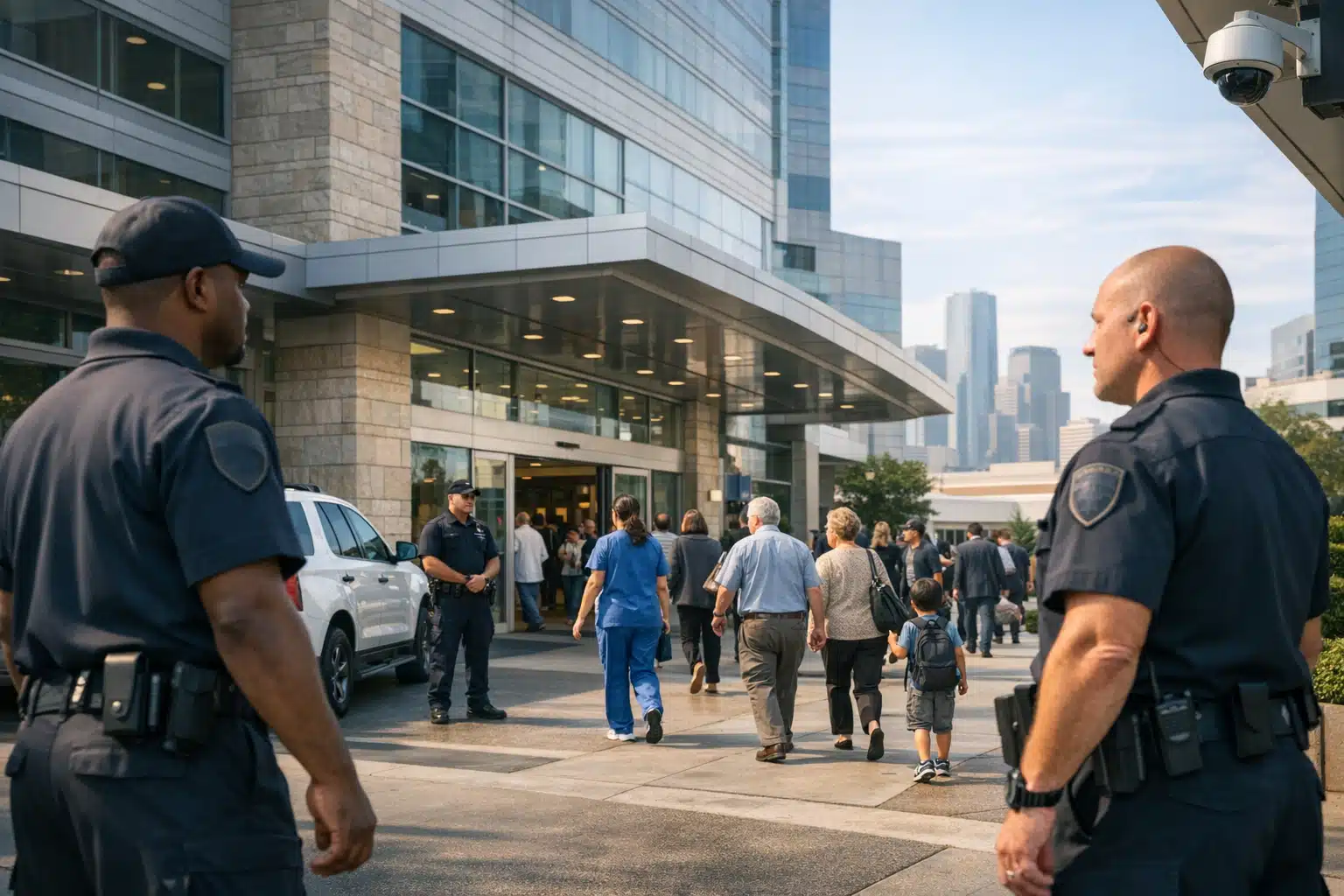
Houston's healthcare facilities encounter significant security challenges, experiencing 23% more incidents than typical commercial properties. Notably, the Texas Medical Center reports over 1,200 security events each month, highlighting the urgent need for enhanced security measures to protect patients and staff.
Security Threats Facing Houston Healthcare Facilities
Houston’s healthcare facilities experience 23% more security incidents than typical commercial properties. The Texas Medical Center alone reports over 1,200 security events monthly across its campus.
Healthcare facility security requires specialized approaches beyond standard commercial protection. These environments face unique vulnerabilities that demand targeted solutions.
Hospital emergency departments see the highest incident rates during evening shifts. Parking structures and patient discharge areas present additional risk zones requiring constant monitoring.
Common Security Challenges in Medical Settings
Patient privacy laws complicate security camera placement and monitoring procedures. HIPAA regulations restrict where surveillance equipment can operate.
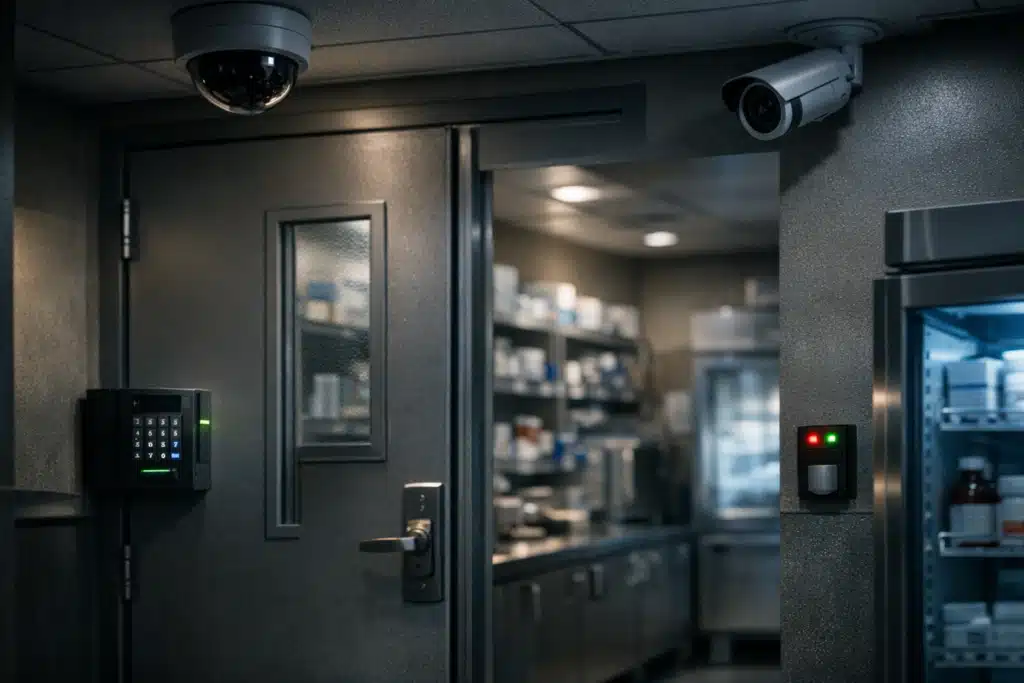
Drug storage areas attract theft attempts targeting prescription medications. Pharmacy sections need multi-layer protection including access control and real-time monitoring.
Visitor management becomes complex with multiple entry points and 24-hour operations. Emergency situations require rapid access while maintaining controlled environments.
Implementing Comprehensive Houston Hospital Protection
Effective Houston hospital protection starts with understanding traffic flow patterns. Peak visiting hours from 2-8 PM require increased security presence in lobbies and patient floors.
Night shift vulnerabilities emerge when staffing levels drop significantly. Skeleton crews cannot monitor all access points simultaneously without technological assistance.
Strategic Security Positioning
Main entrances need both visible security presence and discrete monitoring capabilities. Guards should balance approachable patient services with protective vigilance.
Emergency department security requires specialized training for crisis intervention. Medical emergencies can escalate into security situations without warning.
Parking garage protection extends facility security beyond building walls. Well-lit areas with camera coverage reduce incidents involving staff and visitors.
Technology Integration for Medical Facilities
Remote video monitoring allows 24/7 surveillance without compromising patient privacy. Professional monitoring centers can alert on-site staff to developing situations.
Access control systems track employee movements through secure areas. Badge readers create audit trails while preventing unauthorized entry to restricted zones.
Panic button systems give staff immediate security response capability. Wireless devices allow quick alerts from any location within the facility.
Remote Monitoring Solutions for Healthcare Security
Professional monitoring centers provide continuous surveillance capabilities that individual facilities cannot maintain cost-effectively. Trained operators watch multiple camera feeds simultaneously.
Real-time incident response reduces security gaps during shift changes. Remote operators can dispatch guards or emergency services within seconds of detecting threats.
HIPAA-Compliant Surveillance Strategies
Camera placement must avoid patient care areas while maintaining comprehensive coverage. Hallways, entrances, and public areas allow monitoring without privacy violations.
Video storage requires encrypted systems with controlled access logs. Security footage becomes protected health information when it captures patient activities.
Monitoring personnel need HIPAA training before accessing healthcare facility cameras. Privacy breach prevention protects both patients and facility operators.
Integration with Hospital Operations
Security systems should integrate with existing hospital communication networks. Emergency codes can trigger automatic camera focusing on incident areas.
Visitor management systems link with surveillance to track guest movements. Pre-registration allows faster processing while maintaining security protocols.
Staff identification systems prevent unauthorized personnel from accessing restricted areas. Real-time monitoring verifies proper credentials throughout the facility.
Physical Security Measures for Medical Facilities
On-site security guards provide immediate response capability for medical emergencies that become security situations. Trained personnel understand healthcare environment protocols.
Perimeter security starts with controlled parking areas and well-defined entry points. Clear sight lines and proper lighting eliminate hiding spots around buildings.
Specialized Training for Healthcare Security
Security personnel need de-escalation training for dealing with stressed patients and families. Medical environments require sensitive communication approaches.
Mental health crisis intervention skills help guards assist with psychiatric emergencies. Proper techniques prevent situations from escalating to violence.
Medical equipment security awareness prevents theft of expensive devices. Portable equipment like monitors and pumps requires constant vigilance.
Emergency Response Coordination
Security teams must coordinate with medical staff during various emergency scenarios. Code procedures require security personnel who understand hospital protocols.
Evacuation procedures need security oversight to maintain order during chaotic situations. Guards help direct patient movement and prevent panic.
Law enforcement liaison ensures smooth coordination when police response becomes necessary. Established relationships improve response times and communication.

 Posted on Google
Protecting Vulnerable Areas Within Healthcare Facilities
Pharmacy areas require the highest security levels due to controlled substance storage. Multiple authentication methods prevent unauthorized access to drug supplies.
Patient rooms in psychiatric units need specialized monitoring approaches. Safety concerns must balance with patient privacy and therapeutic environments.
Critical Infrastructure Protection
Medical equipment storage areas contain expensive devices worth millions of dollars. Inventory tracking systems combined with access control prevent theft.
Server rooms housing patient data require both physical and cybersecurity measures. Climate control and access logging protect critical information systems.
Laboratory areas store valuable specimens and equipment requiring special handling. Chain of custody procedures must include security considerations.
Visitor and Staff Safety Measures
Parking structure security becomes critical during shift changes when large numbers of staff arrive or depart simultaneously. Escort services provide additional protection.
Emergency communication systems allow quick contact between security and medical personnel. Two-way radios maintain connectivity throughout large facility complexes.
Violence prevention programs help identify potentially dangerous situations before they escalate. Early intervention protects both staff and patients.
Cost-Effective Security Solutions for Houston Medical Centers
Hybrid security approaches combine on-site guards with remote monitoring to maximize coverage while controlling costs. Strategic placement of personnel provides optimal protection.
Scalable solutions allow facilities to increase security during high-risk periods. Special events or emergency situations may require temporary security enhancement.
Return on Investment for Healthcare Security
Professional security reduces liability insurance costs by preventing incidents that lead to lawsuits. Documented security measures demonstrate due diligence to insurers.
Asset protection prevents losses from theft of medical equipment and supplies. Security systems pay for themselves through loss prevention.
Staff retention improves when employees feel safe in their work environment. Reduced turnover saves recruitment and training costs.
Choosing the Right Security Partner
Local security providers understand Houston’s specific challenges and response times. Familiarity with area law enforcement improves emergency coordination.
Healthcare experience matters when selecting security services. Providers should demonstrate knowledge of HIPAA requirements and medical facility operations.
Technology capabilities must match facility needs for monitoring and access control. Scalable solutions grow with expanding healthcare operations.
Implementation Timeline and Best Practices
Security assessment should begin with a comprehensive facility evaluation. Professional security consultants identify vulnerabilities and recommend solutions.
Phased implementation allows facilities to test systems before full deployment. Gradual rollout prevents operational disruptions during installation.
Staff Training and Adoption
Employee education ensures proper use of new security systems and procedures. Regular training updates maintain awareness of evolving threats.
Incident reporting procedures help security teams learn from each event. Continuous improvement makes systems more effective over time.
Regular security drills test both technology and human response capabilities. Practice scenarios help identify weaknesses before real emergencies occur.
Healthcare facilities require specialized security approaches that address unique vulnerabilities while maintaining therapeutic environments. Professional assessment identifies the most effective combination of technology and personnel for each facility’s specific needs.
Twin City Security Houston provides comprehensive healthcare facility security solutions tailored to Houston medical centers. Contact Houston@Twincitysecurity.com or call 832-301-9478 for a customized security assessment of your healthcare facility.
Sources
- Centers for Medicare & Medicaid Services – Hospital Certification and Compliance
- U.S. Department of Health and Human Services – HIPAA Security Rule
- The Joint Commission – Hospital Security Standards
Houston's healthcare facilities face significant security challenges, experiencing 23% more incidents than typical commercial properties. Effective security measures must address unique vulnerabilities while complying with regulations like HIPAA.
- The Texas Medical Center reports over 1,200 security events monthly, highlighting the need for specialized protection strategies. Emergency departments see the highest incident rates during evening shifts, necessitating increased security presence.
- Patient privacy laws complicate surveillance, requiring careful camera placement to avoid HIPAA violations. Pharmacy areas demand multi-layer protection to prevent theft of controlled substances.
- Hybrid security solutions combining on-site guards with remote monitoring offer cost-effective coverage. Local providers familiar with Houston's challenges can enhance emergency coordination and response times.
Recent Posts