
The Importance of 24/7 Surveillance for Houston’s Financial Institutions
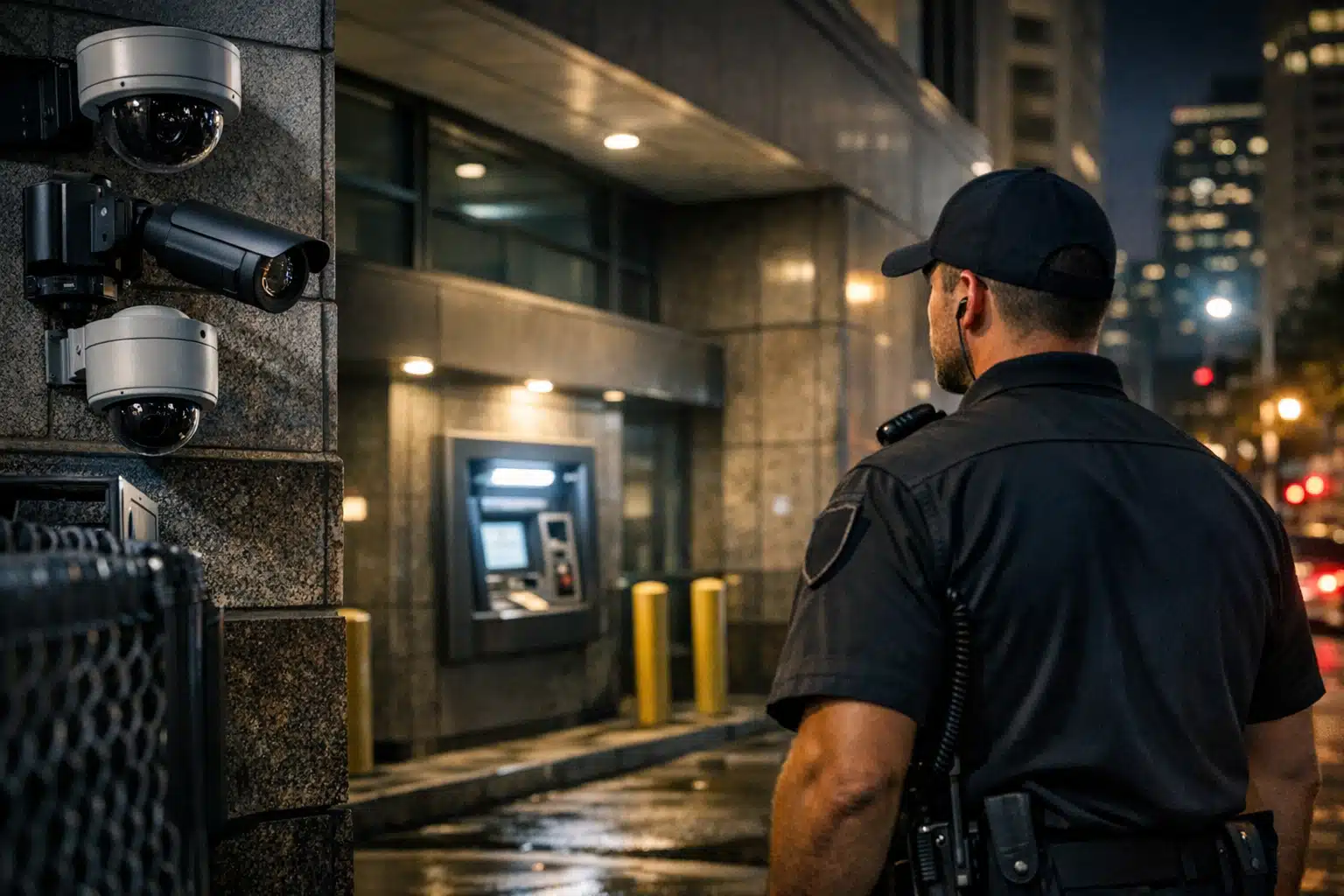
24/7 surveillance is crucial for financial institutions in Houston due to a significant rise in bank robberies, particularly during off-peak hours when security is often lacking. This constant monitoring helps protect valuable assets, sensitive customer information, and ensures the safety of employees, making it an essential measure for these organizations.
Bank robberies in Houston increased 23% last year, with most incidents occurring during off-peak hours when traditional security is minimal. Financial institutions face unique threats that require constant vigilance, making 24/7 surveillance a necessity rather than an option. Banks, credit unions, and financial service centers throughout the Greater Houston area must protect millions in assets, sensitive customer data, and employee safety around the clock.
The stakes are exceptionally high for financial institutions. A single security breach can result in massive financial losses, regulatory penalties, and irreparable damage to customer trust.
Why Financial Institutions Need Continuous Monitoring
Houston’s financial districts in Downtown, the Energy Corridor, and Westchase face distinct security challenges. ATM thefts spike during overnight hours, while sophisticated fraud attempts often occur when banks are closed and unstaffed.
Financial institutions store valuable assets beyond cash. Customer databases, loan documentation, and digital systems contain sensitive information worth millions on black markets. 24/7 surveillance protects these digital assets as vigilantly as physical ones.
Peak Crime Hours for Financial Targets
Houston Police Department data shows financial institution crimes peak between 10 PM and 6 AM. During these hours, criminals target:
- ATM machines with cash removal attempts
- Safe deposit box areas through forced entry
- Server rooms containing customer data
- Vehicle access points for quick escapes
- Perimeter fencing around drive-through areas
Traditional security guards cannot monitor every angle simultaneously. Remote video surveillance fills these gaps with multiple camera angles and real-time threat detection.
Hurricane Season Vulnerabilities for Bank Security Houston
Gulf Coast weather patterns create specific risks for Houston’s financial sector. Hurricane evacuations leave banks vulnerable for extended periods, while post-storm power outages disable many security systems.
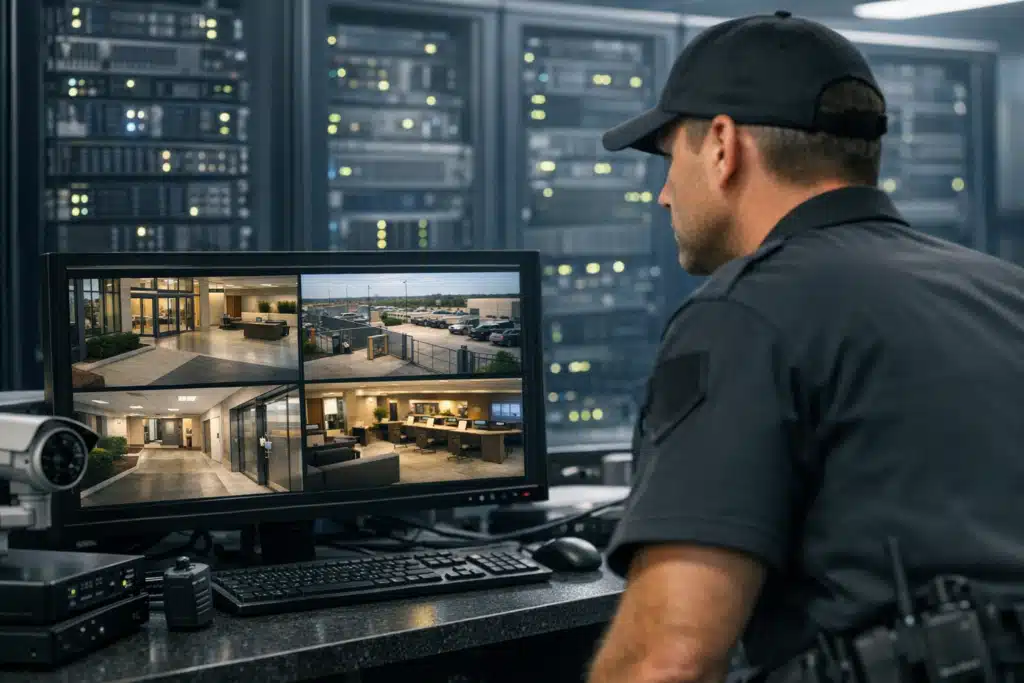
During Hurricane Harvey, several Houston banks experienced break-ins when flooding disabled alarm systems. Continuous remote monitoring with backup power systems prevented similar incidents at protected facilities.
Storm-Related Security Challenges
Financial institutions face these weather-related vulnerabilities:
- Extended closures: Banks may remain closed for weeks after major storms
- Power grid failures: Traditional security systems lose effectiveness without electricity
- Reduced police patrols: Emergency responders focus on life-safety priorities
- Opportunistic crime: Criminals exploit perceived security gaps during recovery
Remote surveillance systems with cellular backup connections maintain protection even when local infrastructure fails.
Advanced Threats Requiring 24/7 Surveillance
Modern bank security Houston operations face sophisticated criminal methods. Thieves use thermal imaging to identify safe locations, while hackers attempt physical access to network infrastructure during off-hours.
ATM skimming devices are often installed between 2 AM and 5 AM when foot traffic is minimal. Continuous monitoring detects these installation attempts in real-time, preventing customer data theft.
Internal Theft Prevention
Employee-related theft accounts for 60% of financial institution losses nationwide. After-hours access by staff requires careful monitoring to prevent:
- Unauthorized safe access outside business hours
- Document removal containing customer information
- Cash drawer manipulation during cleaning shifts
- Computer system access for fraudulent transactions
Video surveillance creates accountability for all personnel movements within secured areas.
Technology Integration for Financial Security
Modern 24/7 surveillance systems integrate multiple security layers. Motion sensors trigger camera activation, while facial recognition software alerts operators to known threats or unauthorized individuals.
Twin City Security Houston deploys high-resolution cameras with night vision capabilities. These systems capture clear footage even in complete darkness, recording license plates and facial features for law enforcement.
Real-Time Response Capabilities
Remote monitoring centers provide immediate response to security events:
- Live operator verification: Trained staff assess threats within 30 seconds
- Police dispatch coordination: Direct communication with Houston PD reduces response times
- Two-way audio systems: Operators can warn intruders they are being monitored
- Mobile alerts: Bank managers receive instant notifications of security events
This rapid response capability often prevents crimes before they escalate.

 Posted on Google
Regulatory Compliance and Documentation
Federal banking regulations require detailed security documentation. Continuous video surveillance provides the evidence trail needed for regulatory compliance and insurance claims.
The Federal Deposit Insurance Corporation mandates specific security measures for insured institutions. 24/7 surveillance helps banks meet these requirements while protecting against liability.
Evidence Quality Standards
Law enforcement requires high-quality video evidence for successful prosecutions. Key technical requirements include:
- 1080p minimum resolution for facial identification
- Timestamp accuracy for legal proceedings
- Chain of custody documentation for recorded footage
- Backup storage systems preventing evidence tampering
Professional surveillance systems meet these evidentiary standards automatically.
Cost Analysis of Security Breaches
A single bank robbery averages $43,000 in direct losses, but indirect costs multiply this figure. Business interruption, employee counseling, increased insurance premiums, and customer confidence damage often exceed $200,000 per incident.
ATM theft attempts cause average damages of $15,000 even when unsuccessful. Repair costs, lost transaction fees, and customer inconvenience accumulate quickly.
Return on Investment for Surveillance
Monthly surveillance costs typically range from $800 to $2,400 per location depending on coverage areas. This investment pays for itself by preventing a single significant security incident.
Banks with continuous monitoring report 78% fewer security incidents compared to facilities relying solely on alarm systems.
Choosing the Right Surveillance Partner
Financial institutions need surveillance providers with banking experience. Understanding regulatory requirements, evidence handling procedures, and rapid response protocols requires specialized knowledge.
Local providers offer advantages in emergency situations. During Hurricane Ike, Houston-based monitoring centers maintained operations when national companies experienced service disruptions.
Key Selection Criteria
Evaluate surveillance providers based on these factors:
- Redundant monitoring centers: Multiple locations prevent single points of failure
- Banking experience: Staff familiar with financial institution security needs
- Local response capabilities: Quick coordination with Houston-area law enforcement
- Technology reliability: Proven uptime statistics and backup systems
Request references from other Houston financial institutions before making decisions.
Financial institutions cannot afford security gaps in today’s threat environment. The combination of sophisticated criminals, extreme weather events, and regulatory requirements makes continuous surveillance mandatory. Banks that invest in proper 24/7 surveillance systems protect their assets, employees, and customers while maintaining regulatory compliance.
Twin City Security Houston specializes in financial institution protection throughout the Greater Houston area. Our remote monitoring systems provide the continuous coverage your bank needs to operate safely and securely. Contact us at 832‑301‑9478 to discuss a customized surveillance plan for your financial facility.
Sources
- FBI – Bank Crime Statistics
- FDIC – Safety and Soundness Manual
- Bureau of Justice Statistics – Commercial Robbery
- Houston Police Department – Crime Statistics
Financial institutions in Houston face increasing security threats, necessitating 24/7 surveillance to protect assets and customer data. With a rise in bank robberies and sophisticated criminal methods, continuous monitoring is essential for maintaining safety and regulatory compliance.
- Bank robberies in Houston rose 23% last year, particularly during off-peak hours. Traditional security measures are insufficient to deter these crimes.
- Continuous surveillance safeguards not only cash but also sensitive customer information and digital assets from theft.
- Investing in 24/7 monitoring can significantly reduce security incidents, with banks reporting 78% fewer breaches compared to those relying solely on alarms.
Recent Posts