
Top Strategies for Preventing Vandalism in Houston’s Public Spaces
Why Vandalism Prevention Matters for Houston Public Spaces
Houston recorded more than 100,000 property crime incidents in a single recent year, according to city police data. Public spaces absorb a large share of that damage.
Parks, community centers, transit stops, and municipal lots face constant graffiti, broken fixtures, and theft. Vandalism prevention keeps these spaces usable and cuts repair budgets fast.
This post breaks down practical strategies for protecting Houston public spaces. It draws on patterns our field teams see across neighborhoods like Third Ward, the Energy Corridor, and Clear Lake.
Understanding Houston’s Public Space Vandalism Patterns
Vandalism in Houston follows predictable patterns tied to location and time. Property managers who learn those patterns spend less on cleanup.
Where Damage Concentrates
Certain sites attract repeat incidents. Our patrol logs show clear hot spots.
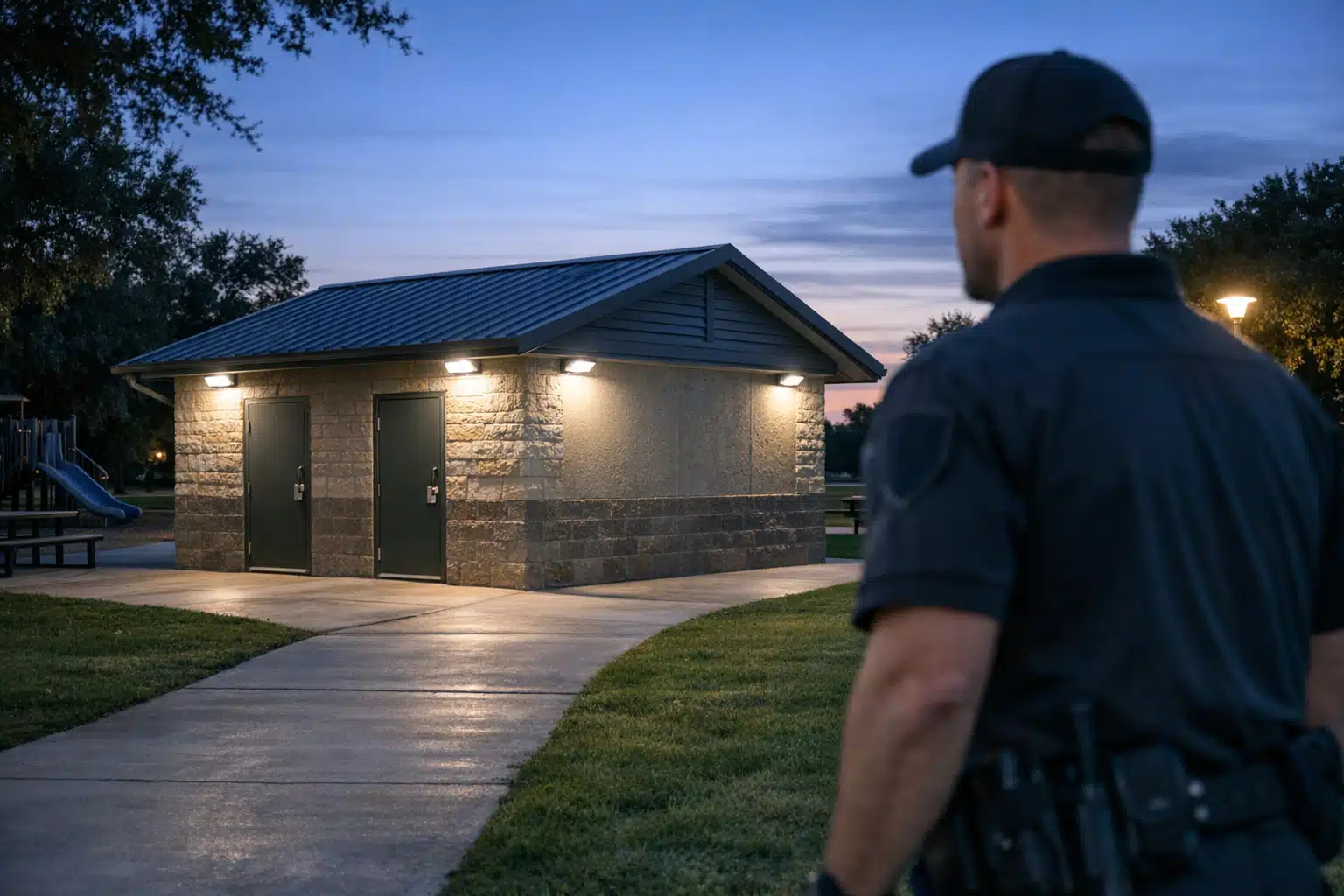
- Community park restrooms — targeted after dark for graffiti and fixture theft
- Recreation center exteriors — tagged on blank concrete walls facing side streets
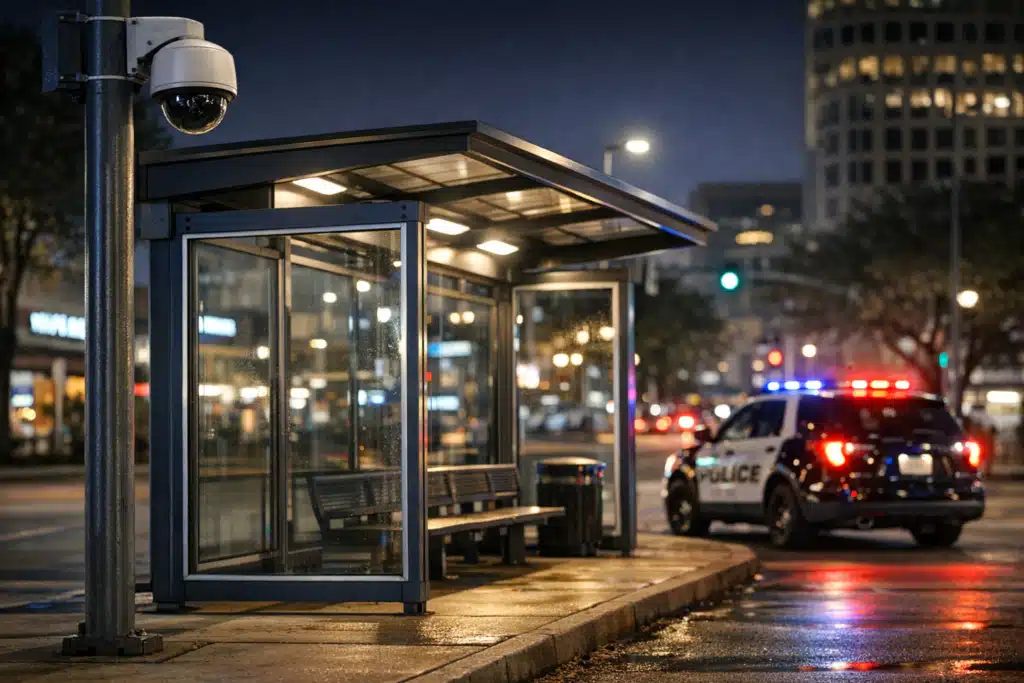
- Transit shelters and bus stops — glass panels shattered near dense apartment corridors
- Municipal parking lots — copper wiring and light fixtures stripped overnight
Blank, unlit surfaces invite tagging. A wall with no camera and no light becomes a canvas within weeks.
When Incidents Spike
Timing matters as much as location. Most public-space vandalism happens between 11 p.m. and 4 a.m.
Summer months bring more foot traffic and more damage. Hurricane season adds another risk window, since storms empty parks and reduce witnesses.
Lighting and Design Strategies for Public Space Security
Physical design stops many incidents before a guard arrives. Good lighting remains the cheapest deterrent available.
Layered Lighting
Bright, even lighting removes hiding spots. Dark corners near dumpsters and stairwells draw the most tagging.
- Install motion-activated lights on rear walls and equipment sheds
- Keep pathway and entrance lighting on dusk-to-dawn timers
- Replace failed bulbs within 48 hours to close gaps
- Add lighting near ATMs, vending, and utility panels
Environmental Design That Discourages Damage
Layout choices shape behavior. Small changes reduce repeat targeting.
- Anti-graffiti coatings let crews wipe paint off in minutes
- Trimmed shrubs below three feet keep sightlines open
- Textured or muraled walls discourage tagging on artwork
- Clear signage stating video monitoring is active
A tagged wall left uncleaned invites more tags. Fast removal signals that someone watches the site.
Remote Video Surveillance for Houston Parks and Centers
Remote video monitoring gives public spaces around-the-clock coverage without a guard on every corner. It fits budgets that cannot fund full-time on-site staff.
How Live Monitoring Works
Cameras feed to a staffed monitoring center. Trained operators watch for movement in restricted zones after hours.
When an operator spots trespassing, several steps follow fast.
- The operator confirms the activity is a real threat
- A live voice-down speaker warns the intruder they are seen
- Most subjects leave within seconds of the warning
- If they stay, the operator dispatches police or a patrol unit
- Recorded footage supports any later report
Voice-down warnings stop most incidents before damage occurs. That prevention beats reviewing footage after the fact.
Coverage That Fits Public Sites
Public spaces have wide, open footprints. Camera placement must match that scale.
- Pan-tilt-zoom cameras cover large park lawns and lots
- Thermal cameras detect movement in unlit tree lines
- License plate capture at entrances tracks repeat vehicles
- Solar-powered units serve remote areas without wired power
Solar and cellular units matter during storm outages. A camera that keeps running when the grid fails protects empty sites.
On-Site Guards for High-Traffic Public Areas
Some Houston public spaces need a visible presence. Cameras alone cannot manage crowds or confront active groups.
When a Guard Beats a Camera
Physical patrols work best in specific settings. A uniformed officer changes behavior on contact.
- Community events and weekend farmers markets
- Recreation centers during open hours
- Aquatic centers and pools in summer
- Parking structures with heavy evening turnover
Guards handle conflicts that software cannot. They also give families and staff a point of contact.
Patrol Routes That Break Patterns
Predictable patrols teach vandals the gaps. Randomized routes remove that advantage.
Our officers vary timing and direction each shift. A tagger who cannot predict the next pass moves on to easier targets.

 Posted on Google
Preparing Public Spaces for Hurricane Season
Gulf Coast storms create a vandalism window most managers overlook. Evacuated neighborhoods leave parks and lots without witnesses for days.
Storm-Period Risks
After Houston floods, looters target unattended sites. Copper theft and equipment stripping rise when crews leave.
Standing water and downed lines also block normal patrols. Sites become harder to reach right when they need watching.
A Storm Security Checklist
- Confirm cameras have battery or solar backup before landfall
- Switch monitoring to cellular in case broadband fails
- Secure and photograph loose equipment and fixtures
- Schedule extra remote monitoring during evacuation windows
- Document damage promptly for insurance claims
Planning before a named storm forms saves scrambling later. We help Houston clients set these steps each June.
Building a Vandalism Prevention Plan That Works
Effective public space security combines several layers. No single tool covers every risk.
Step-by-Step Approach
- Assess the site. Walk it at night to find dark and blind spots.
- Fix the environment. Add lighting, coatings, and clear sightlines.
- Add remote monitoring. Cover after-hours zones with live video.
- Staff high-traffic hours. Place guards where crowds gather.
- Review the data. Track incidents and adjust coverage monthly.
Vandalism prevention improves when you measure results. Incident logs show which fixes cut damage most.
Working With Local Authorities
Houston Police and neighborhood groups support these efforts. Recorded footage helps officers close cases.
Reporting every incident builds a record. That record justifies budget for cameras and patrols next year.
Why Houston Managers Choose Twin City Security Houston
Public spaces carry risks that generic security misses. Our teams know Houston’s neighborhoods, weather, and crime patterns first-hand.
We match remote video, on-site guards, and site design to each location. A Katy community park needs a different setup than a Port-area lot.
That local knowledge keeps vandalism prevention practical and affordable. We build coverage around your budget and your hours.
Conclusion
Vandalism prevention in Houston public spaces works best with lighting, remote video, on-site guards, and storm planning combined. Each layer covers a gap the others leave open. Measuring incidents keeps the plan sharp over time.
Twin City Security Houston builds public space security plans for parks, centers, and municipal lots across the region. Call 832‑301‑9478 or email Houston@Twincitysecurity.com for a site assessment or monitoring quote. Visit https://www.twincitysecurityhouston.com to start.
Sources
Recent Posts