
Remote Surveillance Solutions for Houston’s Expanding Suburban Areas
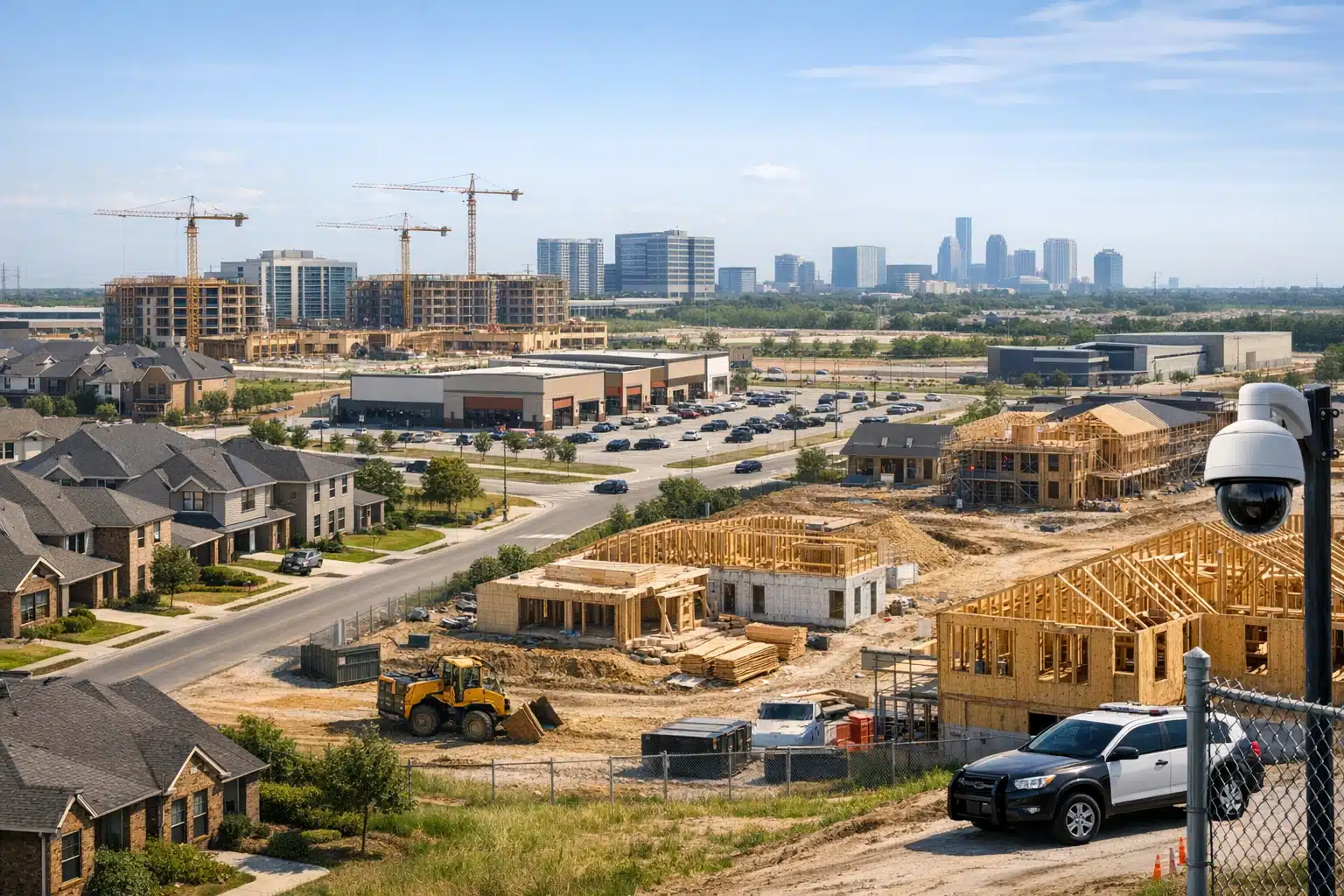
Remote surveillance solutions are security systems designed to monitor and protect retail centers, apartment complexes, and commercial properties in Houston's expanding suburban areas. These systems provide cost-effective protection against security challenges, especially in rapidly developing regions where traditional security measures can be prohibitively expensive.
Houston’s suburban expansion reached a 15% growth rate in 2023, with master-planned communities spreading deeper into Harris, Montgomery, and Fort Bend counties. This rapid development creates unique security challenges for retail centers, apartment complexes, and commercial properties in areas like Katy, The Woodlands, and Pearland. Remote surveillance systems offer cost-effective protection for these emerging suburban markets where traditional security patrol costs can exceed $150,000 annually per location.
Property developers and managers face a critical decision: deploy expensive on-site security teams or leverage advanced monitoring technology to protect assets during the vulnerable expansion phase.
Why Houston Suburbs Security Demands Advanced Remote Monitoring
Suburban expansion zones experience distinct security vulnerabilities during their first three years of development. Construction theft increases by 40% in areas under active development, according to Harris County Sheriff’s Office data.
Remote surveillance addresses specific challenges in Houston’s growing suburbs:
- Limited law enforcement response times in newly developed areas (average 12-18 minutes vs. 6-8 minutes in established zones)
- Higher copper theft rates targeting new electrical infrastructure in communities like Bridgeland and Elyson
- Vandalism patterns that spike during school breaks and summer months
- Package theft clusters in new apartment communities without established delivery protocols
Real-Time Threat Detection in Suburban Environments
Modern surveillance systems detect movement patterns that distinguish between routine activity and potential security threats. AI-powered analytics reduce false alarms by 75% compared to basic motion detection systems.
Twin City Security Houston’s monitoring stations track specific indicators relevant to suburban properties. These include after-hours vehicle access, perimeter breaches, and unusual gathering patterns that often precede property damage or theft.
Remote Surveillance Technology for New Development Areas
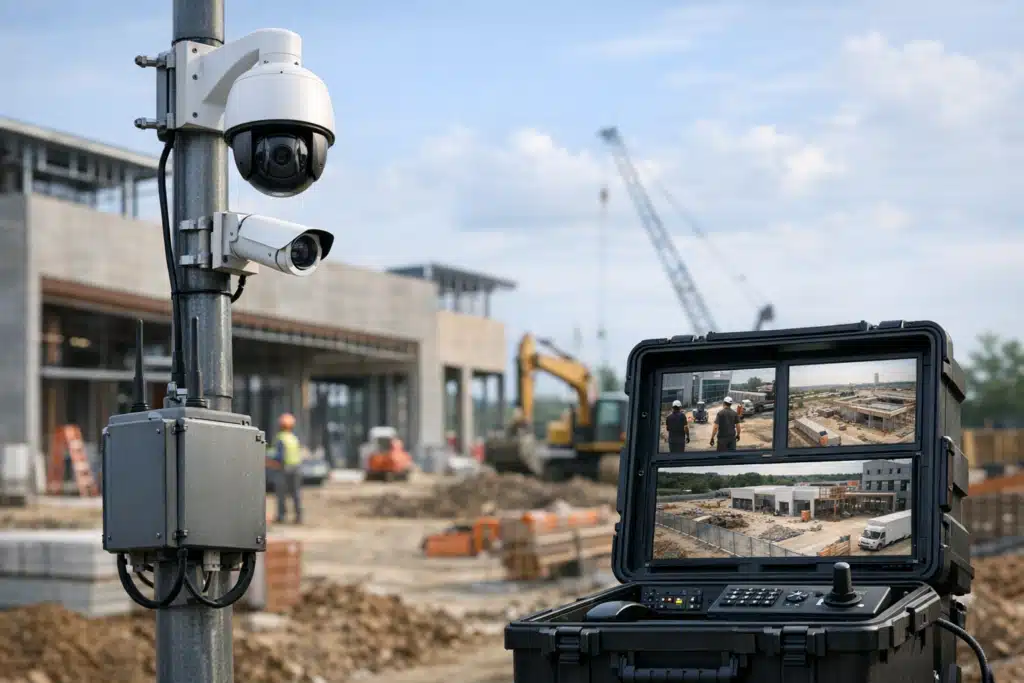
Suburban security infrastructure requires different technology approaches than urban commercial districts. Wireless transmission capabilities prove crucial in areas where hardwired internet connections may not yet exist.
Camera Placement Strategies for Maximum Coverage
Effective suburban surveillance follows the “three-zone” approach:
- Perimeter monitoring – Cameras positioned at property boundaries with 150-foot detection range
- Access point coverage – High-resolution units at all vehicle and pedestrian entry points
- Asset protection zones – Targeted monitoring of high-value areas like equipment storage and electrical panels
Solar-powered camera systems work particularly well in Houston’s climate. They maintain operation during power outages and eliminate trenching costs in newly developed areas.
Integration with Local Emergency Services
Harris County’s emergency dispatch system accepts direct feeds from certified monitoring stations. This integration reduces response delays by 3-5 minutes when security incidents occur.
Twin City Security Houston maintains direct communication protocols with local sheriff departments in suburban jurisdictions. Our operators provide real-time incident details that help deputies respond appropriately to different threat levels.
Cost Analysis: Remote Monitoring vs. Physical Security Guards
Budget considerations drive most security decisions in suburban development projects. Remote surveillance costs typically run 60-70% lower than equivalent guard coverage over a 12-month period.
Monthly Cost Comparison for Suburban Properties
A typical 5-acre suburban retail center faces these security options:
- Two-guard rotation (24/7) – $18,000-$22,000 monthly including benefits and supervision
- Remote surveillance system – $6,500-$8,200 monthly including monitoring services
- Hybrid approach – $11,000-$13,500 monthly with reduced guard hours plus full camera coverage
These figures reflect Houston-area labor costs and account for guard company overhead, insurance, and vehicle expenses.
ROI Factors Beyond Monthly Costs
Remote monitoring delivers additional value through insurance premium reductions. Most commercial property insurers offer 10-15% discounts for certified surveillance systems with professional monitoring.
Incident documentation provides crucial evidence for insurance claims and legal proceedings. High-definition footage often resolves liability questions that could otherwise result in lengthy disputes.
Weather Resilience for Gulf Coast Conditions
Houston’s climate presents specific challenges for outdoor surveillance equipment. Hurricane season preparation requires systems that maintain operation during severe weather events.
Equipment Specifications for Houston Weather
Suburban surveillance installations must handle:
- Wind resistance up to 85 mph sustained winds
- Flood protection with IP67-rated housings for equipment below 8 feet elevation
- Heat tolerance for temperatures exceeding 105°F during summer months
- Humidity resistance preventing condensation damage in equipment enclosures
Battery backup systems provide 72-hour operation during power outages. This capability proved essential during recent weather events that left suburban areas without power for extended periods.

 Posted on Google
Customized Solutions for Different Suburban Property Types
Each property category requires specific surveillance approaches based on risk profiles and operational patterns.
Apartment Community Monitoring
Multi-family housing developments face unique challenges including resident privacy concerns and varying activity patterns. Camera placement focuses on common areas, parking structures, and perimeter boundaries while avoiding direct views into residential units.
Package delivery zones receive dedicated coverage during peak delivery hours. This targeted monitoring reduces theft incidents by up to 85% in covered areas.
Retail Center Surveillance Requirements
Suburban shopping centers experience different crime patterns than urban locations. After-hours break-ins target specific retailers like cellular phone stores and restaurants with cash handling.
Motion detection algorithms distinguish between wind-blown debris and human movement. This specificity reduces false alarm rates that can overwhelm monitoring stations during severe weather.
Construction Site Protection
Active development sites lose an average of $35,000 worth of equipment and materials annually to theft in Houston suburban areas. Remote monitoring provides 24/7 coverage during vulnerable overnight and weekend periods.
Time-lapse capabilities document project progress while maintaining security coverage. This dual function provides additional value for project managers and stakeholders.
Implementation Timeline for Suburban Security Systems
Remote surveillance installation follows a structured timeline that minimizes disruption to ongoing operations.
Phase 1: Site Assessment and Design (Week 1)
Security consultants evaluate property layout, existing infrastructure, and specific risk factors. This assessment identifies optimal camera locations and determines bandwidth requirements.
Site surveys include lighting analysis to ensure adequate night vision coverage and identify areas requiring supplemental illumination.
Phase 2: Equipment Installation (Weeks 2-3)
Professional installation teams complete system deployment with minimal property disruption. Wireless systems typically install 40% faster than hardwired alternatives in suburban environments.
Testing protocols verify camera angles, motion detection sensitivity, and communication reliability before system activation.
Phase 3: Monitoring Integration (Week 4)
Live monitoring begins with 24/7 coverage from Twin City Security Houston’s operation centers. Operator training includes property-specific protocols and local law enforcement contact procedures.
Initial monitoring reports help fine-tune detection settings and reduce false alarm incidents during the first 30 days of operation.
Future-Proofing Suburban Security Infrastructure
Technology advancement requires scalable systems that adapt to changing security needs. Cloud-based platforms enable system upgrades without replacing existing camera hardware.
Artificial intelligence capabilities continue expanding to include facial recognition, license plate reading, and behavioral analysis. These features integrate seamlessly with properly designed surveillance networks.
Houston’s suburban expansion shows no signs of slowing, with major developers planning additional master communities through 2030. Early investment in professional surveillance infrastructure protects property values while providing immediate security benefits.
Remote surveillance offers proven protection for Houston’s expanding suburban areas through advanced technology and professional monitoring. Property managers gain comprehensive security coverage at significantly lower costs than traditional guard services.
Contact Twin City Security Houston at 832‑301‑9478 or Houston@Twincitysecurity.com for a customized security assessment tailored to your suburban property’s specific requirements and risk profile.
Sources
- U.S. Census Bureau – Harris County QuickFacts
- Harris County Sheriff’s Office – Patrol Division
- Bureau of Labor Statistics – Texas Employment Data
- Ready.gov – Hurricane Preparedness
Houston's suburban areas are experiencing significant growth, leading to unique security challenges for property developers and managers. Remote surveillance systems provide a cost-effective solution to protect these expanding communities.
- Houston's suburbs grew by 15% in 2023, creating security vulnerabilities during development.
- Remote surveillance can reduce security costs by 60-70% compared to traditional guards.
- Advanced monitoring technology offers real-time threat detection and integrates with local emergency services.
Recent Posts