
Top Security Tips for Managing Houston’s Apartment Complexes This Fall
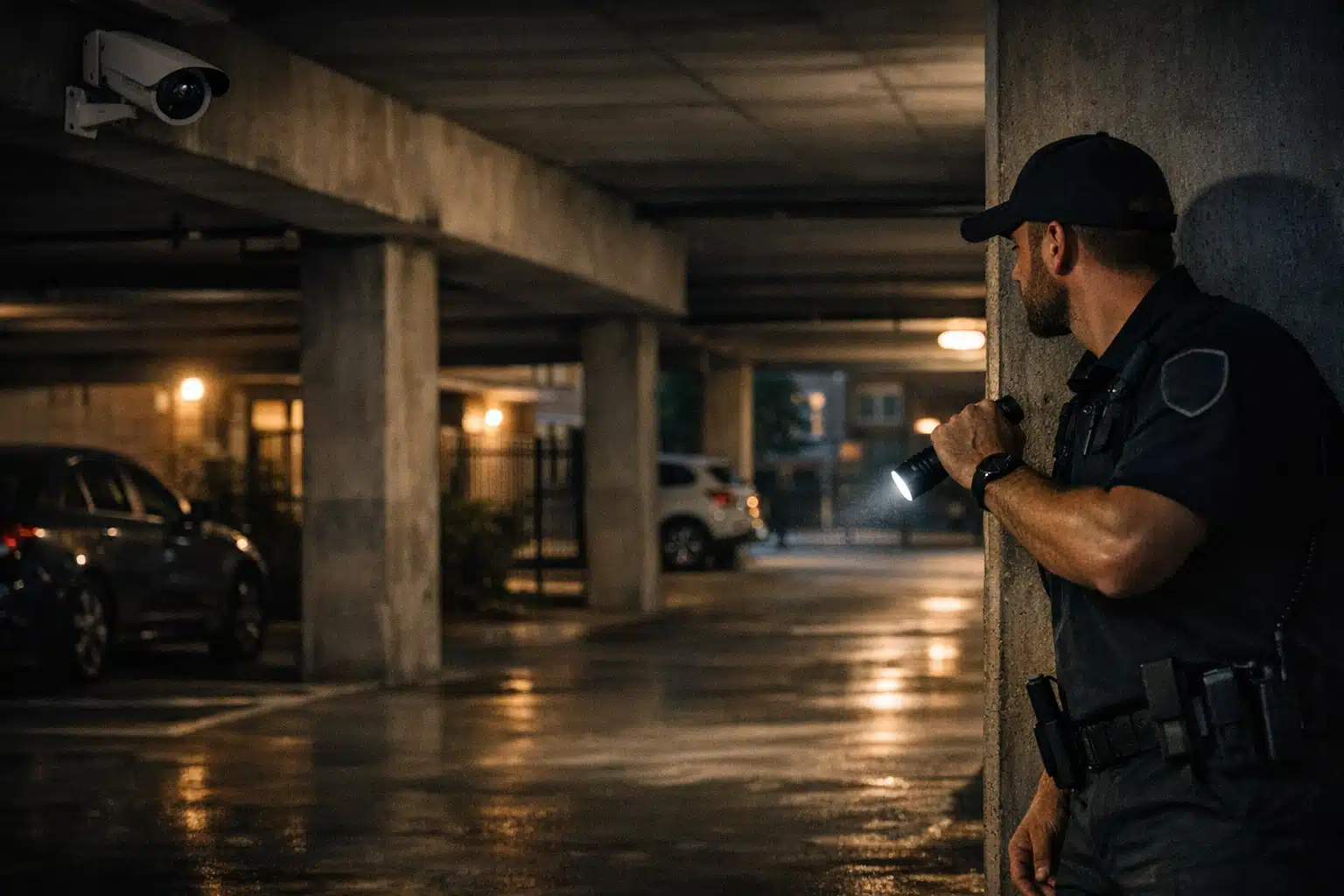
Why Fall Changes the Security Math for Houston Apartments
Houston loses roughly two hours of evening daylight between September and December. That shift matters more than most property managers expect.
Apartment complex security gets harder when residents walk to their cars in the dark after work. Criminals read that pattern too.
Houston Police Department data shows vehicle break-ins and package theft climb during the fourth quarter. Parking garages, mail rooms, and dim breezeways become the three highest-risk zones.
This post breaks down practical fall security strategies for Houston multifamily properties. The focus stays on real incidents, local geography, and measurable fixes.
How Shorter Days Create New Blind Spots
Earlier sunsets expose lighting gaps that stayed hidden all summer. A fixture that looked fine at 8 p.m. in July now leaves a stairwell dark at 6 p.m. in November.
Walk your property after 6 p.m. in October. Note every spot where you cannot clearly see a face from 30 feet away.
The Three Zones That Fail First
- Parking structures: Interior columns block light and hide approach angles.
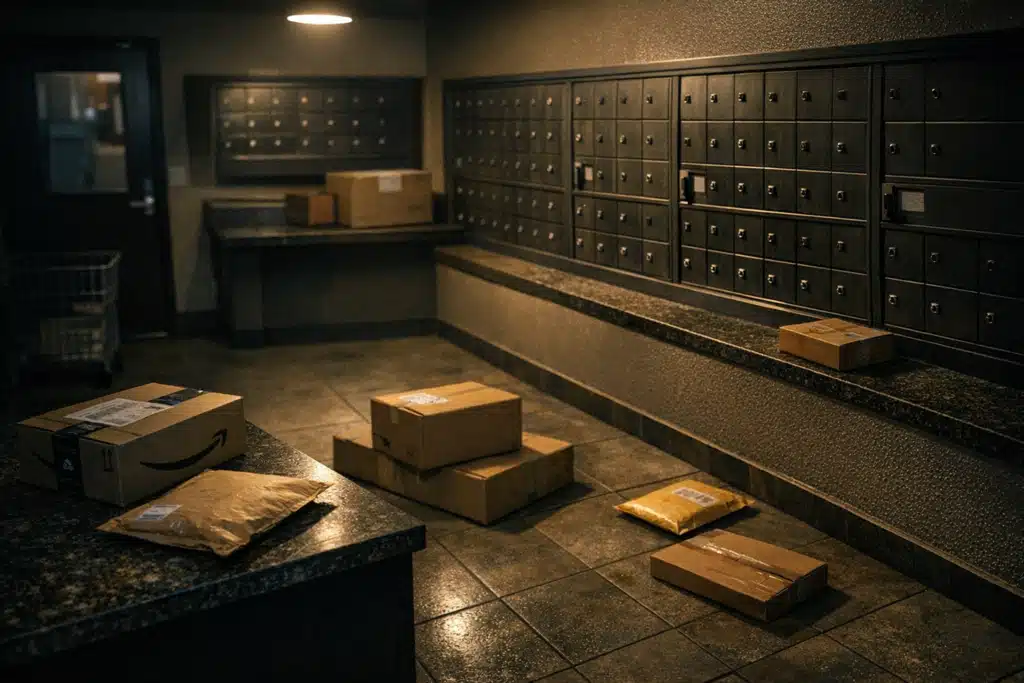
- Mail and package areas: Fall holiday deliveries spike theft at these spots.
- Pool and amenity zones: Closed for the season but still accessible after dark.
Properties near the Energy Corridor and Westchase see heavy evening foot traffic from commuters. That window between 5 and 7 p.m. carries the most risk.
Apartment Complex Security Steps to Take Before November
Apartment complex security works best when you fix the physical environment first, then add human and video coverage. Follow this order.
- Audit every light fixture. Replace burned-out bulbs and upgrade to LED at 4000K for true-color facial recognition on camera.
- Trim landscaping. Overgrown oleander and crepe myrtle create hiding spots near ground-floor units.
- Test access gates. Vehicle gates that stick open after a power flicker invite non-residents straight in.
- Map camera coverage against new shadows. A camera aimed at a now-dark corner needs infrared or a repositioned angle.
- Post updated amenity hours. Close pools and gyms visibly so after-hours presence stands out.
Katy and Cypress properties with large surface lots should prioritize perimeter lighting first. Open lots give offenders long sightlines to spot distracted residents.
Lighting Standards That Hold Up on Camera
Aim for even light, not bright pools surrounded by darkness. The contrast between a floodlight and shadow actually hides more than steady, moderate lighting reveals.
Mount fixtures high enough to resist tampering. Vandalized lights in a stairwell often signal a test run before a larger incident.
Remote Video Surveillance for Fall Evening Coverage
Remote video monitoring fills the gap when on-site patrols cannot be everywhere at once. Live operators watch camera feeds and respond to activity in real time.
This matters most during the 5-to-9 p.m. window when leasing offices close but residents keep moving. A live operator can issue a voice-down warning before an incident starts.
What Active Monitoring Catches That Recording Misses
- A stranger following a resident into a gated garage.
- Someone lingering at the package room after hours.
- Loitering near unlit vehicle rows in a back lot.
Recorded footage only helps after a crime. Monitored footage lets an operator intervene while it still matters.
At Twin City Security Houston, operators pair cameras with speakers to warn trespassers directly. That audible response ends most prowling attempts fast.
On-Site Guards Still Matter for Houston Multifamily
Cameras cannot physically escort a resident or unlock a stuck gate. A visible guard presence shapes behavior in ways technology cannot match.
Mobile patrol units work for mid-size communities that cannot staff a guard around the clock. Marked vehicles making randomized rounds break the predictability offenders rely on.
When to Add a Guard vs. Expand Cameras
Add a guard when your property has frequent walk-up foot traffic, a history of physical confrontations, or a large leasing office handling cash and keys.
Expand video monitoring when your incidents cluster in specific zones like garages or mail rooms. Cameras cover fixed hotspots at lower cost than a full-time post.
Many Houston communities run both. A guard handles the lobby and resident contact; monitored cameras watch the perimeter.

 Posted on Google
Package Theft Peaks During Houston’s Holiday Stretch
Fourth-quarter deliveries flood apartment mail rooms from October onward. Porch pirates target open parcel areas with no camera coverage.
Secure your package operation with these steps:
- Lock parcel rooms and tie access to the same fob system as resident entries.
- Add a monitored camera facing the drop-off and pickup point.
- Post signage stating the area is recorded and monitored.
- Stagger pickup reminders so parcels do not pile up overnight.
Properties in Clear Lake and the Medical District see high delivery volume from working residents. A single monitored camera at the mail room cuts theft reports fast.
Weather and Power: The Gulf Coast Factor
Fall in Houston still carries late hurricane-season risk into November. Power loss knocks out gates, cameras, and lighting at once.
Battery backups on access gates keep them secured during outages. Without backup, a gate can fail open and leave the property exposed for hours.
A Simple Outage Readiness Checklist
- Confirm gate controllers have battery or generator backup.
- Verify cameras tie into backup power, not just wall outlets.
- Keep emergency lighting in stairwells and corridors tested monthly.
- Have a call tree so staff know who monitors the property during an outage.
Communities that lost power during past storms learned this the hard way. A dark complex with open gates becomes an easy target overnight.
Texas Rules Property Managers Should Know
Security personnel in Texas must be licensed under the Texas Department of Public Safety Private Security Program. Hiring unlicensed guards exposes a property to liability.
Ask any vendor for proof of state licensing before signing. A compliant provider shows company and officer-level credentials without hesitation.
Camera placement must respect resident privacy. Keep lenses pointed at common areas, entries, and parking, not at unit windows or private patios.
Bringing the Fall Plan Together
Houston apartment communities face a predictable spike in evening risk as daylight drops. Fixing lighting, locking package rooms, and adding monitored coverage during peak hours stops most incidents before they start.
Twin City Security Houston builds fall security strategies around your property’s real hotspots and traffic patterns. Call 832‑301‑9478, email Houston@Twincitysecurity.com, or visit https://www.twincitysecurityhouston.com for a Houston security assessment.
Sources
Recent Posts