
The Importance of Security Audits for Houston Businesses
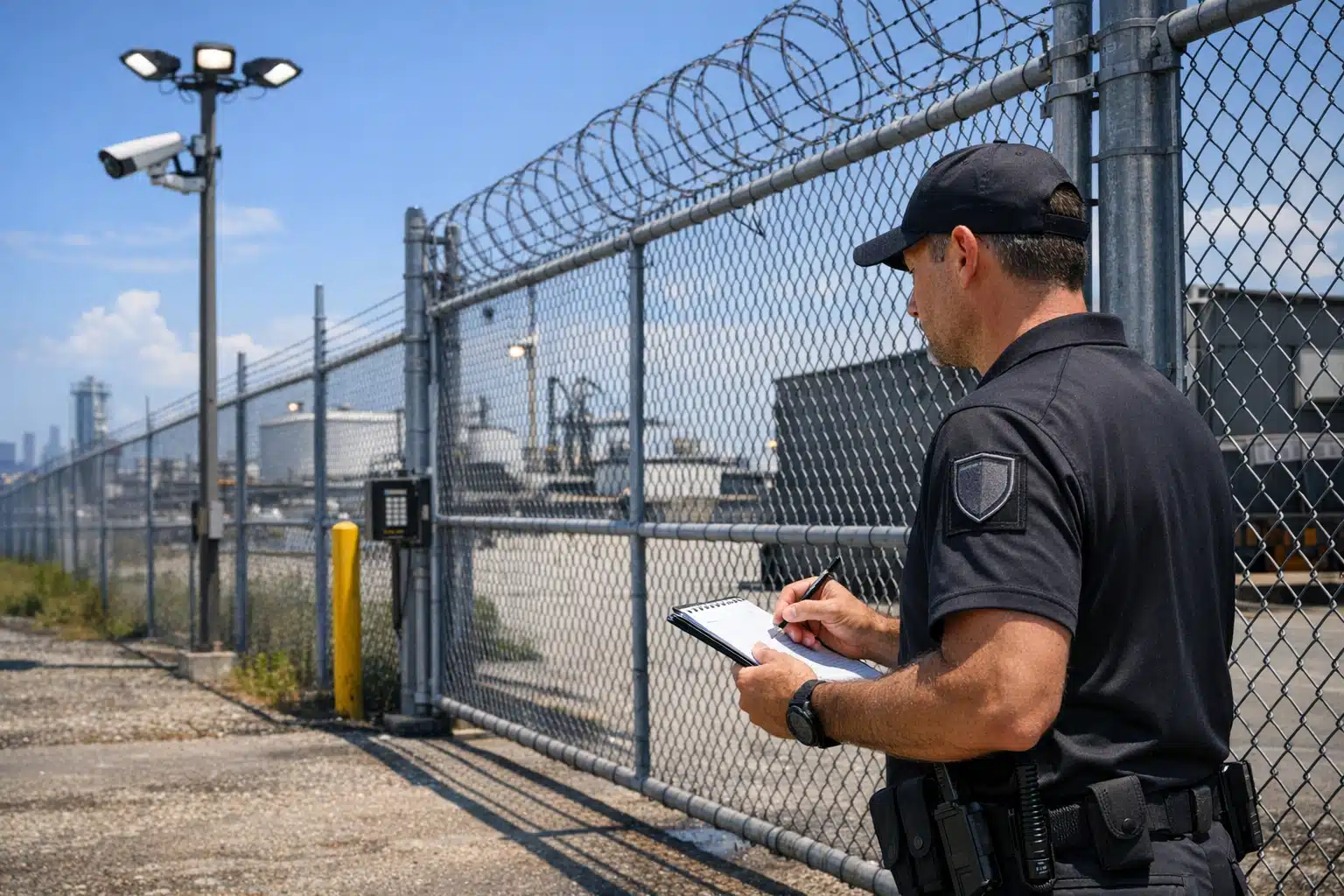
Why Houston Businesses Cannot Skip Security Audits
Houston reported more than 100,000 property crimes in a recent year, according to city police data. Many of those thefts hit businesses with gaps they never knew existed.
Security audits find those gaps before a criminal does. A structured review of your building, cameras, and access points shows where your property is exposed.
This article breaks down what a security audit covers, who needs one, and how Houston operators use audits to cut losses across the Energy Corridor, Port of Houston, and beyond.
What a Security Audit Actually Reviews
A security audit is a documented inspection of your physical and operational protection measures. It scores each area against real threats your site faces.

A strong business security evaluation examines five areas:
- Perimeter — fencing, gates, lighting, and blind spots along property lines
- Access control — who enters, how they enter, and whether badges or keys are tracked
- Surveillance — camera placement, recording retention, and night visibility
- Guard coverage — patrol routes, shift gaps, and response times
- Emergency readiness — hurricane evacuation plans and after-hours protocols
Each area gets a rating. The final report lists fixes ranked by risk and cost.
Why the Report Matters More Than the Walkthrough
Anyone can walk a property. The value comes from the written findings.
A good report tells you which vulnerability to fix first. It might flag a dark loading dock in Katy before it flags a minor gate latch issue.
Security Audits for Houston Energy Facilities
Energy sites face rules most businesses never touch. Facilities handling certain chemicals fall under federal anti-terrorism standards.
Audits at refineries and chemical plants check compliance with the Chemical Facility Anti-Terrorism Standards (CFATS) program run by federal authorities. An audit confirms your perimeter, screening, and cyber controls meet those benchmarks.
During a refinery turnaround, hundreds of temporary contractors enter the site. This is when access control breaks down most.
Turnaround Season Weak Points
An audit before a turnaround catches problems early. Common findings include:
- Contractor badges issued without background checks
- Temporary gates left unmanned during shift changes
- Cameras aimed at old work zones instead of active ones
- No headcount system for evacuation during an incident
Fixing these before the crew arrives prevents theft of copper, tools, and equipment. Metal theft alone costs Gulf Coast operators heavily each year.
Port of Houston and Industrial Site Concerns
The Port of Houston moves cargo worth hundreds of billions annually. That volume draws organized theft and cargo diversion.
Sites near the ship channel need audits that match maritime security expectations. Federal port rules require documented facility security plans and regular assessment.
An audit here checks truck gate procedures, container yard lighting, and driver identity verification. One missed step can let a stolen load leave the yard unnoticed.
Construction Sites Across Katy and The Woodlands
Active construction sites lose lumber, wire, and machinery to overnight theft. Open lots with no fixed staff invite trespassers.
A site audit recommends the right mix of guards and remote video. Twin City Security Houston pairs on-site patrols with monitored cameras for these locations.
Remote video catches movement after hours and alerts a live operator. That operator can trigger a voice warning before anyone reaches the equipment.
Hurricane Season Changes Your Risk Overnight
Gulf Coast storms create a second security threat: looting during evacuations. Empty buildings become targets once power fails.
A hurricane-focused audit reviews your storm plan against your protection plan. It answers questions most owners forget until it is too late.
- Will cameras keep recording during a power outage?
- Do guards have a shelter or relief plan during landfall?
- Can remote monitoring continue if local internet drops?
- Who secures doors and windows before the storm arrives?
Battery backup and cellular failover keep surveillance alive when the grid goes down. An audit confirms yours works before June.

 Posted on Google
How Often Houston Businesses Should Audit
Most sites benefit from a full security audit once a year. Higher-risk operations need reviews more frequently.
Schedule an extra audit when any of the following happen:
- You add a new building, gate, or entrance
- A break-in or theft occurs on your property
- A turnaround or major contractor project begins
- Hurricane season approaches in late spring
- Regulations governing your facility change
A retail center in Clear Lake and a chemical plant near Pasadena need very different schedules. The right cadence depends on your threat level.
What Happens After the Audit
An audit without follow-up wastes money. The findings only help when you act on them.
A useful report groups fixes into three tiers:
- Immediate — open gaps a criminal could use tonight
- Short-term — repairs and upgrades over the next quarter
- Long-term — larger investments like new camera systems
This ranking lets a property manager budget over time. It also gives ownership a clear record of due diligence if an incident ever leads to a claim.
Documentation Protects You Legally
Texas premises liability cases hinge on whether an owner took reasonable steps to protect visitors. A documented audit shows you did.
Courts look for evidence of foreseeable risk and response. An audit trail answers both questions in writing.
Common Vulnerabilities Audits Keep Finding
After reviewing sites across Houston, the same weak points appear repeatedly. Knowing them helps you self-check before a formal audit.
- Dead camera zones near dumpsters and rear exits
- Propped doors employees use for smoke breaks
- Old access codes never removed after staff leave
- Burned-out lighting in parking areas and loading docks
- Landscaping tall enough to hide someone at a window
None of these cost much to fix. Left alone, each one invites the loss you are trying to prevent.
Conclusion
Security audits turn guesswork into a written plan that protects your Houston property. They find the dark corners, expired codes, and storm-season gaps before criminals or hurricanes exploit them.
Twin City Security Houston performs on-site audits and pairs them with guard coverage and remote video monitoring built for Gulf Coast conditions. Call 832‑301‑9478, email Houston@Twincitysecurity.com, or visit https://www.twincitysecurityhouston.com to schedule your assessment.
Sources
Recent Posts