
Security Tips for Managing Access Control in Houston’s Residential Complexes
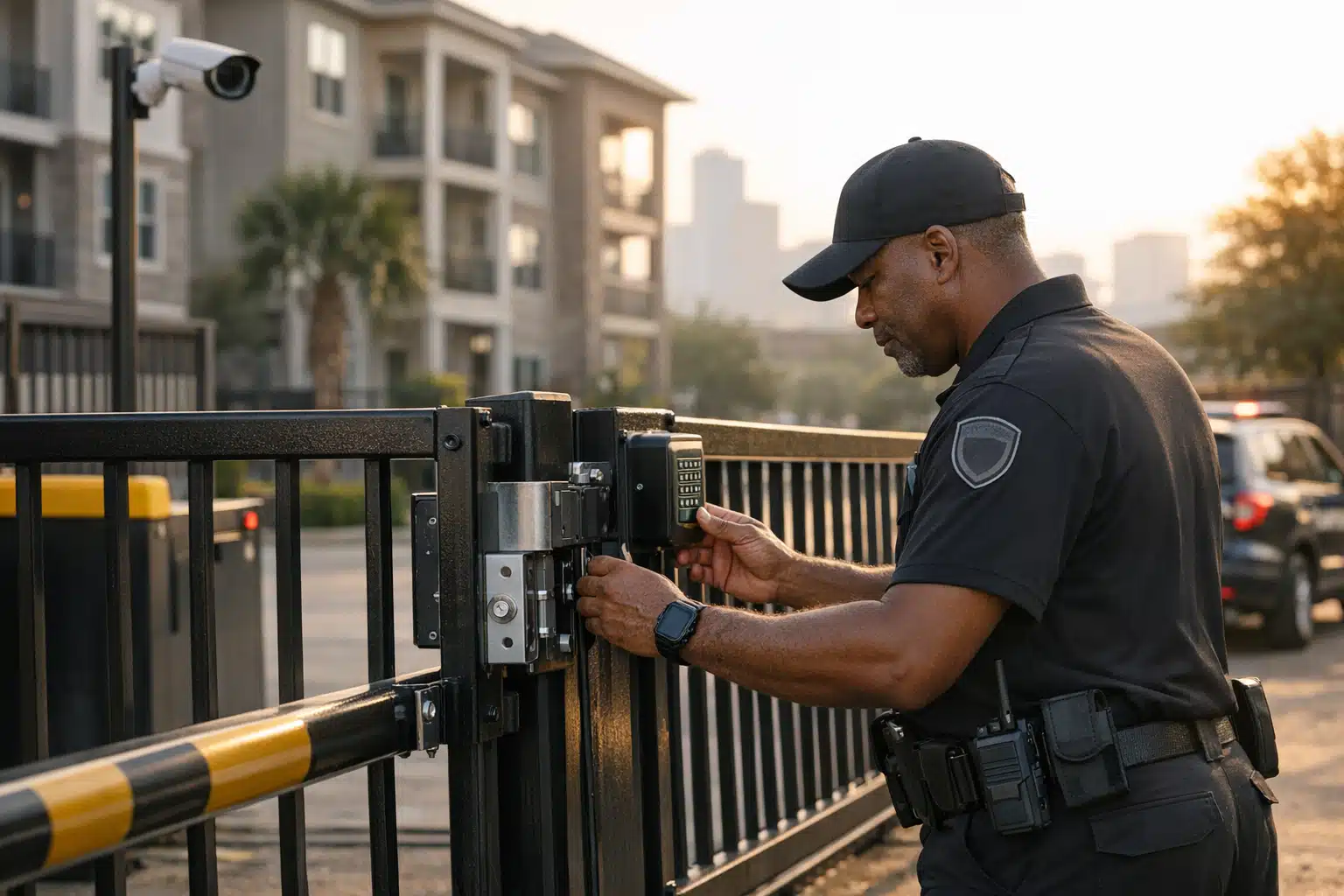
Houston reported over 100,000 property crimes in recent years, with apartment complexes among the frequent targets. Weak access control is the most common gap property managers overlook. Broken gates, shared codes, and unmonitored entry points give criminals easy paths onto your property.
This post breaks down practical steps for managing entry at Houston residential complexes. You get specific fixes for gates, fobs, visitor entry, and remote monitoring.
Why Access Control Matters for Houston Residential Complexes
Access control means managing who enters your property and when. For apartment communities, it covers vehicle gates, pedestrian entrances, parking garages, mailrooms, and amenity areas.
Houston’s sprawl creates real problems for residential security. Complexes in areas like Westchase, Gulfton, and Sharpstown sit near high-traffic corridors with easy vehicle access.
A single failed gate arm can expose 300 units overnight. Tailgating vehicles, propped side gates, and cloned fobs remain the top three entry failures our field teams find during Houston property audits.
The Real Cost of Weak Entry Controls
Package theft, vehicle burglary, and vandalism climb fast when entry points fail. Insurance claims and resident turnover follow close behind.
One Katy-area complex we assessed had a gate stuck open for weeks. Vehicle break-ins tripled during that window. The repair cost less than a single claim.
Step-by-Step Access Control Setup for Apartment Communities
Effective access control follows a clear order. Start with your perimeter, then work inward to shared spaces.
- Map every entry point. List vehicle gates, pedestrian gates, garage doors, and back exits. Most complexes have more than managers realize.
- Fix or replace failing gates. A gate that stays open half the time protects no one. Prioritize repairs before adding new tech.
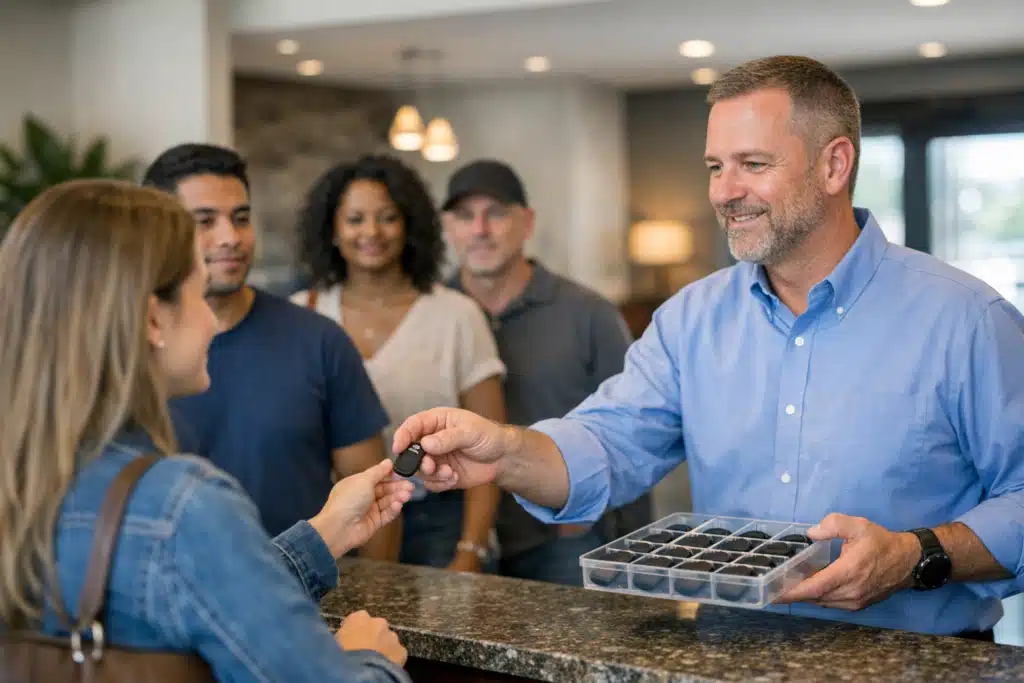
- Switch shared codes to individual credentials. Assign each unit its own fob or app code. Deactivate credentials the day a resident moves out.
- Install anti-tailgating measures. Add signage, delayed gate timers, or a second sensor loop to stop vehicles from following others in.
- Secure pedestrian gates. Self-closing hinges and magnetic locks stop the propped-door problem that plagues Houston walk-up complexes.
- Layer in monitoring. Cameras at each gate confirm who enters and create records for police reports.
Match Credentials to Your Resident Turnover
Houston rentals see high tenant movement. Some Energy Corridor complexes turn over 40% of units yearly as contractors rotate.
Physical keys and shared codes cannot keep pace. Cloud-based fob systems let managers revoke access in seconds when a lease ends.
Managing Visitor and Delivery Access
Deliveries drive most unauthorized entries at Houston apartments. Amazon, food couriers, and rideshare drivers need access dozens of times daily.
Uncontrolled delivery entry lets anyone claim a package drop-off. A structured visitor system closes that gap.
Practical Visitor Controls
- Use a call-box with video. Residents verify guests by sight before granting entry.
- Set up a monitored package room. Cameras and a separate locked entry cut porch piracy.
- Issue temporary codes. Give contractors and cleaners time-limited access that expires automatically.
- Log every entry. Digital records help identify patterns after an incident.
Complexes near the Medical Center and Midtown see heavy nighttime rideshare traffic. Video call-boxes let residents screen late arrivals without opening a blind gate.
Remote Video Monitoring for Houston Residential Security
On-site staff cannot watch every gate around the clock. Remote video surveillance fills those hours when no one is at the leasing office.
Live monitoring agents watch entry points in real time. They spot tailgating, loitering, and forced-gate attempts as they happen.
How Remote Monitoring Works at a Complex
Cameras cover gates, garages, mail areas, and pool decks. Trained agents view feeds from a central station.
When an agent sees a threat, they respond fast. Options include voice-down warnings over speakers, dispatching patrol, or calling Houston Police.
This approach costs far less than posting guards at every gate. It fits mid-size complexes that need coverage without a full on-site team.
Combining Guards and Cameras
Larger communities benefit from both. A roving guard handles physical response while remote agents cover blind spots.
During Gulf Coast storm season, this pairing matters more. Evacuated units become targets, and remote agents flag activity when residents are gone.
Hurricane Season and Access Control Planning
Gulf Coast storms disrupt power and gate systems every year. A gate that fails safe stays open during outages, leaving property exposed.
Plan for these conditions before June arrives. Battery backups and manual lock procedures keep entry controlled during outages.
- Install battery backup on gate operators and locks.
- Set fail-secure modes where fire code allows.
- Pre-stage manual keys with vetted staff for emergency entry.
- Keep cameras on backup power to record during and after storms.
After Hurricane Beryl, many Houston complexes lost power for days. Properties with backup-powered cameras had records; those without lost all evidence of storm-period theft.

 Posted on Google
Texas Regulations Every Houston Property Manager Should Know
Texas requires licensed security personnel for guard work. The Texas Department of Public Safety Private Security Bureau regulates companies and officers.
Always confirm your provider holds a valid state license. Ask for the company license number and officer credentials.
Fire code also governs gate locks. Emergency egress must stay unblocked, so coordinate lock design with local fire officials.
Common Access Control Mistakes at Houston Complexes
Certain errors show up again and again during our property reviews. Fixing them costs little and prevents most incidents.
- Never resetting the master gate code after staff leave.
- Propping side gates for maintenance convenience.
- Ignoring blind spots near dumpsters and rear parking.
- Skipping camera maintenance until footage is needed and missing.
- Relying on one gate with no pedestrian control.
Each of these gaps has caused real losses at Houston-area properties we have assessed. Address them in order of exposure.
Building an Access Control Budget That Works
Access control does not require replacing everything at once. Phase upgrades based on your highest-risk points.
A Practical Phasing Plan
- Phase one: Repair failing gates and secure the perimeter.
- Phase two: Convert shared codes to individual credentials.
- Phase three: Add cameras at all entry points.
- Phase four: Layer in remote monitoring or guard coverage.
This order protects your biggest vulnerabilities first. It also spreads cost across budget cycles.
Protecting Your Houston Residential Community
Strong access control starts with knowing your entry points and fixing what fails. Individual credentials, monitored visitor entry, and camera coverage stop most apartment crime. Storm-season planning keeps that protection working when Houston needs it most.
Twin City Security Houston helps apartment managers assess entry gaps and build practical protection plans. Call 832‑301‑9478, email Houston@Twincitysecurity.com, or visit https://www.twincitysecurityhouston.com for a Houston residential security assessment.
Sources
Recent Posts