
Weathering the Storm: Preparing Houston Businesses for Unexpected Security Threats
Why Storm Season Changes the Security Math for Houston Businesses
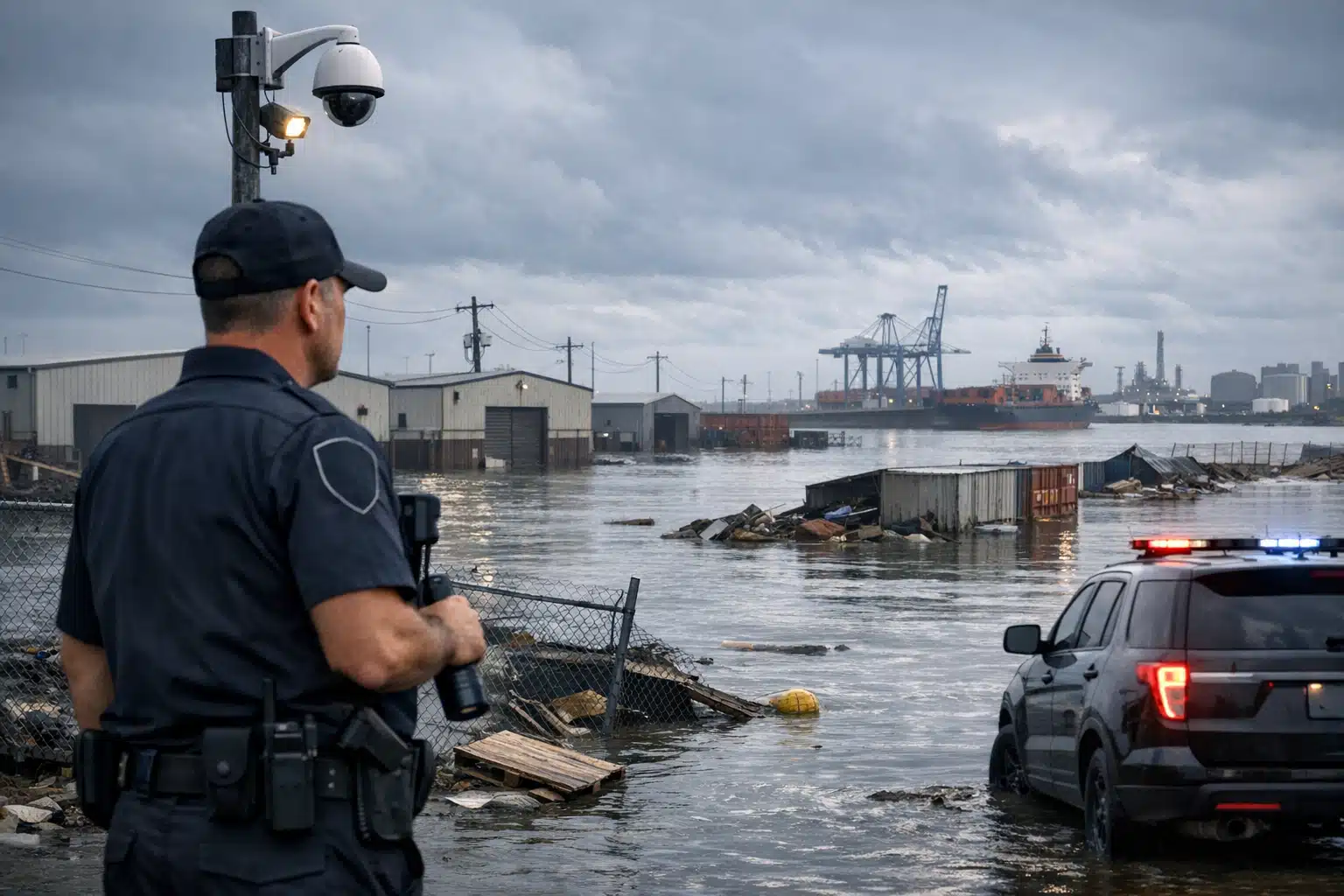
Hurricane Harvey dumped over 50 inches of rain on parts of Houston in 2017. Businesses lost inventory, equipment, and control of their sites for days.
Storms create a second wave of danger after the wind stops. Empty buildings, powered-down alarms, and distracted staff open the door to unexpected security threats.
This post breaks down how Houston companies can adapt security plans for hurricane season. It covers real Gulf Coast scenarios, from Port of Houston flooding to Energy Corridor evacuations.
How Hurricanes Create Unexpected Security Threats
Storms do more than damage property. They strip away the systems businesses rely on to stay protected.
Power Loss Disables Standard Protection
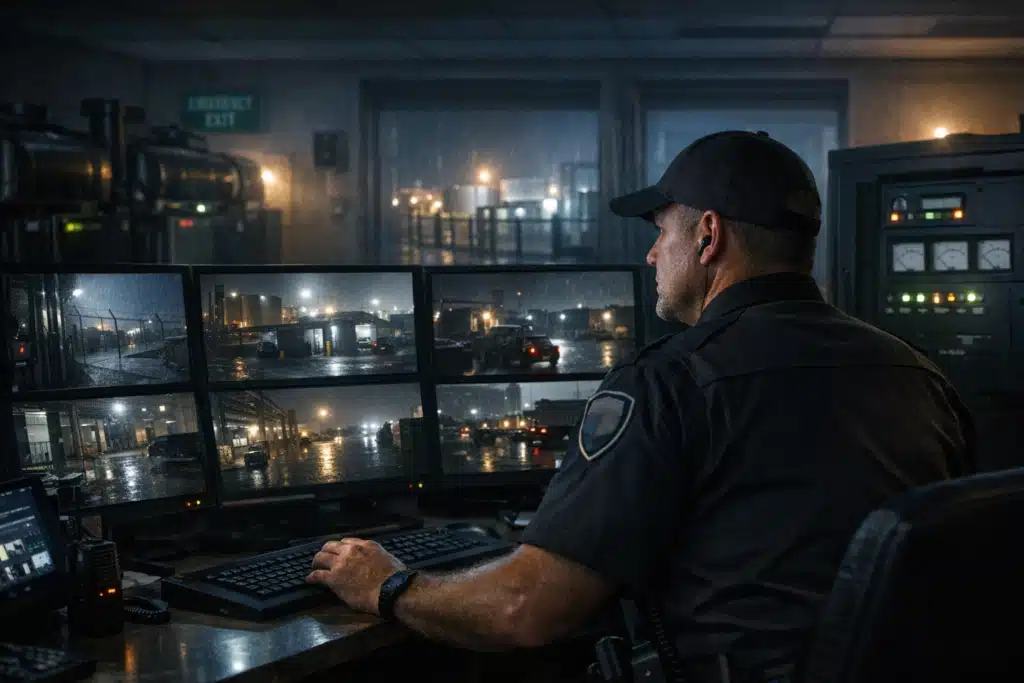
Most alarm systems and access controls run on grid power. When the grid fails, so does perimeter monitoring.
During Harvey, thousands of Houston-area properties lost power for over a week. Backup batteries in many camera systems drained within hours.
Evacuations Leave Sites Unguarded
Mandatory evacuations pull staff away from facilities. Looters and thieves know empty commercial districts become soft targets.
After Harvey, Houston police reported burglaries at flooded storefronts and warehouses. Criminals moved by boat and high-water vehicle to reach abandoned buildings.
Flooded Access Roads Delay Response
Police and fire crews prioritize life-safety calls during storms. A break-in report may wait hours or days for a response.
Blocked roads around the Port of Houston and Ship Channel slow every emergency vehicle. Your site could sit exposed with no help coming.
Protecting Houston Energy Facilities During Hurricane Season
Energy facility security requires planning that accounts for both storm damage and regulatory rules. Refineries and chemical plants along the Houston Ship Channel face strict federal oversight.
Meet Chemical Facility Security Standards
Many Houston-area plants fall under federal chemical security regulations. Perimeter breaches during a storm can trigger compliance violations and safety incidents.
Storm prep for these sites should include:
- Redundant power for cameras and access gates
- Documented guard coverage during and after evacuation orders
- Flood-rated equipment at ground-level checkpoints
- Chain-of-custody logs for restricted materials
Plan for Turnaround and Storm Overlap
Refinery turnarounds bring hundreds of temporary contractors on site. When a storm hits during a turnaround, access control gets messy fast.
Remote video monitoring keeps eyes on gates when badge readers fail. A live operator can verify who belongs on site and who does not.
Securing Construction Sites and Port Operations Before a Storm
Construction sites and port yards hold high-value, movable assets. Copper wire, generators, and heavy equipment attract thieves after every major storm.
Steps to Protect a Houston Construction Site
To protect your Houston construction site before a hurricane, follow these steps:
- Secure or remove loose materials that wind can scatter or damage.
- Move portable equipment to a central, monitored location.
- Photograph all assets for insurance and theft records.
- Switch cameras to battery or cellular backup before landfall.
- Assign remote monitoring coverage for the evacuation window.
Sites in Katy and along the Grand Parkway saw equipment theft spikes after past storms. A monitored site gives thieves a reason to move on.
Port of Houston Specific Risks
The Port of Houston moves millions of tons of cargo each year. Storm surge and flooding can scatter containers and disrupt access checkpoints.
Cargo left in staging yards becomes vulnerable when normal controls go down. Remote surveillance with thermal cameras spots movement in flooded, dark conditions.
Building an Emergency Preparedness Plan That Covers Security
Emergency preparedness for Houston businesses must include security, not just life safety. Most storm plans stop at evacuation routes and generator fuel.
What a Storm Security Plan Should Include
A strong plan answers these questions before the first storm warning:
- Who monitors the site once staff evacuate?
- How do cameras stay online without grid power?
- Who has authority to grant emergency access?
- How are guards relieved if roads flood?
- What triggers a shift from on-site to remote coverage?
Combine On-Site Guards With Remote Monitoring
On-site guards handle physical response and visible deterrence. Remote monitoring covers periods when it is unsafe to keep people on site.
During peak storm conditions, live operators watch feeds from a secure off-site center. They call police, dispatch response, and log every event with timestamps.
This pairing keeps protection running when one method alone would fail.

 Posted on Google
What Houston Businesses Learn After Every Storm
Companies that survive a storm with minimal loss share common habits. They planned for security before the weather turned.
Common Post-Storm Security Gaps
After each Gulf Coast storm, we see the same recurring problems:
- Camera systems with no backup power
- Access logs that stop when the network drops
- No coverage plan for the 48 hours after landfall
- Assets left in flood-prone ground-floor areas
Each gap is fixable with planning weeks before hurricane season starts.
Timing Your Preparation
Atlantic hurricane season runs June 1 through November 30. Houston sees its highest risk from August into October.
Start security reviews in April or May. Testing backup power and remote feeds during a real storm is too late.
How Twin City Security Houston Supports Storm Readiness
Twin City Security Houston works with businesses across the Energy Corridor, Ship Channel, Clear Lake, and The Woodlands. Our teams plan for storm scenarios specific to each site.
We provide on-site guards and remote video monitoring built for Gulf Coast conditions. That includes coverage during evacuations when your staff cannot stay on site.
Our operators keep watch when the grid fails and roads flood. They log events, contact authorities, and protect assets others leave exposed.
Conclusion
Houston storms strip away the systems businesses depend on for protection. Planning for unexpected security threats before hurricane season keeps sites covered when power, staff, and police response fall short.
Twin City Security Houston builds storm-ready security plans for Houston facilities. Call 832‑301‑9478 or email Houston@Twincitysecurity.com for a Houston security assessment or monitoring quote.
Sources
Recent Posts