
Steps to Evaluate Security Needs for New Businesses in Houston
Houston recorded more than 100,000 property crime incidents in a single year, according to the Houston Police Department. A new storefront in Midtown faces different risks than a fabrication yard near the Ship Channel. That gap is why every owner must evaluate security needs before opening doors.
This post walks you step by step. You get a checklist built for startups and a new business Houston owners can apply the same week they sign a lease.
Why New Businesses in Houston Face Specific Risks
Houston spans more than 600 square miles. Crime patterns shift block by block, not just neighborhood by neighborhood.
A retail center in Sharpstown deals with smash-and-grab theft. A construction site in Katy loses copper wire and diesel fuel overnight. An energy facility in the Energy Corridor must guard against trespass and sabotage.
New businesses are easy marks for three reasons:
- No security history. Criminals watch new sites to test response times.
- Incomplete fencing or lighting. Construction phases leave gaps.
- Untrained staff. First hires rarely know local theft tactics.
Hurricane season adds another layer. From June to November, evacuations leave buildings empty and exposed.
How to Evaluate Security Needs in Eight Steps
To evaluate security needs for a Houston business, work through a fixed sequence. Skipping steps leaves blind spots that thieves find first.

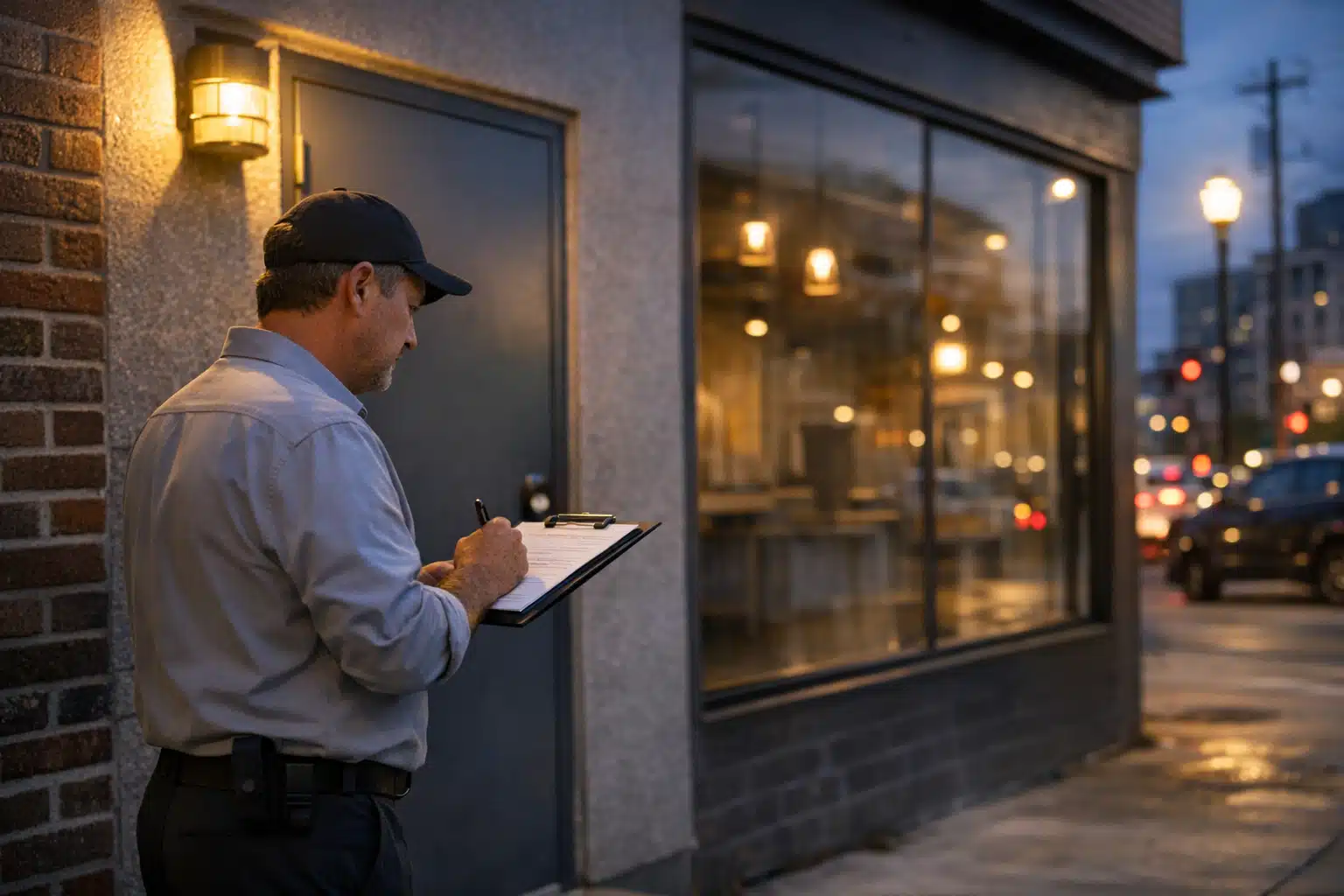
Step 1: Map Your Physical Site
Walk the property at three times: morning, dusk, and after dark. Lighting changes everything.
Note every entry point. Doors, loading docks, roof access, and fence breaks all count.
A warehouse near the Port of Houston might have six entry points you never noticed during a daytime tour.
Step 2: Identify What You Are Protecting
List your assets by value and theft appeal. A medical office protects records and equipment. A construction site protects tools, copper, and heavy machinery.
Rank each asset:
- High value, high theft risk — copper, electronics, pharmaceuticals
- High value, low theft risk — fixed machinery, structures
- Low value, high disruption — fuel, signage, fencing
This ranking decides where cameras and guards go first.
Step 3: Pull Local Crime Data
Use the Houston Police Department crime map for your exact address. Look at a half-mile radius, not the whole ZIP code.
A site near Gulfton shows different burglary rates than one in Clear Lake. Real numbers beat assumptions every time.
Step 4: Assess Hours of Vulnerability
Most break-ins happen when nobody is watching. For retail, that means overnight. For construction, weekends after Friday payroll.
Match your protection to your idle hours. A site empty from 6 p.m. to 6 a.m. needs coverage for those twelve hours, not round the clock.
Step 5: Choose Between Guards, Cameras, or Both
On-site guards stop incidents in progress. Remote video surveillance covers more ground at lower cost.
Here is how owners pair them:
- Active job site: daytime access control guard plus night camera monitoring
- Retail center: roving patrol plus camera coverage at entrances and parking
- Energy facility: staffed gate plus perimeter cameras with live monitoring
- Apartment community: evening guard plus 24-hour camera review
Twin City Security Houston runs both models and pairs them based on your idle hours and asset map.
Step 6: Plan for Gulf Coast Weather
Hurricane season demands its own plan. When staff evacuate, your site goes dark and unwatched.
Remote monitoring keeps eyes on property during a storm. Cameras with battery backup and cellular connection report flooding, looting, or wind damage in real time.
Energy operators near Pasadena and Deer Park face turnaround periods with extra contractors on site. More people means more access points to track.
Step 7: Check Texas Licensing Requirements
Texas regulates private security under the Department of Public Safety. Any guard company you hire must hold a state license.
Ask for the company license number before signing. Verify that individual officers carry proper registration.
Unlicensed providers expose your new business to liability you cannot afford.
Step 8: Set a Budget Tied to Risk
Match spending to the asset ranking from Step 2. A copper-heavy job site justifies live monitoring. A low-risk office may need only cameras and alarm response.
Build security into your opening budget, not as an afterthought. Replacing stolen equipment costs more than preventing the theft.
A Quick Evaluation Checklist for Houston Startups
Use this list before you open. Each item maps to a step above.
- All entry points mapped and counted
- Assets ranked by value and theft appeal
- HPD crime data pulled for a half-mile radius
- Idle hours identified and documented
- Guard and camera mix decided
- Hurricane and storm plan in place
- Texas DPS license verified for your provider
- Security budget set against asset risk
Print it. Check each box before your grand opening.
Common Mistakes New Houston Owners Make
Owners often wait for a first break-in before acting. By then the loss is done and insurance premiums rise.
Three errors repeat across the city:
- Relying on alarms alone. An alarm reports a break-in. It does not stop one.
- Buying cameras nobody watches. Recorded footage helps after the fact. Live monitoring prevents the act.
- Ignoring parking lots. Many assaults and vehicle thefts happen in the lot, not the building.
Each mistake has a fix built into the eight steps above.

 Posted on Google
When to Bring in a Local Security Partner
Some owners handle the early evaluation themselves. The site walk and asset ranking take a few hours.
Bring in a partner once you reach the guard-and-camera decision. A Houston firm knows which neighborhoods need patrols and which need monitoring.
Twin City Security Houston runs free on-site assessments. An officer reviews your entry points, idle hours, and asset map, then recommends a coverage plan.
Conclusion
To evaluate security needs for a new business in Houston, map your site, rank your assets, pull local crime data, and match protection to your idle hours and storm risk. Verify Texas licensing and tie your budget to real threats, not guesswork.
Twin City Security Houston builds coverage plans for retail, construction, energy, and port operations across the metro. Call 832‑301‑9478, email Houston@Twincitysecurity.com, or request a Houston security assessment to protect your new location from day one.
Sources
Recent Posts