
How to Implement Effective Night Surveillance for Houston Warehouses
Why Night Hours Are the Highest-Risk Window for Houston Warehouses
Most warehouse break-ins in Houston happen between midnight and 4 a.m. Empty lots, dim lighting, and slow police response create openings for thieves.
Effective night surveillance closes those openings. It combines cameras, monitoring, and human response to stop theft before goods leave the property.
This post walks Houston facility managers step by step. You will learn how to plan coverage, pick technology, and reduce after-dark losses at your site.
Houston warehouse security matters more here than in many cities. The Port of Houston, freight corridors, and I-10 distribution hubs make stored inventory a frequent target.
Understanding the Real Threats to Houston Warehouse Districts
Warehouse theft is rarely random. Crews watch a property for days before acting.
Areas near the Port of Houston and Beltway 8 see repeat targeting of copper, electronics, and freight containers. Katy and northwest distribution zones report trailer theft from unfenced yards.
Common After-Dark Attack Patterns
- Fence-line cutting along rear property lines with no lighting.
- Trailer hookups where thieves attach a tractor and drive off loaded trailers.
- Roof and skylight entry on older Gulf Coast warehouse stock.
- Insider timing, where criminals know shift gaps and camera blind spots.
Each pattern points to a weakness. Night surveillance works by removing those weaknesses one by one.
Step-by-Step: How to Implement Night Surveillance for Your Warehouse
Building night coverage follows a clear order. Skipping steps leaves gaps that thieves find quickly.
Step 1: Map Your Property and Blind Spots
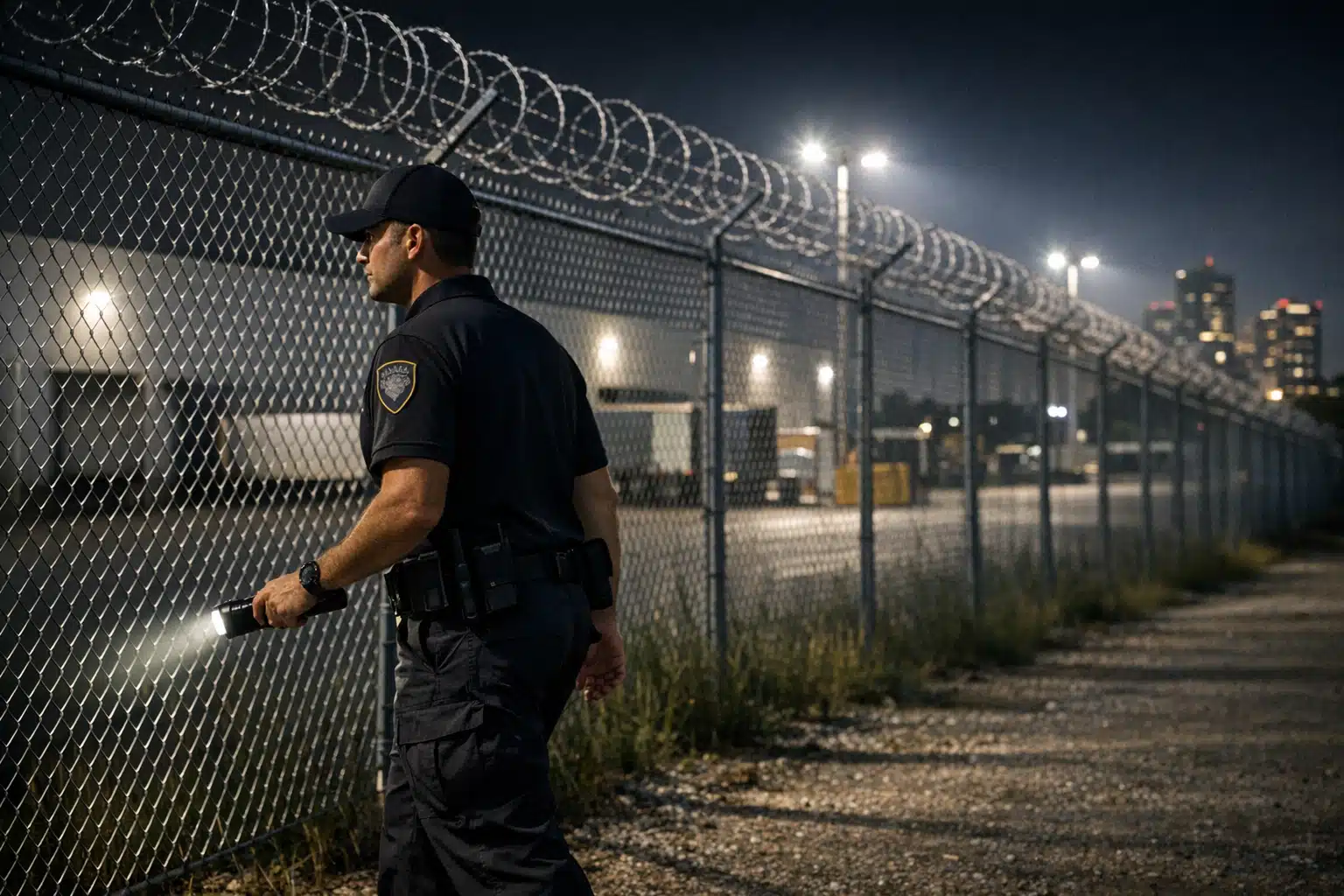
Walk the full perimeter after dark. Note every shadow, gate, dock door, and fence break.
Record where existing lights fail. Most Houston warehouse yards have three or four dark zones the owner never noticed.
Step 2: Fix Lighting Before Adding Cameras
Cameras cannot record what light does not touch. Install motion-activated LED floods at docks, corners, and driveways.
Layered lighting alone deters many casual intruders. Pair it with camera coverage for stronger results.
Step 3: Position Cameras for Faces and Plates
Mount cameras low enough to capture faces, not just the tops of heads. Aim one camera at every entry drive to record license plates.
- Perimeter cameras facing fence lines and gates.
- Dock cameras covering every loading bay.
- Yard cameras watching trailer parking and container rows.
- Choke-point cameras at the single exit most thieves must use.
Step 4: Add Remote Video Monitoring
Recorded footage helps after a theft. Live monitoring stops the theft as it starts.
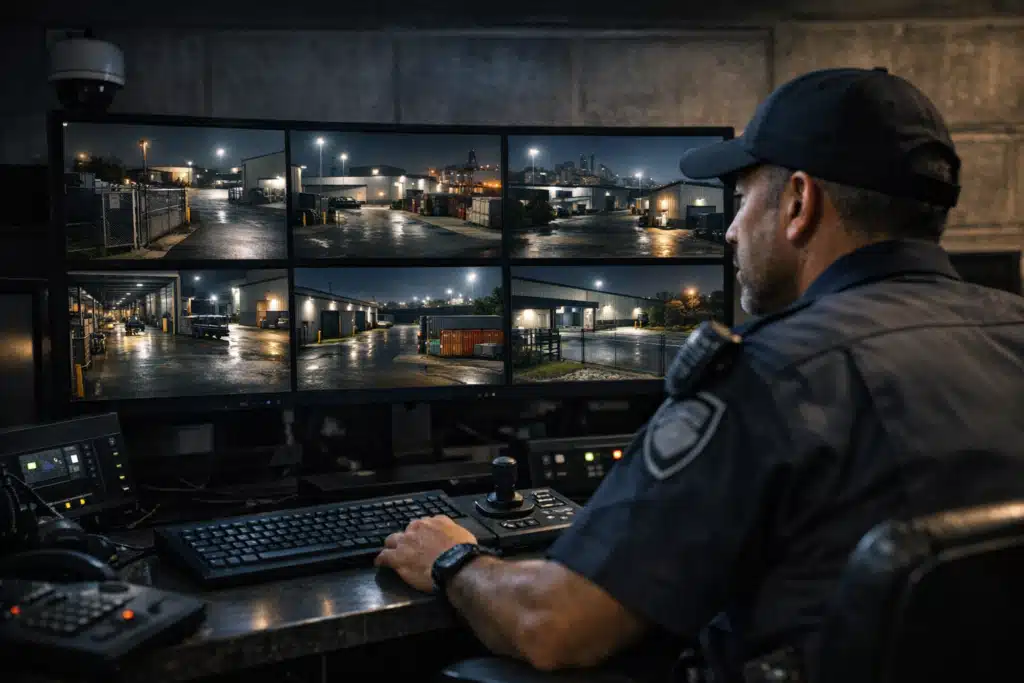
With remote video monitoring, trained operators watch feeds in real time. They speak through on-site speakers and dispatch police when they spot an intruder.
This matters for Houston warehouse security because response speed decides your loss. A voice-down warning at 2 a.m. sends most intruders running.
Step 5: Combine Cameras With On-Site Guards
Cameras cannot physically stop someone. A patrolling guard can lock a gate, confront a trespasser, and confirm alarms.
Many Houston sites pair remote monitoring with a mobile patrol guard. The camera team flags activity, and the guard responds within minutes.
Choosing the Right Night Surveillance Technology
Not every camera works after dark. Gulf Coast humidity, rain, and fog defeat cheap equipment.
Features That Perform in Houston Conditions
- Infrared and starlight sensors that see clearly in near-total darkness.
- Weather-rated housings built for coastal storms and heat.
- Analytics that separate people from stray cats, rain, and blowing debris.
- Backup power that keeps cameras running during outages.
Motion analytics cut false alarms. Without them, operators drown in alerts and miss real threats.
Why Backup Power Matters on the Gulf Coast
Hurricane season runs June through November. Storms knock out grid power across Houston every year.
Thieves know outages create blind spots. Battery or generator backup keeps your night surveillance live when the lights go dark.
Reducing Warehouse Theft With a Layered Night Plan
No single tool stops warehouse theft. Layers force intruders past multiple barriers, and each layer buys response time.
A Working Example From a Northwest Houston Facility
One distribution yard near the 290 corridor lost trailers three times in a year. Fence cameras alone did not stop the crews.
Adding live monitoring with speaker warnings changed the pattern. Operators caught a hookup attempt at 1 a.m. and issued a voice-down.
The crew fled before police arrived. The site logged zero losses over the following months.
That result came from stacking lighting, cameras, monitoring, and fast dispatch. Each piece supported the next.

 Posted on Google
Texas Rules and Documentation You Should Track
Texas licenses security companies and officers under the Department of Public Safety. Verify any provider holds a current Private Security license.
Keep clear records for your own protection:
- Save footage for at least 30 days when storage allows.
- Log every incident with date, time, and camera reference.
- Report thefts to Houston Police and keep case numbers.
- Review coverage quarterly as your inventory and layout change.
Good records support insurance claims and prosecution. They also reveal which cameras need repositioning.
What Night Surveillance Costs and How to Budget
Costs depend on property size, camera count, and monitoring level. A small warehouse needs fewer feeds than a multi-acre yard near the port.
Weigh the cost against a single stolen trailer of freight. One recovered loss frequently covers a year of monitoring.
Questions to Ask Any Provider
- Do you monitor feeds live, or only record for later review?
- How fast do operators issue voice-downs and dispatch police?
- What happens to coverage during a hurricane power outage?
- Are your officers licensed under Texas DPS?
Clear answers separate real protection from empty camera boxes on a wall.
Protect Your Warehouse After Dark With Twin City Security Houston
Night surveillance reduces theft by pairing lighting, cameras, live monitoring, and fast response. The strongest plans stack layers and stay running during Gulf Coast storms.
Twin City Security Houston builds night coverage for warehouses, port operations, and distribution yards across the region. Contact our team for a site assessment or monitoring quote.
Call 832‑301‑9478, email Houston@Twincitysecurity.com, or visit https://www.twincitysecurityhouston.com.
Sources
Recent Posts