
How to Choose the Best Security System for Houston’s Educational Facilities
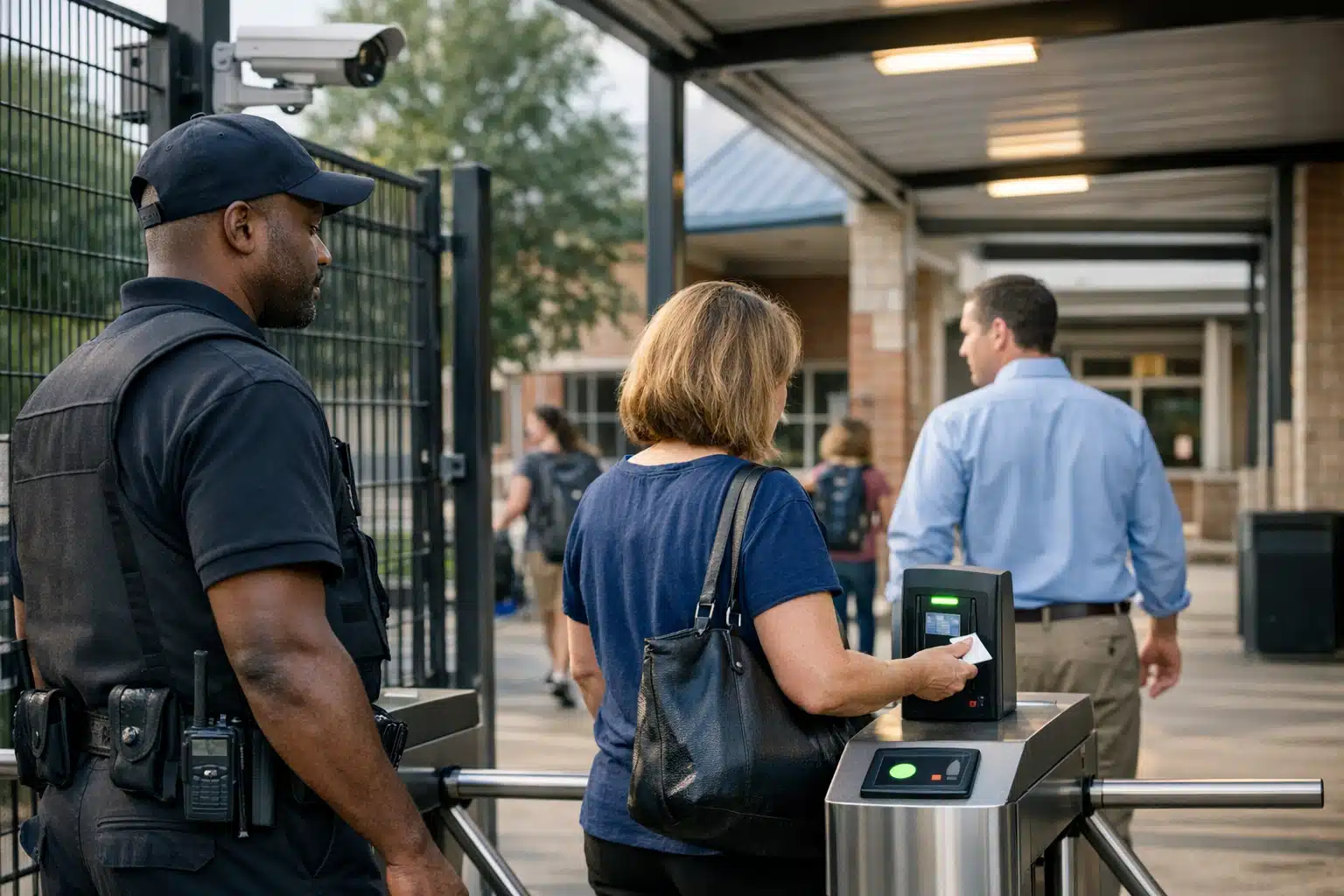
Why Houston Schools Face Security Pressures Public Districts Rarely Talk About
Harris County school campuses sit near flood zones, major freeways, and dense apartment corridors. That geography shapes every security decision an administrator makes.
Strong educational facility security means matching your protection to the real risks on your property. A charter school off Bissonnet faces different threats than a private academy in The Woodlands.
This post walks you step by step through choosing the right protection. You will learn what to prioritize, what to budget for, and where many Houston campuses leave gaps.
What Educational Facility Security Actually Requires
Educational facility security requires three layers working together: controlled entry, visual monitoring, and human response. Each layer covers what the others miss.
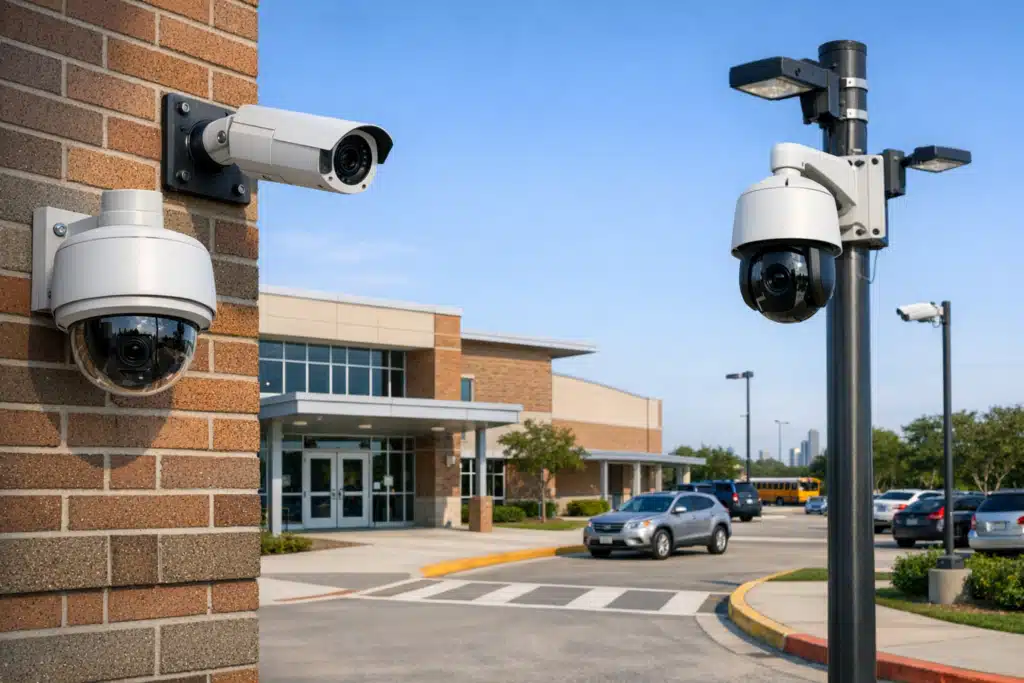
Cameras record events. Access control limits who gets in. Guards make decisions in real time. A campus with only one layer leaves the other two exposed.
Layer 1: Controlled Access Points
Most Houston campus incidents start at an unlocked side door or a propped-open gym entrance. Controlling entry is your highest-return investment.
- Single-point entry during school hours forces all visitors past one checkpoint.
- Badge or fob readers log every staff entry with a timestamp.
- Visitor check-in systems screen IDs against sex offender databases.
- Vestibule buzz-in doors hold guests between two locked sets of doors.
Texas districts near the Energy Corridor have adopted mantrap vestibules after safety audits. Private schools in Katy and Clear Lake can apply the same design.
Layer 2: Video Surveillance Coverage
Camera placement matters more than camera count. Four well-aimed cameras beat twelve pointed at empty hallways.
Prioritize coverage of these zones:
- Every exterior door and the main entrance vestibule
- Parking lots and student drop-off lanes
- Stairwells and blind hallway corners
- Perimeter fence lines and athletic fields
- Bus loading and dismissal areas
Remote video monitoring adds a live operator watching those feeds. When a camera catches someone climbing a fence at 2 a.m., a monitored system triggers immediate action instead of a next-day recording review.
Layer 3: On-Site and Remote Guard Response
Technology flags a problem. People resolve it. A trained guard on campus can lock down a wing or meet police at the entrance within seconds.
Smaller campuses that cannot staff a full-time guard can pair cameras with remote monitoring. An off-site operator speaks through on-site speakers and dispatches response when activity crosses a threshold.
Matching Security Systems to Your Campus Type
Different educational settings need different setups. The right mix depends on enrollment, building layout, and surrounding neighborhood.
K-12 Private and Charter Schools
These campuses need strict entry control and strong parent-pickup monitoring. Custody disputes and unauthorized pickups are a real daily risk, not a rare event.
Build around a single secured entrance, a visitor management system, and cameras over every dismissal zone.
Daycare and Early Learning Centers
Infant and toddler rooms demand airtight access logs. Parents want proof of who entered and when.
Pair keypad entry with camera verification at the front door. A remote operator can confirm each parent before the door releases.
Colleges and Trade Schools
Larger campuses near downtown Houston deal with open layouts and overnight classes. Lighting, emergency call stations, and roving guard patrols matter most here.
Parking garages and late-night walkways deserve dedicated camera coverage and patrol routes.
Preparing Educational Facility Security for Gulf Coast Weather
Hurricane season runs June through November along the Gulf Coast. Houston campuses need security systems that survive flooding and power loss.
Plan for these weather realities:
- Battery or generator backup keeps cameras and access control running during outages.
- Weather-rated exterior cameras hold up against wind-driven rain.
- Elevated equipment mounting protects recorders in flood-prone buildings.
- Remote monitoring during closures watches empty campuses when staff evacuate.
Empty schools draw copper thieves and vandals after storms. A monitored system catches intrusions while your buildings sit closed.
What to Budget and Ask Before You Buy
Security pricing varies by campus size and feature set. Before signing anything, get clear answers on these points.
- Installation vs. monitoring costs: Separate the one-time hardware cost from the monthly monitoring fee.
- Guard staffing hours: Confirm whether coverage is full-time, event-based, or on-call.
- Response protocol: Ask exactly what happens when an alarm triggers at midnight.
- System ownership: Find out if you own the cameras or lease them.
- Texas licensing: Verify the provider holds a current Texas DPS Private Security license.
Texas law regulates private security firms through the Department of Public Safety. Any guard company on your campus must hold proper state licensing.

 Posted on Google
Common Mistakes Houston Campuses Make
Many schools buy cameras and stop there. Recording footage does nothing to stop an event in progress.
Watch for these frequent gaps:
- Cameras with no one watching them live
- Propped-open doors that defeat access control
- No backup power for storm season
- Unmonitored fence lines and back lots
- No written lockdown procedure tied to the system
A security setup works only when every layer stays active and connected to a response plan.
How Twin City Security Houston Supports Local Campuses
We assess each campus on site before recommending anything. A school in Clear Lake gets a different plan than one near the Port.
Our team pairs on-site guards with remote video monitoring so your campus stays covered around the clock. That mix controls cost without leaving blind spots.
We hold Texas DPS licensing and know Houston neighborhoods, flood zones, and storm patterns firsthand.
Conclusion
Strong campus protection combines controlled entry, live-monitored cameras, and trained guard response built for Gulf Coast weather. Choose a provider who assesses your specific site instead of selling a one-size package.
Twin City Security Houston builds protection around your campus layout, enrollment, and local risks. Call 832‑301‑9478 or email Houston@Twincitysecurity.com for a Houston campus security assessment.
Sources
Recent Posts