
How to Prepare Your Houston Business for Unexpected Security Challenges
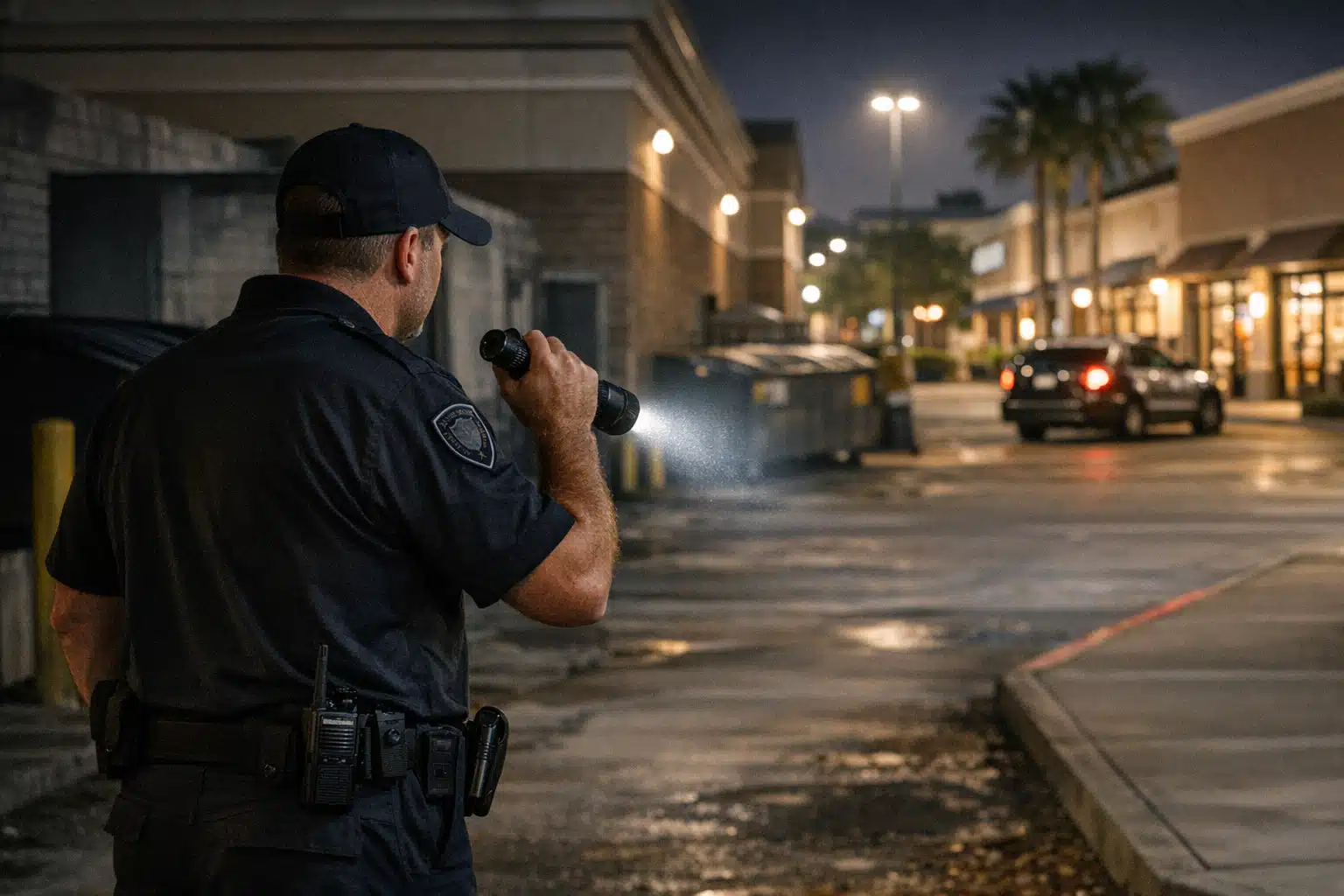
Houston recorded more than 200,000 property crime incidents in recent reporting years, according to city police data. That number climbs during hurricane evacuations, refinery turnarounds, and holiday retail rushes. Preparing your Houston business for unexpected security challenges means building defenses before a threat appears, not after. This post walks you step by step through proactive planning for construction sites, energy facilities, port operations, apartment communities, and retail centers across the region.
Reactive security costs more and protects less. Owners who plan ahead reduce theft, liability, and downtime.
Why Houston Business Preparedness Starts With Local Risk Mapping
Every Houston property faces different threats based on location and function. A Katy retail center deals with organized retail theft. A Port of Houston terminal handles cargo security and access control.
Houston business preparedness begins by identifying which risks apply to your specific site.
Common Threats by Property Type
- Energy Corridor offices: after-hours break-ins, vandalism, trespassing during layoffs.
- Construction sites in Katy and Cypress: copper theft, equipment loss, material shrinkage.
- Refineries along the Ship Channel: perimeter breaches, unauthorized entry during turnarounds.
- Apartment communities: car break-ins, package theft, unauthorized loitering.
- Retail centers: shoplifting spikes, parking lot assaults, cart-based theft rings.
Map your threats first. A plan built on your real risks beats a generic checklist.
Building a Proactive Plan for Unexpected Security Challenges
Proactive security means layering defenses so one failure does not expose the whole site. Cameras, guards, lighting, and access control each cover different gaps.
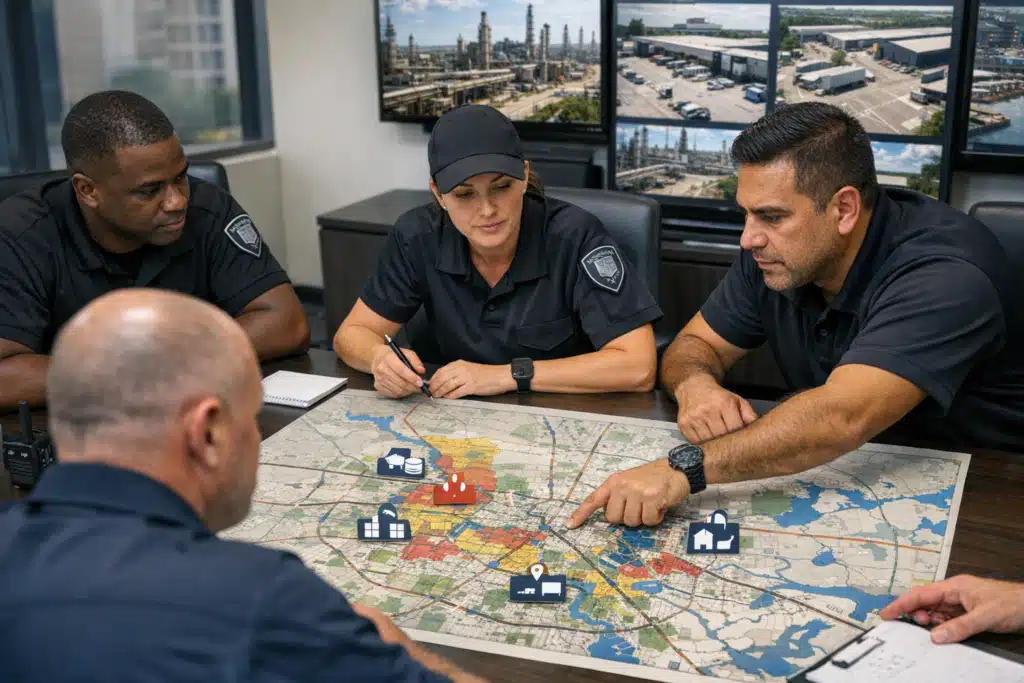
Follow these steps to prepare your Houston property.
Step 1: Conduct a Physical Site Assessment
Walk your property at night. Note dark corners, broken fencing, and blind spots.
Most break-ins target the least visible entry point. A single unlit loading dock invites repeat theft.
Step 2: Layer Remote Video Surveillance
Remote video monitoring watches your site when staff go home. Trained operators view live feeds and respond to motion in real time.
For a construction site in the Energy Corridor, this stops copper thieves before they cut fencing. Operators issue live voice warnings and dispatch police.
Step 3: Deploy On-Site Guards Where Presence Matters
Cameras record. Guards intervene. Both matter for different reasons.
A visible guard at an apartment community deters loitering and reassures residents. At a refinery gate, guards verify credentials and log every vehicle.
Step 4: Control Access Points
Limit how people enter and exit. Fewer entry points mean fewer weak spots.
- Use gated vehicle entries with guard verification.
- Require badge or check-in logs for contractors.
- Track deliveries against scheduled manifests.
Step 5: Write and Rehearse an Incident Response Plan
Every staff member should know what to do during a break-in, fire, or threat. A plan left in a drawer helps no one.
Assign roles. Practice twice a year. Update contact trees after staff changes.
Protecting Houston Energy Facilities During Turnarounds and Storms
Energy facilities face concentrated risk during two windows: refinery turnarounds and hurricane season. Both bring outsiders and disruption.
During a turnaround, hundreds of contractors move on and off site. Credential fraud and equipment theft rise sharply.
Turnaround Security Measures
- Verify contractor identity against approved vendor lists.
- Post guards at temporary lay-down yards holding valuable parts.
- Run remote cameras on perimeter fencing after shift changes.
Hurricane season runs June to November along the Gulf Coast. Evacuations leave facilities empty for days.
Storm and Evacuation Monitoring
Empty sites attract looters after major storms. Remote surveillance keeps eyes on your property when staff cannot return.
After Hurricane Harvey, many owners found flood damage compounded by theft. Continuous monitoring flags intruders even during power loss with backup systems.
Securing Port of Houston and Construction Operations
The Port of Houston moves cargo worth billions each year. Access control and cargo integrity define port security.
Unauthorized entry, cargo tampering, and after-hours trespassing top the risk list. Guards trained in TWIC verification and manifest checks reduce loss.
Construction Site Protection Checklist
Construction theft costs contractors across Houston millions each year. Copper, tools, and heavy equipment vanish overnight.
- Install remote cameras before materials arrive on site.
- Light every access road and material storage zone.
- Lock equipment cabs and remove keys nightly.
- Post visible signage warning of active monitoring.
- Schedule guard patrols at random intervals, not fixed times.
Predictable patrols teach thieves your schedule. Random timing keeps them guessing.

 Posted on Google
Preparing Retail Centers and Apartment Communities
Retail theft rings target Houston shopping centers in coordinated groups. Parking lots draw car break-ins and confrontations after dark.
A guard presence at entrances and in lots cuts both problems. Cameras give police usable evidence when incidents occur.
Apartment Community Safeguards
- Monitor mail and package areas where theft concentrates.
- Patrol parking structures during evening hours.
- Control gate access with verified resident credentials.
- Light stairwells and walkways to remove hiding spots.
Residents renew leases where they feel safe. Security supports occupancy and reputation.
How Twin City Security Houston Handles Unexpected Security Challenges
Twin City Security Houston combines on-site guards with remote video monitoring across the region. Our teams cover the Energy Corridor, Port of Houston, Katy, The Woodlands, and Clear Lake.
We build plans around your real risks, not a template. Guard placement, camera coverage, and response protocols match your property type.
What a Local Assessment Includes
- A night walkthrough to find blind spots and weak entries.
- Camera placement mapping for full perimeter coverage.
- Guard scheduling matched to your high-risk hours.
- An incident response plan your staff can follow.
Preparing before a threat appears costs far less than recovering after one.
Conclusion
Handling unexpected security challenges in Houston comes down to mapping your risks, layering guards and cameras, and rehearsing a clear response plan. Energy facilities, ports, construction sites, and retail centers each need different protection matched to local threats and Gulf Coast weather. Strong Houston business preparedness protects your property, your people, and your bottom line.
Contact Twin City Security Houston for a local security assessment or remote monitoring quote. Call 832‑301‑9478, email Houston@Twincitysecurity.com, or visit https://www.twincitysecurityhouston.com.
Sources
Recent Posts