
The Role of Fire Watch Services in Houston’s High-Risk Areas
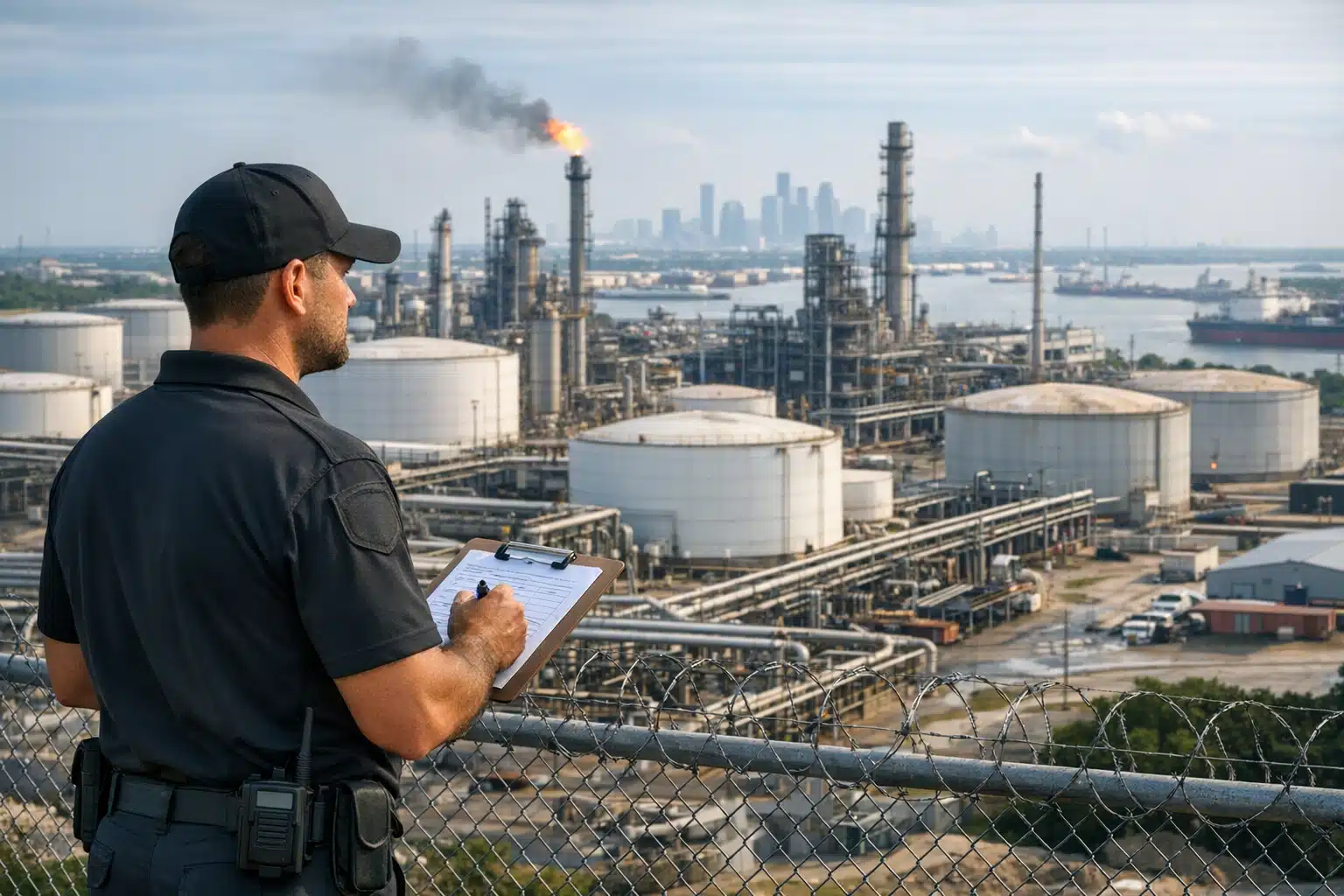
When a fire sprinkler system goes offline during a refinery turnaround near the Houston Ship Channel, work does not stop — but the fire protection does. That gap is where fire watch services step in. Across Houston’s energy corridors, construction zones, and aging apartment complexes, fire watch personnel fill the dangerous window when automatic fire systems are down. This post explains when fire watch is legally required, what it costs, and how it protects high-risk areas across the Gulf Coast.
What Fire Watch Services Actually Do
Fire watch is a trained person assigned to patrol a property and watch for fire hazards. They act when a building’s fire detection or suppression system is disabled.
The role is simple to describe but strict in practice. A fire watch attendant walks defined routes, logs each patrol, and alerts the fire department at the first sign of smoke or flame.
Fire watch becomes mandatory in specific situations:
- Sprinkler systems are shut down for repair or inspection
- Fire alarm panels are offline during renovations
- Hot work like welding or cutting is underway
- Standpipe systems are impaired in high-rise buildings
- A building’s water supply for fire suppression is interrupted
Houston follows the International Fire Code, enforced by the Houston Fire Department. When a fire system goes down, the code requires a fire watch until the system returns to service.
Why Houston’s High-Risk Areas Need Fire Watch Coverage
Houston holds one of the largest concentrations of petrochemical facilities in North America. The Houston Ship Channel alone anchors more than 200 private and public terminals.

Many of these sites run turnarounds where fire systems are intentionally taken offline. During those windows, flammable materials sit exposed to welding sparks and heat sources.
Energy Corridor and Ship Channel Facilities
Refineries along the east side of Harris County handle volatile hydrocarbons daily. A single ignition source near stored fuel can trigger a catastrophic event.
Fire watch attendants assigned to these sites understand hot work permits and confined-space risks. They monitor welding operations and stay posted 30 minutes after work ends, per standard hot work rules.
Construction Sites in Katy, The Woodlands, and Clear Lake
Active construction creates constant fire exposure. Temporary wiring, propane heaters, and combustible debris pile up fast on new builds.
Many framed structures lack functioning sprinklers until near completion. During that stretch, a fire watch becomes the only line of defense against total loss.
Apartment Communities and Retail Centers
Older multifamily properties across Houston face frequent fire system outages. When a sprinkler riser fails inspection, the property owner must post a fire watch or evacuate.
Evacuating hundreds of residents is rarely practical. A fire watch keeps units occupied legally while repairs happen.
Houston Fire Watch Regulations You Should Know
Texas and Houston rules draw from the International Fire Code and NFPA standards. Property owners carry legal responsibility for compliance.
Key requirements for a compliant fire watch in Houston:
- Dedicated personnel — The attendant performs no other duties during the watch.
- Documented patrols — Logs record time, location, and conditions for every round.
- Direct fire department contact — The attendant must call 911 immediately upon detecting fire.
- Full coverage area — Patrol routes include all affected zones of the impaired system.
- Fire extinguisher access — The attendant carries or has immediate access to firefighting tools.
The Houston Fire Department may request patrol logs during or after an impairment. Missing records can lead to fines or occupancy shutdowns.
Hot Work Fire Watch Rules
Hot work creates its own set of requirements. Welding, grinding, and torch cutting demand a fire watch during and after the task.
The standard holds the watch for at least 30 minutes after hot work finishes. Smoldering material can ignite long after the sparks stop.
What Fire Watch Services Cost in Houston
Pricing depends on site risk, duration, and the number of attendants needed. Most Houston fire watch assignments bill at an hourly rate per attendant.
Factors that affect fire watch pricing:
- Site size — Larger facilities need more attendants or longer patrol routes.
- Risk level — Petrochemical sites require specialized training and higher rates.
- Shift length — Round-the-clock coverage costs more than daytime-only watches.
- Response time — Emergency same-day deployment may carry a premium.
- Duration — Multi-week turnarounds often qualify for lower blended rates.
A short sprinkler repair at a retail center differs greatly from a refinery turnaround. The second involves hazmat awareness, confined-space protocols, and strict logging.
Getting a written quote before an impairment starts prevents last-minute price shocks. It also confirms the attendants hold the right credentials for your site.
How to Set Up Fire Watch for Your Houston Property
Planning ahead keeps operations legal and insured. Rushing a fire watch during an active impairment invites compliance gaps.
Follow these steps to arrange fire watch coverage:
- Identify the impairment — Confirm which fire system is offline and for how long.
- Notify the Houston Fire Department — Report planned impairments as required by code.
- Define the coverage area — Map every zone the disabled system protected.
- Set patrol frequency — High-risk zones may need rounds every 15 to 30 minutes.
- Assign trained attendants — Match credentials to your site’s hazard profile.
- Maintain patrol logs — Keep records ready for inspection at all times.
- Restore and verify — End the watch only after the system passes inspection.
Pairing Fire Watch With Remote Video Monitoring
Fire watch and remote surveillance work together on large sites. Cameras extend an attendant’s reach across a sprawling refinery or construction yard.
Remote operators spot smoke or unauthorized access across multiple zones at once. The on-site attendant then responds directly to the flagged area.
This pairing matters during Gulf Coast storm season. When crews evacuate ahead of a hurricane, remote monitoring keeps eyes on an empty high-risk site.

 Posted on Google
Fire Watch During Houston Hurricane Season
Storms knock out power and water that fire systems depend on. A flooded pump room can disable suppression across an entire facility.
After a major storm, fire watch coverage bridges the gap until repairs finish. Generators, portable pumps, and damaged wiring all raise fire risk during recovery.
Energy operators near the Ship Channel face added pressure during these windows. Restarting equipment after an outage introduces heat and spark hazards.
A planned fire watch arrangement before storm season beats a scramble afterward. Pre-arranged coverage means attendants arrive fast when systems fail.
Choosing a Houston Fire Watch Provider
Not every security company handles fire watch correctly. The role demands specific training, documentation discipline, and local code knowledge.
Ask any provider these questions:
- Are your attendants trained on hot work and impairment protocols?
- Do you supply detailed patrol logs after every shift?
- How fast can you deploy for an emergency impairment?
- Do you have attendants experienced with petrochemical sites?
- Can you pair fire watch with remote video monitoring?
Twin City Security Houston staffs fire watch assignments across Harris County and surrounding areas. Our attendants cover refineries, construction sites, port terminals, apartment communities, and retail centers.
Conclusion
Fire watch protects lives and property when automatic fire systems fail across Houston’s highest-risk sites. From Ship Channel refineries to Katy construction zones, trained attendants keep operations legal and insured during dangerous gaps. Plan coverage before an impairment starts, not during a crisis.
Contact Twin City Security Houston for a site assessment or fire watch quote. Call 832‑301‑9478, email Houston@Twincitysecurity.com, or visit https://www.twincitysecurityhouston.com.
Sources
Recent Posts