
Understanding the Role of Fire Watch Services in Houston’s Industrial Areas

Fire watch services in Houston's industrial areas involve specialized monitoring to prevent fire hazards during high-risk activities such as maintenance turnarounds and welding operations. These services are essential for ensuring safety in facilities located near the Ship Channel, which houses numerous petrochemical operations prone to extreme fire risks.
Houston’s Industrial Fire Risks Demand Specialized Monitoring
Houston’s Ship Channel houses over 200 petrochemical facilities within a 25-mile radius. These operations generate extreme fire hazards during maintenance turnarounds, welding operations, and equipment shutdowns. Fire watch services provide the specialized monitoring these facilities require during high-risk periods.
Unlike standard security patrols, fire watch personnel focus exclusively on fire prevention and early detection. They monitor active hot work, inspect recently completed operations, and maintain direct communication with emergency responders.
Texas regulations mandate fire watch coverage during specific industrial activities. Facilities that skip this requirement face both regulatory violations and catastrophic liability exposure.
When Houston Industrial Facilities Require Fire Watch Services
Fire watch requirements trigger during several critical operational periods. Each scenario demands trained personnel who understand both fire science and industrial processes.
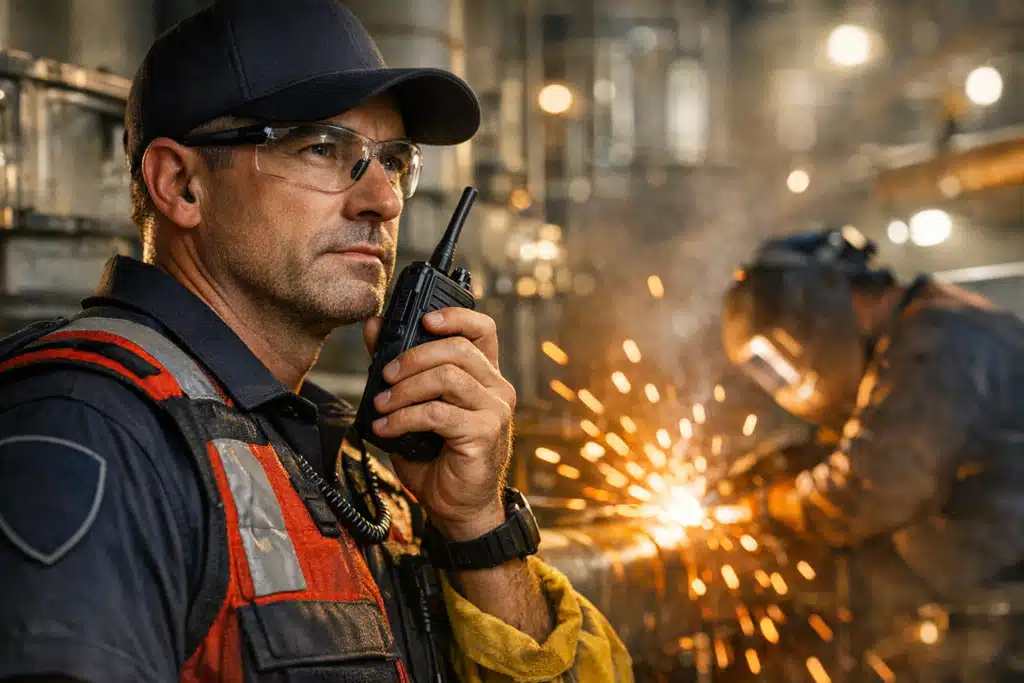
Hot Work Operations
Welding, cutting, and grinding operations create immediate ignition risks. Fire watch personnel must remain on-site during active work and continue monitoring for at least 30 minutes after completion. This cooling-down period prevents delayed ignition of residual heat sources.
At Houston refineries, hot work permits often require fire watch coverage for up to four hours post-completion. The extended monitoring accounts for complex piping systems where heat can migrate to unexpected locations.
Fire Protection System Shutdowns
When facilities disable sprinkler systems or gas suppression equipment for maintenance, fire watch services provide temporary human monitoring. These shutdowns commonly occur during turnaround seasons when refineries perform major equipment overhauls.
The Port of Houston requires fire watch coverage whenever dock facilities shut down their fixed fire protection systems. Cargo operations continue during these periods, maintaining significant fire loads without automated suppression.
Construction and Demolition Projects
New construction within operating industrial facilities creates unique fire scenarios. Construction activities often occur near live process equipment, creating ignition sources adjacent to flammable materials.
Demolition projects require fire watch services when removing equipment that contained flammable substances. Even after cleaning, residual materials can ignite during cutting operations.
Essential Skills for Industrial Security Houston Fire Watch Personnel
Effective fire watch services require personnel trained beyond basic security functions. Houston’s industrial environment demands specific technical knowledge and emergency response capabilities.
Fire Behavior Recognition
Fire watch personnel must identify early fire indicators before visible flames appear. This includes recognizing unusual smoke patterns, detecting abnormal heat signatures, and identifying chemical odors that signal combustion.
In petrochemical environments, different materials create distinct fire behaviors. Hydrocarbon fires spread differently than electrical fires or combustible metal fires. Trained personnel know which suppression methods work for each fire type.
Emergency Communication Protocols
Fire watch personnel maintain direct radio contact with facility emergency response teams. They must communicate fire locations using plant-specific terminology and coordinate with incoming emergency responders.
Houston Ship Channel facilities use standardized emergency communication codes. Fire watch personnel learn these codes to ensure clear communication during high-stress situations.
Portable Fire Suppression Equipment
Fire watch personnel carry appropriate suppression equipment for their assigned areas. This typically includes Class A, B, and C fire extinguishers, plus specialized agents for specific industrial hazards.
Personnel must know which extinguisher types work safely in their environment. Using water-based suppressants on electrical equipment or chemical fires can worsen the emergency.
Houston Fire Code Compliance Requirements
Houston adopts the International Fire Code with local amendments specific to industrial operations. These requirements establish minimum fire watch standards for different facility types.
Hot Work Permit Requirements
Hot work permits specify fire watch duration and personnel qualifications. Standard permits require fire watch coverage during work plus 30 minutes afterward. Complex operations may require extended monitoring periods.
Permit violations carry significant penalties. Houston Fire Department can issue stop-work orders and fines up to $2,000 per violation. Repeat violations may result in permit suspension.
Training and Certification Standards
Fire watch personnel must complete recognized fire safety training programs. Many Houston facilities require NFPA 51B certification, which covers hot work safety and fire watch procedures.
Some facilities mandate additional training specific to their processes. Refineries often require personnel to complete facility-specific hazard recognition courses before beginning fire watch duties.
Documentation Requirements
Fire watch services must maintain detailed logs documenting patrol routes, inspection findings, and incident reports. These records demonstrate compliance during regulatory inspections.
Documentation must include specific timestamps, personnel signatures, and detailed descriptions of observed conditions. Generic log entries do not satisfy regulatory requirements.
Technology Integration in Modern Fire Watch Operations
Contemporary fire watch services combine human monitoring with advanced detection technology. This integration improves response times and provides comprehensive coverage of large industrial areas.
Thermal Imaging Cameras
Handheld thermal cameras allow fire watch personnel to detect heat signatures invisible to the naked eye. These devices identify hot spots in equipment, electrical panels, and structural components.
Thermal imaging proves particularly valuable in Houston’s industrial environments where ambient temperatures already run high. The cameras distinguish between normal operational heat and abnormal hot spots that signal potential fire conditions.
Gas Detection Equipment
Fire watch personnel carry multi-gas detectors that identify flammable vapor concentrations. These devices provide early warning when gas leaks create fire hazards in work areas.
Different industrial processes require specific gas detection capabilities. Petrochemical facilities need detectors calibrated for hydrocarbon vapors, while other industries may focus on different hazardous gases.
Real-Time Communication Systems
Modern fire watch services use digital communication platforms that provide instant updates to facility managers and emergency coordinators. These systems create permanent records of all communications during fire watch operations.
GPS-enabled communication devices allow supervisors to track fire watch personnel locations and verify patrol completion. This technology ensures thorough coverage of assigned areas.

 Posted on Google
Cost Considerations for Houston Industrial Fire Watch Services
Fire watch service costs vary based on facility size, risk level, and required coverage duration. Understanding these factors helps facilities budget appropriately for compliance requirements.
Hourly Rate Factors
Standard fire watch coverage typically costs $35-50 per hour for basic industrial applications. Specialized environments requiring additional training or certifications command higher rates of $50-75 per hour.
Facilities requiring multiple fire watch personnel for large areas or simultaneous operations may qualify for volume discounts. Extended coverage periods often reduce hourly rates through contracted pricing agreements.
Equipment and Technology Costs
Basic fire watch services include standard suppression equipment and communication devices. Advanced technology like thermal imaging or specialized gas detectors may increase hourly rates by $10-20.
Some facilities provide their own detection equipment, reducing service costs. However, service providers must train personnel on facility-specific equipment before beginning coverage.
Emergency Response Capabilities
Fire watch services with enhanced emergency response training cost more but provide greater value during actual incidents. Personnel trained in facility-specific emergency procedures can coordinate more effectively with plant response teams.
This enhanced capability often justifies higher service rates through reduced insurance premiums and improved regulatory compliance scores.
Selecting Qualified Fire Watch Service Providers
Houston’s industrial facilities need fire watch providers with demonstrated experience in similar environments. Generic security companies often lack the specialized knowledge these applications require.
Qualified providers maintain current certifications, carry appropriate insurance coverage, and employ personnel trained in industrial fire hazards. They understand facility-specific requirements and maintain equipment suitable for hazardous environments.
References from similar facilities provide the best indicator of service quality. Providers should supply contact information for current clients operating comparable industrial processes.
Protecting Houston’s Industrial Operations
Fire watch services provide critical safety coverage during high-risk industrial operations. Proper implementation requires trained personnel, appropriate equipment, and strict adherence to regulatory requirements.
Houston facilities need fire watch providers who understand both regulatory compliance and practical operational challenges. This combination ensures effective fire prevention while maintaining productivity during maintenance and construction activities.
Twin City Security Houston provides experienced fire watch services for Houston’s industrial facilities. Our certified personnel understand petrochemical operations, construction site hazards, and regulatory compliance requirements. Contact us at 832‑301‑9478 or Houston@Twincitysecurity.com for a customized fire watch assessment of your facility’s needs.
Sources
- NFPA – Standard for Fire Prevention During Welding, Cutting, and Other Hot Work
- Houston Fire Department – Fire Prevention Division
- OSHA – Welding, Cutting and Brazing Standards
- International Code Council – International Fire Code Chapter 35
Fire watch services in Houston's industrial areas are essential for monitoring high-risk operations, particularly in the petrochemical sector. These services ensure fire prevention and compliance with Texas regulations during critical activities like hot work and equipment shutdowns.
- Fire watch personnel focus on fire prevention and early detection during high-risk operations. They maintain communication with emergency responders and monitor for potential fire hazards.
- Trained staff are required during hot work, equipment maintenance, and construction projects to prevent ignition risks. They must understand fire behavior and emergency protocols specific to industrial environments.
- Costs for fire watch services vary based on facility size and risk levels, with specialized training and technology potentially increasing rates. Facilities must choose providers with relevant experience and certifications.
Recent Posts