
How to Protect Houston’s Energy Sector from Environmental Activism
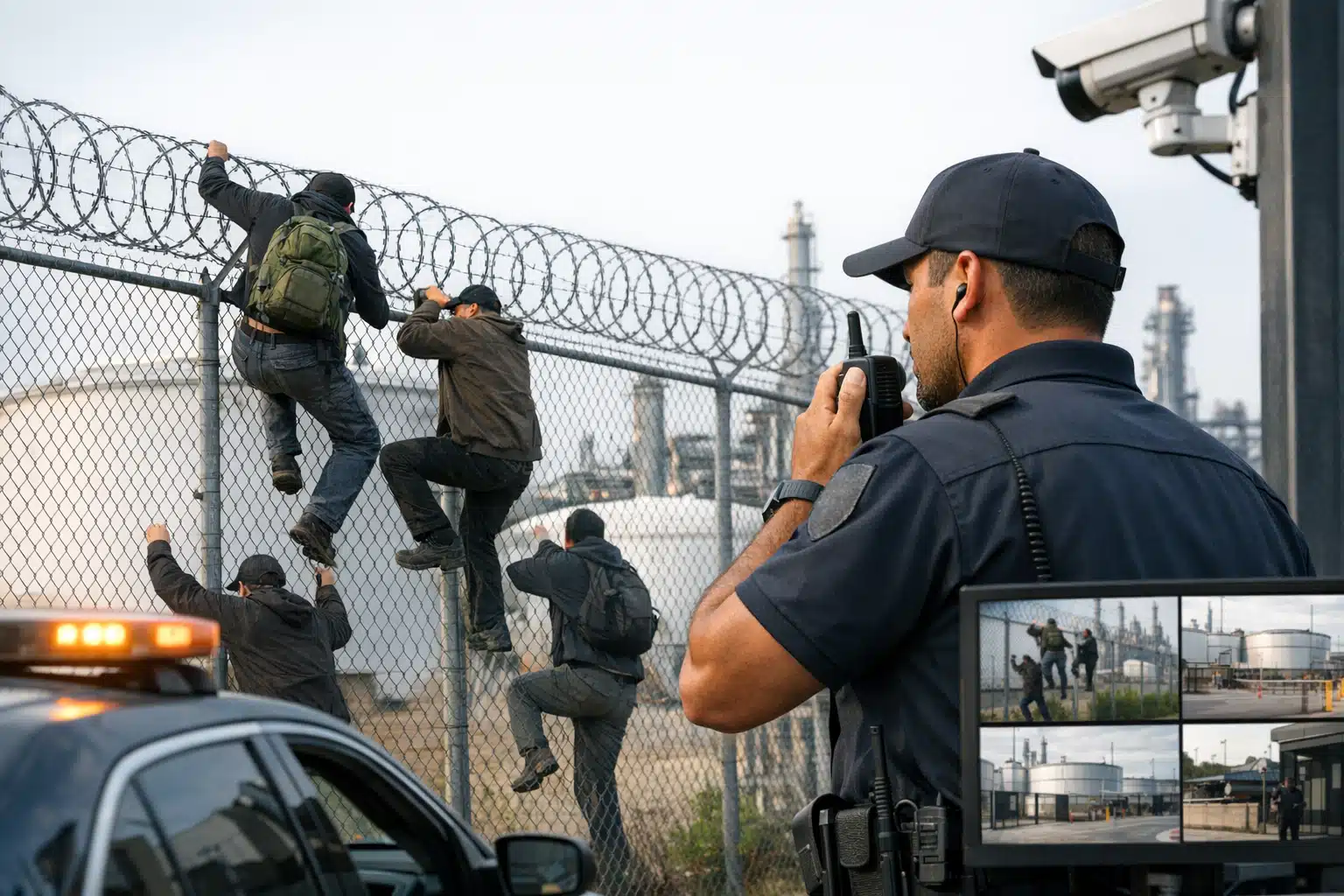
Why Environmental Activism Puts Houston Energy Facilities at Risk
Houston’s Ship Channel handles roughly 40% of the nation’s petrochemical capacity. That concentration makes local facilities a focus for protest and direct action.
Energy sector security now covers threats beyond theft and vandalism. Coordinated activist campaigns target refineries, pipelines, and terminals along the Gulf Coast.
This post breaks down the real risks, the legal backdrop in Texas, and steps facility operators can take. The goal is practical protection for your people, assets, and operations.
What Environmental Activism Looks Like at Houston Energy Sites
Environmental activism ranges from lawful demonstration to criminal trespass. Facility managers need to know the difference before an incident starts.
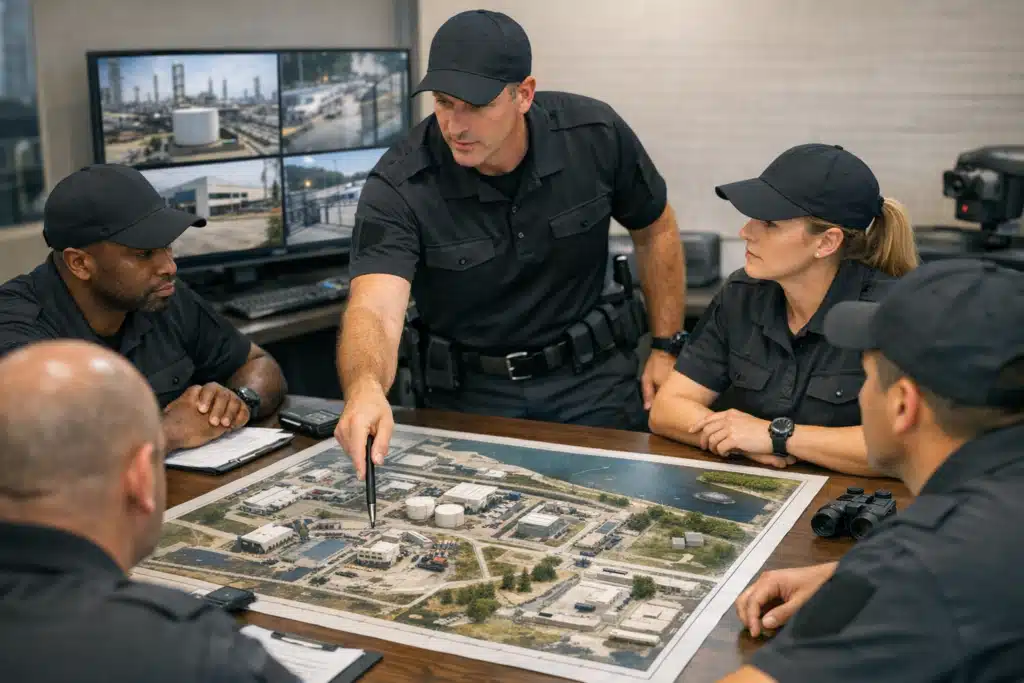
Common Tactics Targeting Energy Facilities
- Perimeter breaches — activists climbing fences to reach tanks or flare stacks
- Lock-ons — protesters chaining themselves to gates, valves, or equipment
- Blockades — human chains or vehicles blocking terminal entrances
- Tree-sits and structure occupations — climbers occupying pipeline routes
- Drone overflights — aerial documentation of restricted areas
In 2019, protesters scaled the Fred Hartman Bridge over the Houston Ship Channel. They hung banners and disrupted marine traffic for hours.
That single action delayed vessel movement across one of the busiest waterways in Texas. It showed how a small group can halt large-scale operations.
Why Houston Sees More of This Activity
The Energy Corridor, Baytown, Pasadena, and the Port of Houston concentrate high-value targets. Pipelines cross public land in Katy, The Woodlands, and Clear Lake.
Media attention rewards action taken at recognizable sites. A blocked terminal gate generates coverage that a rural site never would.
Texas Law and Critical Infrastructure Protection
Texas treats energy sites as protected assets. The Critical Infrastructure Protection Act (House Bill 3557, 2019) raised penalties for interference.
Under this law, damaging or impairing a critical facility can be a second-degree felony. Organizations that direct such acts face fines up to $500,000.
What Counts as a Critical Facility in Texas
- Petroleum and alumina refineries
- Electrical power plants and substations
- Natural gas processing and compressor stations
- Chemical and treatment plants
- Ports, pipelines, and storage terminals
The law strengthens your position, but it works best with documentation. Timestamped video and trained witnesses turn a trespass into a prosecutable case.
Security staff who know the statute can respond correctly. They can warn, document, and detain within legal limits until law enforcement arrives.
How Energy Sector Security Prevents Activist Incidents
Energy sector security requires layered protection built for large, spread-out sites. A single guard shack at the main gate leaves miles of fence line open.
Step-by-Step Protection for a Houston Energy Facility
- Map your vulnerabilities. Identify unmanned gates, low fence sections, and pipeline access points.
- Set clear perimeters. Post visible signage citing Texas trespass and critical infrastructure law.
- Deploy on-site guards at choke points. Station officers at entrances, control rooms, and loading racks.
- Add remote video surveillance. Cover fence lines and remote acreage that guards cannot patrol at once.
- Establish response protocols. Define who calls HPD, Harris County constables, or the Coast Guard.
- Document everything. Log every approach, breach attempt, and unusual gathering near the property.
This structure closes the gaps activists look for. It also builds the evidence trail prosecutors need.
Where Remote Video Surveillance Fits
Remote video monitoring watches areas no guard can reach fast enough. Cameras with analytics flag people crossing fence lines at 3 a.m.
A monitoring operator sees the intrusion in real time. They issue a voice-down warning through on-site speakers before anyone reaches equipment.
For pipeline right-of-ways stretching across Fort Bend County, this coverage matters. One operator can watch dozens of camera feeds across separated sites.
Protecting the Port of Houston and Marine Terminals
Port operations face water-side and land-side risks at once. Activists have used kayaks and small boats to block tanker berths.
Marine terminal security coordinates with the U.S. Coast Guard under MTSA rules. Your private security team fills the gaps between federal patrols.
Practical Steps for Terminal Operators
- Monitor the water approach with cameras rated for marine glare and fog
- Keep guards trained on TWIC credential checks at every entry
- Pre-plan gate lockdown steps for blockade attempts
- Coordinate contact lists with Coast Guard Sector Houston-Galveston
A blocked berth costs thousands per hour in demurrage. Fast detection and a clear response plan cut that exposure.

 Posted on Google
Handling Protests During Refinery Turnarounds
Turnarounds bring hundreds of contractors on site at once. That surge in traffic gives activists cover to blend in.
Badge every contractor and verify each against the work order. Guards who know the turnaround schedule spot people who do not belong.
Turnaround Security Checklist
- Set a single controlled entry for all contractor traffic
- Issue color-coded daily credentials that change each shift
- Add temporary cameras at laydown yards and staging areas
- Brief guards on the difference between labor disputes and outside activism
Confusion during a turnaround is the opening activists want. Tight access control removes it.
Balancing Security With Lawful Free Speech
Not every gathering near your fence is a threat. People have the right to protest on public property.
Your team must respond to trespass and property interference, not lawful speech. Overreaction creates liability and bad press.
Trained guards know where public land ends and your property begins. They document activity without escalating a peaceful demonstration.
This restraint protects your company legally. It keeps the focus on people who actually cross the line onto private, protected ground.
Why Houston Operators Choose Local Security Partners
A Houston-based security team knows the region’s sites and agencies. They know response times for HPD, Harris County constables, and Pasadena PD.
They understand Gulf Coast weather too. Hurricane season demands guards who stay through evacuation orders to prevent post-storm intrusion.
Twin City Security Houston staffs officers who train on critical infrastructure protocols. Remote monitoring backs them across large, spread-out energy properties.
Conclusion
Houston’s energy facilities face real risks from organized activist action, from bridge banners to berth blockades. Layered protection, trained guards, and remote video surveillance close the gaps that direct action targets.
Texas law backs operators who document incidents correctly and respond within legal limits. Twin City Security Houston builds site plans matched to refineries, ports, and pipeline routes across the region.
Call 832‑301‑9478 or email Houston@Twincitysecurity.com for a Houston energy site assessment or monitoring quote.
Sources
Recent Posts