
Key Security Risks for Houston’s Manufacturing Facilities and How to Mitigate Them
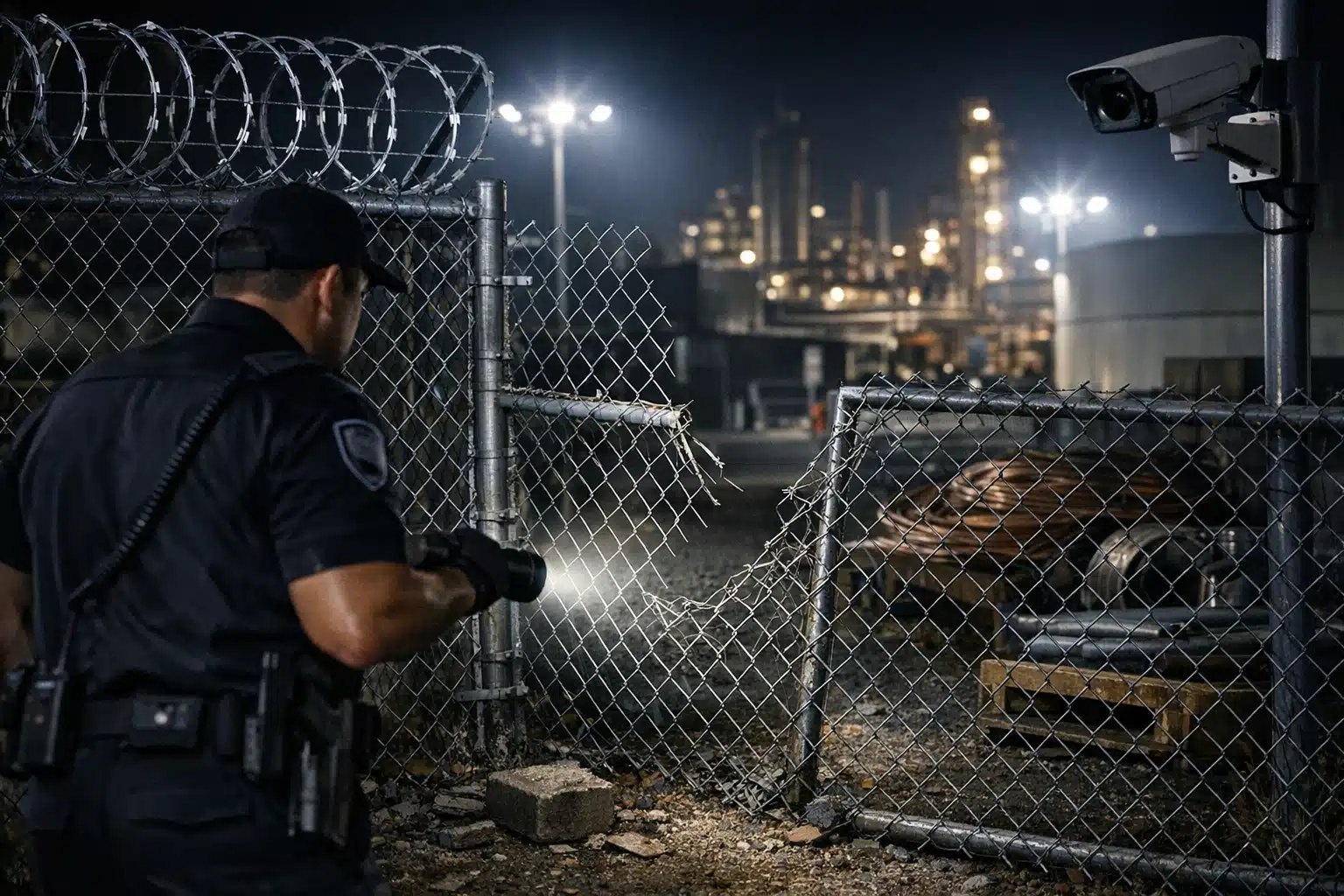
Houston’s manufacturing sector faces manufacturing security risks that cost facilities an average of $50,000 per incident according to recent FBI property crime data. The Energy Corridor alone houses over 400 manufacturing operations ranging from petrochemical plants to aerospace component facilities.
These risks multiply during hurricane season when facilities may sit empty for days. Understanding and mitigating these threats protects your operation, employees, and bottom line.
Primary Manufacturing Security Risks in Houston
Manufacturing facilities face distinct security challenges compared to other commercial properties. These risks stem from valuable equipment, hazardous materials, and complex site layouts.
Equipment Theft and Metal Scrap Targeting
Copper wiring, aluminum components, and precision machinery attract thieves who know their resale value. Manufacturing sites store thousands of dollars in raw materials like steel beams, copper pipes, and electronic components.
A Clear Lake aerospace parts manufacturer lost $75,000 in titanium stock during a weekend break-in last year. The thieves knew exactly where to look and what to take.
Industrial Espionage and Trade Secret Theft
Houston manufacturing companies develop proprietary processes worth millions. Competitors or foreign actors may attempt to steal:
- Manufacturing formulas and chemical processes
- Client lists and pricing information
- Equipment specifications and blueprints
- Quality control procedures
Energy sector manufacturers face higher espionage risks due to their strategic importance.
Workplace Violence and Disgruntled Employee Incidents
Manufacturing environments create stress from shift work, safety concerns, and job competition. Terminated employees may return with knowledge of security gaps and facility layouts.
OSHA data shows manufacturing workers experience workplace violence at twice the rate of office employees.
Vandalism and Equipment Sabotage
Damaged production equipment can shut down operations for weeks. A single act of sabotage to a chemical mixing system or CNC machine creates cascading delays.
Vandalism peaks during labor disputes or after layoffs when employee morale drops.
Houston-Specific Risk Factors for Factory Protection
Houston’s location and climate create unique security challenges that other cities don’t face.
Hurricane Season Vulnerabilities
Hurricane season runs from June through November, forcing many facilities to evacuate. Empty buildings become targets for organized theft rings who monitor evacuation announcements.
During Hurricane Harvey, several Pasadena manufacturing sites experienced break-ins while owners focused on flood damage.
Port of Houston Proximity Issues
Manufacturing facilities near the Port of Houston face higher crime rates due to transient populations and cargo theft activity. The ship channel area sees 40% more property crimes than Houston’s average.
Energy Corridor Targeted Threats
The Energy Corridor’s concentration of oil, gas, and chemical manufacturers makes it a target for environmental activists and industrial espionage. Foreign governments specifically target energy sector intellectual property.
Proven Risk Mitigation Strategies
Effective Houston factory protection requires layered security measures that address your facility’s specific vulnerabilities.
Perimeter Security Implementation
Manufacturing sites need strong perimeter controls to prevent unauthorized access. Key measures include:
- Fence height and material – Eight-foot chain link minimum with barbed wire extensions
- Gate access controls – Card readers, keypads, or guard stations
- Lighting systems – LED flood lights with backup power
- Vehicle barriers – Bollards or crash gates for truck entrances
A Katy chemical manufacturer reduced unauthorized entries by 85% after installing motion-activated perimeter lighting.
On-Site Security Guard Deployment
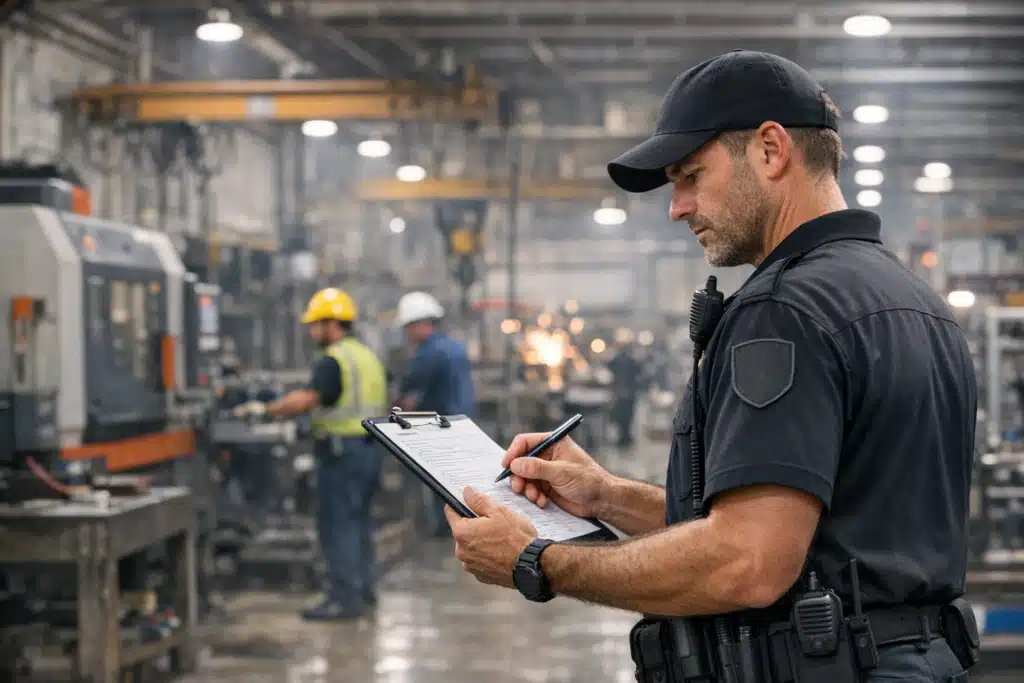
Physical security presence deters criminal activity and provides rapid response to incidents. Manufacturing facilities benefit from guards who understand industrial environments.
Security guards can monitor multiple zones simultaneously and respond to alarms within minutes rather than waiting for police arrival times that average 12 minutes in Houston.
Remote Video Surveillance Systems
Modern surveillance technology provides 24/7 monitoring without the cost of round-the-clock guards. Key features for manufacturing include:
- Thermal imaging cameras for low-light areas
- Motion detection with instant alerts
- License plate recognition at entry points
- Integration with existing access control systems
Remote monitoring centers can watch multiple camera feeds and dispatch security or police when needed.
Employee Access Management
Controlling who enters your facility and when prevents insider threats. Effective access management includes:
- Badge-based entry systems with time restrictions
- Visitor escort policies
- Contractor background checks
- Regular access privilege reviews
Remove access immediately when employees leave or change departments.
Emergency Response Planning for Manufacturing Sites
Manufacturing facilities require specialized emergency response plans that account for hazardous materials and complex evacuation procedures.
Hurricane Preparation Security Measures
Develop hurricane security protocols before storm season begins:
- Secure or relocate valuable portable equipment
- Increase security patrols during evacuation periods
- Install temporary barriers over windows and entry points
- Coordinate with local law enforcement for vacant property checks
Incident Documentation and Reporting
Proper documentation helps with insurance claims and law enforcement investigations. Security systems should automatically log all access attempts, alarm activations, and video footage timestamps.
Create incident response procedures that your security team can follow consistently.

 Posted on Google
Technology Integration for Maximum Protection
Modern manufacturing security combines multiple technologies into integrated systems that provide comprehensive coverage.
Smart Sensor Networks
Advanced sensors detect vibrations from fence cutting, glass breaking, or equipment tampering. These systems differentiate between false alarms from weather and genuine security threats.
Mobile Security Management
Facility managers can monitor security status remotely through smartphone apps that provide real-time alerts and camera access. This capability proves valuable during off-hours or hurricane evacuations.
Cost-Effective Security Investment Strategies
Manufacturing security requires balancing protection levels with operational budgets. Smart investments focus on the highest-risk areas first.
Start with perimeter security and main building access points before expanding to secondary structures. Phase in technology upgrades over time rather than attempting complete overhauls.
Many Houston manufacturers see positive ROI within 18 months after preventing just one major theft incident.
Regulatory Compliance Considerations
Manufacturing facilities must meet various security requirements depending on their products and processes. Chemical manufacturers face stricter regulations than general fabrication shops.
CFATS (Chemical Facility Anti-Terrorism Standards) requires covered facilities to implement specific security measures. Work with security providers who understand these compliance requirements.
Manufacturing security risks require proactive planning and professional implementation to protect your Houston facility effectively. The combination of physical security, technology systems, and proper procedures creates multiple barriers against threats.
Twin City Security Houston provides comprehensive security assessments for manufacturing facilities throughout the Houston area. Our team understands the unique challenges facing Energy Corridor manufacturers, Port of Houston operations, and industrial facilities across Greater Houston.
Contact Twin City Security Houston at 832‑301‑9478 or Houston@Twincitysecurity.com to schedule your manufacturing facility security evaluation.
Sources
Recent Posts