
Essential Security Measures for Houston’s Energy Corridor Businesses
Houston’s Energy Corridor spans roughly two miles along Interstate 10 in west Houston, home to over 300 companies and thousands of daily workers. This density makes Energy Corridor security a distinct concern for facility managers who face copper theft, after-hours trespassing, and flood-related evacuation risks. This post breaks down the specific threats and the measures that address them.
The area sits near Buffalo Bayou, which flooded badly during Hurricane Harvey. That geography shapes every security plan built here.
Why Energy Corridor Security Differs From Standard Commercial Protection
Energy Corridor properties hold assets that draw specific criminal interest. Copper wiring, diesel fuel, hydraulic equipment, and proprietary data all sit on-site.
Thieves target these locations for scrap metal value. A single copper theft can cost a facility $50,000 in repairs and downtime.
Corporate campuses here also carry heavy foot and vehicle traffic during weekdays. That volume drops sharply at night, leaving large parking structures and lobbies empty.
These quiet hours create the biggest exposure. Empty campuses invite vandalism, break-ins, and loitering.
Threats Common to West Houston Energy Facilities
- Metal and equipment theft during nights and weekends
- Unauthorized access to parking garages and loading docks
- Trespassing near retention ponds and bayou-adjacent lots
- Vehicle break-ins in multi-level parking structures
- Flood-related looting after storm evacuations
On-Site Guards for Energy Corridor Security
Trained guards remain the strongest deterrent for large energy campuses. A visible officer at an entry point changes how intruders assess a target.
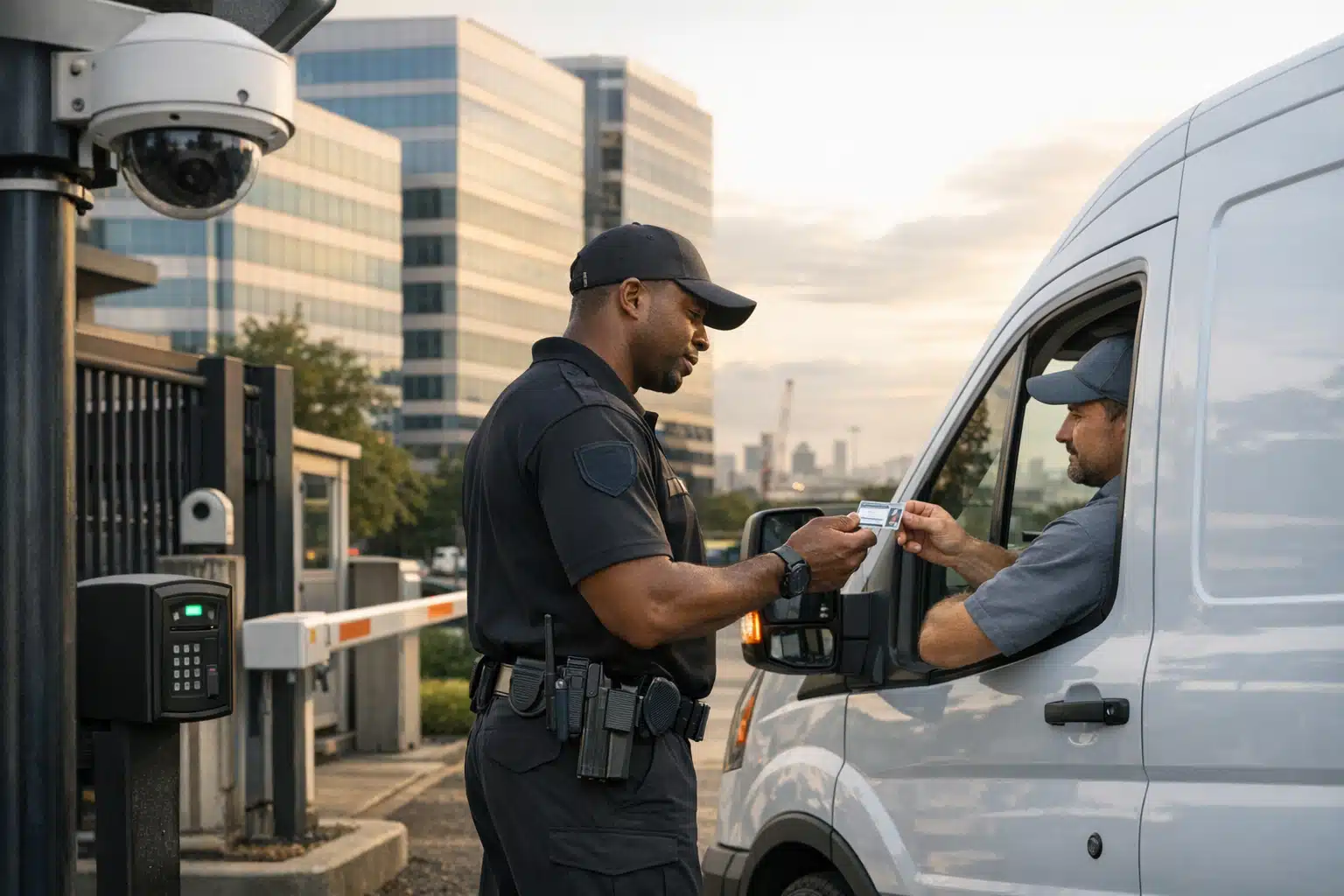
Guards do more than watch. They verify credentials, log deliveries, and respond to alarms before police arrive.
For a corporate campus off Eldridge Parkway, a guard controls who enters after 6 p.m. This gatekeeping matters when contractors and vendors cycle in and out during turnarounds.
What On-Site Officers Handle Daily
- Access control at gates, lobbies, and loading zones
- Patrol routes across parking decks and perimeters
- Incident documentation for insurance and liability
- Alarm response and coordination with Houston PD
- Visitor and contractor check-in during high-traffic projects
Refinery turnarounds bring hundreds of temporary workers. Guards manage that surge without letting security lapse.
Remote Video Monitoring for Business Protection After Hours
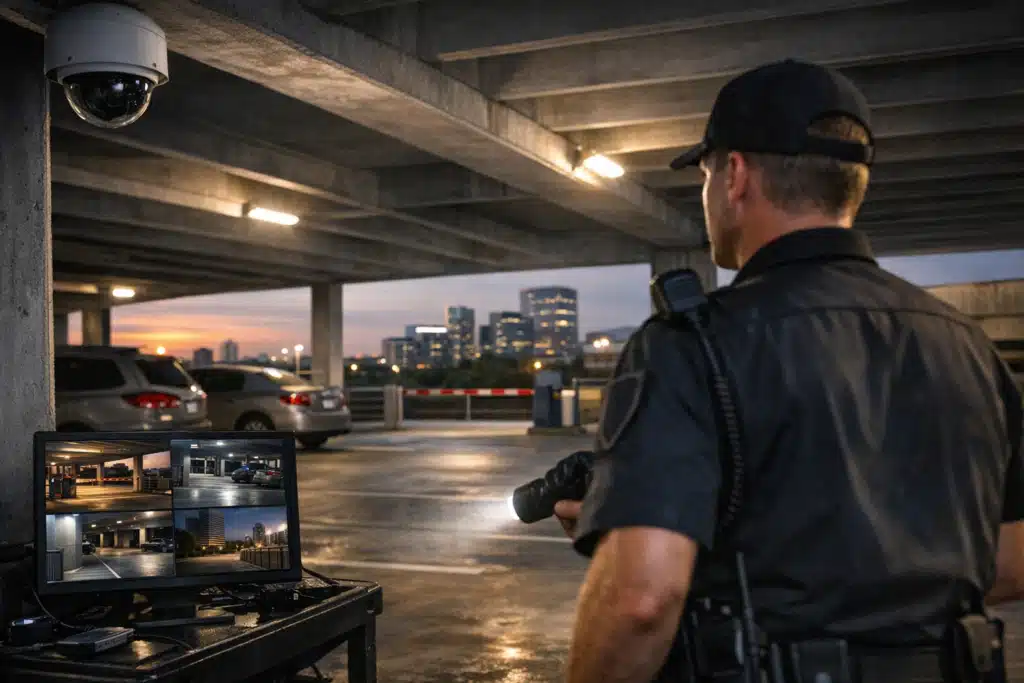
Remote video surveillance covers ground that guards cannot patrol at once. Cameras with live monitoring watch every corner of a property in real time.
When a camera detects motion after hours, a trained operator reviews the feed instantly. If the threat is real, the operator speaks through on-site speakers.
A voice-down often stops intruders before they act. Many leave the moment they hear a live person addressing them.
This approach lowers cost for facilities that cannot staff guards around the clock. It pairs well with on-site officers for full coverage.
Where Remote Monitoring Works Best
- Fenced equipment yards and laydown areas
- Employee parking structures during off-hours
- Perimeter fence lines facing wooded or bayou zones
- Loading docks after shipping hours end
For business protection during holidays and shutdowns, remote monitoring keeps eyes on empty sites. No gaps form when staff go home.
Protecting Energy Corridor Sites During Hurricane Season
Gulf Coast hurricane season runs June through November. Storms force evacuations that leave facilities unmanned for days.
Harvey dropped over 50 inches of rain on parts of Houston in 2017. Energy Corridor properties near Buffalo Bayou saw serious flooding and forced closures.
Empty, flood-damaged sites attract looters. Criminals know that response times slow when a storm hits.
Storm-Season Security Steps
- Confirm camera systems have battery or generator backup before landfall
- Move critical equipment above known flood lines
- Schedule remote monitoring coverage for evacuation periods
- Document asset conditions with dated video before storms
- Set clear re-entry protocols for staff and guards
Remote monitoring becomes the only viable watch during mandatory evacuations. Cameras stay online when no person can safely remain on-site.
Access Control and Perimeter Design
Perimeter protection starts at the property edge. Fencing, lighting, and gate placement shape how hard a site is to breach.
Poorly lit lots near Dairy Ashford invite after-dark activity. Bright, motion-triggered lighting removes the cover intruders rely on.
Layered access points slow anyone trying to move deeper into a facility. Each checkpoint adds friction and creates a record.
Perimeter Priorities for Energy Facilities
- Controlled vehicle gates with guard or camera verification
- Bright, maintained lighting across lots and fence lines
- Clear sightlines free of overgrowth near bayou edges
- Badge or credential systems for staff and vendors

 Posted on Google
Texas Regulations and Licensed Security Providers
Texas licenses private security companies and officers under state law. The Texas Department of Public Safety oversees this through its Private Security Program.
Any firm you hire must hold a valid state license. Officers must complete required training and background checks.
Hiring an unlicensed provider exposes your facility to liability. Always confirm license status before signing a contract.
Questions to Ask Before Hiring
- Are your company and officers licensed by Texas DPS?
- What training do your guards complete for energy-sector sites?
- How fast do remote operators respond to a triggered alert?
- Can you scale coverage during turnarounds or storm events?
- Do your camera systems have backup power for outages?
Building a Layered Plan for Your Facility
No single measure protects an Energy Corridor site alone. Guards, cameras, lighting, and access control each cover a different weakness.
A mid-size campus might use guards during business hours and remote monitoring overnight. A fenced equipment yard might rely mostly on cameras with voice-down capability.
The right mix depends on your assets, hours, and location within west Houston. A site near the bayou needs stronger flood planning than one on higher ground.
Twin City Security Houston assesses each property before recommending coverage. That keeps you from paying for protection you do not need.
Conclusion
Energy Corridor businesses face copper theft, after-hours trespassing, and hurricane-season evacuation risks that standard plans overlook. A layered mix of on-site guards, remote video monitoring, and storm-ready perimeter design closes those gaps.
Twin City Security Houston builds coverage around your facility’s real exposure. Call 832‑301‑9478 or email Houston@Twincitysecurity.com for a Houston security assessment or monitoring quote.
Sources
Recent Posts