
Ensuring Safety in Houston’s Public Transportation Hubs
Why Public Transportation Security Matters in Houston
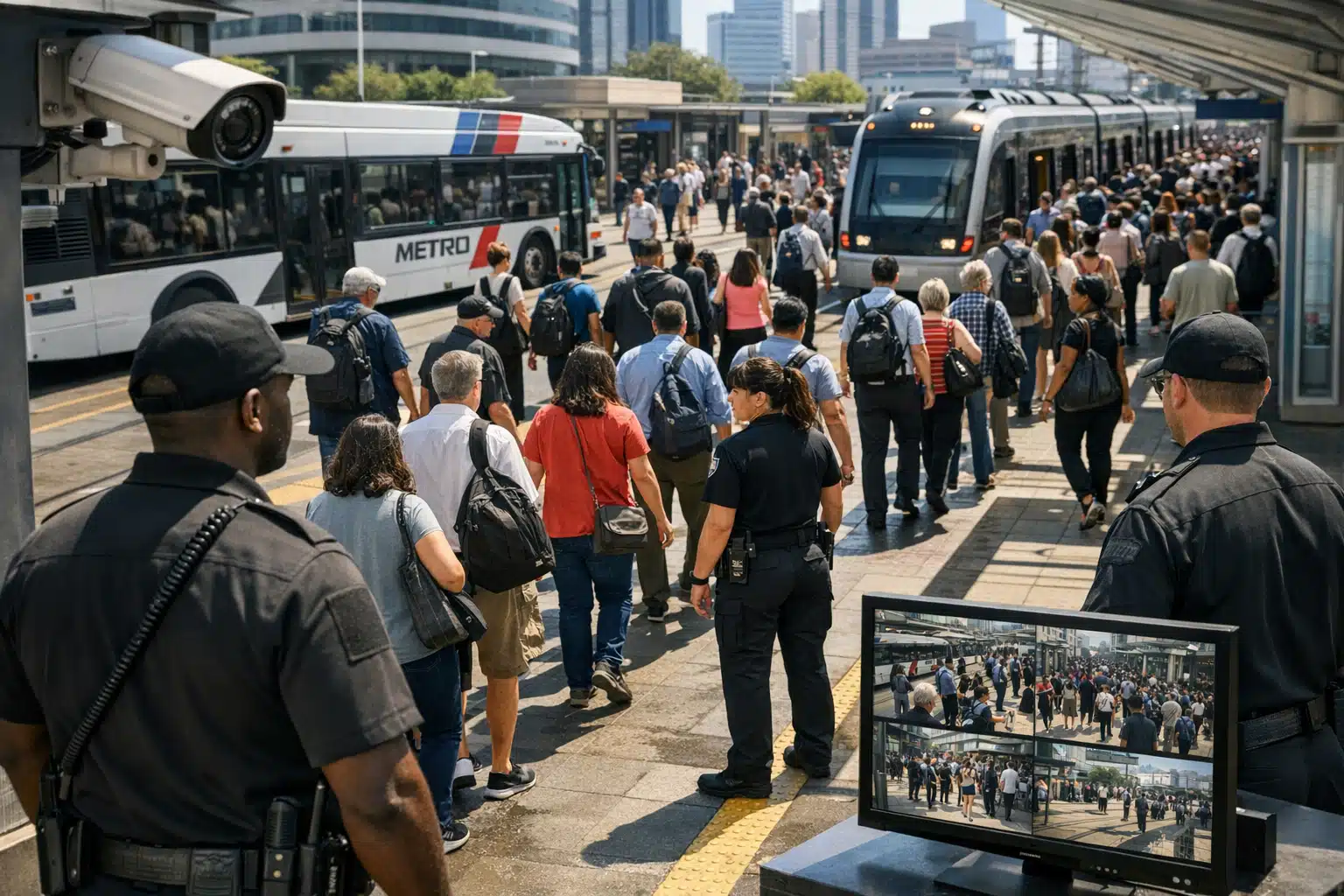
Houston’s METRO system moves more than 200,000 riders on an average weekday. Bus terminals, light rail stations, and Park & Ride lots connect every corner of the region.
High foot traffic creates high exposure. Public transportation security addresses crowds, open access points, and constant movement that standard building protection cannot match.
Transit hubs face threats that shift by the hour. Morning commuters, midday travelers, and late-night riders each bring different risks.
This post breaks down the specific challenges Houston transit facilities face. It covers practical safety measures, the role of remote monitoring, and how operators protect both riders and staff.
The Specific Risks Facing Houston Transit Hubs
Public transportation security differs from fixed-site protection in one way: the space never fully closes. People flow in and out around the clock.
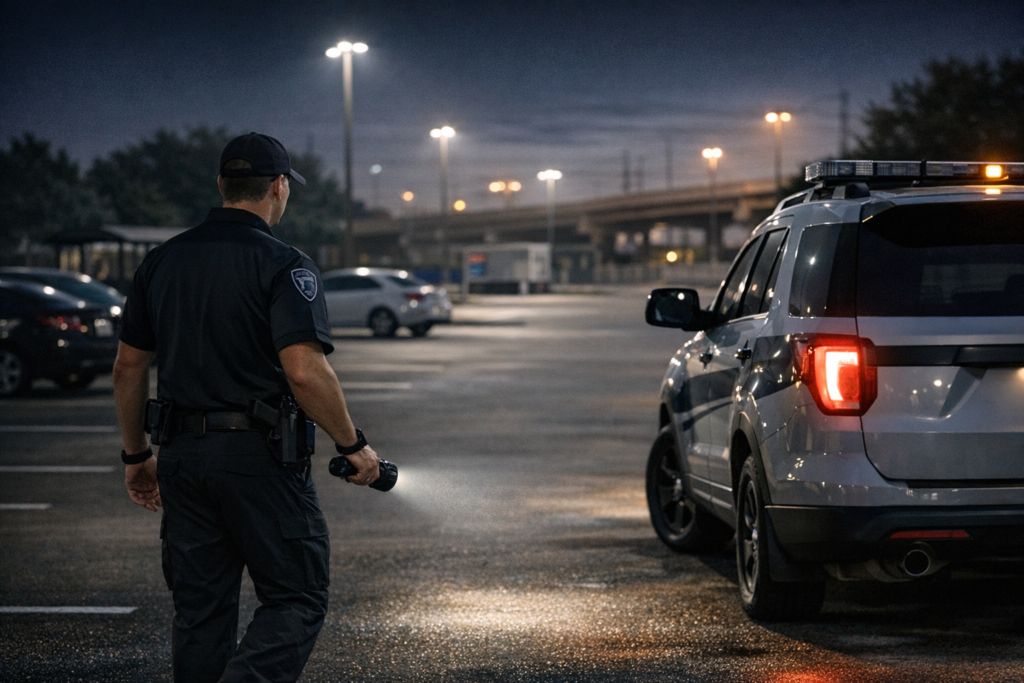
Houston transit facilities deal with recurring problem areas. Each one demands a different response.
Common Threats at Transit Stations
- Theft and pickpocketing during peak boarding at the Downtown Transit Center.
- Vandalism and graffiti on idle rail cars and station platforms overnight.
- Loitering and trespassing at Park & Ride lots in Katy and The Woodlands after hours.
- Assault and altercations in crowded, blind-corner waiting areas.
- Fare evasion that escalates into confrontations with staff.
Park & Ride lots carry a quiet risk many operators overlook. Cars sit unattended for 10 hours or more while owners commute downtown.
That gap makes lots along the Katy Freeway and I-45 targets for catalytic converter theft and vehicle break-ins.
Weather Adds a Gulf Coast Layer
Gulf Coast storms flood low-lying stations and underground passages. Hurricane season tests every evacuation plan Houston transit operators build.
During Hurricane Harvey, flooded Park & Ride lots stranded hundreds of vehicles. Storm planning must account for both rider safety and asset protection.
Safety Measures That Work in Transit Environments
Effective transit protection layers people, technology, and clear procedures. No single tool covers an open, high-traffic hub.
Houston operators who reduce incidents share a common pattern. They combine visible presence with constant electronic oversight.
On-Site Security Guard Coverage
Uniformed guards change rider behavior the moment they appear. A visible officer at a platform entrance cuts theft and loitering fast.
Guards at Houston transit hubs handle tasks automated systems cannot:
- De-escalate disputes between riders before they turn physical.
- Direct crowds during delays, breakdowns, or evacuations.
- Check credentials at restricted maintenance and staff areas.
- Respond in seconds to medical events or fare disputes.
- Coordinate with Houston Police and METRO authorities during incidents.
Officer placement matters more than officer count. One guard at a blind stairwell prevents more than three guards clustered at a main entrance.
Remote Video Surveillance for Round-the-Clock Coverage
Cameras alone record crime. Monitored cameras stop it.
Remote video surveillance puts trained operators behind the lens in real time. When motion triggers an alert at a 2 a.m. Park & Ride lot, someone sees it immediately.
Live monitoring works well for Houston transit sites because of scale. One operator watches dozens of camera feeds across multiple stations at once.
Key capabilities that protect transit facilities:
- Active voice-down warnings that tell a trespasser to leave before they act.
- Verified alarm response that confirms real threats before police dispatch.
- Nighttime coverage for empty platforms and unattended parking lots.
- Incident footage that supports prosecution and insurance claims.
Access Control at Restricted Zones
Transit hubs hide many restricted areas. Rail yards, control rooms, and maintenance bays need tight access rules.
Badge systems and guard-checked entry points keep unauthorized people away from tracks and equipment. One breach in a rail yard risks lives and service shutdowns.
Building a Layered Security Plan for a Houston Transit Hub
A working plan starts with the site, not a template. Every Houston station carries its own traffic pattern and weak points.
Follow these steps to protect a transit facility.
Step 1: Run a Site-Specific Risk Assessment
Walk the property at peak and off-peak hours. Map blind corners, poorly lit platforms, and unmonitored parking rows.
A Downtown Transit Center behaves nothing like a suburban Clear Lake Park & Ride. Each needs its own threat map.
Step 2: Match Coverage to Traffic Patterns
Staff guards during boarding surges and late-night lulls. Route remote monitoring to cover the hours guards cannot stretch across.
A smart schedule reduces cost without leaving gaps. Pay for presence when and where risk peaks.
Step 3: Integrate Technology and Personnel
Guards and monitoring operators should talk in real time. When a camera operator spots trouble, the nearest guard moves at once.
This link turns two separate tools into one fast response team.
Step 4: Plan for Gulf Coast Weather
Build storm procedures before hurricane season starts. Define evacuation roles, asset relocation, and post-storm site checks.
Flood-prone lots need advance warning plans so riders move vehicles in time.
Step 5: Review and Adjust Quarterly
Crime shifts with construction, new routes, and seasonal ridership. Review incident logs every quarter and move resources to new hot spots.

How Twin City Security Houston Protects Transit Facilities
Twin City Security Houston works with transit operators, property managers, and facility teams across the region. The approach joins trained officers with live remote monitoring.
Houston transit sites benefit from local knowledge. A team that knows the Energy Corridor commute and Port of Houston traffic reads risk faster than a national vendor.
What a transit security program includes:
- On-site guards trained for crowd control and de-escalation.
- 24/7 remote video surveillance with live voice-down capability.
- Access control for restricted rail and maintenance zones.
- Hurricane-season planning built for Gulf Coast conditions.
- Coordination with Houston law enforcement during incidents.
The goal stays simple. Keep riders safe, protect assets, and keep service running.
Conclusion
Public transportation security demands layered protection that covers open access, high foot traffic, and round-the-clock operation. Houston transit hubs cut incidents when they pair visible guards with live remote monitoring and weather-ready planning.
Twin City Security Houston builds site-specific protection for Houston transit facilities. Call 832‑301‑9478 or email Houston@Twincitysecurity.com for a Houston security assessment or monitoring quote.
Sources
Recent Posts