
Adapting Your Houston Business to Cybersecurity Threats in 2026
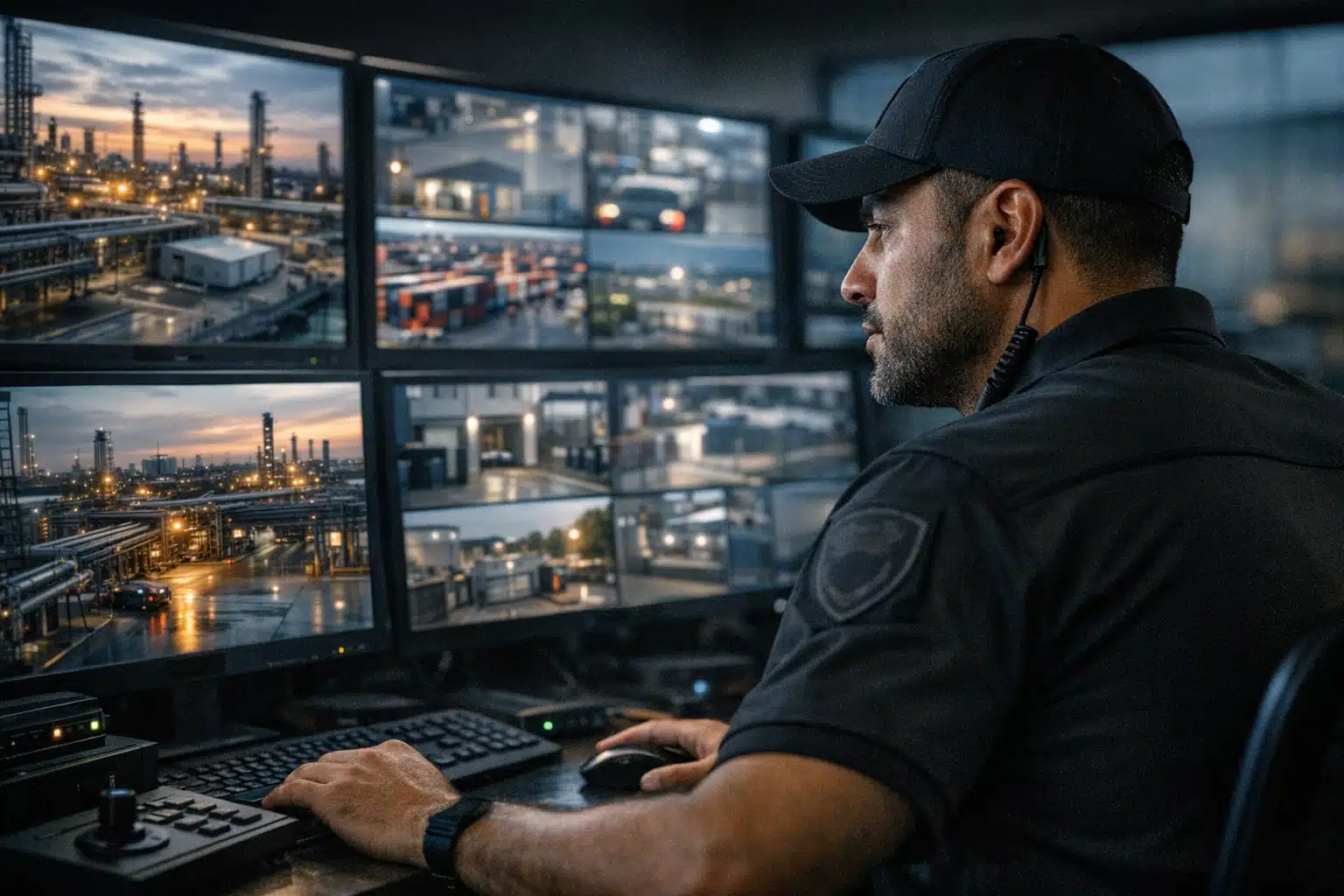
Why Physical Security and Cybersecurity Now Overlap in Houston
Houston reported over 60,000 property crimes in recent years, and many of them started with a digital weakness. A propped door, a stolen badge, or an unmonitored server room opens the path for attackers.
Modern cybersecurity threats rarely stay behind a screen. Criminals study camera blind spots, clone access cards, and plug rogue devices into networks inside your building.
This post shows Houston business owners, property managers, and energy operators how physical protection stops digital breaches in 2026. Twin City Security Houston works both sides of that line every day.
How Cybersecurity Threats Reach Your Houston Building in 2026
Cybersecurity threats often begin with physical access. An attacker who walks into your facility can bypass firewalls that cost thousands of dollars.
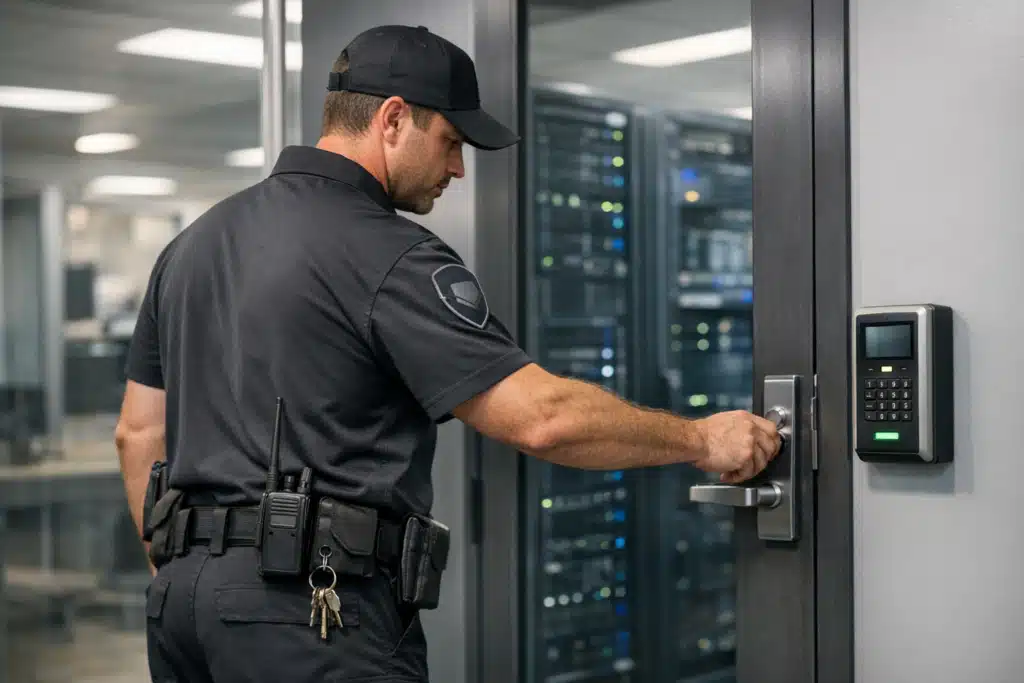
Here are the common physical entry points behind digital breaches:
- Tailgating: An intruder follows an employee through a secured door.
- Rogue USB drops: Malware-loaded drives left in parking lots at Energy Corridor offices.
- Unlocked server rooms: Direct access to network hardware and backups.
- Stolen laptops: Devices taken from cars or unattended desks.
- Badge cloning: Copied access cards used after business hours.
Each of these gaps sits inside your walls, not on the internet. A trained guard and a monitored camera catch what antivirus software cannot.
The Energy Corridor and Port of Houston Face Higher Stakes
Energy firms along the Katy Freeway hold sensitive operational data and control systems. A breach at a refinery or pipeline operator can halt production and endanger workers.
The Port of Houston moves cargo tied to national supply chains. Attackers target its logistics systems, and physical intrusion often precedes the digital attack.
Texas critical infrastructure operators must meet federal reporting rules under CISA. Physical access logs and video records support those requirements when incidents occur.
Steps to Link Physical Security With Cybersecurity Protection
Business security in 2026 works best when guards, cameras, and network defenses share one plan. Follow these steps to close the gap between your building and your data.
- Map every entry point: List doors, loading docks, and utility access. Note which lead to server rooms or network closets.
- Assign access levels: Limit who reaches sensitive areas. Tie badge permissions to job roles.
- Post guards at data-critical zones: Station personnel where servers, control panels, and backups sit.
- Monitor with remote video: Watch access points around the clock. Flag after-hours movement near IT infrastructure.
- Log and review access events: Match badge swipes against camera footage weekly.
- Test response times: Run drills for both intruders and network alerts.
Each step ties a physical control to a digital risk. That connection stops attackers before they reach a keyboard.
Remote Video Surveillance Catches Threats After Hours
Most breaches at Houston construction sites and warehouses happen between midnight and 5 a.m. Empty buildings give intruders time to work undisturbed.
Remote video monitoring watches your site when staff go home. Trained operators verify alarms, speak through on-site audio, and call police in real time.
For a Clear Lake tech firm or a Katy distribution center, this coverage stops both theft and network tampering. An intruder near a server rack triggers an immediate response.
Protecting Houston Energy Facilities From Blended Threats
Energy facility protection requires guards who understand both site risks and digital assets. A single unattended gate can expose control systems to attack.
Consider a common scenario at a Ship Channel plant:
- A contractor badge is lost during a turnaround shift.
- An outsider uses it to enter a restricted control area.
- He plugs a device into an operations network port.
- The attack spreads before anyone notices the missing badge.
On-site guards catch the unfamiliar face. Camera analytics flag the unusual entry. Fast reporting shuts the port before damage spreads.
Hurricane Season Widens the Attack Window
Gulf Coast storms force evacuations and leave facilities empty for days. Attackers know staff attention shifts to safety and recovery.
During hurricane season, keep these protections active:
- Backup power for cameras: Keep surveillance running through outages.
- Remote monitoring: Watch evacuated sites from a secure operations center.
- Access lockdown: Suspend non-essential badges during evacuation.
- Storm-hardened records: Store access and video logs off-site.
A refinery near Baytown left unwatched during a storm invites both looting and network intrusion. Continuous monitoring closes that window.

 Posted on Google
What Houston Property Managers Should Ask Before 2026
Apartment communities and retail centers hold resident data and payment systems. A breach there carries legal and financial weight under Texas law.
Ask your security provider these questions:
- Do your guards receive training on IT and data-area protection?
- Can remote monitoring cover server rooms and mail centers?
- How fast do operators verify and escalate alarms?
- Do you keep access logs that support breach investigations?
- Can coverage scale during peak seasons or emergencies?
Clear answers signal a provider that connects physical and digital defense. Vague answers leave gaps attackers use.
Small Businesses in Houston Are Not Too Small to Target
Attackers favor small firms with weak physical controls. A single unlocked back office in a Midtown shop can expose customer records.
Basic steps close most of these gaps:
- Lock and monitor rooms holding computers or routers.
- Add cameras at rear and side entrances.
- Use guard patrols during closing hours.
- Restrict keys and badges to current staff.
These measures cost far less than recovering from a data breach. Prevention protects both your revenue and your reputation.
Building a 2026 Security Plan That Covers Both Fronts
Strong business security in 2026 treats your building and your network as one target. Guards, cameras, and access controls form the first line of defense.
Twin City Security Houston places trained officers where your data lives. Remote video surveillance extends that coverage across every hour and every site.
From the Energy Corridor to the Port of Houston, one plan should protect people, property, and information together.
Protect Your Houston Business Before the Next Threat
Cybersecurity threats in 2026 begin at your doors, gates, and loading docks. Physical security and remote monitoring stop attackers before they reach your systems.
Twin City Security Houston builds site assessments that link guards, cameras, and access control into one defense. Call 832‑301‑9478 or email Houston@Twincitysecurity.com for a Houston security assessment or monitoring quote.
Sources
Recent Posts