
The Role of Armed Security Guards in Protecting Houston Businesses
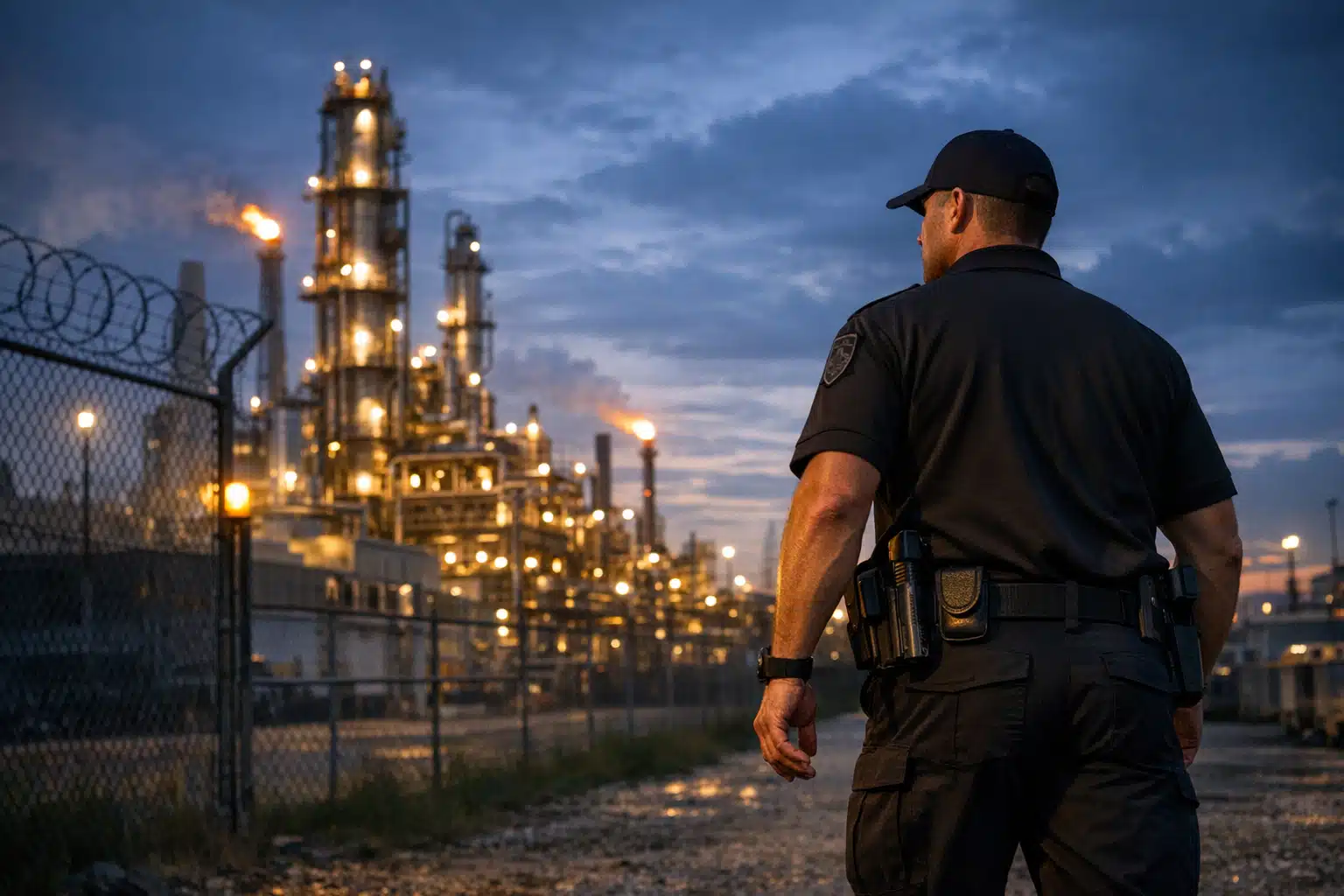
Armed security guards play a vital role in protecting Houston businesses by providing visible deterrence against crime, ensuring rapid response to threats, and utilizing specialized training for high-risk situations. Their presence is particularly important in areas with elevated robbery rates, such as the Energy Corridor and Port of Houston.
Houston businesses face armed robbery rates 23% higher than the national average, with Energy Corridor facilities and Port of Houston operations particularly vulnerable during overnight shifts and hurricane evacuations. Armed security guards Houston businesses rely on provide the highest level of protection through visible deterrence, rapid threat response, and specialized training for high-risk environments.
The decision to deploy armed versus unarmed security depends on your specific threat profile, asset value, and regulatory requirements.
When Houston Businesses Need Armed Security Guards
Armed security becomes necessary when potential threats exceed what unarmed personnel can handle. Houston’s unique industrial landscape creates specific scenarios requiring armed protection.
Energy Facility Vulnerabilities
Refineries and chemical plants along the Houston Ship Channel face targeted theft attempts for valuable metals and equipment. During turnaround seasons, when contractor populations surge, facilities report 40% more security incidents.
Armed guards provide the authority needed to control access points and respond to aggressive trespassers who may be armed themselves.
High-Value Asset Protection
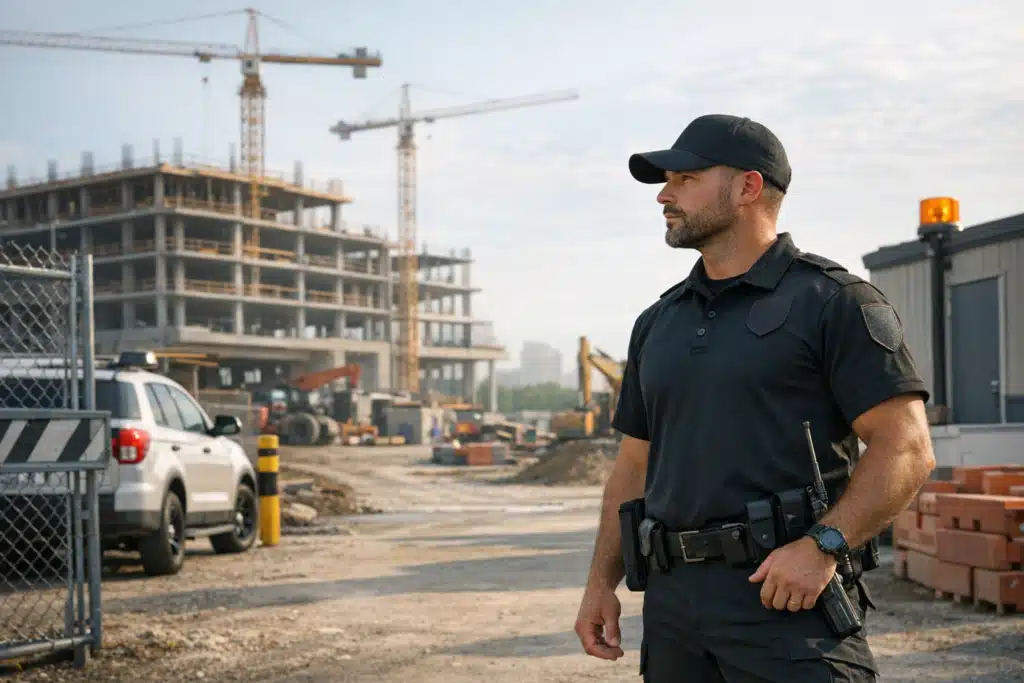
Construction sites in The Woodlands and Katy experience copper wire theft averaging $15,000 per incident. Armed security guards Houston contractors deploy create a deterrent effect that reduces theft by 67% compared to camera-only protection.
Port operations storing valuable cargo require armed response capabilities. The Port of Houston Authority reports that facilities with armed security experience 80% fewer cargo theft attempts.
Legal Framework for Armed Security in Texas
Texas Private Security Act governs armed security deployment. Level IV commissioned security officers undergo extensive background checks, psychological evaluations, and firearms training.
Licensing Requirements
- 40 hours initial training plus 16 hours firearms instruction
- Annual recertification with live-fire qualifications
- Clean criminal background with no disqualifying offenses
- Psychological fitness evaluation
Houston businesses must verify their security provider maintains proper licensing. Unlicensed armed security creates massive liability exposure.
Use of Force Protocols
Armed guards operate under strict engagement rules. They can only draw weapons when facing imminent threat of death or serious bodily injury.
Proper training covers de-escalation techniques, threat assessment, and legal justification standards. Business protection role armed guards fill requires judgment and restraint, not just firepower.
Armed Security Response Capabilities
The presence of armed security fundamentally changes threat dynamics. Criminals conduct surveillance before targeting businesses and avoid locations with visible armed protection.
Immediate Threat Neutralization
Armed guards can engage active threats without waiting for police response. In Houston’s sprawling industrial areas, police response times average 8-12 minutes.
A trained armed officer provides immediate protection during those critical minutes when threats develop.
Asset Recovery Operations
When theft occurs, armed security can pursue and detain suspects until police arrive. This capability proves crucial for recovering stolen equipment or preventing getaway vehicles from leaving the premises.
Unarmed guards must maintain safe distance from armed criminals, limiting their effectiveness during active incidents.
Industry-Specific Armed Security Applications
Different Houston industries face distinct security challenges requiring tailored armed security approaches.
Energy Sector Protection
Refineries and petrochemical facilities need guards trained in HAZMAT environments. Armed security for energy facilities includes:
- Perimeter patrol with night vision capabilities
- Access control for contractor management
- Response to environmental protesters or sabotage attempts
- Coordination with federal security agencies
During hurricane evacuations, armed guards protect evacuated facilities from looters and vandals. Hurricane Harvey showed the importance of maintaining security during extended facility shutdowns.
Retail and Commercial Properties
Shopping centers in southwest Houston deploy armed security during peak holiday seasons. Armed guards reduce violent crime incidents by 45% compared to unarmed-only security.
The visible presence of armed officers deters organized retail crime groups that target high-end merchandise.
Construction Site Security
Major construction projects exceeding $10 million in value typically justify armed security costs. Guards protect against:
- Equipment theft during overnight hours
- Copper and metal theft from completed sections
- Trespasser injuries that create liability exposure
- Vandalism and arson attempts
Cost-Benefit Analysis of Armed Security
Armed security guards cost 40-60% more than unarmed personnel, but prevent losses that far exceed the additional investment.
Direct Cost Factors
Armed security rates in Houston range from $25-35 per hour depending on experience and risk level. Additional costs include:
- Higher insurance premiums for armed personnel
- Enhanced training and certification expenses
- Specialized equipment and uniforms
- More comprehensive background screening
Loss Prevention Value
A single prevented theft can justify months of armed security costs. Energy facilities report average theft losses of $50,000 per incident.
Insurance providers often reduce premiums for facilities with certified armed security, offsetting 15-25% of the additional security costs.

 Posted on Google
Hurricane Season Considerations
Gulf Coast hurricane threats create unique armed security needs. During evacuation periods, abandoned facilities become targets for organized criminal groups.
Pre-Storm Preparation
Armed guards help secure facilities during evacuation procedures. They ensure proper shutdown protocols and prevent last-minute theft attempts during the chaos of storm preparation.
Post-Storm Recovery
After hurricanes, armed security prevents looting during power outages and communication disruptions. Guards also protect repair crews working in damaged areas where normal law enforcement may be overwhelmed.
Hurricane Harvey demonstrated how armed security maintained order at critical infrastructure sites when regular emergency services were unavailable.
Selecting Armed Security Providers
Not all security companies can provide qualified armed personnel. Business protection role requirements demand experienced, properly trained officers.
Key Qualification Criteria
- Verify Texas Private Security Bureau licensing
- Review training records and certifications
- Check insurance coverage limits
- Examine previous experience in your industry
- Confirm 24/7 supervisory support
Performance Monitoring
Armed security requires ongoing oversight. Monitor response times, incident reports, and client feedback to ensure service quality.
Regular training updates keep guards current on legal requirements and tactical procedures. Providers should conduct quarterly recertification exercises.
Integration with Technology Systems
Modern armed security works best when integrated with surveillance and alarm systems. Guards use real-time video feeds to assess threats before responding.
Mobile patrol units coordinate with fixed surveillance posts through digital communication systems. This combination provides comprehensive coverage while optimizing personnel deployment.
Conclusion
Armed security guards Houston businesses deploy provide crucial protection against escalating criminal threats and high-value asset theft. The investment in properly licensed, trained armed personnel pays dividends through prevented losses and enhanced safety.
Houston’s industrial complexity demands security solutions tailored to specific operational risks and regulatory requirements.
Contact Twin City Security Houston at 832-301-9478 or Houston@Twincitysecurity.com for a comprehensive security assessment that determines whether armed protection fits your facility’s risk profile and operational needs.
Sources
- FBI Uniform Crime Reporting Program – Crime Statistics
- Texas Department of Licensing and Regulation – Private Security Program
- Harris County Sheriff’s Office – Crime Statistics and Reporting
- Texas Department of Public Safety – Security Licensing Requirements
Houston businesses face significant armed robbery risks, particularly in vulnerable areas like the Energy Corridor and Port of Houston. Armed security guards offer essential protection through their specialized training and rapid response capabilities.
- Armed security guards provide a visible deterrent and can respond immediately to threats, unlike unarmed personnel.
- The presence of armed guards has been shown to reduce theft incidents significantly, with some facilities reporting up to 80% fewer theft attempts.
- Properly licensed armed security is crucial for protecting high-value assets and ensuring compliance with legal requirements.
Recent Posts