
Enhancing Safety with Mobile Surveillance for Houston’s Construction Sites
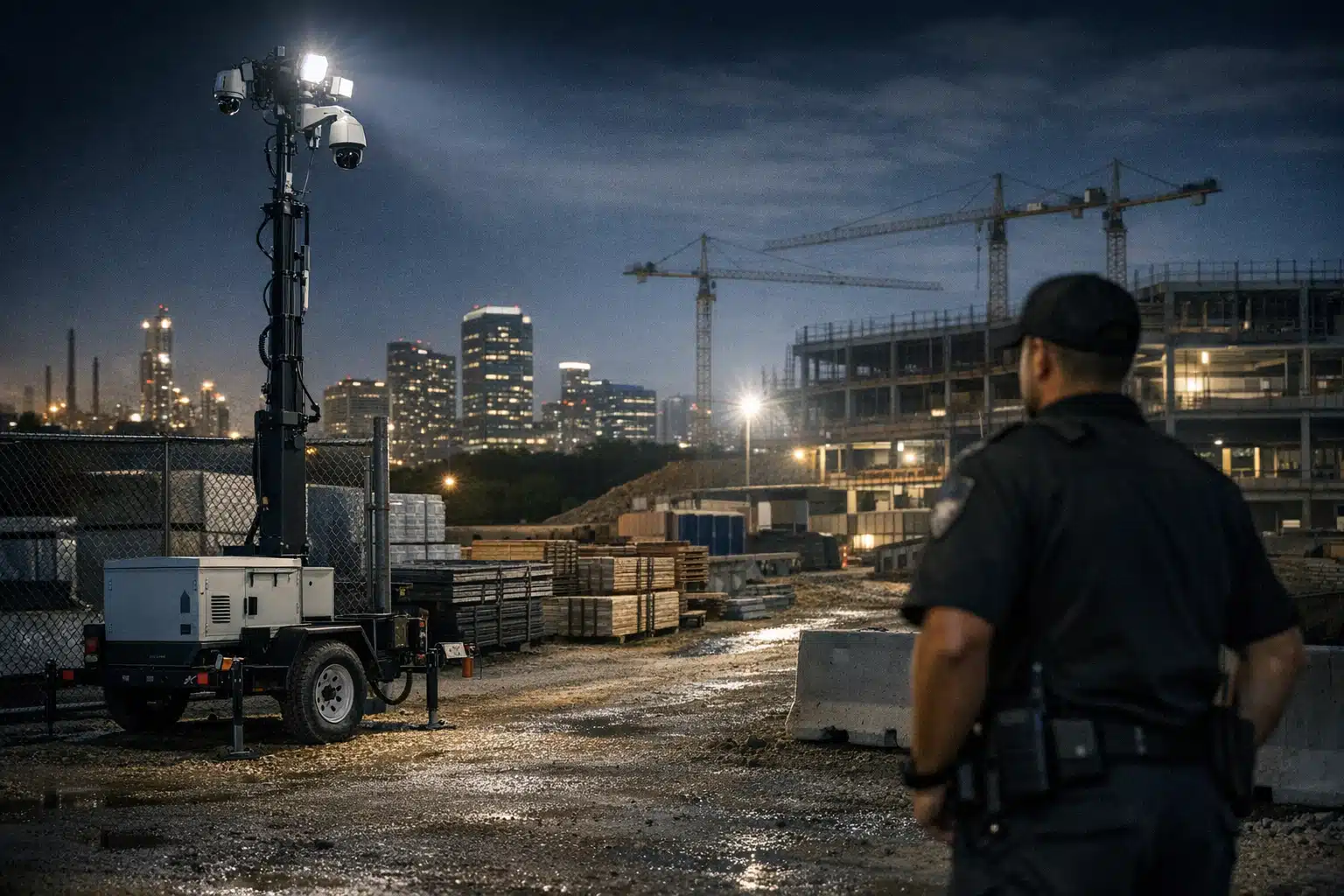
Construction sites across Houston lose thousands of dollars in copper wire, tools, and heavy equipment every month. Metal theft alone costs the U.S. construction sector over $1 billion annually. Mobile surveillance gives Houston builders a fast, flexible way to protect open sites without waiting weeks for wired infrastructure. This post explains how mobile units work, where they fit Houston job sites, and what to expect when hiring a local provider.
Why Houston Construction Sites Face Higher Theft Risk
Active construction sites are open targets by design. Fencing goes up late, materials sit in the open, and crews leave at 5 p.m.
Houston’s building boom widens the exposure. New apartment complexes near the Energy Corridor, warehouse projects along the Port of Houston, and mixed-use builds in Katy all sit unguarded overnight.
Thieves know the patterns. They target sites during predictable gaps:
- Overnight hours between 10 p.m. and 4 a.m.
- Weekends when no crews return until Monday
- Holidays and extended shutdowns
- Rain delays when sites empty early and stay empty
Copper and catalytic converters draw the most attention. Both sell fast and leave little trace.
The Real Cost Beyond Stolen Materials
Theft delays timelines. A stolen generator or wiring run can stall a project for days.
Replacement costs stack on insurance premiums. Repeated claims raise rates and can flag your site as high-risk.
Vandalism adds another layer. Graffiti, broken equipment, and trespasser injuries create liability that outlasts the build.
How Mobile Surveillance Protects Active Job Sites
Mobile surveillance uses self-contained camera units mounted on trailers or poles. Each unit runs on solar power or battery, so no permanent wiring is needed.
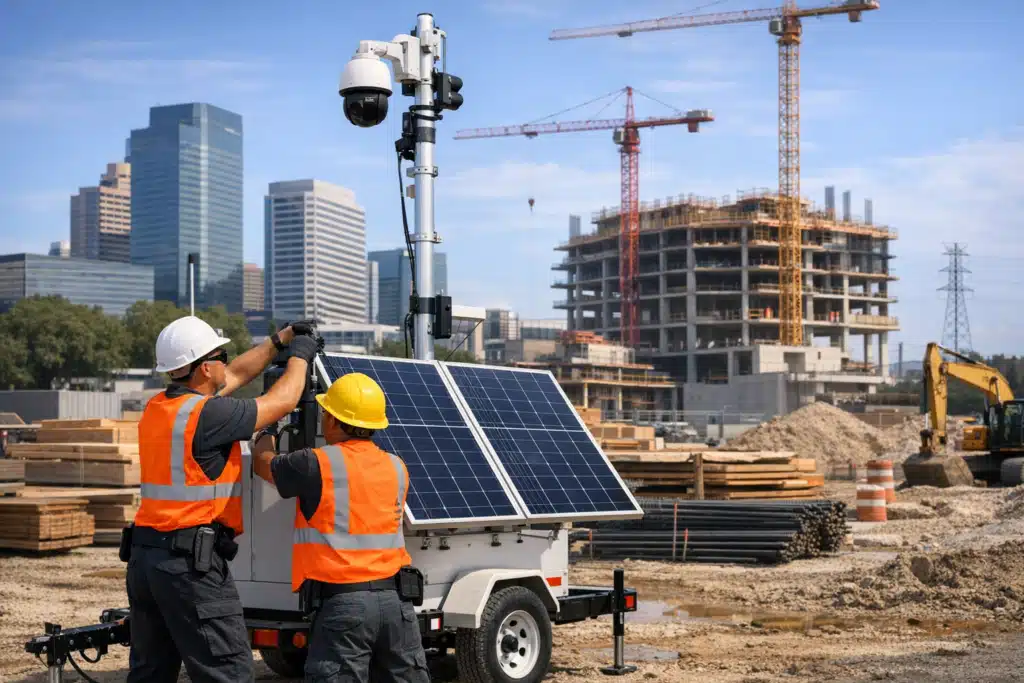
Units connect over cellular networks and stream footage to a monitoring center. Operators watch live feeds and respond to activity in real time.
The setup matters most for construction. Job sites change shape weekly, and fixed cameras cannot keep pace.
Rapid Deployment for Fast-Moving Sites
Mobile units arrive and go live the same day. A trailer-mounted tower can be positioned, powered, and connected in under two hours.
That speed fits Houston’s construction pace. When a site breaks ground in Clear Lake or a phase opens in The Woodlands, coverage starts immediately.
Relocation is just as fast. As the build moves from foundation to framing, cameras move with it.
Coverage Without Permanent Infrastructure
Traditional camera systems need trenching, conduit, and power drops. On raw land, that work takes weeks and costs thousands.
Mobile units skip all of it. Solar panels and cellular modems remove the need for utility hookups.
For remote parcels near the Port of Houston or undeveloped tracts in Katy, this independence keeps sites covered from day one.
Mobile Surveillance vs. On-Site Guards for Construction
Both protect a site, but they solve different problems. Many Houston builders use a mix of the two.
When Mobile Surveillance Fits Best
- Large perimeters where guards cannot see every corner
- Overnight-only coverage after crews leave
- Multiple staging areas spread across acreage
- Budget-conscious projects that need wide coverage per dollar
Cameras record continuously and never lose focus. Footage also gives police and insurers clear evidence after an incident.
When Guards Add Value
- Access control at gates and delivery points
- Immediate physical response to intruders
- High-value equipment yards holding cranes or fleets
- Sites with active foot traffic during work hours
A combined setup works well on large builds. Cameras watch the perimeter, guards manage the gate.
Deterrence That Stops Theft Before It Starts
The strongest security prevents the crime. Mobile units are built to warn intruders off the property.
Most towers carry visible cameras, strobe lights, and two-way speakers. When motion triggers an alert, a live operator can speak directly to the trespasser.
A voice-down warning ends most incidents fast. Intruders leave once they know they are being watched.
How a Live Voice-Down Works
- Motion analytics detect movement in a restricted zone.
- The alert reaches a monitoring operator within seconds.
- The operator verifies the threat on live video.
- A spoken warning plays over the on-site speaker.
- If the intruder stays, the operator dispatches police with a live description.
This chain often stops theft in under a minute. Compare that to a recorded system, where footage is only reviewed after the loss.
Built for Gulf Coast Weather
Houston sites face heat, humidity, and storm season. Mobile units must hold up under all three.
Quality towers use weather-rated housings and secured mounts. Solar systems store several days of backup power for cloudy stretches.
During hurricane season, sites empty fast ahead of a storm. Mobile cameras keep watching evacuated job sites when no crew can stay behind.
Storm Season Site Protection Steps
- Position units to cover material stockpiles and equipment.
- Confirm battery backup for extended power loss.
- Set alerts for post-storm trespassing and looting.
- Keep footage accessible for damage and insurance claims.
After a storm passes, that footage documents wind damage and theft alike. Insurers move faster with clear visual records.

 Posted on Google
Choosing Construction Site Security in Houston
Not every provider handles active job sites the same way. Ask direct questions before signing.
Questions to Ask a Provider
- How fast can a unit deploy? Same-day matters on tight schedules.
- Is monitoring live or recorded only? Live response prevents loss.
- Where is the monitoring center? Local operators know Houston streets and precincts.
- How does the unit handle power loss? Backup capacity keeps coverage steady.
- Can units relocate as the site changes? Flexibility keeps pace with the build.
Strong construction site security combines fast deployment, live monitoring, and local knowledge. A provider based in Houston responds faster and understands regional theft patterns.
Matching Coverage to Your Project Phase
Early groundwork needs perimeter coverage over open land. Framing and finish stages call for tighter watch on stored materials.
As phases shift, reposition units to follow the risk. A local team adjusts placement without a new contract every time.
Why Local Response Matters for Houston Builders
Houston covers over 600 square miles across dozens of jurisdictions. Response time depends on knowing the area.
A Houston-based operator knows which precinct covers your site. That knowledge shortens the gap between alert and police arrival.
Local teams also read regional patterns. Theft near the Ship Channel differs from theft in a Katy subdivision, and coverage should reflect that.
Conclusion
Mobile surveillance gives Houston construction sites fast, flexible protection without permanent wiring. Live monitoring and voice-down deterrence stop theft before materials disappear, and units move as your build progresses. Strong construction site security protects your timeline, your budget, and your insurance standing.
Twin City Security Houston sets up mobile units and live monitoring for job sites across the region. Call 832‑301‑9478, email Houston@Twincitysecurity.com, or visit https://www.twincitysecurityhouston.com for a site assessment.
Sources
Recent Posts