
How Fire Watch Services Ensure Safety During Houston’s Industrial Shutdowns
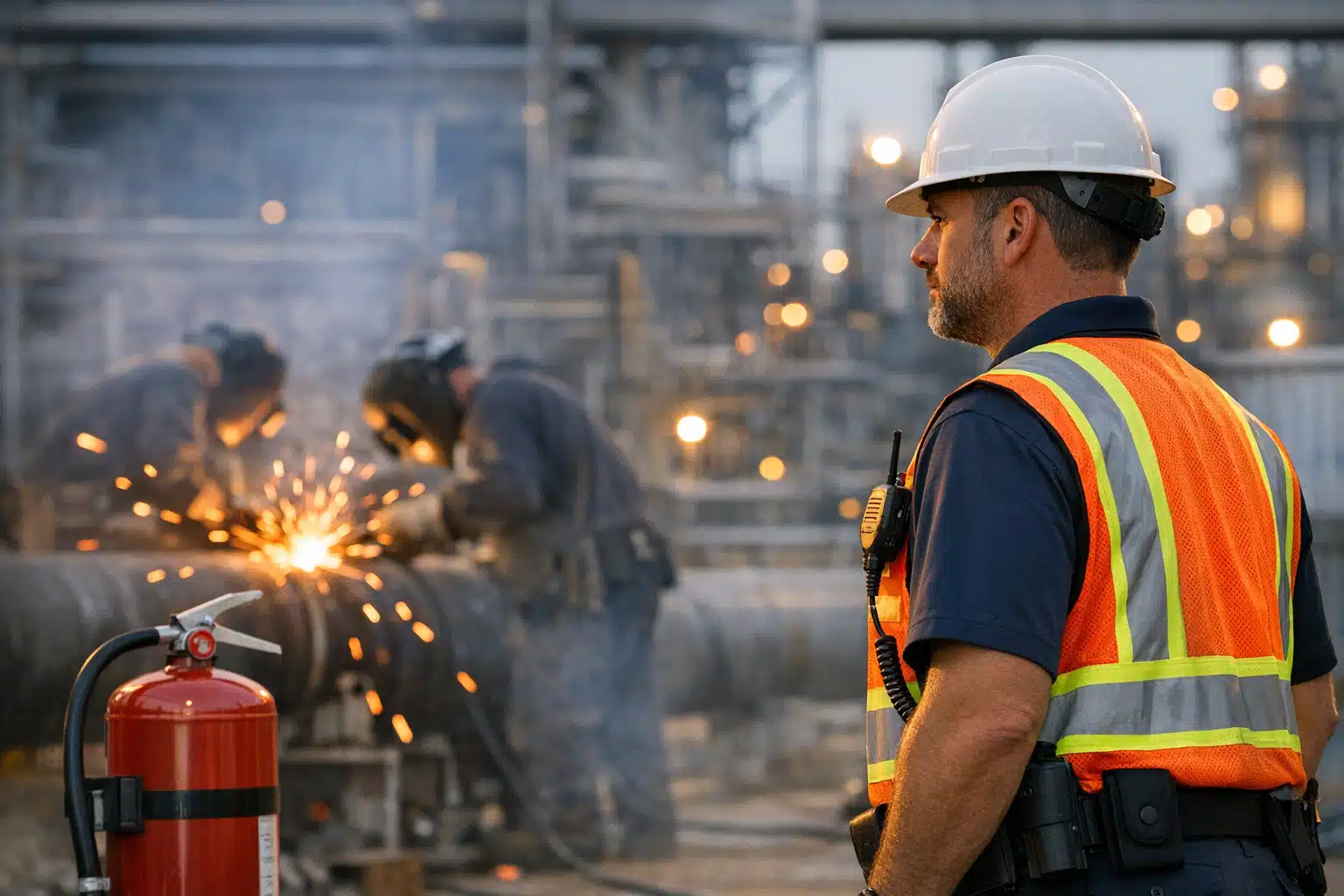
Why Houston Shutdowns Create Fire Risk
Houston runs the largest petrochemical complex in the United States. When a refinery along the Ship Channel begins a turnaround, its fire suppression systems get drained, tested, or taken offline.
That downtime creates a gap. Hot work, welding, and cutting continue on-site, but automatic detection may be disabled.
Fire watch services fill that gap. Trained personnel monitor hazard zones when normal fire protection cannot operate. For Houston operators managing planned shutdowns, this coverage keeps both people and permits intact.
This post breaks down when fire watch is required, what Texas and federal rules demand, and how Houston facilities stay compliant during maintenance windows.
What Fire Watch Services Actually Cover
A fire watch is a dedicated person assigned to detect and respond to fire hazards. Their only job is watching for ignition risk.
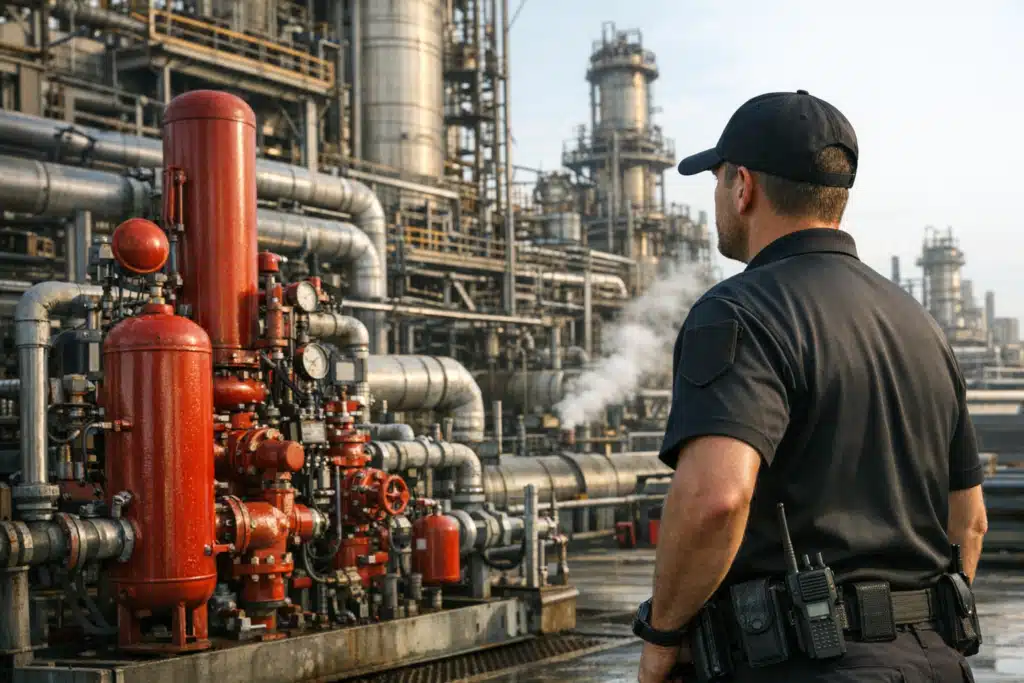
They do not perform maintenance or run equipment. Their attention stays on the hazard zone at all times.
Core Duties During an Industrial Shutdown
- Monitor hot work areas during welding, grinding, and torch cutting
- Watch for smoldering materials for at least 30 minutes after hot work stops
- Keep fire extinguishers and suppression tools within reach
- Sound alarms and initiate evacuation if ignition occurs
- Log patrol times and conditions for compliance records
At a Pasadena chemical plant during a hydrocracker turnaround, dozens of welders work near residual product lines. A single spark near a vapor pocket can start a fire before anyone reacts.
That is why fire watch personnel stay stationed at each hot work location, not roaming the entire unit.
When Texas and Federal Rules Require Fire Watch
Fire watch is a legal requirement, not a suggestion. OSHA and NFPA standards mandate it under specific conditions.
Conditions That Trigger a Mandatory Fire Watch
- Hot work occurs within 35 feet of combustible materials
- Fire sprinkler or suppression systems are shut down for maintenance
- Wall or floor openings expose combustibles in adjacent areas
- Combustible materials cannot be moved or protected
OSHA 1910.252 covers welding, cutting, and brazing. It requires fire watchers when hot work creates ignition risk near flammable material.
NFPA 25 requires a fire watch when a sprinkler system stays out of service more than 10 hours in a 24-hour period.
For Houston energy facilities, both rules apply during major turnarounds. Suppression systems come offline for days, and hot work runs around the clock.
The Houston Fire Department can require documented fire watch logs. Missing records can stall permit approval and delay restart.
Industrial Safety Gaps During Planned Turnarounds
Turnarounds compress months of maintenance into a few weeks. Contractor headcount can jump from hundreds to thousands overnight.
That surge strains normal industrial safety controls. More workers, more hot work permits, and more temporary conditions raise fire exposure.
Common Shutdown Scenarios in Houston
- Refinery turnarounds along the Houston Ship Channel with suppression systems drained
- Tank cleaning at Bayport and Deer Park storage terminals with residual vapors
- Pipeline maintenance in the Energy Corridor with confined space hot work
- Petrochemical unit rebuilds in Baytown and Texas City
During tank cleaning, vapor readings can spike without warning. A fire watcher with a gas monitor catches that shift before it reaches an ignition point.
Roaming supervisors cannot maintain that focus. A dedicated fire watch can.
Fire Watch During Gulf Coast Hurricane Season
Hurricanes force Houston plants into rapid shutdowns. Crews scramble to secure units before landfall, creating rushed hot work and temporary hazards.
Power loss knocks out electronic detection systems. Backup fire pumps may not carry full coverage during an outage.
Fire watch personnel provide human detection when technology fails. After a storm, they patrol units before restart to confirm no ignition risk remains.
During Hurricane Harvey, several Ship Channel facilities lost primary power for days. Manual patrols became the only reliable line of fire detection at some sites.

 Posted on Google
How to Set Up an Effective Fire Watch Program
A strong fire watch starts before the shutdown begins. Planning prevents coverage gaps once hot work ramps up.
Steps to Protect Your Houston Facility
- Map hazard zones where suppression systems will go offline
- Calculate coverage needs based on hot work locations and shifts
- Assign trained watchers equipped with extinguishers and gas monitors
- Set patrol routes and inspection intervals for each zone
- Document every patrol with time-stamped logs for HFD and OSHA
- Coordinate radio contact between watchers and site command
Coverage should extend past the final welding shift. Smoldering can ignite hours after hot work ends.
Fire watch services work best when paired with remote video monitoring. Cameras cover perimeter and access points while personnel focus on active hazard zones.
Combining Fire Watch With Remote Surveillance
Shutdowns increase theft risk alongside fire risk. Idle equipment, copper wiring, and stored tools attract intruders.
Remote video surveillance watches the fence line and gates during off-hours. Fire watch personnel handle the interior hot work zones.
Layered Protection Benefits
- Fewer blind spots across large industrial sites
- Faster response to both fire and trespass events
- Recorded evidence for insurance and compliance claims
- Lower cost than staffing every access point with guards
A Deer Park terminal running a two-week turnaround might use six fire watchers inside and remote cameras covering the perimeter. That structure protects both safety and assets without overstaffing.
What Fire Watch Coverage Costs in Houston
Cost depends on duration, headcount, and hazard level. A single fire watcher differs greatly from a 24-hour multi-zone assignment.
Factors That Shape Your Quote
- Number of hot work zones needing simultaneous coverage
- Shift length and whether patrols run around the clock
- Turnaround duration from a few days to several weeks
- Equipment needs such as gas monitors and communication gear
- Compliance documentation requirements from HFD and OSHA
A rushed hire during a storm evacuation costs more than planned coverage. Booking watchers before a scheduled turnaround controls both budget and staffing.
Poor coverage carries a higher price. A fire during a suppression outage can halt operations for months and trigger regulatory penalties.
Conclusion
Fire watch services protect Houston facilities during the exact moments when normal fire systems cannot. Shutdowns, turnarounds, and hurricane prep all create windows where trained watchers keep people, permits, and assets safe.
Twin City Security Houston staffs certified fire watch personnel and pairs them with remote video monitoring for full-site coverage. Call 832‑301‑9478, email Houston@Twincitysecurity.com, or visit https://www.twincitysecurityhouston.com for a Houston fire watch assessment.
Sources
Recent Posts