
Creating a Comprehensive Security Plan for Houston’s Small Businesses
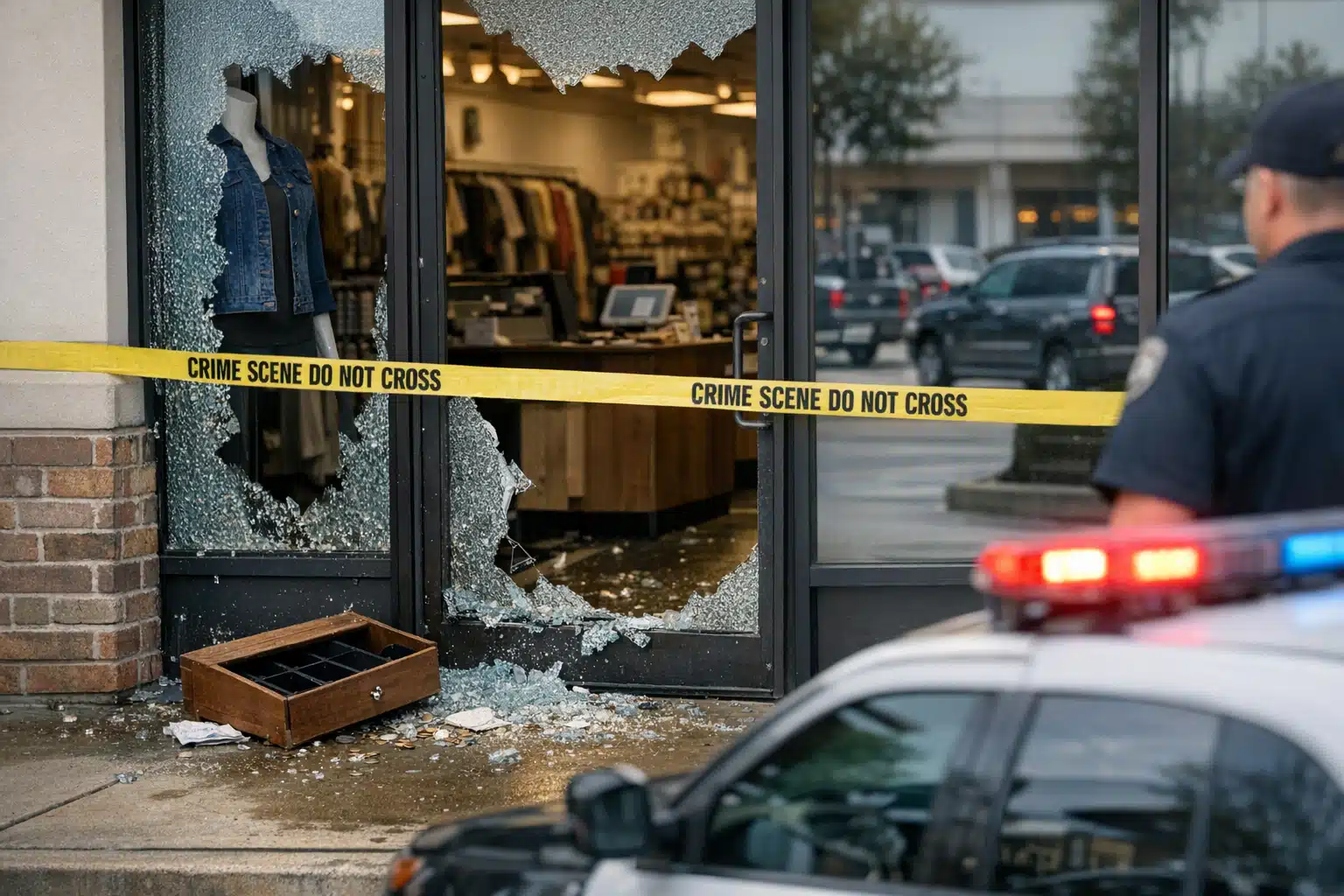
Houston reported more than 100,000 property crimes in a recent year, and small storefronts absorb a heavy share of that loss. A single overnight break-in at a Katy retail shop can cost $8,000 in stolen goods and broken glass. That is why small business security matters as much for a Montrose café as it does for a Ship Channel operator.
This post walks Houston owners and managers through building a practical security plan on a small-business budget. You get concrete steps, local risk factors, and cost-aware choices.
Why Small Business Security Planning Starts With Local Risk
Every Houston neighborhood carries its own threat pattern. A plan built for The Woodlands will not fit a warehouse near the Port of Houston.
Effective security planning begins by mapping the specific risks your location faces. Location, hours, inventory value, and cash handling all shape the answer.
Common Threats Houston Small Businesses Face
- After-hours burglary — strip-mall retail in Gulfton and Sharpstown sees repeat break-ins.
- Smash-and-grab theft — jewelry and electronics shops along Westheimer are frequent targets.
- Copper and equipment theft — construction and HVAC sites in Katy and Cypress lose metal overnight.
- Parking-lot incidents — assaults and vehicle break-ins hit restaurants with poor lighting.
- Storm looting — vacant businesses after hurricane evacuation attract opportunistic theft.
Name your top three risks before you spend a dollar. That focus keeps your budget aimed at real exposure, not guesswork.
Step-by-Step: Building a Small Business Security Plan
A written plan turns scattered cameras and locks into one working system. Follow these steps in order.
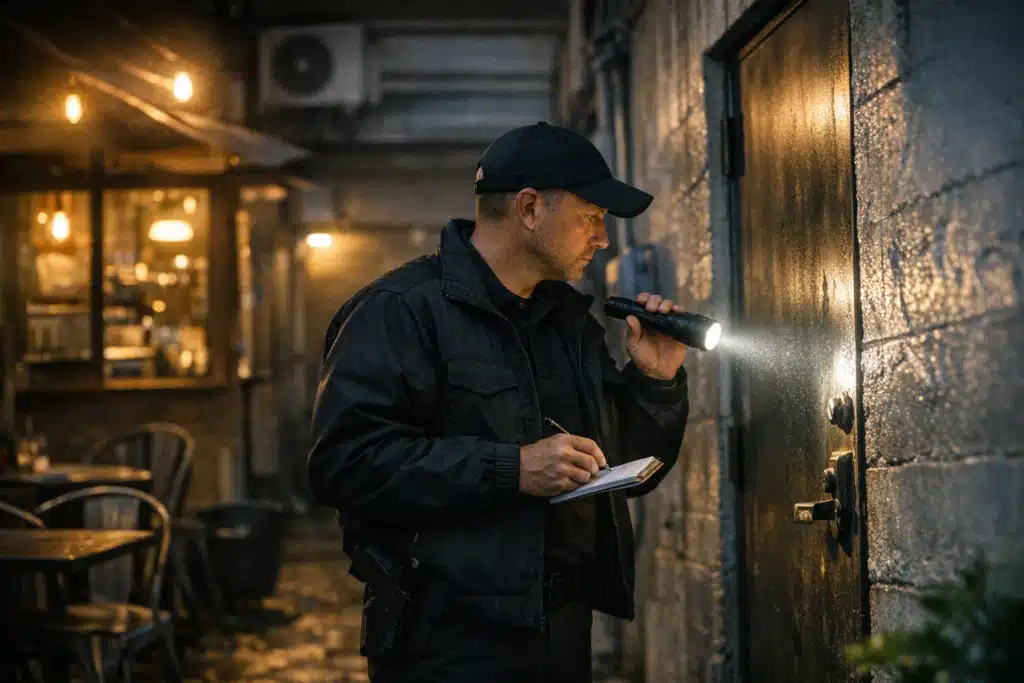
Step 1: Conduct a Walkthrough Audit
Walk your property at open, at close, and after dark. Note every door, window, blind corner, and dim light.
Photograph weak points. A rear alley door with no light in the East End is a burglar’s favorite entry.
Step 2: Rank Your Assets
List what you would lose most if stolen or damaged. Cash drawers, POS systems, inventory, and customer data each rank differently.
Protect the highest-value assets first. A medical clinic near the Texas Medical Center guards patient records before anything else.
Step 3: Set a Realistic Budget
Most Houston small businesses spend between $150 and $2,500 monthly on security. Where you land depends on risk and coverage.
- Under $300/month — camera package plus alarm monitoring.
- $300–$900/month — remote video surveillance with active alerts.
- $900+/month — on-site guard coverage for high-risk hours.
Spend on the gaps your audit exposed. A cash-heavy convenience store needs different coverage than a low-traffic office.
Step 4: Layer Your Defenses
No single tool stops every threat. Strong plans stack physical, electronic, and human layers.
- Deterrence — visible cameras, signage, and bright lighting.
- Detection — motion sensors, alarms, and monitored video.
- Response — guards or dispatch that act within minutes.
A layered setup slows intruders long enough for help to arrive.
Choosing Between On-Site Guards and Remote Video Surveillance
Both approaches work, but they fit different budgets and risks. Many Houston owners combine them.
When On-Site Guards Make Sense
On-site guards fit businesses with cash exposure, foot traffic, or frequent incidents. A restaurant closing at 2 a.m. in Midtown benefits from a physical presence.
Guards handle conflict, escort staff to cars, and respond in real time. Their visibility alone reduces confrontations.
When Remote Video Surveillance Fits Better
Remote monitoring costs less than round-the-clock guards. Trained operators watch live feeds and speak through on-site speakers to warn off intruders.
This works for construction yards, storage lots, and after-hours retail. A Cypress lumber yard can protect acres for a fraction of guard cost.
The strongest plans pair remote surveillance with on-call guard response. You get coverage plus a human backstop.
Hurricane Season Security for Houston Small Businesses
Gulf Coast storms create a second security threat: the empty building. When you evacuate, your business sits exposed for days.
Looting spikes during power outages and mandatory evacuations. Standard alarms fail when electricity and internet drop.
Storm-Ready Steps to Take Before June
- Install battery-backed cameras that record during outages.
- Add cellular backup so alarms transmit without internet.
- Move valuables and cash off-site before a named storm arrives.
- Arrange remote monitoring that keeps watching after you leave.
- Photograph inventory for faster insurance claims.
Hurricane season runs June through November. Set these up in spring, not the week a storm forms in the Gulf.
Texas Rules Every Houston Owner Should Know
Security providers in Texas must be licensed. The Texas Department of Public Safety Private Security Program regulates guards and companies.
Verify any provider holds a valid state license before signing. Ask for their company license number and confirm guard certifications.
Questions to Ask a Security Provider
- Are your guards licensed under Texas DPS?
- Do you carry liability insurance, and how much?
- What is your average response time in my area?
- Do you monitor cameras locally or out of state?
- Can you scale coverage during hurricane season?
A clear answer to each question separates serious providers from the rest.

 Posted on Google
A Sample Plan for a Houston Retail Shop
Consider a boutique in the Heights open 10 a.m. to 8 p.m. Its main risks are after-hours burglary and storm exposure.
A workable plan for this shop might include:
- Four exterior cameras covering doors and the alley.
- Remote video monitoring from close to open.
- Motion-triggered lighting at the rear entrance.
- Cellular alarm backup for storm outages.
- On-call guard response for triggered alerts.
This setup fits a modest monthly budget and covers the shop’s real threats. The same framework scales up for a warehouse or scales down for a single office.
Common Mistakes That Weaken Small Business Security
Many Houston owners spend money and still get burglarized. The gaps repeat across businesses.
- Fake cameras — experienced thieves spot dummies fast.
- Unmonitored footage — recordings only help after the loss.
- Dark parking lots — poor lighting invites both theft and injury claims.
- No storm plan — evacuation leaves the building undefended.
- Untested alarms — a system nobody checks fails when needed.
Fix the gaps that let past incidents happen. History is your clearest warning.
Review and Update Your Plan Twice a Year
A security plan is not a one-time purchase. Threats shift as your business grows and seasons change.
Schedule a spring review before hurricane season and a fall review before the holidays. Retail theft climbs in November and December.
Update coverage when you add inventory, extend hours, or open a second location. Small changes create new exposure.
Protect Your Houston Business the Smart Way
Strong small business security starts with knowing your local risks, ranking your assets, and layering defenses within your budget. Houston’s crime patterns and storm season demand a plan built for this city, not a generic template.
Twin City Security Houston helps local owners assess risk and match coverage to budget. Call 832‑301‑9478, email Houston@Twincitysecurity.com, or visit https://www.twincitysecurityhouston.com for a Houston security assessment.
Sources
Recent Posts