
Choosing the Right Security for Houston’s Energy Facilities
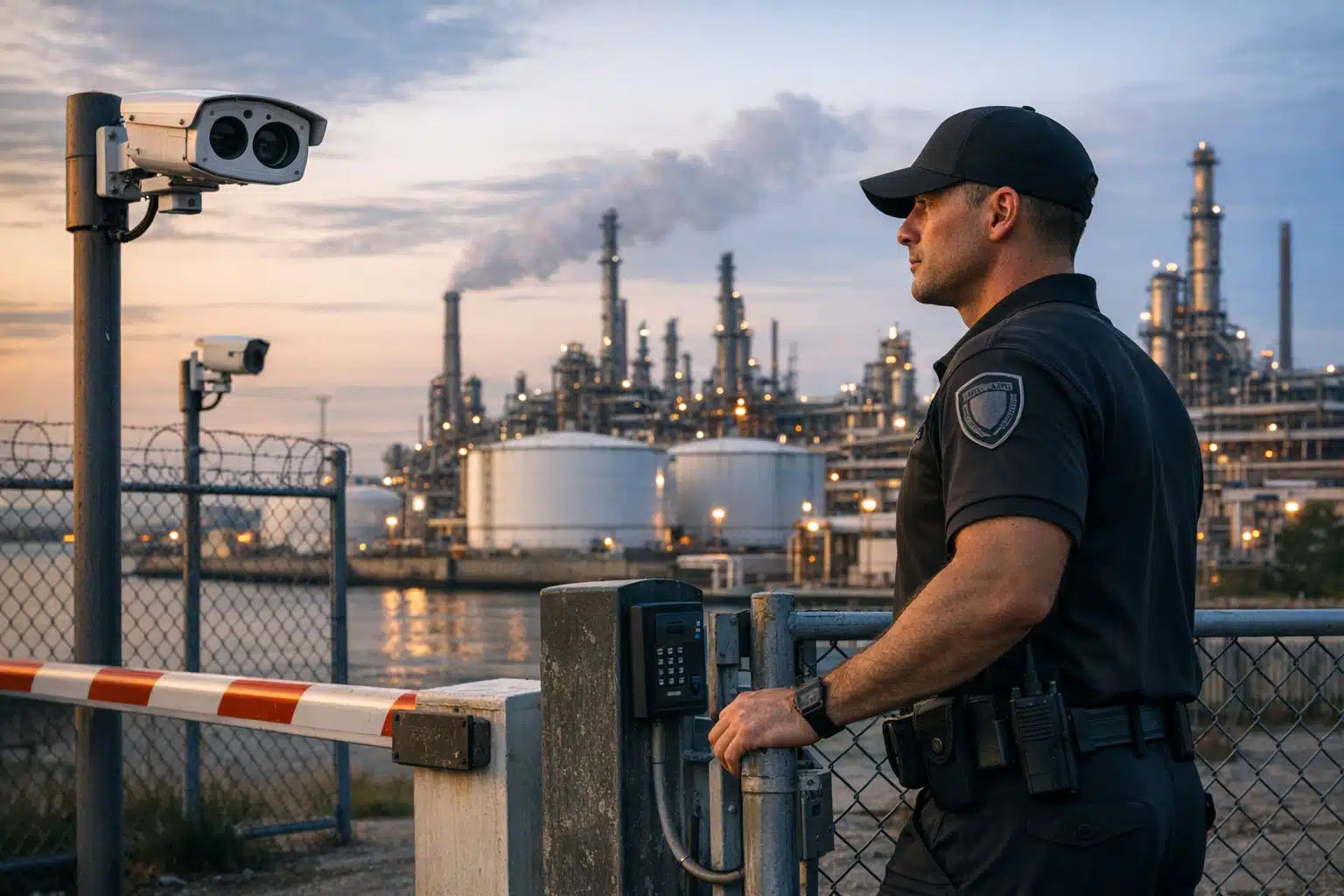
Houston refineries process more than 2.6 million barrels of crude oil each day along the Gulf Coast. That scale makes energy facility security a frontline concern for operators from the Energy Corridor to the Port of Houston. A single breach at a tank farm or substation can halt production and trigger regulatory penalties.
This article breaks down how to match security measures to the specific risks energy sites face in Houston. You will learn what matters for refineries, pipeline yards, and port terminals.
Why Energy Facility Security Differs in Houston
Energy sites carry risks that a standard office building never faces. Flammable storage, high-voltage equipment, and federal oversight change the math.
Houston adds its own pressures. Hurricane season, sprawling industrial zones, and copper theft all shape what strong industrial protection looks like here.
Local Threats That Target Energy Sites
Energy operators in Harris County report a recurring set of problems:
- Copper and metal theft from substations and idle construction yards
- Diesel and equipment theft during refinery turnarounds
- Trespassing near pipeline right-of-ways and tank farms
- Cargo tampering at port-adjacent storage terminals
Turnaround periods raise the stakes. Hundreds of contractors enter a site at once, and access control gets harder to track.
Matching Security to Your Facility Type
Energy facility security requires a plan built around the specific site, not a one-size template. A pipeline yard in Katy needs different coverage than a terminal at the Port of Houston.
Refineries and Chemical Plants
Large plants along the Houston Ship Channel span hundreds of acres. Fixed guard posts alone cannot cover that footprint.
Pair on-site officers at entry gates with remote video surveillance across the perimeter. Thermal cameras catch movement near tank farms at night, when most intrusions happen.
Electrical Substations and Pipeline Yards
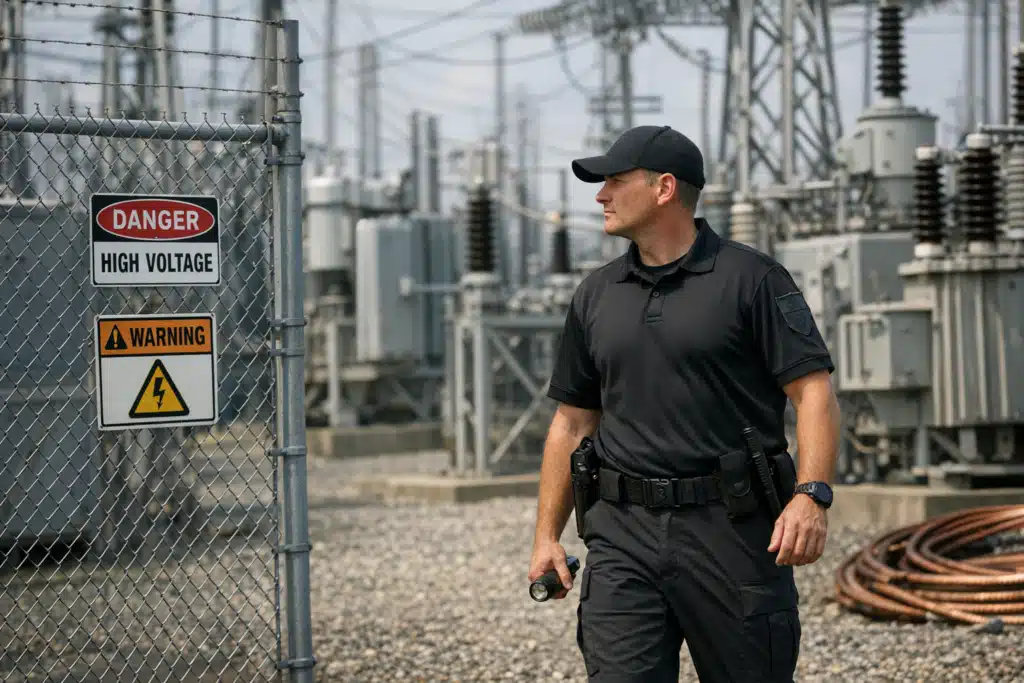
Substations face steady copper theft pressure. Many sit unmanned in remote parts of Fort Bend and Montgomery counties.
Remote monitoring with motion-triggered alerts works best for these sites. A live operator can issue a voice-down warning the moment someone crosses the fence line.
Port of Houston Terminals
Port facilities fall under federal maritime rules. The Maritime Transportation Security Act requires strict access control and credentialed entry.
Your security staff must handle TWIC (Transportation Worker Identification Credential) verification. Officers who understand port protocols reduce compliance gaps during Coast Guard inspections.
Building a Layered Energy Facility Security Plan
The strongest protection uses several layers that back each other up. One camera or one guard leaves gaps that a determined intruder finds.
Follow these steps to structure coverage for a Houston energy site:
- Map your perimeter. Identify fence lines, gates, and blind spots across the full property.
- Set access control points. Limit vehicle and foot entry to staffed or badge-controlled gates.
- Add remote video surveillance. Cover high-value zones like tank farms, transformer yards, and loading docks.
- Station officers at critical points. Place trained guards where human judgment matters most.
- Build an incident response chain. Define who gets called and how fast when an alert fires.
Each layer reduces load on the others. Remote cameras watch the fence line so officers focus on access and response.
Protecting Houston Energy Facilities During Hurricane Season
Gulf Coast storms create a predictable security gap. When sites evacuate, empty facilities draw looters and opportunists.
Hurricane Harvey in 2017 left many industrial sites unstaffed for days. Flooded roads blocked response teams from reaching damaged perimeters.
Storm-Season Monitoring Steps
Prepare your site before the next named storm reaches the Gulf:
- Confirm remote surveillance runs on battery and cellular backup
- Document equipment locations for post-storm theft claims
- Arrange off-site monitoring that stays active during evacuation
- Set alert protocols for water intrusion near electrical gear
Remote video keeps eyes on your property when staff cannot be there. Operators watch for breaches while roads stay closed.
On-Site Guards Versus Remote Video Surveillance
Both methods have clear strengths. The right mix depends on your site size, budget, and risk profile.
When On-Site Guards Make Sense
- Staffed entry gates needing credential checks
- Active turnaround periods with heavy contractor traffic
- Sites requiring physical response to incidents
- Port terminals under federal access rules
When Remote Monitoring Wins
- Large perimeters too wide for foot patrol
- Unmanned substations and pipeline yards
- Overnight coverage at lower cost than full guard staffing
- Evacuated sites during storm events
Many Houston operators combine both. Guards manage the gate, and remote operators cover the fence line after dark.

 Posted on Google
Texas Regulations and Compliance Factors
Security staff in Texas must hold licensing under the Texas Department of Public Safety. The Private Security Bureau regulates guard companies statewide.
Ask any provider to confirm their state license number. Verify that officers assigned to energy sites carry proper commissioned credentials.
Port and chemical facilities face added federal layers. The Chemical Facility Anti-Terrorism Standards program sets rules for sites storing listed chemicals.
What Energy Facility Security Costs in Houston
Pricing depends on coverage hours, site size, and method. Remote monitoring often costs less per hour than full guard staffing.
Use these variables to estimate your budget:
- Coverage hours. Overnight-only costs less than round-the-clock staffing.
- Officer type. Commissioned and armed officers carry higher rates.
- Camera count. More monitored zones raise equipment and monitoring fees.
- Response needs. On-call physical response adds to the base rate.
A mixed model usually gives the strongest coverage per dollar. Remote cameras extend reach without adding guard hours across a wide perimeter.
Choosing a Houston Security Partner
Pick a provider that knows local energy operations firsthand. Ask how they handle refinery turnarounds, port credentialing, and storm-season coverage.
Strong questions to ask during your assessment:
- Do your officers have energy or port site training?
- Can remote monitoring run during a mandatory evacuation?
- How fast do operators respond to a perimeter alert?
- Are you licensed through Texas DPS?
The answers reveal whether a provider grasps Houston’s energy sector or treats every site the same.
Conclusion
Energy facility security in Houston works best when it matches the specific site, the local threats, and Gulf Coast storm risk. Layered coverage that pairs on-site officers with remote video surveillance protects wide perimeters without wasting budget.
Twin City Security Houston builds site-specific protection for refineries, substations, and port terminals across the region. Call 832‑301‑9478 or email Houston@Twincitysecurity.com for a Houston security assessment or monitoring quote.
Sources
Recent Posts