
Proactive Security Planning for Houston’s New Business Developments
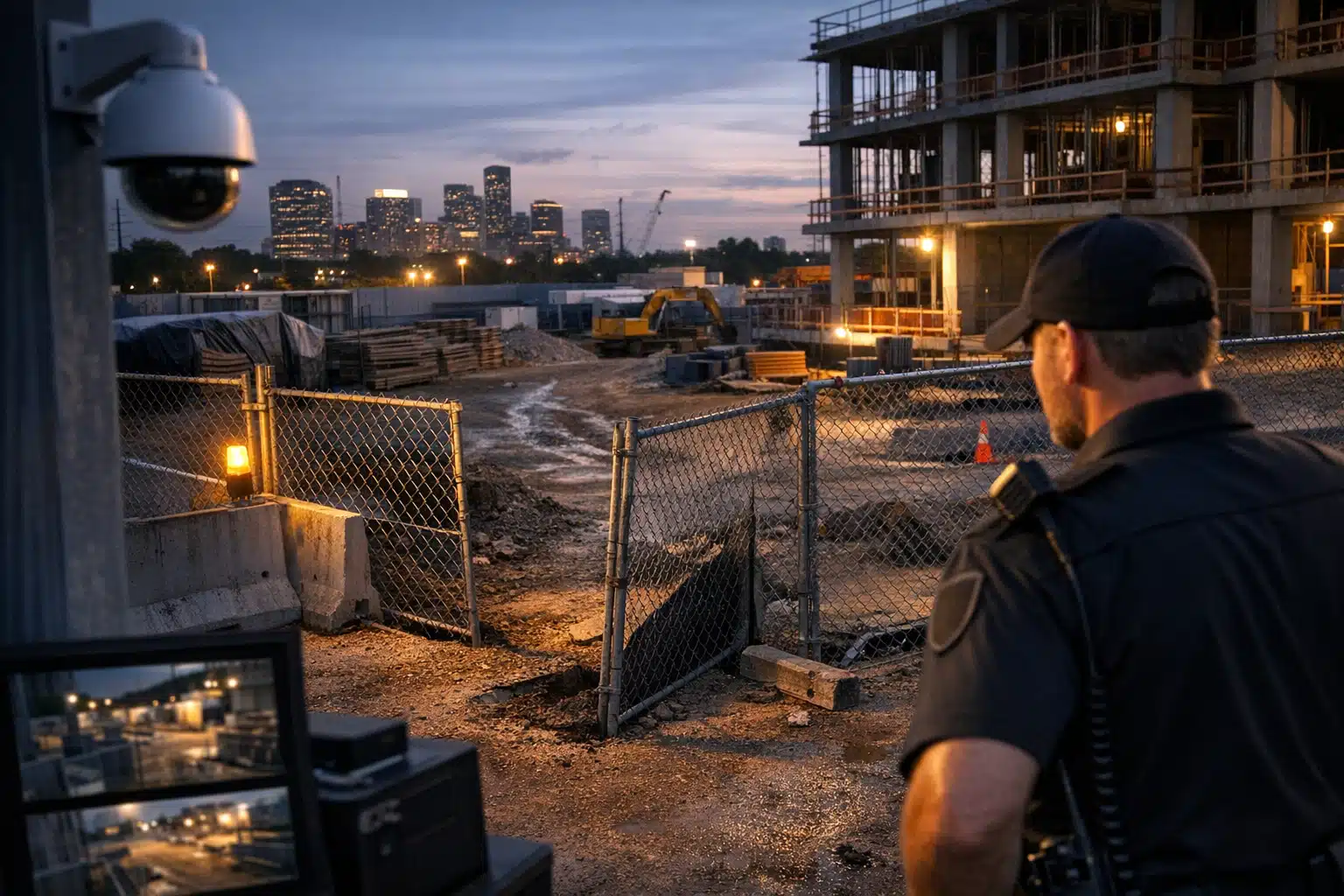
Houston added more than 45,000 new business establishments in recent years, and each one becomes a target the moment construction starts. Copper theft, equipment loss, and trespassing hit new developments hardest during their first 90 days. New business security planning works best when it begins at the blueprint stage, not after the first break-in. This post walks Houston owners and developers step by step from groundbreaking to grand opening.
Why New Houston Developments Face Higher Risk
New sites carry vulnerabilities that established properties have already solved. Fencing may be temporary. Lighting is incomplete. Access controls do not exist yet.
Criminals watch for these gaps. A half-built retail center in Katy or a new industrial pad near the Port of Houston signals opportunity.
The Most Common Threats to Watch
- Copper and wire theft from HVAC units and electrical rough-ins
- Equipment and tool theft from unsecured trailers and lay-down yards
- Material loss such as lumber, rebar, and piping
- Vandalism and graffiti on unoccupied structures
- Squatting and trespassing in shells left open overnight
Copper theft alone costs Texas construction sites millions each year. A single ripped-out condenser unit can set a project back weeks.
New Business Security Planning: A Step-by-Step Framework
Effective new business security planning follows a sequence. Each phase of construction and opening brings different exposure. Match your protection to the phase you are in.
Step 1: Assess the Site Before Ground Breaks
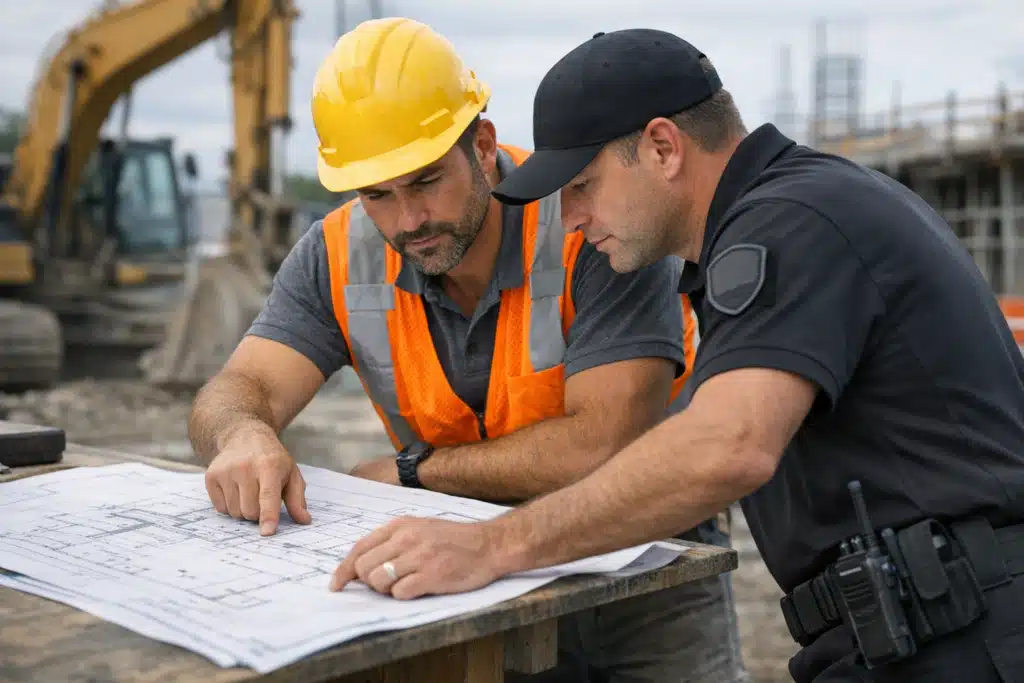
Start with a risk assessment tied to location. A construction site in the Energy Corridor faces different threats than one in Clear Lake or downtown.
Map these details early:
- Property boundaries and every point of entry
- Neighboring crime patterns and past incidents
- Distance from the nearest HPD or constable patrol
- Flood zones and hurricane evacuation routes
- Where high-value materials will be stored
This assessment shapes every decision that follows. Skipping it means guessing.
Step 2: Secure the Perimeter During Construction
Perimeter control matters most when a site sits empty overnight. Temporary chain-link with locked gates is the baseline, not the finish line.
Add layers based on value at risk:
- Remote video surveillance with motion detection covering entry points
- Portable light towers to remove dark corners
- Posted signage stating the site is monitored
- Locked containers for tools and copper materials
Remote monitoring costs a fraction of round-the-clock guards. For a Katy strip center under construction, cameras can watch the full lot from a central station.
Step 3: Choose Between On-Site Guards and Remote Monitoring
Both methods protect Houston developments. The right choice depends on site size, risk level, and budget.
On-site guards work for:
- Large energy facilities with active turnarounds
- Port-adjacent yards with vehicle and container access
- Sites needing immediate physical response
- Locations with frequent daytime deliveries and contractor traffic
Remote video surveillance works for:
- Fenced construction lots with defined boundaries
- Apartment developments between build phases
- Retail pads where cost control matters
- Sites needing overnight coverage without full staffing
Many Houston developments combine both. Guards patrol during active hours. Cameras watch overnight and alert a monitoring station.
Step 4: Plan for Gulf Coast Weather From Day One
Hurricane season runs June through November. A half-finished building has no storm shutters and no locked doors. Looters follow evacuations.
Build weather response into your security plan:
- Identify which cameras and equipment need waterproof housings
- Arrange backup power for monitoring during outages
- Set a pre-storm walkthrough to secure loose materials
- Confirm who monitors the site when staff evacuate
Remote monitoring holds an edge during storms. A guard cannot stay on a flooded site. Cameras with cellular backup can keep watching after evacuation orders.
Step 5: Transition Security as You Approach Opening Day
Construction security ends. Operational security begins. This handoff is where many new Houston businesses drop their defenses.
Before you open, install the permanent measures:
- Access control for employee and delivery entrances
- Fixed camera systems covering registers, entrances, and parking
- Lighting that meets Texas commercial standards for parking areas
- Alarm monitoring tied to a response protocol
An apartment community in The Woodlands needs different coverage than a retail center in Midtown. Match the system to how the property will operate.
Security Costs for Houston Business Development Projects
Cost drives most decisions in early-stage Houston business development. Owners want numbers before they commit.
Several variables set the price:
- Site size and the number of camera or patrol points needed
- Hours of coverage, whether overnight only or 24/7
- Guard versus remote staffing model
- Risk level based on location and materials on site
Remote video surveillance runs lower than staffing multiple guards. For a mid-size construction lot, remote monitoring can cover overnight hours at a fraction of continuous guard cost.
The real math compares security spend against loss. One stolen transformer or a torched trailer erases months of savings from skipping coverage.
Special Considerations for Houston Energy and Port Sites
Energy facilities and port operations answer to stricter rules than a strip mall. Federal and state oversight shapes their security from the start.
Energy Corridor and Refinery Developments
New energy facilities near the Ship Channel face regulatory scrutiny. Perimeter integrity, access logs, and monitored entry points are baseline requirements, not upgrades.
During turnarounds, contractor headcount spikes. Access control keeps unauthorized workers out of sensitive areas.
Port of Houston Facilities
Sites near the port fall under maritime security expectations. Credentialing, vehicle inspection, and cargo area monitoring matter here.
New warehouses and logistics hubs along the channel should plan for these controls before cargo arrives. Retrofitting security after operations begin costs more and disrupts flow.

 Posted on Google
A Practical Checklist for Your First 90 Days
Use this list to track your security setup from break-ground to open:
- Complete a site risk assessment tied to the neighborhood
- Install temporary fencing and lock all gates
- Set up remote video surveillance on entry points
- Add lighting to remove blind spots
- Store copper, tools, and materials in locked containers
- Build a hurricane response step into the plan
- Post monitored-site signage as deterrence
- Plan the transition to permanent access control and alarms
- Test every camera and alarm before opening day
Checking each box closes the gaps criminals look for during the vulnerable early months.
Conclusion
Houston developments face their highest risk before the doors ever open, from copper theft to storm-season looting. Strong new business security planning follows a sequence: assess the site, secure the perimeter, choose the right coverage, plan for weather, and transition to permanent systems.
Twin City Security Houston helps owners across the Energy Corridor, Port of Houston, Katy, The Woodlands, and Clear Lake protect projects from groundbreaking forward. Call 832‑301‑9478, email Houston@Twincitysecurity.com, or visit https://www.twincitysecurityhouston.com for a site assessment or monitoring quote.
Sources
Recent Posts