
Strategies for Securing Clear Lake’s Port Facilities
Why Clear Lake’s Maritime Environment Changes the Security Equation
Clear Lake sits at the meeting point of Galveston Bay, the Houston Ship Channel, and NASA’s Johnson Space Center corridor. This puts marinas, fuel docks, and cargo terminals within a few miles of each other.
Port facility security here must account for water-side access, not just fenced land perimeters. A boat can approach a bulkhead at 2 a.m. far more quietly than a truck can breach a gate.
This post breaks down the specific threats Clear Lake operators face. It covers regulatory requirements, physical layout weaknesses, remote monitoring, and storm-season planning.
The Threats Specific to Clear Lake Port Facilities
Clear Lake facilities face risks that inland warehouses never see. The mix of recreational boat traffic and commercial operations creates blind spots.
Water-Side Intrusion
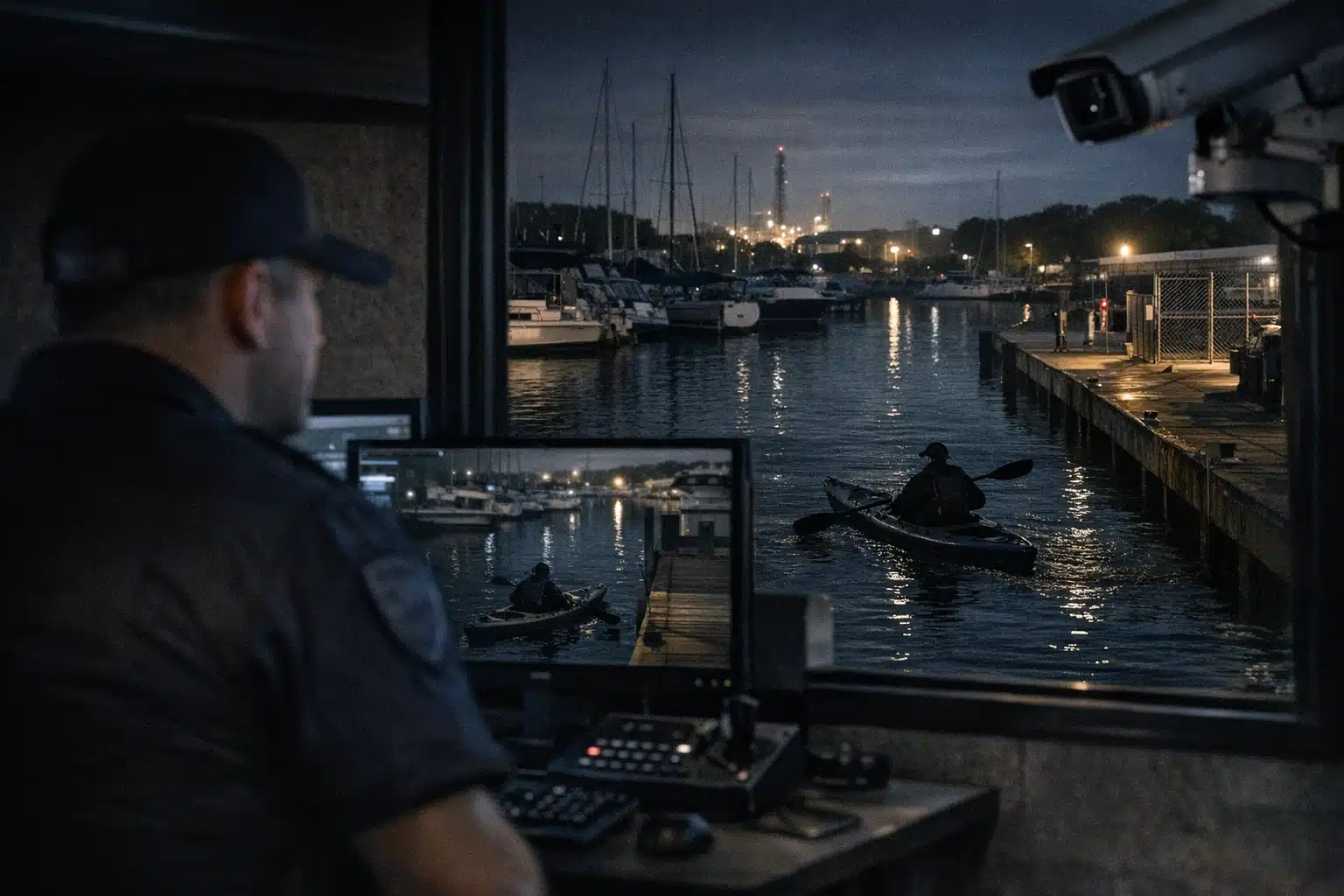
Thieves and trespassers reach docks by kayak, jet ski, or small skiff. They avoid every camera and guard post aimed at the parking lot and front gate.
Fuel theft from marina tanks and copper theft from dock electrical systems both happen from the water. A land-only camera plan misses the approach entirely.
Recreational Traffic Masking Bad Actors
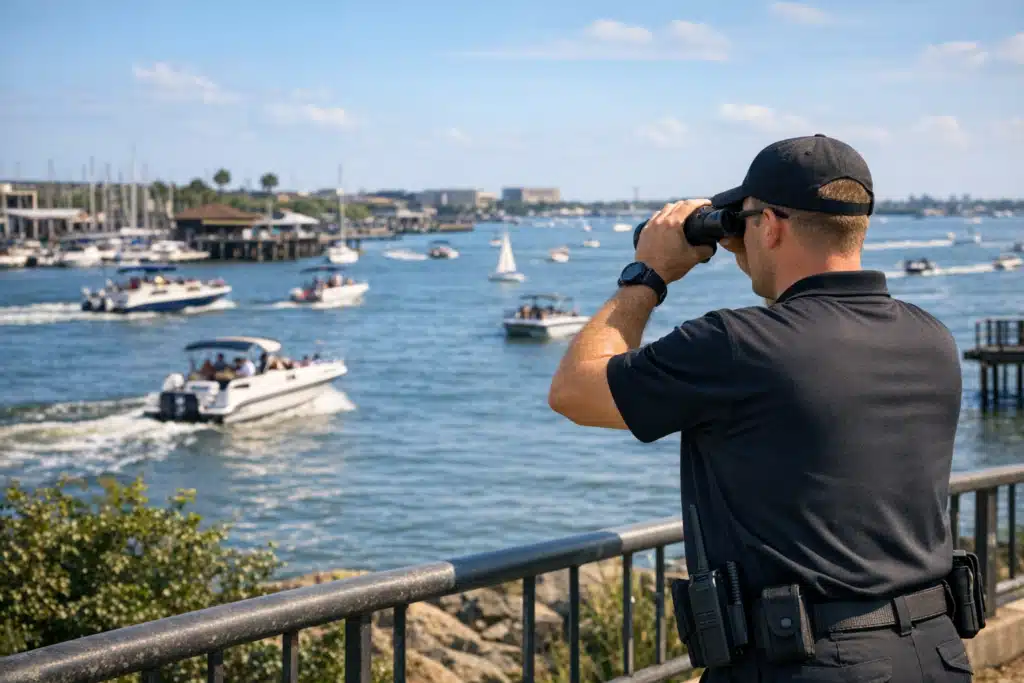
The waters around Clear Lake, Kemah, and Seabrook carry heavy weekend boat traffic. A single suspicious vessel blends into hundreds of legitimate ones.
Effective monitoring separates normal marina activity from a vessel loitering near a restricted dock. That takes trained eyes, not just recorded footage.
Proximity to High-Value Energy Assets
Clear Lake sits near petrochemical operations along the Bayport and Ship Channel corridors. Facilities storing fuel, chemicals, or bulk cargo draw both theft and regulatory scrutiny.
Regulations That Shape Port Facility Security in Clear Lake
Federal law governs most commercial maritime facilities on the Gulf Coast. Ignoring these rules risks fines, shutdowns, and Coast Guard enforcement.
MTSA and the Facility Security Plan
The Maritime Transportation Security Act (MTSA) requires covered facilities to maintain a written Facility Security Plan. The U.S. Coast Guard reviews and approves it.
Key MTSA obligations include:
- Designating a Facility Security Officer responsible for the plan
- Controlling access to restricted areas by land and water
- Monitoring the facility and surrounding waters continuously
- Screening people, vehicles, and cargo entering the site
- Setting response procedures for three MARSEC threat levels
TWIC Card Access Control
Workers entering secure maritime areas need a Transportation Worker Identification Credential (TWIC). Guards must verify these cards at controlled entry points.
A missed TWIC check during a Coast Guard inspection can trigger penalties. On-site officers trained in credential verification keep facilities compliant.
Building a Layered Port Facility Security Plan
Strong maritime protection uses overlapping layers. If one fails, another catches the gap. Here is how Clear Lake operators can structure it.
Step 1: Map Every Access Route
Start with a site walk that includes the water line. Document gates, fences, docks, bulkheads, storm drains, and open bay frontage.
Mark where a small boat could tie up unseen. Mark where fence lines end at the water and leave a gap.
Step 2: Cover the Waterfront With Cameras
Point cameras at docks, slips, and open bay approaches, not only the front gate. Thermal and low-light cameras catch movement across dark water.
Remote video surveillance turns those cameras into an active deterrent. Live operators watch feeds and speak through on-site talk-down speakers when someone approaches a restricted dock.
Step 3: Staff Patrols That Include the Shoreline
On-site guards should walk the waterfront, not just the perimeter road. Foot patrols check dock locks, fuel connections, and moored equipment.
Guards trained in maritime environments know what a fuel siphoning setup looks like. They spot a vessel that has lingered past sunset near a loading berth.
Step 4: Control Every Entry Point
Set up a single staffed gate for vehicles and a logged process for water-side deliveries. Verify TWIC cards, log visitors, and inspect cargo.
Step 5: Integrate Alarms With Live Response
Motion sensors, gate contacts, and camera analytics should alert a live monitoring center. An alarm that only records footage does nothing to stop a theft in progress.
Remote Video Surveillance for Clear Lake Waterfronts
Remote monitoring fits Clear Lake facilities that cannot afford guards at every dock. Cameras cover ground that foot patrols reach only once an hour.
How Live Monitoring Works
Cameras feed a staffed monitoring center around the clock. Operators watch high-risk zones and respond to motion alerts in real time.
When someone crosses a boundary, the operator can:
- Confirm the activity on live video
- Trigger a voice warning through on-site speakers
- Alert dispatch or on-site guards
- Call law enforcement with a live description
- Save timestamped footage for the report
Cost Compared to Full Guard Coverage
Round-the-clock guard staffing costs far more than camera monitoring per covered acre. Many Clear Lake operators pair a small guard team with remote surveillance for the rest.
The result covers more ground for less money than guards alone. Pricing depends on camera count, monitoring hours, and site size.

 Posted on Google
Hurricane Season Security for Clear Lake Facilities
Gulf Coast storms hit Clear Lake directly. Storm surge from Galveston Bay pushes water inland across low-lying docks and yards.
Theft Risk Rises During Evacuations
Empty facilities during evacuation orders draw looters. Power outages knock out cameras and alarms that depend on grid electricity.
Plan for these gaps before June:
- Install battery or generator backup for cameras and monitoring links
- Move fuel and high-value cargo to higher, monitored zones
- Document asset positions with photos before storm landfall
- Arrange post-storm patrols to check the site once winds drop
- Keep cellular backup for feeds when internet lines fail
Post-Storm Damage and Access Control
After a storm, roads flood and gates fail. On-site guards prevent unauthorized entry while cleanup crews and adjusters arrive.
Guards also document damage for insurance claims. A clear log of who entered and when protects the facility from disputes.
What to Ask Before Hiring Maritime Security
Not every security provider knows waterfront operations. Ask specific questions before you sign.
- Have your officers worked MTSA-regulated facilities before?
- Can your team verify TWIC credentials at entry points?
- Do your cameras cover water approaches, not just land?
- Is your monitoring center staffed 24 hours by live operators?
- What is your backup plan during hurricane power loss?
A provider that answers these clearly understands Clear Lake’s maritime risks. One that only talks about gates and parking lots does not.
Conclusion
Clear Lake port facilities face water-side intrusion, MTSA compliance demands, and direct hurricane exposure that inland sites never see. A layered plan of waterfront cameras, live remote monitoring, and trained on-site guards covers each of those gaps.
Twin City Security Houston builds maritime security plans for Clear Lake operators, marinas, and energy terminals. Call 832‑301‑9478 or email Houston@Twincitysecurity.com for a site assessment or monitoring quote.
Sources
Recent Posts