
How to Choose Between Armed and Unarmed Security Guards for Your Houston Business

Choosing the Right Guard Type for Houston’s Risk Profile
Houston reported more than 100,000 property crime incidents in recent years, according to local police data. That number shapes how business owners staff their sites.
The choice between armed security and unarmed guards depends on your location, assets, and threat level. A Katy retail strip faces different risks than a Port of Houston cargo yard.
This post breaks down when each guard type fits a Houston business. You will see cost differences, legal rules, and real examples from local sectors.
What Armed Security Means Under Texas Law
Armed security guards in Texas carry firearms and hold a Level III certification. They complete 45 hours of training regulated by the Texas Department of Public Security.
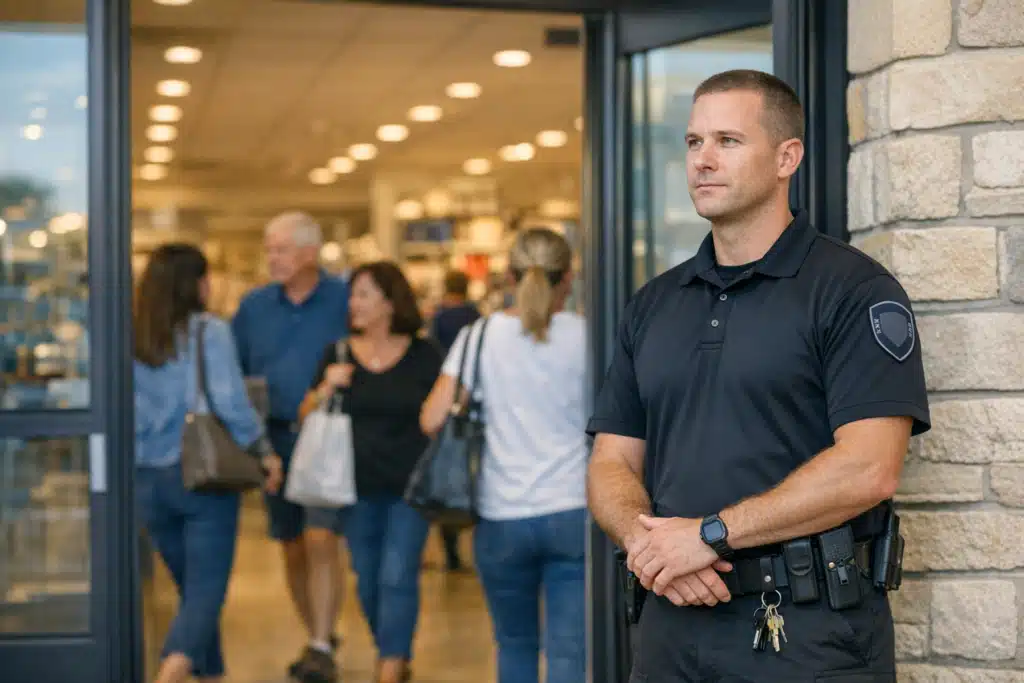
That training covers firearm handling, use-of-force law, and de-escalation. Guards renew the license and pass background checks before working any Houston site.
When Armed Security Fits a Houston Business
Armed guards suit sites with high-value assets or elevated theft risk. The deterrent effect matters when intruders know a site carries valuables.
- Energy facilities: Refineries along the Ship Channel store volatile product and expensive equipment.
- Port operations: Cargo theft and trespassing make armed response reasonable at the Port of Houston.
- Banks and jewelry retailers: Cash and merchandise draw armed robbery attempts.
- Cannabis-adjacent and cash-heavy businesses: Limited banking access raises on-site cash risk.
Armed security also helps during late-night shifts in isolated areas. Energy Corridor properties that sit empty after hours benefit from visible armed presence.
What Unarmed Security Covers in Houston
Unarmed security guards hold a Level II certification and carry no firearm. They handle access control, patrols, reporting, and customer-facing duties.
Unarmed guards work for sites where the main concern is observation and order. They cost less and present a lower-profile image for public-facing properties.
When Unarmed Guards Make Sense
- Apartment communities: Residents prefer a friendly presence over visible firearms.
- Retail centers: Shopping plazas in The Woodlands want approachable staff at entrances.
- Construction sites: Day-shift access control and equipment checks rarely need armed response.
- Corporate lobbies: Office buildings in the Energy Corridor focus on badge checks and visitor logs.
Unarmed guards still call Houston police fast when threats escalate. Their value lies in presence, documentation, and rapid reporting.
Armed vs. Unarmed: A Direct Houston Comparison
The right choice balances risk, budget, and public image. Below is how the two compare across the factors Houston operators weigh.
Cost
Armed guards cost more per hour than unarmed guards. The higher rate reflects added training, licensing, and liability insurance.
A refinery paying for armed coverage accepts that cost against the value of protected assets. A small retail center may find unarmed coverage meets its needs.
Deterrence
Armed presence stops many threats before they start. Criminals targeting cargo or cash often avoid sites with armed guards.
Unarmed guards deter casual trespassing and loitering. They work well where the main risk is disorder rather than violent crime.
Liability
Armed security carries higher liability exposure. A firearm on site raises the stakes of any incident.
Unarmed coverage reduces that exposure. Property managers who want minimal legal risk lean toward unarmed staff backed by camera systems.
Public Image
Firearms shape how visitors read a property. An apartment community may feel safer with unarmed guards and strong lighting.
An oil storage terminal, by contrast, benefits from the message armed guards send. The right image depends on who uses the site.
How to Decide for Your Houston Property
Match guard type to your actual risk, not a generic template. Follow these steps to reach a clear decision.
- Assess your assets. List what thieves might target: equipment, cargo, cash, or copper.
- Review local crime data. Check incident reports for your Houston ZIP code and nearby blocks.
- Map your hours of exposure. Identify when the site sits empty or poorly lit.
- Weigh your budget against risk. Decide whether asset value justifies armed coverage cost.
- Factor in your tenants or customers. Gauge how visible firearms affect their comfort.
- Combine guards with technology. Pair staff with remote video monitoring for wider coverage.

 Posted on Google
Blending Guards With Remote Video Surveillance
Many Houston sites get the best result from a mixed setup. Remote video monitoring extends coverage without adding full guard shifts.
A construction site in Katy might use unarmed day guards plus remote monitoring at night. Operators watch live feeds and dispatch response when motion triggers an alert.
Energy facilities often pair armed on-site guards with camera coverage across the perimeter. This keeps staffing lean while covering large acreage along the Ship Channel.
Hurricane Season Coverage
Gulf Coast storms create security gaps during evacuations. Empty sites draw looters once residents leave.
Remote monitoring keeps eyes on your property when guards cannot stay on site. Operators flag intrusions during the days a storm keeps crews away.
Houston Sector Examples
Different Houston sectors reach different conclusions. Here is how the choice plays out in practice.
- Port of Houston terminal: Armed guards at gates, plus camera coverage across container yards.
- Clear Lake apartment complex: Unarmed patrols and remote monitoring at entry points.
- Energy Corridor office park: Unarmed lobby staff with after-hours camera surveillance.
- Refinery turnaround project: Armed perimeter guards during high-contractor-traffic weeks.
- Katy construction site: Unarmed access control by day, remote monitoring by night.
Conclusion
Armed guards fit high-risk Houston sites like ports and refineries, while unarmed guards suit apartments, retail, and corporate lobbies. The right call rests on your assets, crime exposure, budget, and the people who use your property.
Twin City Security Houston builds staffing plans around your site’s real risk and pairs guards with remote video monitoring. Call 832‑301‑9478, email Houston@Twincitysecurity.com, or visit https://www.twincitysecurityhouston.com for a Houston security assessment.
Sources
Recent Posts