
Ensuring Safety at Houston’s Large-Scale Outdoor Events: Security Essentials
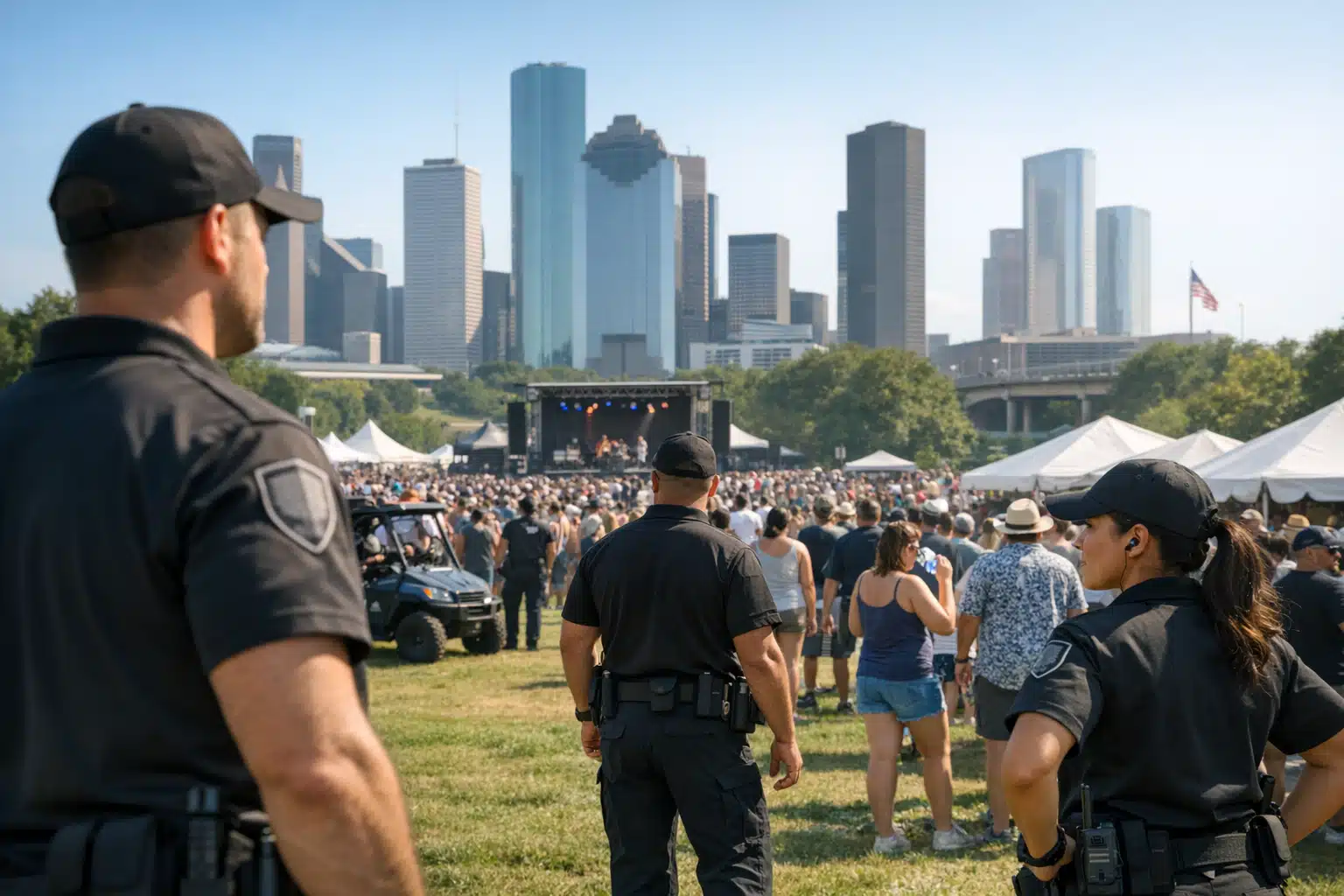
Houston hosts more than 500 permitted outdoor events each year, from RodeoHouston to Free Press Summer Fest crowds packing Eleanor Tinsley Park. Strong event security keeps those gatherings safe when temperatures hit 95 degrees and attendance climbs past 20,000. This post breaks down the logistics of protecting large outdoor events across the region, with concrete steps for organizers who cannot afford a gap in coverage.
Outdoor venues create risks that indoor spaces never face. Wide open perimeters, shifting weather, and unpredictable crowd movement all demand planning that begins months in advance.
Why Event Security Matters for Houston Organizers
Houston’s climate and geography raise the stakes for any outdoor gathering. Gulf Coast humidity, sudden thunderstorms, and flash flooding can turn a calm afternoon into an evacuation scenario within minutes.
City ordinances require permitted events to submit safety plans. The Houston Fire Marshal and HPD both review crowd management measures before approving large gatherings.
Poor planning carries real cost. A single crowd surge or missing exit route can cause injuries, lawsuits, and permit denial for future events.
Local Risk Factors to Account For
- Heat exposure: Summer festivals near Discovery Green push medical teams past capacity without shade and hydration stations.
- Flash flooding: Buffalo Bayou venues sit in flood-prone zones that fill fast during afternoon storms.
- Traffic bottlenecks: Events near NRG Park or the Theater District snarl parking and emergency vehicle access.
- Alcohol service: Beer gardens and concert grounds raise the odds of altercations after dark.
Building an Outdoor Event Protection Plan
Outdoor event protection requires a written plan that maps every access point, exit, and emergency route. Start this work at least 60 to 90 days before the gate opens.
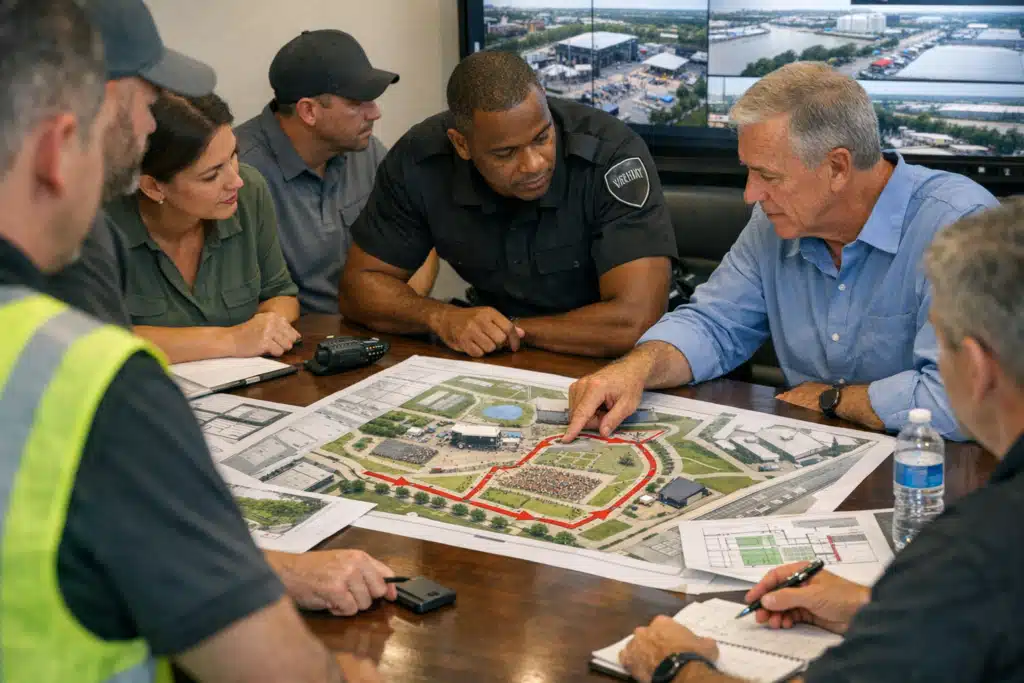
The plan must match the venue’s real conditions, not a generic template. A concert at Cynthia Woods Mitchell Pavilion in The Woodlands needs different measures than a street festival in EaDo.
Step-by-Step Security Planning
- Map the perimeter. Identify every entry, service road, and unfenced boundary that a person could cross undetected.
- Set entry screening. Decide on bag checks, metal detection, and credential verification for staff and vendors.
- Position guards by zone. Assign fixed posts at gates, stages, and cash-handling areas, plus roving patrols.
- Plan crowd flow. Design one-way paths near stages to prevent dangerous compression points.
- Coordinate with HPD and EMS. Share your plan and confirm response staging locations in advance.
- Build a weather trigger sheet. Define wind speed and lightning distance thresholds that pause or stop the event.
Each step gets documented and shared with every team lead. A plan no one reads protects no one.
Access Control and Crowd Management
Access control keeps unauthorized people out and creates a clear count of who is inside. For a 15,000-person festival, controlled entry points reduce both theft and violent incidents.
Crowd density near stages causes the most serious injuries at outdoor concerts. Guards trained in crowd dynamics watch for compression at barricades and call for pauses before a surge turns deadly.
Practical Access Control Measures
- Wristbands or scannable tickets at every gate to track capacity in real time.
- Separate vendor and VIP entrances to keep service traffic away from general crowds.
- Bag-check stations positioned 20 to 30 feet ahead of the main gate to prevent backups.
- Clear-bag policies that speed screening at events over 5,000 people.
Guards at each point need radios tied to a central command post. When one gate reaches capacity, staff redirect arrivals before a bottleneck forms.
Remote Video Surveillance for Wide-Open Venues
Remote video surveillance covers ground that guards on foot cannot see at once. Mobile camera units placed on light towers give a live overhead view of parking lots, back fences, and crowd edges.
At a sprawling site like a fairground in Katy or Clear Lake, a monitoring team spots trouble early. Operators track a fight forming in a rear lot and dispatch guards before it spreads.
Where Cameras Earn Their Keep
- Perimeter fencing where fence-jumpers try to enter after dark.
- Parking areas prone to vehicle break-ins during headline sets.
- Cash and merchandise tents that draw theft attempts.
- Evacuation routes that must stay clear during a weather emergency.
Recorded footage protects organizers after the fact. If a liability claim follows an incident, timestamped video answers questions no witness can.
Weather and Emergency Response on the Gulf Coast
Gulf Coast weather changes fast, and outdoor events must plan for it. Lightning within eight miles forces a stage shutdown under most safety standards.
Houston’s flood history means low-lying venues need a shelter plan that moves thousands of people quickly. Guards trained in evacuation direct crowds without triggering panic.
Weather Response Checklist
- Assign a weather monitor who tracks radar and lightning distance all day.
- Pre-mark shelter locations with capacity limits posted for staff.
- Rehearse the evacuation call so team leads act without hesitation.
- Stage medical teams near likely heat-collapse zones like standing-room fronts.
A clear chain of command decides when to pause music and when to clear the grounds. Confusion at that moment costs lives.

 Posted on Google
Staffing Ratios and Guard Training
Guard count scales with attendance, alcohol service, and event type. A common starting point runs one guard per 100 attendees, adjusted up for high-risk shows.
Texas licenses security personnel under the Department of Public Safety Private Security Bureau. Every guard at your event must hold a valid state license.
What to Verify Before Hiring
- Active Texas DPS licensing for every guard on site.
- Crowd management training beyond basic patrol certification.
- Prior event work at comparable Houston venues and crowd sizes.
- Radio and command coordination practice with your team.
Untrained staff create more risk than they remove. A guard who freezes during a medical emergency slows the whole response.
Coordinating With Local Authorities
Houston requires event organizers to work with HPD for large permitted gatherings. Off-duty officers frequently supplement private security at concerts and festivals.
Your private security team fills the gaps police do not cover. Guards handle credential checks, vendor issues, and interior patrols while officers manage arrests and traffic.
Clear role division prevents overlap and confusion. A pre-event meeting between your security lead, HPD, and EMS sets those boundaries.
Conclusion
Safe outdoor events in Houston depend on early planning, trained guards, camera coverage, and a firm weather response plan. The region’s heat, storms, and crowd sizes leave no room for guesswork. Match your security measures to your venue, and coordinate with local authorities well before gate day.
Twin City Security Houston helps event organizers plan and staff safe gatherings across the Houston area. Call 832‑301‑9478, email Houston@Twincitysecurity.com, or visit https://www.twincitysecurityhouston.com for an event security assessment.
Sources
Recent Posts