
Enhancing Perimeter Security for Houston’s Expanding Industrial Areas
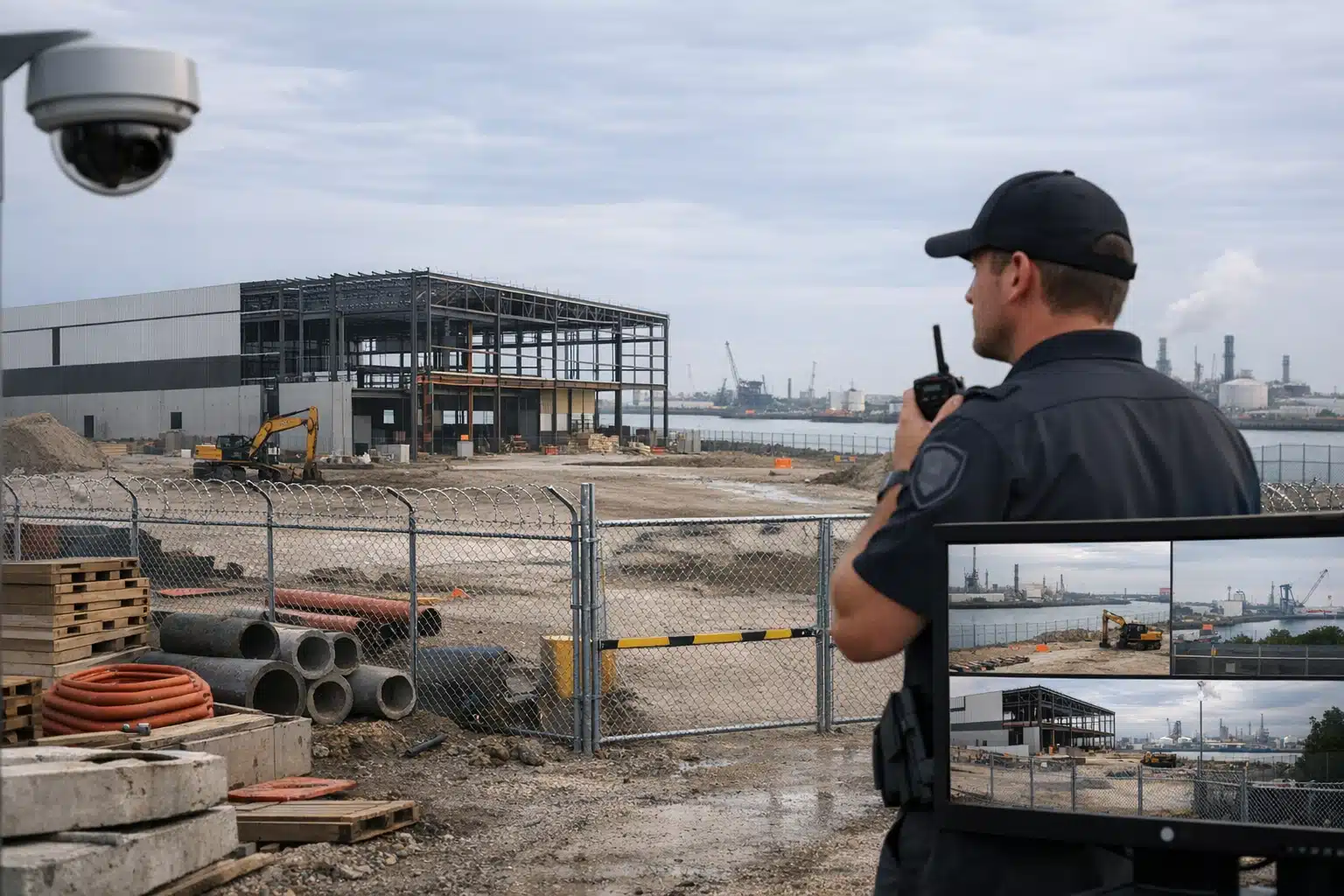
Why Perimeter Security Matters for Houston’s Industrial Growth
Harris County recorded over 100,000 property crimes in a single year, and industrial zones absorb a large share. New warehouses, terminals, and fabrication yards keep opening across the region. Each one adds fence line, gates, and stored assets that thieves target.
Effective industrial perimeter security protects these assets before intruders reach the building. For facility managers along the Ship Channel and in the Energy Corridor, the perimeter is the first line that stops copper theft, cargo loss, and trespassing.
This post breaks down the real threats tied to Houston industrial expansion and the practical steps that reduce them. You get concrete tactics, not generic checklists.
The Security Gaps Created by Houston Industrial Expansion
New industrial construction moves faster than security planning. A site can sit half-built for months with fencing gaps, unlocked laydown yards, and idle equipment worth six figures.
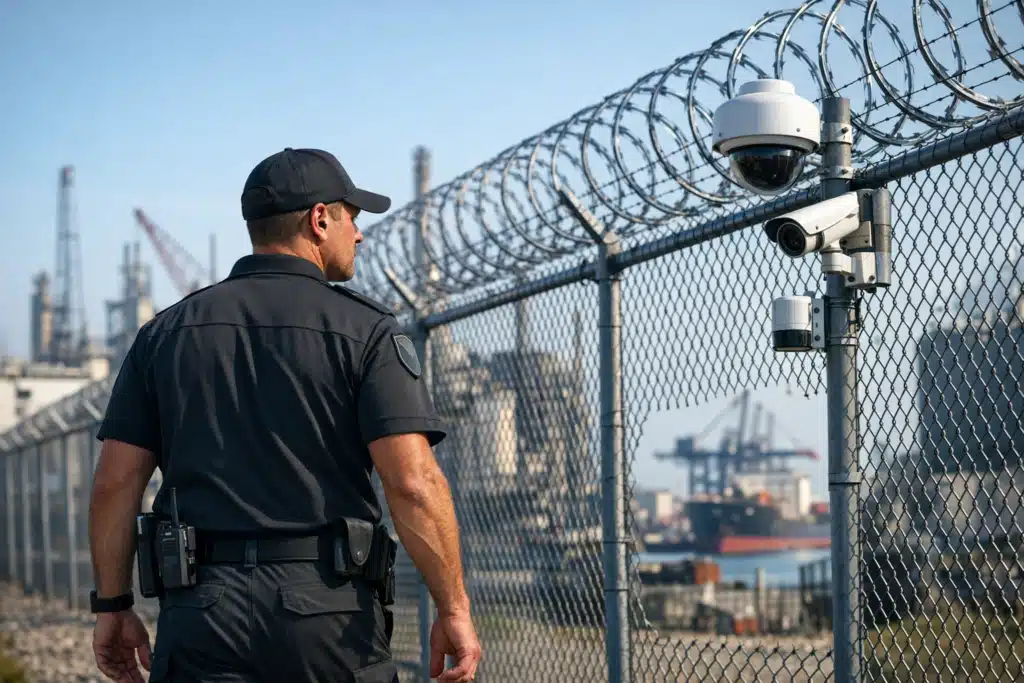
Along Beltway 8 and near the Port of Houston, several patterns repeat:
- Copper and catalytic converter theft from parked fleet vehicles and electrical rooms
- Diesel siphoning from generators and machinery left overnight
- Cargo and material theft at staging areas near terminal gates
- Trespassing and squatting on undeveloped parcels adjacent to active sites
Sites in Katy and along the Grand Parkway face a different pressure. Rapid growth means construction crews and security both stretch thin across large footprints.
Why Standard Alarms Fall Short Here
A basic alarm reports a break-in after it happens. That leaves a 15 to 45 minute police response window in outer Harris County.
By then, thieves have loaded a truck and left. Perimeter defense needs detection at the fence line, not at the office door.
Building a Layered Industrial Perimeter Security Plan
Strong perimeter protection works in layers. Each layer buys time and creates a record for prosecution.
Follow these steps to structure a plan for a Houston industrial site:
- Map your fence line and blind spots. Walk the property at night. Note dark corners, drainage ditches, and low fence sections.
- Set detection zones. Place motion-activated cameras at gates, laydown yards, and fuel storage.
- Add live remote monitoring. Trained operators watch feeds and speak to intruders in real time.
- Deploy on-site guards for high-risk hours. Physical presence deters organized theft crews.
- Control access points. Log every vehicle and worker at the gate.
- Review incident data weekly. Adjust coverage based on where activity clusters.
This structure fits refineries, terminals, and construction yards alike. The mix shifts with each site’s risk profile.
Remote Video Monitoring for Large Footprints
Remote video surveillance covers ground that guards alone cannot. One monitoring operator can watch dozens of camera zones at once.
When a camera detects movement after hours, the operator sees it live. Many systems include speakers for voice-down warnings.
A voice-down command stops most trespassers before they act. The intruder learns they are seen and recorded. This works well for sprawling energy sites and port-adjacent yards where fence lines run for thousands of feet.
On-Site Guards Where Presence Counts
Cameras record. Guards intervene. For active refinery turnarounds and high-value cargo staging, both matter.
A guard at the gate verifies contractor credentials during a turnaround. That single checkpoint prevents unauthorized entry when hundreds of temporary workers rotate in.
Protecting Energy Corridor and Port of Houston Facilities
Energy facilities carry regulatory weight beyond theft. Port and pipeline operations fall under federal security rules.
The Maritime Transportation Security Act sets access control standards for port facilities. Perimeter cameras and guard logs help operators meet documentation requirements.
For chemical plants, the TSA Pipeline Security Guidelines and CFATS-style expectations shape site access design. A weak perimeter creates compliance exposure, not just loss risk.
Hurricane Season and Evacuation Monitoring
Gulf Coast storm season runs June through November. When a facility evacuates, it sits empty and exposed for days.
Looters target evacuated industrial zones after major storms. Remote monitoring keeps eyes on the property when staff cannot return.
Set up storm-ready monitoring before the season starts:
- Confirm cameras have battery or generator backup
- Verify cellular failover if wired internet drops
- Pre-authorize the monitoring team to alert police during evacuation
- Document equipment locations for post-storm damage claims
After Hurricane Beryl, many Houston businesses lost power for days. Sites with backup-powered surveillance kept coverage while neighbors went dark.

 Posted on Google
What Industrial Perimeter Security Costs in Houston
Pricing depends on site size, risk level, and coverage hours. A clear breakdown helps you budget realistically.
Common cost drivers include:
- Number of camera zones along the fence line and interior yard
- Monitoring hours — overnight only versus 24/7 coverage
- Guard staffing — armed versus unarmed, single post versus patrol
- Voice-down and access control add-ons
Remote monitoring costs less per hour than a full guard roster. Many Houston operators pair overnight remote video with daytime guard posts.
That combination covers the highest-risk hours without staffing the site around the clock. The result cuts loss while controlling spend.
Getting a Site-Specific Assessment
No two industrial sites share the same risk map. A yard in Pasadena faces different threats than a warehouse in Katy.
A proper assessment starts on the ground. A security specialist walks the perimeter, reviews past incidents, and marks weak points.
From there, you get a plan matched to your actual fence line and budget. Guesswork drops out of the equation.
Common Mistakes Houston Facility Managers Make
Even careful operators leave gaps. These errors show up repeatedly across Harris County sites.
- Relying on lighting alone. Bright lights help cameras but do not stop anyone.
- Ignoring the back fence. Thieves enter where no one watches.
- Skipping voice-down capability. Passive cameras record loss instead of preventing it.
- Letting camera views drift. Wind and vegetation block lenses over time.
- Treating security as one-time setup. Threats shift as the site changes.
Regular review closes each of these gaps. A quarterly walkthrough catches problems before criminals do.
Partner With Twin City Security Houston
Houston’s industrial footprint keeps growing, and so does the risk at every fence line. Layered perimeter protection — remote video, live monitoring, and on-site guards — stops loss before it starts. The right mix depends on your specific site, hours, and budget.
Twin City Security Houston protects construction sites, energy facilities, port operations, and warehouses across the region. Call 832‑301‑9478 or email Houston@Twincitysecurity.com for a site assessment and monitoring quote. Get coverage matched to your perimeter before the next incident.
Sources
Recent Posts