
Choosing the Best Remote Surveillance Options for The Woodlands
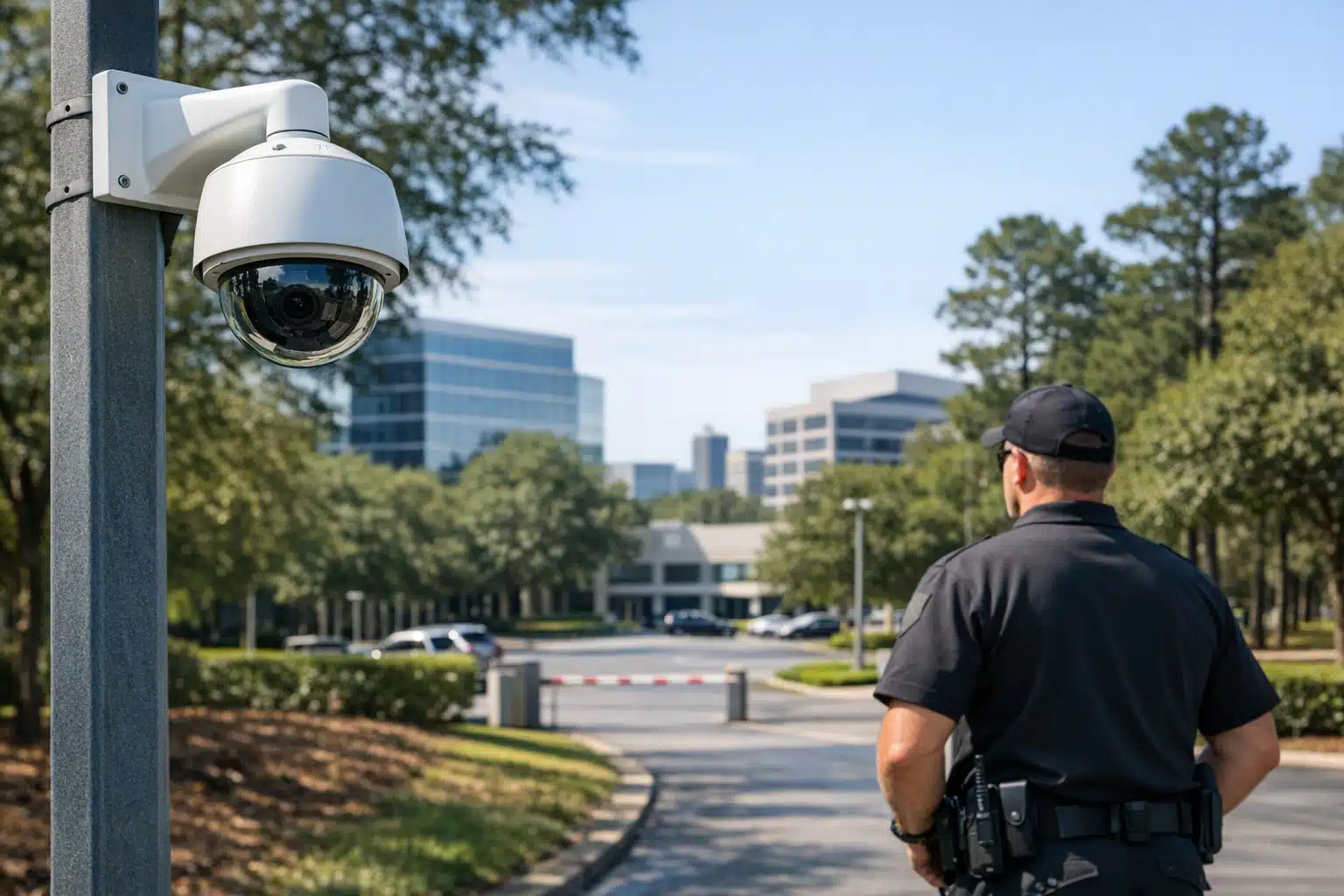
Property crime in Montgomery County climbs each year as The Woodlands adds new commercial construction and retail space. Business owners here face a specific problem: sprawling office parks, wooded lots, and low-traffic parking structures create blind spots. Remote surveillance closes those gaps by pairing live cameras with trained operators who watch your property in real time. This post walks you through picking the right system for The Woodlands security needs.
The goal is practical: fewer break-ins, faster response, and lower costs than round-the-clock guard coverage alone.
Why Remote Surveillance Fits The Woodlands Business Layout
The Woodlands was built around green space, master-planned villages, and wide commercial corridors. That design creates security conditions you do not see in dense downtown Houston.
Wooded buffers and setbacks hide activity from the street. A parked vehicle behind a tree line near Research Forest Drive can sit unnoticed for hours.
Remote surveillance solves this because operators watch camera feeds continuously. When motion triggers an alert, a live person verifies the threat within seconds.
Where Local Businesses Get Hit Hardest
- Retail centers off I-45 and Sawdust Road — after-hours smash-and-grab attempts
- Office parks near Grogan’s Mill — catalytic converter theft in employee lots
- Construction sites along the Woodlands Parkway — copper wire and equipment theft overnight
- Medical and professional buildings — unauthorized loitering after tenant hours
Each of these sites shares one trait: long periods with no one watching. That is where camera monitoring earns its keep.
What Remote Surveillance Includes and How It Works
Remote surveillance is a system where cameras feed video to a staffed monitoring center. Operators watch, verify events, and respond by voice or by calling police.
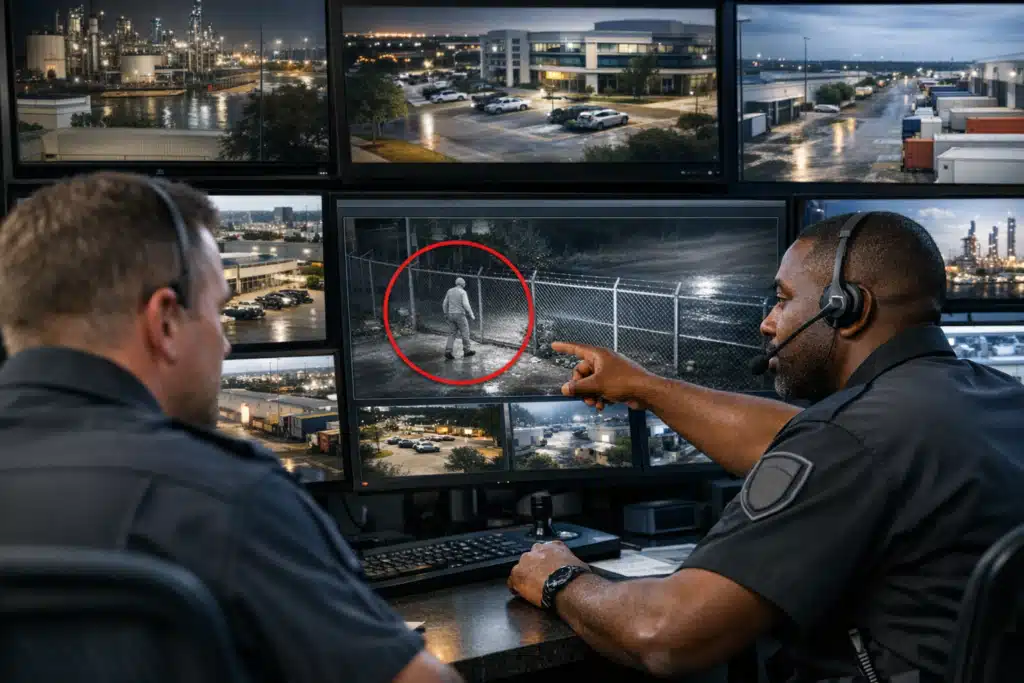
A working setup for a Woodlands property includes four parts:
- Cameras — fixed and pan-tilt-zoom units placed at entries, lots, and perimeters
- Analytics — motion detection that separates people from wind-blown branches
- Live operators — trained staff who confirm threats and act
- Voice-down speakers — on-site audio to warn intruders in real time
Voice-down capability matters most in The Woodlands. A live operator telling a trespasser they are being recorded stops most incidents before police arrive.
Verified Alarms Get Faster Police Response
Montgomery County law enforcement prioritizes verified calls. A camera operator who witnesses a break-in gives dispatch confirmed details.
That verification moves your call ahead of standard alarm signals. Response times drop when an operator reports an active person on the property.
Comparing Remote Surveillance to On-Site Guards
Both approaches protect your property. Picking between them depends on your site size, hours, and budget.
When On-Site Guards Make Sense
- High foot traffic requiring access control or badge checks
- Sites needing physical intervention or escort duty
- Properties with a visible-presence requirement from insurers
When Remote Surveillance Wins
- Large lots with few people — one operator covers ground a single guard cannot patrol
- Overnight-only risk windows — pay for monitoring during peak theft hours
- Multiple locations — one center watches all your Woodlands sites at once
- Budget-conscious coverage — monitoring costs a fraction of 24-hour guard staffing
Many Woodlands clients use both. Cameras cover the perimeter, and guards handle entry points. This hybrid model gives strong coverage without full guard staffing.
Choosing the Right System for Your Woodlands Property
Follow these steps to match a remote surveillance setup to your site.
Step 1: Map Your Blind Spots
Walk your property after dark. Note every corner a streetlight misses.
In The Woodlands, tree canopy and landscaped berms create shadow zones. Cameras with infrared or low-light sensors belong in those spots.
Step 2: Define Your Risk Hours
Retail theft peaks between midnight and 4 a.m. Construction theft runs from Friday evening to Monday morning.
Set your monitoring schedule around your real exposure. You do not pay for daytime watching if your risk is overnight.
Step 3: Pick Cameras Built for Local Weather
Gulf Coast humidity, heavy summer storms, and hurricane winds test equipment. Choose weather-rated cameras and backup power.
Storm season runs June through November. A system that loses feed during a hurricane leaves your property exposed when looting risk climbs.
Step 4: Confirm Operator Verification and Voice-Down
Ask whether a live person watches or only software flags events. Live verification prevents false police calls and fines.
Voice-down speakers let operators warn intruders directly. This single feature stops a large share of attempts on its own.
Step 5: Plan for Scale
If you manage several properties near The Woodlands Town Center or along Lake Woodlands Drive, choose a system that adds sites easily. One monitoring account should cover them all.
Cost Factors for Remote Surveillance in The Woodlands
Pricing depends on four things:
- Number of cameras — more coverage points raise setup and monitoring cost
- Monitoring hours — overnight-only costs less than 24/7
- Analytics level — advanced detection adds accuracy and price
- Existing infrastructure — reusing current cameras lowers startup cost
Most Woodlands businesses spend far less on monitoring than on a single full-time guard. A local assessment gives you exact numbers for your site.
Hidden Savings Owners Miss
Verified surveillance can lower insurance premiums. Reduced theft and vandalism cut replacement and repair costs across the year.
Fewer false alarms mean fewer municipal fines. Over time, monitoring pays back through avoided losses.

 Posted on Google
Common Mistakes When Buying The Woodlands Security Systems
Avoid these errors owners make when they first shop for coverage.
- Buying cameras without monitoring — recorded footage helps after a crime, not during one
- Skipping voice-down — silent cameras rarely stop an active intruder
- Ignoring weather ratings — cheap units fail in the first summer storm
- Placing cameras too high — you get scene coverage but no usable face detail
- Forgetting backup power — outages during storms create dangerous gaps
A local provider who knows Montgomery County conditions helps you sidestep each of these.
Why Local Knowledge Matters for Monitoring
An operator familiar with The Woodlands knows normal from suspicious. Foot traffic patterns near Market Street differ from a fenced construction lot at 2 a.m.
Twin City Security Houston works across Houston and Montgomery County. Our operators recognize local risk patterns and coordinate with area law enforcement.
That local grounding means faster, smarter decisions when your cameras catch activity.
Get a Remote Surveillance Plan Built for Your Site
Remote surveillance gives The Woodlands businesses live coverage, faster verified response, and lower costs than full guard staffing. The right system matches your blind spots, risk hours, and weather conditions. A local assessment turns those factors into a clear plan.
Contact Twin City Security Houston for a Woodlands security assessment or monitoring quote. Call 832‑301‑9478, email Houston@Twincitysecurity.com, or visit https://www.twincitysecurityhouston.com.
Sources
Recent Posts