
Optimizing Security for Houston’s Suburban Business Growth
Why Houston’s Suburban Growth Changes the Security Equation
Harris and Fort Bend counties added tens of thousands of new residents last year. That population push spills into Katy, Cypress, Fulshear, and Spring at a rapid pace.
New rooftops bring new commerce. Strip centers, medical plazas, and distribution hubs open faster than local patrol coverage keeps up.
Suburban business security now requires planning that matches this speed. A shopping center in Fulshear built on former farmland has different risks than a downtown storefront.
This post breaks down the security gaps that come with suburban growth. It covers construction phases, retail openings, and the coverage lag that leaves new businesses exposed.
The Security Gap in Fast-Growing Suburbs
Suburban development moves ahead of infrastructure. Roads, lighting, and police staffing arrive months or years after the first tenants move in.
That timing gap creates predictable weak points. Criminals read new construction as low-risk targets with high-value materials on site.
Where the Risk Concentrates
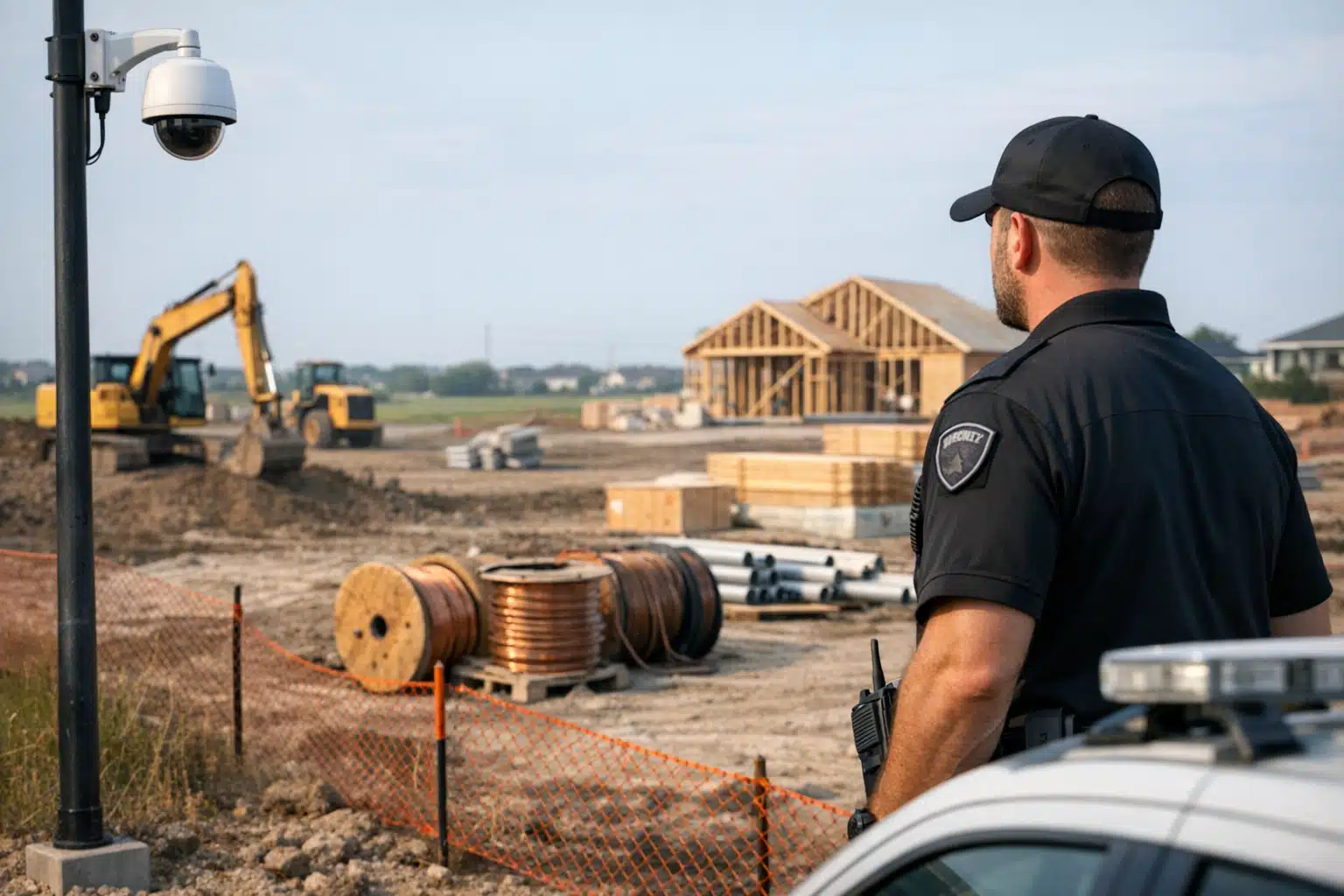
Growth areas around the Grand Parkway show clear patterns. Copper theft, catalytic converter theft, and equipment loss cluster near active building sites.
- Construction zones hold copper wire, lumber, and heavy machinery with minimal fencing.
- Newly opened retail operates before alarm and camera systems are fully live.
- Vacant pad sites attract dumping, trespassing, and vandalism after dark.
- Partially leased plazas leave dark, empty units next to open businesses.
Each phase of development carries its own exposure. A plan that fits one stage rarely fits the next.
Matching Security to Each Stage of Suburban Expansion
Growth happens in phases, and protection should track those phases. Below is a stage-by-stage breakdown for suburban commercial sites.
Stage 1: Land Clearing and Early Construction
Empty lots draw theft of equipment and materials. Remote video surveillance fits this stage because there is no building to wire yet.
- Install trailer-mounted or pole-mounted camera units with cellular connection.
- Set motion-triggered alerts for after-hours activity.
- Pair cameras with live monitoring that can issue voice warnings on site.
- Log every alert for insurance and police reports.
A single monitored camera tower covers ground that a roving patrol might miss. Voice-down warnings stop most intruders before loss occurs.
Stage 2: Vertical Construction and Fit-Out
As walls go up, valuable materials arrive daily. Copper, HVAC units, and tools become theft magnets during this stretch.
On-site guards add value here. A guard controls gate access, checks deliveries, and logs subcontractor traffic.
Combine both methods for full coverage. Guards handle daytime access control, and remote monitoring watches the perimeter overnight.
Stage 3: Opening and Early Operations
New businesses face their highest exposure in the first 90 days. Alarm systems may lag, and staff are still learning routines.
Suburban retail centers in Katy and Cypress report break-ins during this window. Empty neighboring units give cover to anyone testing doors.
- Schedule guard patrols during opening and closing hours.
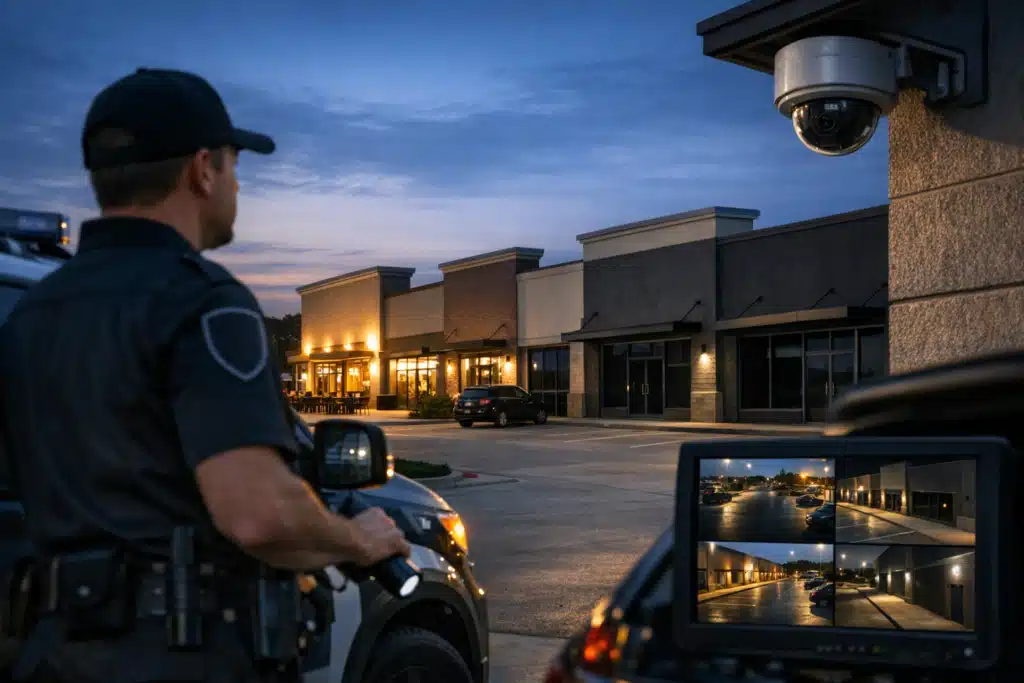
- Use remote cameras to monitor parking lots and loading zones.
- Confirm alarm monitoring is active before the first day of business.
Expansion Challenges Unique to the Gulf Coast
Houston suburbs face weather risks that inland growth areas avoid. Hurricane season runs June through November and reshapes security needs.
Storm and Evacuation Coverage
When staff evacuate, sites sit empty for days. Vacant commercial property draws looting after major storms.
Remote video surveillance keeps watch when no one can safely stay on site. Cameras with battery backup and cellular links keep running during outages.
Plan storm coverage before the season starts. A site left dark after evacuation is an open invitation.
Flood-Prone Growth Areas
Parts of Fort Bend and northwest Harris County flood during heavy rain. Security equipment must sit above known flood lines.
Elevated camera mounts and waterproof housings hold up where ground-level gear fails. Local knowledge of drainage patterns matters when placing equipment.

 Posted on Google
Building a Suburban Business Security Plan That Scales
Suburban business security works best when it grows with the property. A plan built for a single building fails once a second phase opens.
Steps to Build a Scalable Plan
- Map current risks. Walk the property and note dark corners, access points, and neighboring vacancies.
- Match coverage to stage. Use remote monitoring for open land and guards for active operations.
- Set clear response rules. Define who gets called when an alert triggers at 2 a.m.
- Review coverage quarterly. Adjust as new tenants arrive and traffic patterns shift.
- Coordinate with local law enforcement. Share camera access and site maps for faster response.
This structure handles the expansion challenges that catch suburban operators off guard. It scales as the property fills in.
Cost Comparison: Guards vs. Remote Monitoring
Budget shapes every security decision for a growing suburban site. Each method fits different needs.
- On-site guards handle access control, customer contact, and physical response.
- Remote video surveillance covers wide areas at lower cost per hour.
- Hybrid coverage puts guards where presence matters and cameras where reach matters.
A large distribution yard in Cypress might run cameras across the perimeter with one guard at the gate. That mix controls cost without leaving blind spots.
Why Local Coverage Beats a One-Size Model
Houston suburbs are not interchangeable. A plan for Clear Lake near the port differs from one for Fulshear farmland.
Port-adjacent sites face cargo theft and heavy truck traffic. Far-west suburbs face isolation and slow patrol response.
Twin City Security Houston builds coverage around each location and its stage of growth. Local teams know the crime patterns and weather risks that shape suburban sites.
Protect Your Growing Suburban Site
Suburban business security in Houston must adapt as construction turns into commerce. Matching guards and remote monitoring to each growth phase closes the gaps that thieves target most.
Contact Twin City Security Houston for a site assessment or monitoring quote. Call 832‑301‑9478 or email Houston@Twincitysecurity.com to plan coverage that scales with your property.
Sources
Recent Posts