
Remote Surveillance Benefits for Houston’s Busy Retail Districts
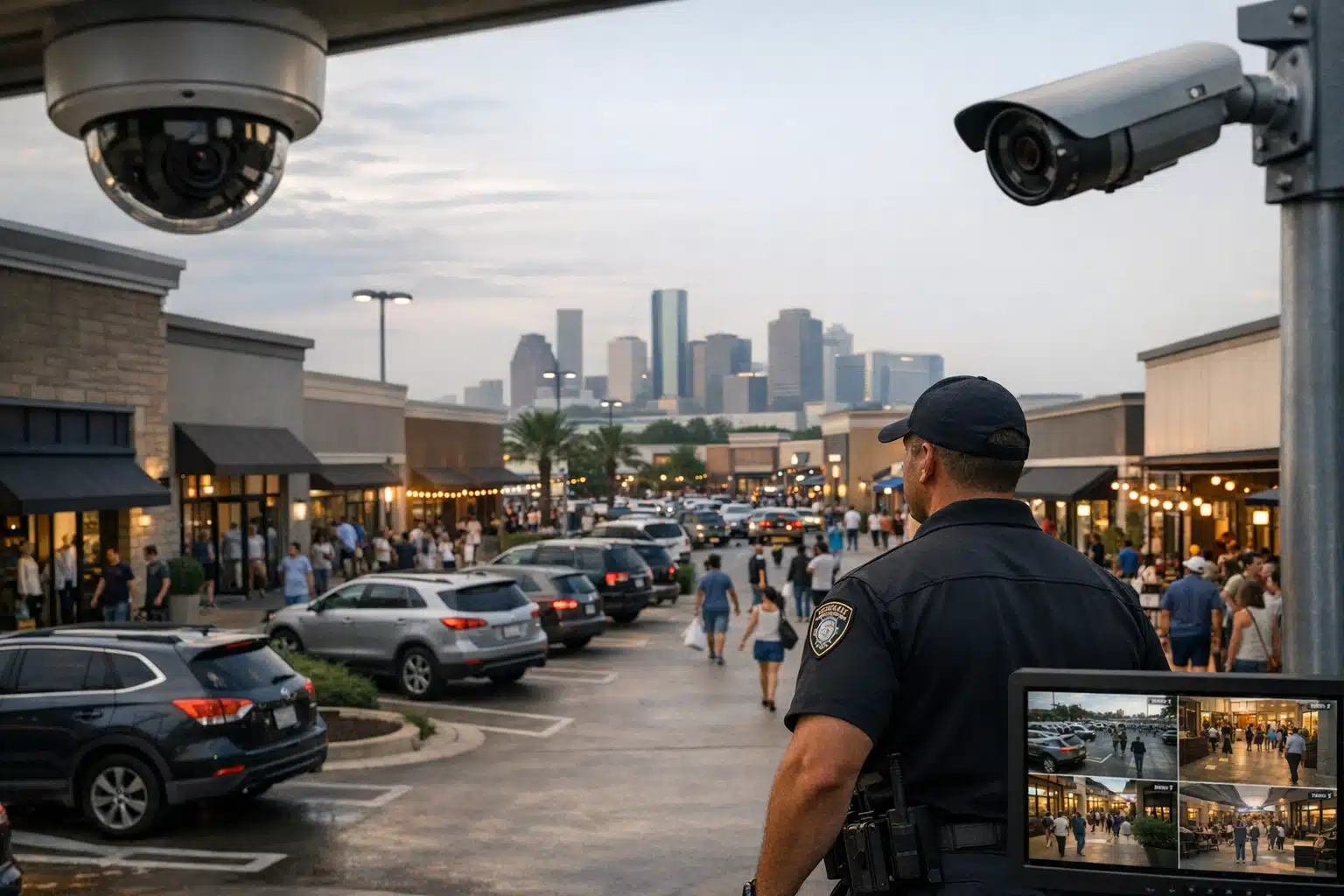
Why Houston Retail Centers Face Rising Security Pressure
Houston reported more than 90,000 property crime incidents in a recent year, according to city police data. Retail corridors absorb a large share of those losses.
Shopping centers along Westheimer, the Galleria area, and strip malls in Katy see steady foot traffic. High traffic means more opportunity for theft, loitering, and after-hours break-ins.
The remote surveillance benefits for Houston retail districts start with speed. A monitored camera catches trouble as it happens, not hours later on a recorded file.
This post breaks down how remote video monitoring works for retail properties. You will learn where it beats traditional patrols and how to plan coverage for your center.
What Remote Surveillance Means for Retail Properties
Remote surveillance uses live cameras watched by trained operators at an off-site monitoring station. Operators respond in real time when something looks wrong.
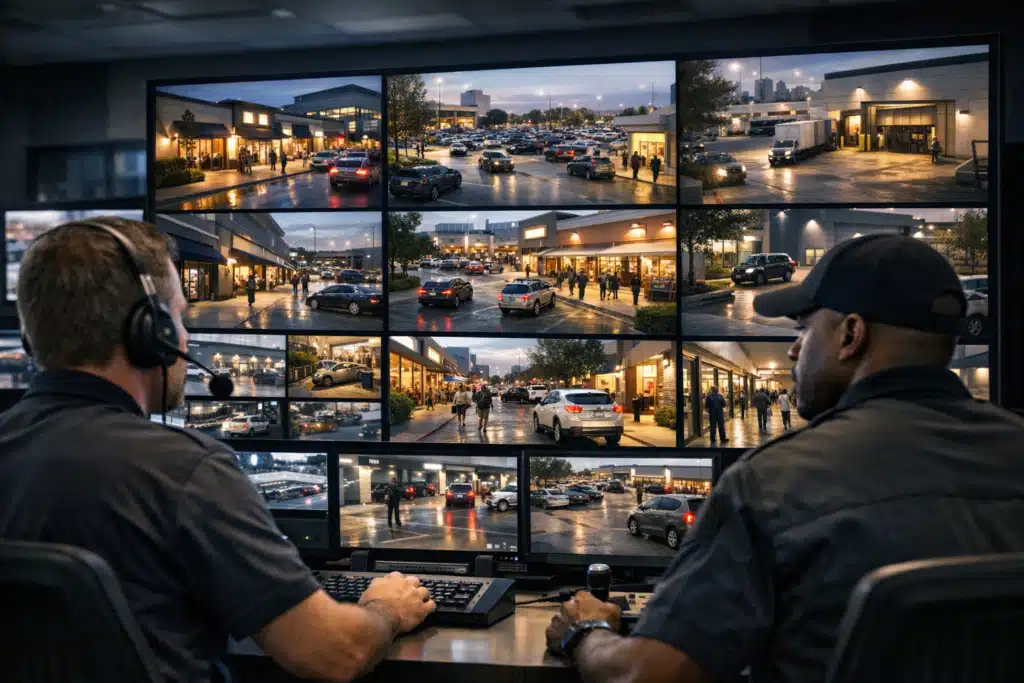
Unlike a recording that no one watches, live monitoring acts before a crime finishes. That difference matters most in busy commercial zones.
How the System Works
A monitored retail setup usually includes four parts:
- Cameras placed at entrances, loading docks, parking lots, and storefronts.
- Analytics software that flags motion in restricted areas after hours.
- Live operators who verify each alert on screen.
- Two-way speakers that let operators warn intruders by voice.
When an operator spots a trespasser, they issue a verbal warning over the speaker. Most people leave once they know they are being watched.
If the threat continues, the operator contacts Houston police and shares a live description. This cuts response time compared to a passerby calling 911.
Remote Surveillance Benefits for Houston Retail Districts
Retail centers gain several measurable advantages from live monitoring. Each one ties back to cost, crime, or customer safety.
1. Faster Threat Response
A monitored camera flags an event in seconds. Operators act while a suspect is still on the property.
A single guard cannot watch every corner of a large center at once. Cameras cover the blind spots a patrol misses.
2. Lower Cost Than Full Guard Coverage
Staffing a large retail property with on-site guards around the clock adds up fast. Remote monitoring watches multiple zones from one station.
Many Houston property managers pair the two. Guards handle daytime foot traffic, and remote cameras cover overnight hours.
3. Deterrence That Works After Dark
Most retail break-ins happen after closing. Empty parking lots draw catalytic converter thieves and vandals.
Voice-down warnings from a live operator stop these acts early. Would-be thieves rarely stay once a speaker calls them out by location.
4. Evidence That Holds Up
Time-stamped video supports police reports and insurance claims. Clear footage of a theft speeds up both.
Houston centers dealing with repeat car burglaries use this footage to build patterns. That helps police target problem hours.
Where Cameras Belong in a Retail Center
Camera placement decides how much a system catches. A poorly aimed lens misses the exact spot where crime happens.
Priority Coverage Areas
- Parking lots — the top location for vehicle theft and assault at Houston centers.
- Rear loading docks — quiet zones targeted for after-hours entry.
- Storefront entrances — smash-and-grab points during closed hours.
- Dumpster and utility areas — spots for loitering and copper theft.
- ATM and cash-handling zones — high-value targets in any strip center.
Coverage should match your center’s layout, not a generic template. A corner strip mall in Clear Lake needs different angles than a Galleria-area plaza.
Handling Houston’s Weather and Seasonal Risks
Gulf Coast weather tests any outdoor camera system. Heat, humidity, and storm flooding all affect equipment.
Hurricane Season Coverage
Retail centers empty out during evacuations. Vacant properties draw looters during and after major storms.
Remote monitoring keeps eyes on your center when staff cannot be present. Operators watch for forced entry while the area is cleared.
Cameras rated for weather resistance keep working in heavy rain. Battery and cellular backup keep feeds live when power drops.
Summer Foot Traffic Spikes
Houston summers push shoppers indoors and into evening hours. Longer open hours widen the window for parking lot incidents.
Monitoring adjusts to these hours without adding guard shifts. Coverage scales with your busy season.

 Posted on Google
Comparing Remote Monitoring to On-Site Guards
Both methods protect retail property. The right choice depends on your center’s size, hours, and budget.
When Remote Monitoring Fits Best
- Large parking areas that one guard cannot cover.
- Overnight hours with no customer traffic.
- Multiple buildings spread across a property.
- Budgets that cannot support 24-hour staffing.
When On-Site Guards Fit Best
- Peak shopping hours with heavy crowds.
- Centers needing a visible presence at entrances.
- Properties with frequent customer disputes.
- Cash escorts and lockup duties.
Many Houston retail districts run both. A blended plan covers gaps that either method leaves open on its own.
Steps to Set Up Retail Surveillance
Planning coverage takes a short, ordered approach. Follow these steps to start.
- Map your risk zones. Walk the property and note past incident spots.
- Review your hours. Identify when the center sits empty.
- Set coverage priorities. Rank entrances, lots, and docks by risk.
- Choose your mix. Decide where cameras replace or support guards.
- Test the response plan. Confirm how operators reach police and management.
A site assessment turns these steps into a working plan. An expert visit catches blind spots an owner might miss.
What Retail Managers Should Ask Before Hiring
Not every monitoring provider works the same way. Ask direct questions before you sign.
- Are operators live or is footage only recorded?
- What is the average verification and response time?
- Do cameras include two-way voice warnings?
- How does the system handle power and internet loss?
- Is the provider licensed under Texas security regulations?
Texas requires security companies to hold state licensing through the Department of Public Safety. Confirm this before hiring anyone.
Protect Your Houston Retail Center
Remote surveillance gives Houston retail districts faster response, lower costs, and stronger deterrence after dark. The right camera placement and live monitoring stop most incidents before they escalate.
Twin City Security Houston builds retail monitoring plans around your property’s layout and hours. Call 832‑301‑9478 or email Houston@Twincitysecurity.com for a Houston security assessment or monitoring quote.
Sources
Recent Posts