
Preparing for Houston’s Summer Heat: Security Considerations for Businesses
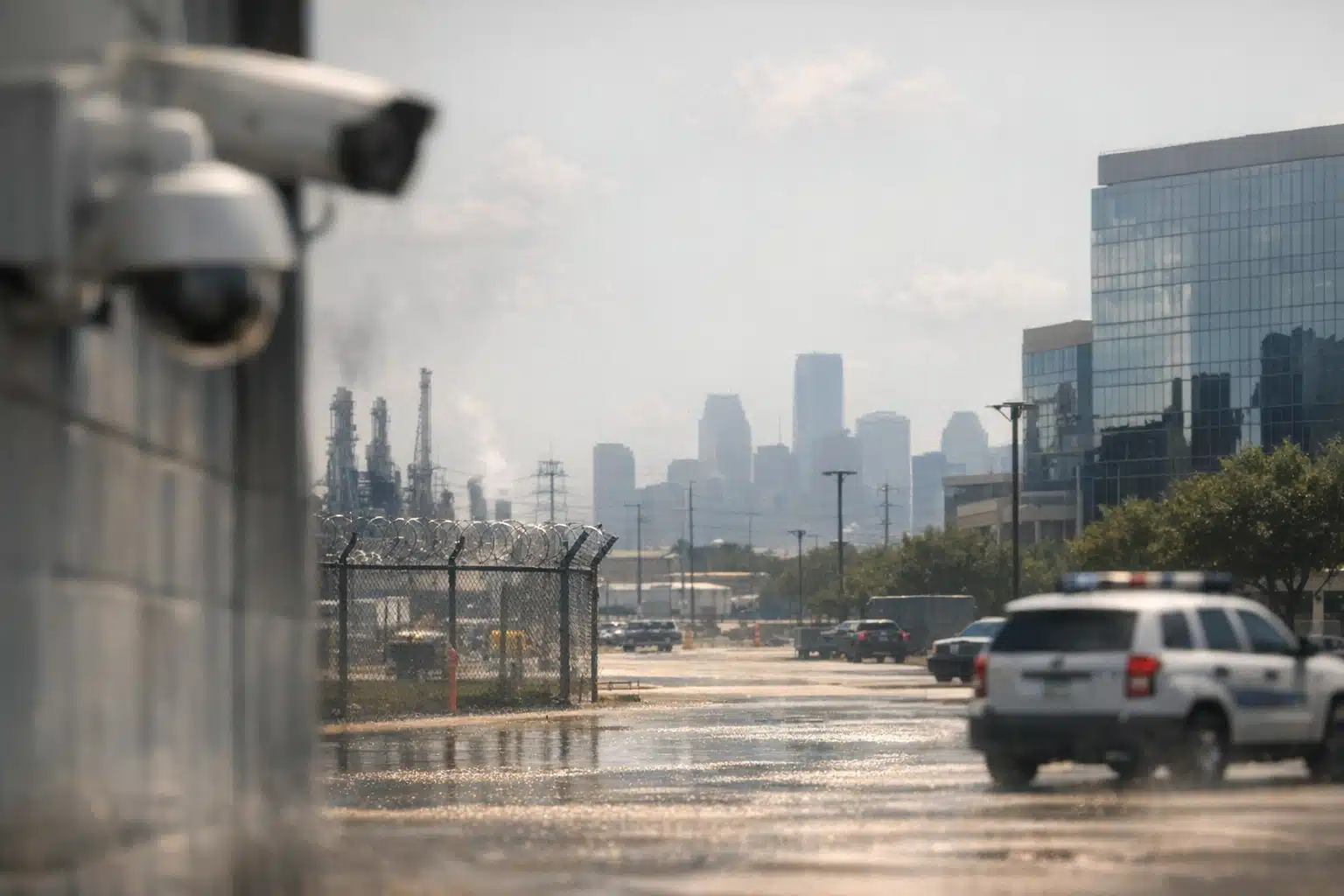
Businesses in Houston must address unique security challenges posed by extreme summer heat and humidity. With temperatures exceeding 95°F for over 100 days annually, companies should prioritize personnel safety and asset protection by implementing measures such as proper hydration, heat stress training, and securing equipment against heat-related damage.
Houston businesses face summer heat security Houston challenges that most other cities never encounter. With temperatures soaring above 95°F for more than 100 days each year, the combination of extreme heat and humidity creates security vulnerabilities that can compromise both personnel safety and asset protection.
Heat-related security incidents spike 23% during Houston’s peak summer months. Equipment failures increase. Guard performance declines. Criminal activity shifts to cooler evening hours when fewer security measures are active.
Smart business preparation tips can prevent these seasonal security gaps before they impact your operations.
How Extreme Heat Compromises Houston Security Operations
Security equipment suffers significant stress when Houston’s heat index reaches 110°F or higher. Outdoor cameras experience thermal drift, causing focus issues and color distortion. Motion sensors trigger false alarms as asphalt and concrete surfaces radiate heat waves.
Battery backup systems lose 50% of their capacity in extreme heat. Access control panels installed in direct sunlight fail more frequently during July and August than any other months.
Guard patrol schedules require adjustment when heat becomes dangerous. Standard hourly perimeter checks become safety hazards during peak afternoon hours. This creates coverage gaps that experienced criminals exploit.
Energy Corridor Facility Challenges
Energy facilities in Houston’s western corridor face compounded risks during summer months. Refinery turnarounds coincide with peak heat season, bringing thousands of contract workers to sites with temporarily reduced security staffing.
Heat stress affects contractor compliance with security protocols. Workers bypass checkpoints to reach air-conditioned areas faster. Loading dock security becomes compromised as drivers rush through procedures.
Summer Heat Security Houston: Equipment Protection Strategies
Professional security providers adapt their technology deployment for Houston’s climate. Camera housings require active cooling systems and UV-resistant enclosures rated for continuous 100°F+ operation.
Thermal management prevents the cascading failures that occur when one overheated component triggers system-wide shutdowns. Strategic equipment placement keeps critical components in shaded areas or climate-controlled environments.
Essential Heat-Resistant Security Upgrades
- Solar-powered backup systems with temperature compensation circuitry
- Infrared cameras that maintain accuracy despite ambient heat interference
- Wireless communication systems with extended temperature operating ranges
- Motion detection zones recalibrated to filter heat-related false triggers
- Access control readers with internal cooling and surge protection
Video analytics software requires seasonal recalibration. Heat shimmer and thermal updrafts confuse standard motion detection algorithms. Professional systems adapt their sensitivity thresholds automatically based on ambient temperature readings.
Guard Service Adaptations for Houston Summer Conditions
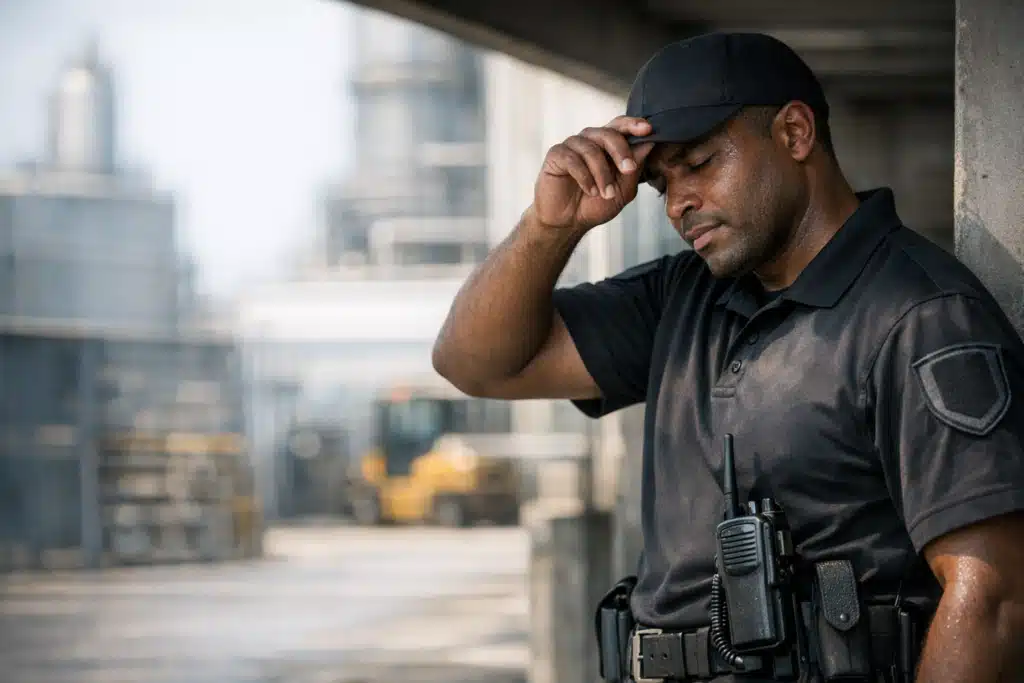
Security guard effectiveness drops measurably when working in extreme heat without proper protocols. Reaction times slow. Attention to detail decreases. Heat exhaustion becomes a liability risk for both the guard and the facility.
Professional guard services implement rotating schedules that limit continuous outdoor exposure. Guards work 45-minute exterior shifts followed by 15-minute climate-controlled breaks during peak heat hours.
Heat Safety Protocol Implementation
Effective summer security operations require modified procedures that maintain coverage while protecting personnel. Guards receive heat illness recognition training and carry cooling equipment during outdoor patrols.
- Pre-shift hydration protocols begin two hours before duty starts
- Cooling vest rotations provide continuous temperature regulation
- Radio check intervals increase to monitor guard condition every 20 minutes
- Emergency shade stations positioned at patrol route midpoints
- Backup guard deployment ready for heat-related personnel changes
Vehicle-based patrols replace walking routes during extreme heat warnings. Air-conditioned patrol vehicles become mobile command posts that extend guard effectiveness during dangerous temperature periods.
Criminal Activity Pattern Changes During Houston Heat Waves
Property crime statistics show clear seasonal patterns in Houston. Burglaries and vandalism shift to dawn and dusk hours when temperatures drop below 85°F. Standard 9-to-5 security coverage misses these peak crime windows.
Construction sites face increased theft risk during summer months. Copper theft incidents peak when criminals target air conditioning units and electrical components. Tool theft occurs during early morning hours before crews arrive.
Retail and Apartment Complex Vulnerabilities
Shopping centers experience concentrated security challenges when customers and staff seek relief from heat. Parking lot incidents increase as people spend less time walking between vehicles. Shoplifting patterns shift toward evening hours when foot traffic increases.
Apartment complexes see domestic disturbance calls rise 15% during extended heat waves. Pool areas require enhanced monitoring as unauthorized usage attempts increase. Package theft spikes when residents avoid retrieving deliveries during peak heat hours.

 Posted on Google
Remote Monitoring Solutions for Heat-Intensive Operations
Remote video surveillance becomes critical when on-site security presence faces heat limitations. Professional monitoring centers provide continuous coverage without exposing personnel to dangerous conditions.
Advanced analytics detect unusual activity patterns that indicate heat-related security compromises. Systems recognize when guards miss scheduled check-ins or when equipment performance degrades beyond acceptable thresholds.
Port of Houston Maritime Security Considerations
Port operations face unique summer security challenges as loading schedules shift to cooler hours. Container yard security must adapt to concentrated activity during dawn and evening periods.
Truck staging areas require enhanced monitoring when drivers arrive hours early to avoid daytime heat. Fuel theft risks increase as equipment operators look for ways to keep engines running for air conditioning.
Maritime facilities implement heat-adapted security protocols that maintain cargo protection while accommodating worker safety requirements.
Emergency Response Planning for Heat-Related Security Events
Security emergencies compound rapidly during extreme heat conditions. Medical response times increase when first responders face multiple heat-related calls simultaneously.
Business preparation tips include establishing relationships with security providers who maintain full staffing despite weather conditions. Emergency response protocols require modification for scenarios where heat limits normal evacuation or lockdown procedures.
Integration with Houston Emergency Services
Professional security operations coordinate with Houston Fire Department and EMS during heat emergency declarations. Communication protocols ensure rapid response when security incidents coincide with heat-related medical emergencies.
Backup power systems receive priority testing before summer season peaks. Security systems must maintain operation when electrical grid stress causes rolling blackouts or power quality issues.
Cost-Effective Summer Security Enhancements
Budget-conscious businesses can implement targeted improvements that address the most critical heat-related vulnerabilities. Strategic upgrades provide maximum security enhancement for reasonable investment levels.
Phased implementation allows businesses to spread costs while building comprehensive heat-resistant security capabilities. Priority focuses on life safety systems before moving to asset protection enhancements.
ROI Analysis for Heat-Adapted Security
Equipment failures during summer months cost businesses an average of $8,400 per incident in lost coverage and emergency repairs. Heat-resistant systems pay for themselves through reliability improvements and reduced maintenance calls.
Insurance providers recognize properly implemented summer security protocols. Some policies offer premium reductions for businesses that demonstrate heat emergency preparedness and equipment protection measures.
Houston’s extreme summer heat creates security challenges that require specialized expertise and equipment. Professional security providers understand these seasonal demands and implement solutions that maintain protection regardless of temperature conditions.
Don’t let summer heat compromise your business security. Contact Twin City Security Houston at 832‑301‑9478 for a comprehensive assessment of your heat-related security vulnerabilities and customized protection solutions.
Sources
- National Weather Service – Houston Climate Data
- Houston Police Department – Crime Statistics
- OSHA – Heat Exposure Prevention
- Harris County Office of Homeland Security – Extreme Heat Preparedness
Houston businesses must confront unique security challenges during the summer heat, which can exceed 95°F for over 100 days. This extreme weather increases security vulnerabilities, necessitating proactive measures to protect personnel and assets.
- Heat-related security incidents rise by 23% in summer, with equipment failures and guard performance declining.
- Criminal activity shifts to cooler evening hours, making standard security coverage less effective.
- Businesses can implement targeted upgrades to enhance security and reduce the impact of heat-related vulnerabilities.
Recent Posts