
Improving Security for Houston’s Public Parks and Recreation Areas
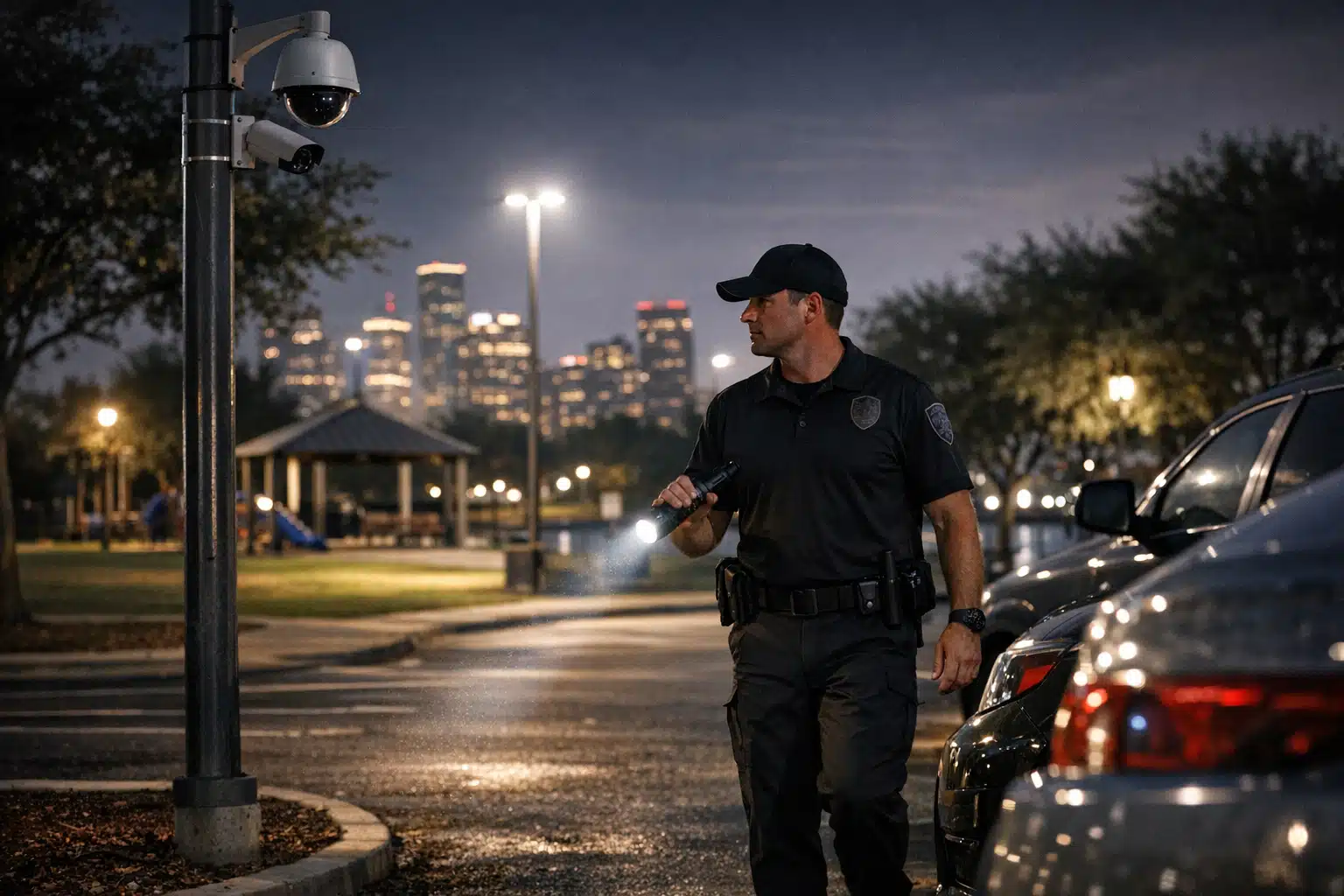
Why Public Park Security Matters in Houston
Houston manages more than 380 parks across roughly 38,000 acres. That scale makes public park security harder than most cities face.
Open layouts, long trails, and dusk-to-dawn access create blind spots. Vandalism, auto break-ins, and after-hours trespassing follow.
This article breaks down practical steps for parks departments, HOA boards, and recreation managers. The focus stays on Houston conditions, local crime patterns, and Gulf Coast weather.
Understanding the Security Risks in Houston Parks
Park crime rarely looks like a single dramatic event. It builds from small, repeated incidents that drain budgets.
Across Houston recreation areas, the common problems include:
- Vehicle break-ins in trailhead and pavilion parking lots
- Copper and metal theft from HVAC units, irrigation, and lighting
- Restroom and pavilion vandalism during unmonitored overnight hours
- Illegal dumping along park edges and service roads
- After-hours loitering in closed areas near playgrounds
Parks near Buffalo Bayou, Memorial Park, and neighborhood greenspaces in Katy and Clear Lake share these patterns. The details shift by location, but the weak points stay consistent.
The After-Hours Problem
Most park incidents happen between 10 p.m. and 5 a.m. That window has few visitors and limited staff on site.
A park that feels safe at noon becomes a liability at 2 a.m. Lighting and signage help, but they cannot respond to a live incident.
How to Improve Public Park Security: A Step-by-Step Approach
Effective public park security starts with matching coverage to real risk hours. Follow these steps to build a plan that fits a Houston park.
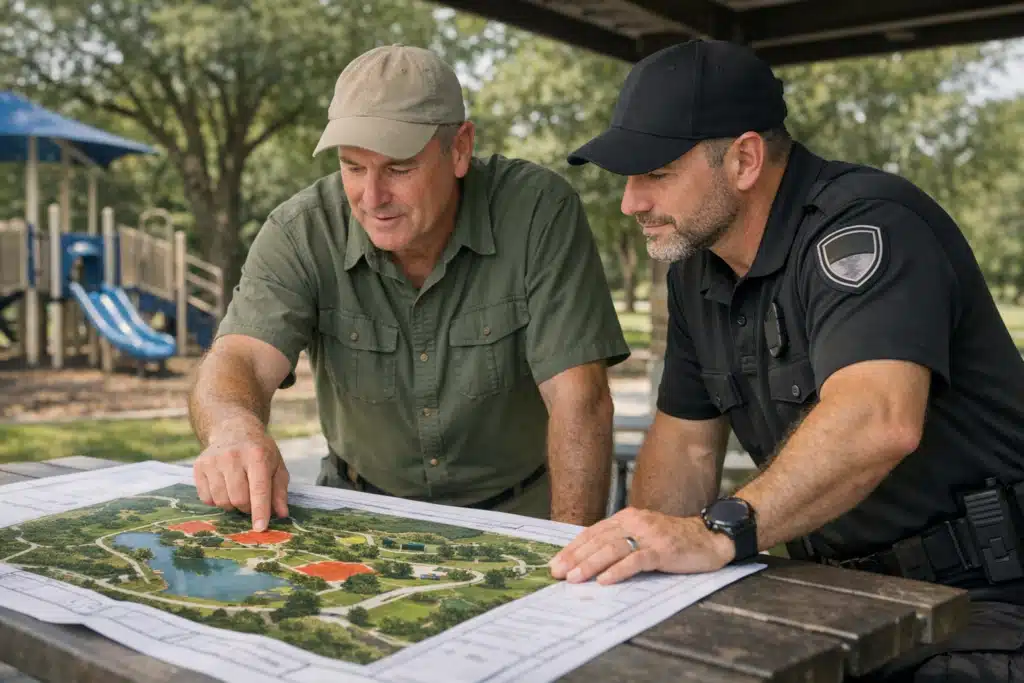
- Map the risk zones. Identify parking lots, restrooms, equipment sheds, and entry points.
- Review incident history. Pull 12 months of reports to find patterns by time and location.
- Set access hours. Post clear closing times and mark closed zones.
- Add layered coverage. Combine lighting, cameras, and guard patrols.
- Define response steps. Decide who gets called when an alarm triggers.
Each park needs its own version of this plan. A 5-acre neighborhood park and a 1,500-acre regional park carry different exposure.
Match Coverage to Park Size
Small parks respond well to remote video monitoring and periodic patrols. Large parks with multiple entrances benefit from on-site guards during peak hours.
A split model works for many Houston sites. Guards cover evenings and weekends, and cameras watch overnight.
Remote Video Surveillance for Recreation Area Protection
Remote video monitoring gives Houston parks eyes on the ground without a guard at every corner. Trained operators watch live feeds and act on real events.
This model supports recreation area protection across wide spaces at a lower cost than full guard coverage. Cameras with analytics flag motion in closed zones after hours.
When the system detects a person in a restricted area, an operator reviews the feed. They can trigger a live voice warning, log the event, and call police if needed.
What Remote Monitoring Catches
- People entering closed areas after posted hours
- Vehicles parked in lots past closing time
- Groups gathering near playgrounds or restrooms overnight
- Theft in progress at utility and storage buildings
Voice-down speakers let operators warn trespassers directly. Many leave once they realize they are being watched in real time.
On-Site Security Guards for Houston Parks
On-site guards handle what cameras cannot: direct contact, crowd management, and physical response. They matter most during events, peak weekends, and high-traffic seasons.
A guard presence changes behavior before an incident starts. Visible patrols reduce vandalism and car break-ins in parking areas.
When Guards Add the Most Value
- Festivals and public events with large crowds
- Youth sports seasons with busy weekend parking
- Parks near high-crime corridors that need steady presence
- Holiday periods like July 4th gatherings along the bayous
Guards trained in de-escalation handle conflicts calmly. That skill keeps minor disputes from growing into police matters.

 Posted on Google
Preparing Houston Parks for Hurricane Season
Gulf Coast storms create a second security problem each summer. From June to November, parks face flooding, debris, and post-storm theft.
After a hurricane, closed parks hold exposed equipment and damaged structures. Thieves target generators, tools, and metal during recovery.
Storm-Season Security Steps
- Move portable equipment to secured storage before landfall.
- Document all assets with photos for insurance.
- Set up temporary camera coverage for closed, damaged areas.
- Schedule guard patrols during extended closures.
Parks along Buffalo Bayou and in low-lying Clear Lake areas flood first. Plan recovery security before the storm, not after.
Balancing Public Access With Safety
Parks exist for open use, which limits hard barriers. Security must protect without turning a greenspace into a fortress.
The goal is deterrence that respects public access. Cameras, clear signage, and visible patrols work without locking people out.
Design Choices That Support Safety
- Trim overgrown brush that hides parked cars and entry points
- Keep sightlines open near restrooms and playgrounds
- Place lighting along main paths and parking areas
- Post camera signage at every entrance
Visibility discourages crime. A park with open sightlines and active monitoring feels safer to families and harder for offenders.
Costs and Coverage Planning
Security budgets stretch further with a layered model. Full guard coverage everywhere costs more than most park budgets allow.
A practical mix for a mid-size Houston park might include:
- Remote video monitoring for overnight hours across all zones
- Weekend guard patrols during peak visitor times
- Event-based staffing for festivals and tournaments
- Storm-season add-ons during hurricane months
This structure puts spending where risk is highest. Parks managers control costs by scaling coverage to real activity.
Partner With Twin City Security Houston
Strong park security blends remote video monitoring, trained guards, and a plan built for Houston conditions. Match coverage to risk hours, prepare for storm season, and keep sightlines open for public safety.
Twin City Security Houston builds park and recreation area protection plans for local conditions. Call 832‑301‑9478, email Houston@Twincitysecurity.com, or visit https://www.twincitysecurityhouston.com for a Houston security assessment.
Sources
Recent Posts