
Ensuring Security for Houston’s Summer Outdoor Events
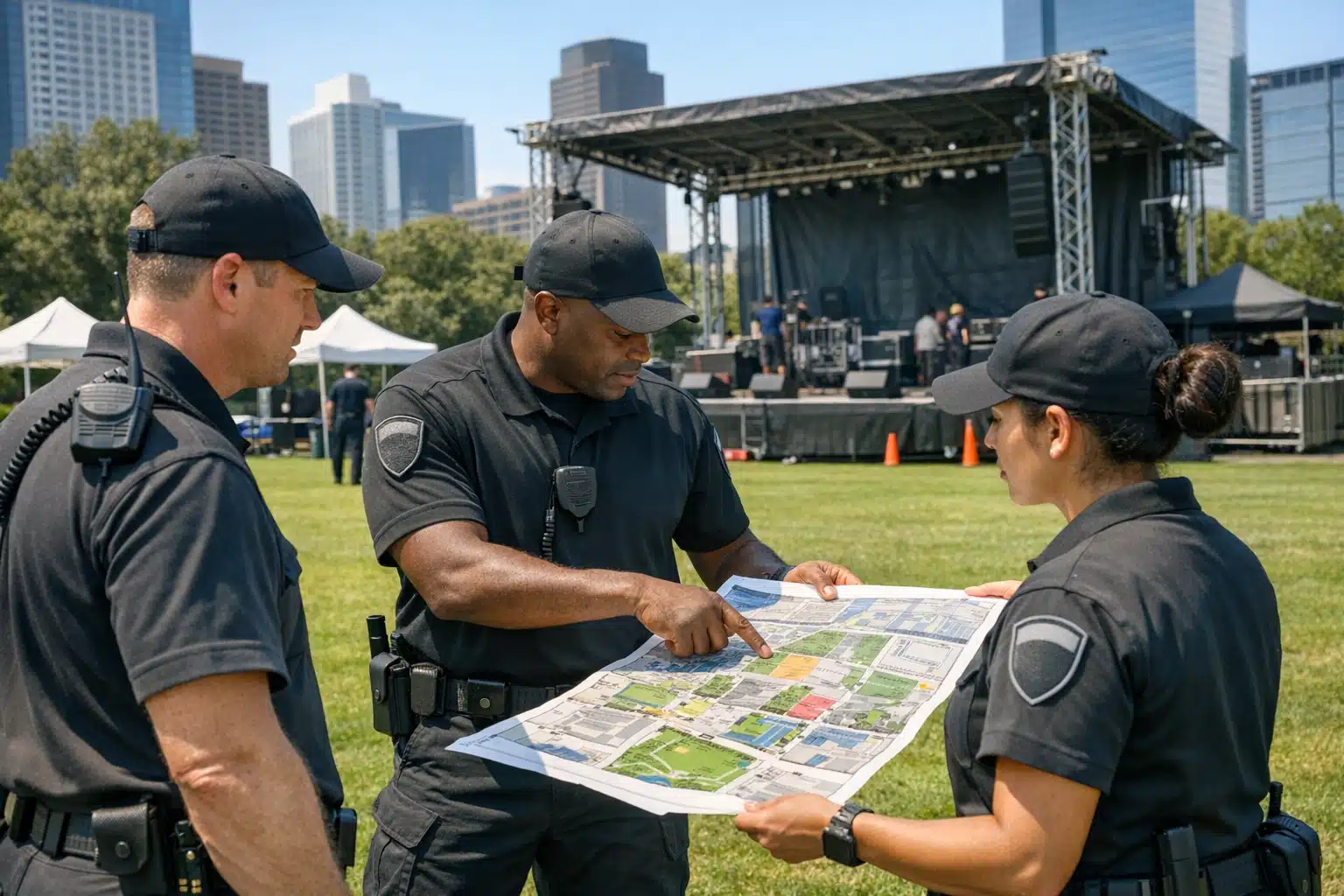
Houston summers push outdoor events into dangerous heat, with July highs averaging 94°F and heat index readings above 105°F common along the Gulf Coast. Those conditions change how summer event security must operate at any Houston gathering. Large crowds, alcohol sales, and afternoon thunderstorms create risks that indoor venues rarely face. This post breaks down what event organizers, property managers, and venue operators need to plan before the gates open.
Why Summer Event Security in Houston Differs From the Rest of the Year
Outdoor events in Houston face two threats at once: crowd-related incidents and Gulf Coast weather. Both can escalate within minutes.
Heat-related medical calls spike during summer festivals. A single 90-minute delay in shade or water access can send dozens of attendees to first aid.
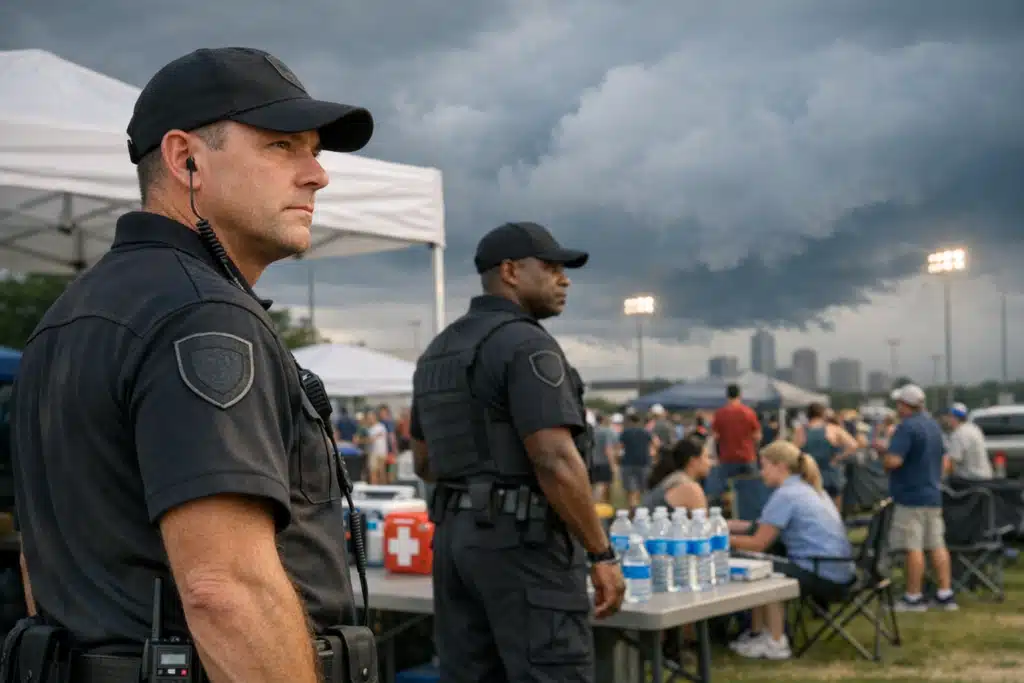
Afternoon storms form fast over Harris County. A clear noon sky can turn into lightning and 50 mph gusts by 4 p.m.
The Specific Risks at Houston Outdoor Venues
Security teams at Houston outdoor venues plan for a defined set of summer hazards:
- Heat exhaustion and heatstroke among attendees and staff
- Sudden lightning that requires immediate evacuation to hard structures
- Crowd surges near stages, entrances, and vendor lines
- Alcohol-related conflicts that increase after 6 p.m.
- Parking lot theft and vehicle break-ins during peak attendance
- Unauthorized entry at large open-perimeter sites
An event in Discovery Green faces different problems than one at a Katy sports complex. Each site needs a plan built around its layout and crowd size.
Building a Summer Event Security Plan for Houston Crowds
Effective summer event security starts weeks before the event date. The plan should map every zone and assign coverage.
Step 1: Assess the Venue Layout
Walk the full site with a security lead. Mark entrances, exits, stages, vendor rows, and medical stations.
Identify the nearest hard-structure shelters for lightning events. Note how long a full evacuation would take from each zone.
Step 2: Calculate Guard Coverage by Attendance
Guard counts scale with crowd size and alcohol presence. A common starting ratio for general admission events is one guard per 100 attendees.
Events serving alcohol or hosting late-night acts need more. High-risk zones like beer gardens and main stages require dedicated posts.
Step 3: Position Access Control Points
Control every entry with bag checks and clear signage. Single-file lanes reduce chokepoints and speed screening.
Separate VIP, vendor, and general entrances. This keeps lines shorter and limits confusion during peak arrival windows.
Step 4: Plan for Heat Before the Gates Open
Heat response is part of security, not a separate task. Guards often reach a struggling attendee before medical staff do.
- Stock water stations at every 200-foot interval
- Place cooling and shade zones near high-traffic areas
- Brief guards on early heatstroke signs: confusion, dry skin, collapse
- Keep radio contact open between guards and on-site medics
Step 5: Set Weather Triggers and Evacuation Rules
Define exact conditions that stop the event. Lightning within eight miles is a standard trigger for outdoor shutdown.
Assign guards to evacuation routes ahead of time. Each guard should know which zone they clear and where crowds go.
Remote Video Surveillance for Large Houston Events
On-site guards cannot watch every corner of a large open venue. Remote video surveillance fills the gaps across parking lots and perimeters.
Cameras cover blind spots that a walking patrol misses. Operators monitoring live feeds can direct guards to incidents in real time.
Where Remote Monitoring Helps Most
- Parking areas where vehicle break-ins cluster during peak hours
- Perimeter fencing at open sites without permanent barriers
- Overflow zones that guards cannot reach quickly
- After-hours setup and teardown when equipment sits exposed
Combined camera coverage and foot patrols cut response time. An operator spots a problem and radios the closest guard directly.
Coordinating With Houston Emergency Services and Texas Rules
Large events in Houston require coordination with local authorities. The Houston Fire Marshal sets occupancy and exit requirements for outdoor gatherings.
Texas licenses private security personnel under the Department of Public Safety. Every guard working your event should hold a valid state license.
What to Verify Before Hiring an Event Security Provider
- Confirm all guards carry current Texas DPS security licenses
- Ask for proof of liability insurance covering event work
- Review their heat and severe weather protocols in writing
- Check references from past Houston outdoor events
- Confirm radio and command coordination with your medical team
A provider that dodges license questions is a warning sign. Verify credentials before signing any agreement.

 Posted on Google
Common Summer Event Security Mistakes in Houston
Organizers repeat the same errors year after year. Avoiding them prevents most incidents.
- Understaffing peak hours. Crowds and conflicts rise after sunset, not at open.
- Ignoring parking areas. Break-ins happen away from the main event footprint.
- No weather plan. Gulf storms give little warning; delay decisions cost lives.
- Treating heat as a medical-only issue. Guards need heat training too.
- Poor radio coordination. Silence between teams slows every response.
A venue in Clear Lake learned this after a storm scattered an unprepared crowd. A defined evacuation plan would have moved people to shelter in minutes.
Matching Security Coverage to Your Event Type
Different Houston events need different staffing models. The plan shifts with crowd behavior and site conditions.
Music and Food Festivals
These draw dense crowds and serve alcohol. Stage-front barriers and dedicated crowd-monitoring posts reduce surge risk.
Corporate and Energy Sector Events
Energy Corridor company gatherings need access control and asset protection. Guest verification keeps unauthorized visitors out of private functions.
Community and Neighborhood Events
Smaller events in areas like The Woodlands still need coverage. Family crowds bring lost children, minor conflicts, and parking congestion.
Protect Your Next Houston Summer Event
Summer event security in Houston means planning for heat, storms, and crowd pressure at the same time. A trained guard team paired with remote video coverage keeps attendees safe from gate open to teardown. Twin City Security Houston builds event security plans for outdoor venues across the metro area.
Call 832‑301‑9478 or email Houston@Twincitysecurity.com for a Houston event security assessment or monitoring quote.
Sources
Recent Posts