
Preparing Your Houston Business for Hurricane Season: Security Essentials
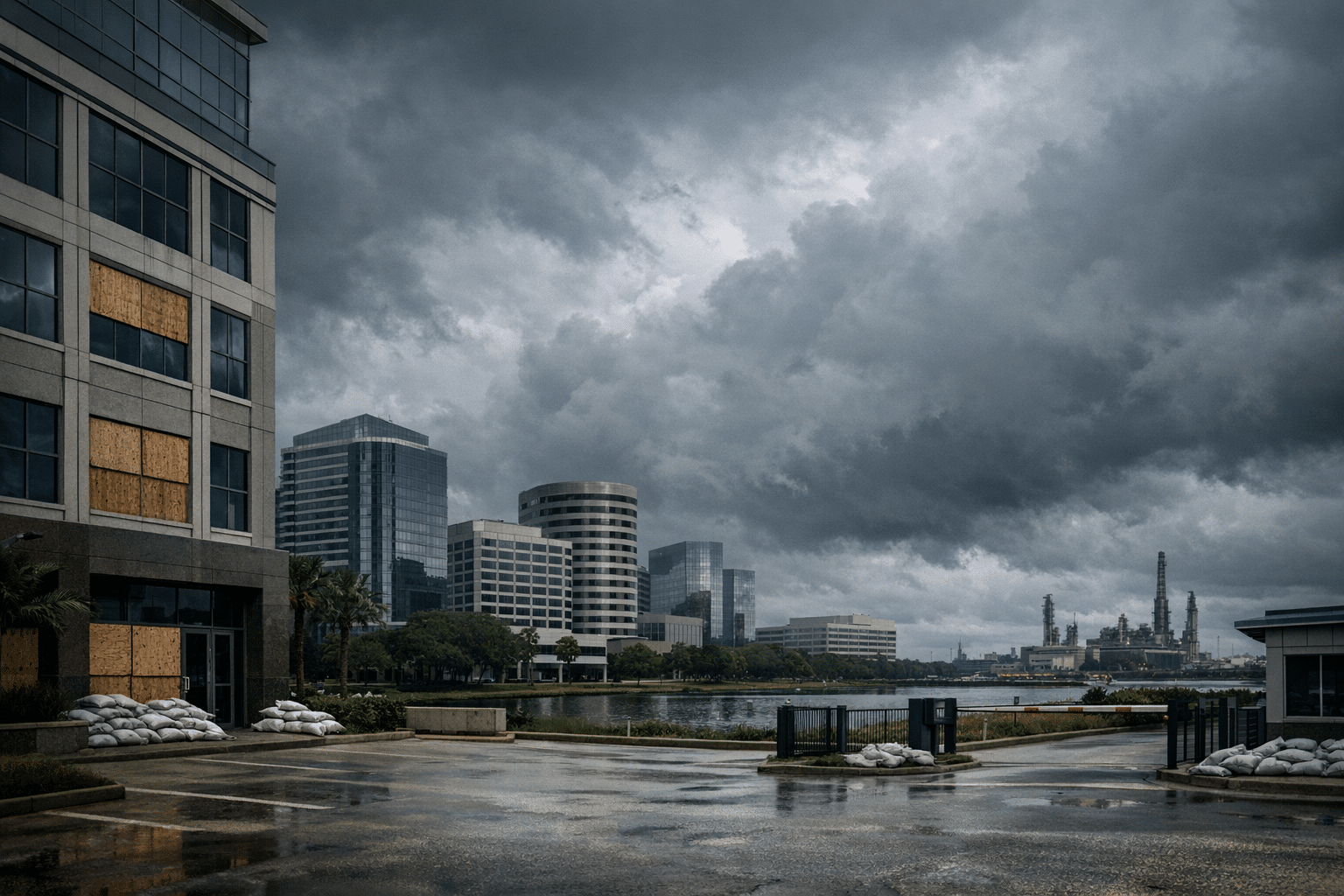
During hurricane season, Houston businesses should implement essential security measures such as securing property against flooding, ensuring backup power supplies, and developing emergency response plans. These steps help protect assets and maintain safety during natural disasters, addressing the unique challenges posed by severe weather in the region.
Hurricane season brings unique challenges to Houston businesses. Property managers and business owners face increased risks from power outages, flooding, and reduced police response times. Hurricane season security planning protects your assets when natural disasters strike the Gulf Coast.
Smart security preparation means the difference between minor losses and catastrophic damage to your business.
Why Hurricane Season Security Matters for Houston Businesses
Houston experiences an average of one major hurricane every six years. The Energy Corridor, Port of Houston, and downtown business districts face specific vulnerabilities during severe weather events.
Crime rates typically spike 30-40% in the weeks following major hurricanes. Vacant properties become targets for theft, vandalism, and copper wire stripping.
Business owners lose millions annually from preventable security breaches during storm recovery periods. Empty retail centers, construction sites, and office buildings attract criminal activity when regular security measures fail.
Common Hurricane-Related Security Threats
- Looting and theft during power outages
- Vandalism of vacant properties
- Copper wire theft from construction sites
- Break-ins at retail locations
- Equipment theft from industrial facilities
Pre-Storm Security Preparations
Effective preparation starts 72 hours before predicted landfall. Houston businesses must secure physical assets and establish communication protocols with security providers.
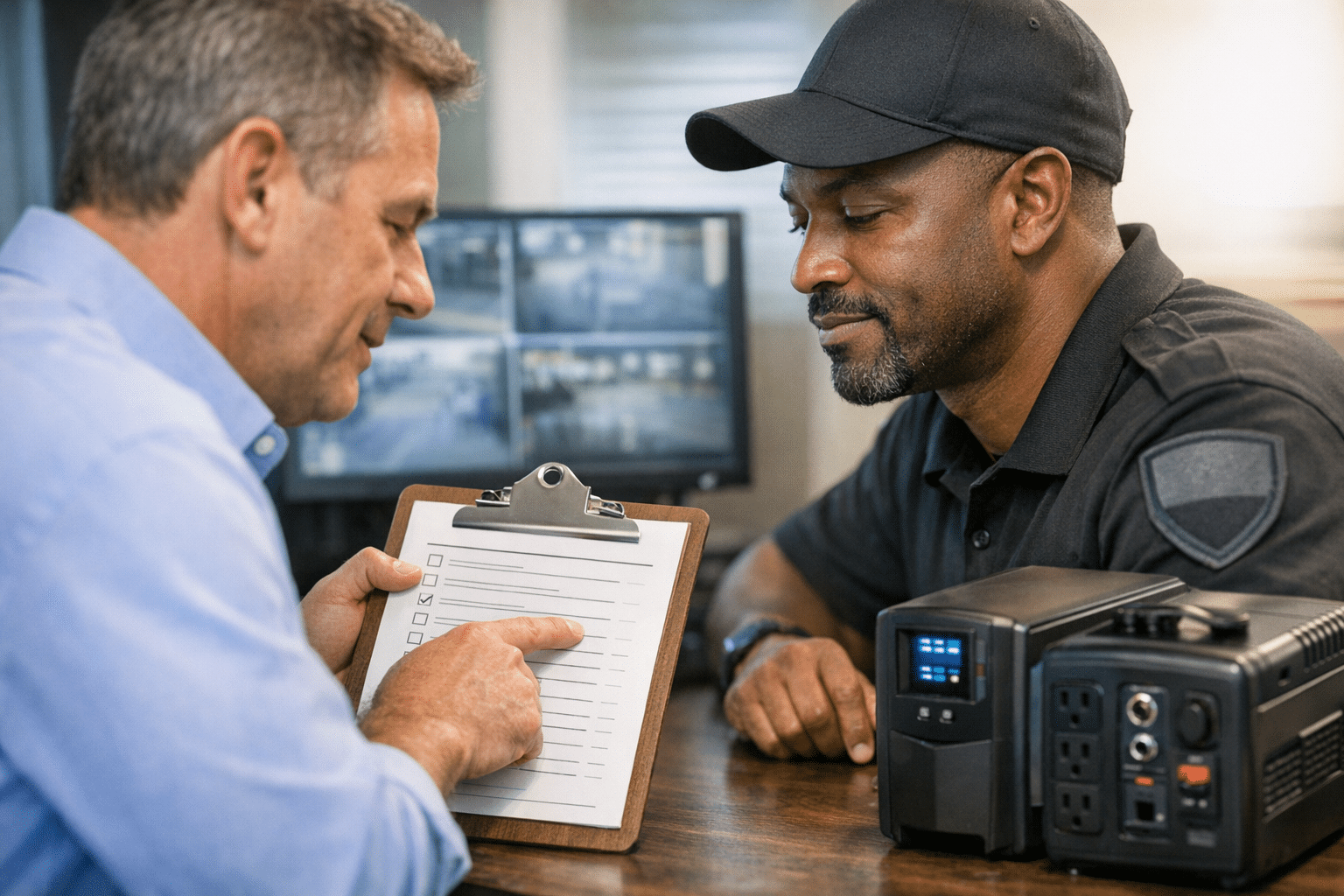
Facility Hardening Checklist
Physical security improvements protect your property when storms approach:
- Install backup power systems for security cameras and alarm systems
- Secure outdoor equipment and signage that could become projectiles
- Board windows and glass doors in ground-floor retail locations
- Move valuable inventory to upper floors or secure storage areas
- Test emergency communication systems with security teams
Documentation and Insurance Requirements
Proper documentation protects your insurance claims. Video surveillance systems should capture pre-storm property conditions.
Many insurance policies require proof of security measures during declared emergencies. Professional security services provide necessary documentation for claims processing.
Remote Video Surveillance During Hurricane Season
Modern surveillance technology operates effectively during power outages and severe weather. Remote monitoring systems protect Houston businesses 24/7 without requiring on-site personnel.
Battery-backed camera systems continue recording during power failures. Cloud-based storage ensures footage remains accessible even when local servers fail.
Technology Requirements for Storm Conditions
Hurricane-ready surveillance systems need specific capabilities:
- Weatherproof camera housings rated for Category 3+ winds
- Cellular backup connectivity when internet lines fail
- Infrared night vision for operations during power outages
- Motion detection alerts sent to monitoring centers
- Two-way audio systems for remote communication
Remote Monitoring Advantages
Professional monitoring centers operate outside hurricane impact zones. Security teams can dispatch emergency responders even when local communications fail.
Real-time alerts allow property managers to respond immediately to security breaches. Video evidence supports insurance claims and criminal prosecutions.
On-Site Security Guards vs. Remote Monitoring
Both security approaches offer distinct advantages during hurricane season. The right choice depends on your facility type, location, and risk tolerance.
When to Use On-Site Security Guards
Certain Houston facilities require physical security presence during storms:
- Energy facilities in the Ship Channel area
- Construction sites with expensive equipment
- Retail centers in high-crime neighborhoods
- Apartment complexes with emergency management needs
- Port operations requiring continuous monitoring
Guards provide immediate response capabilities and can coordinate with emergency services. They also perform welfare checks on remaining personnel.
Remote Monitoring Benefits
Houston business preparedness often relies on remote systems for cost-effective coverage. Multiple properties can be monitored from a single location.
Remote monitoring costs 60-70% less than 24/7 guard services. Systems operate continuously without weather-related staffing challenges.
Post-Storm Security Protocols
The 48-72 hours after hurricane passage present the highest security risks. Damaged infrastructure creates opportunities for criminal activity.
Immediate Assessment Procedures
Professional security teams conduct systematic property evaluations:
- Document storm damage with timestamped photos and video
- Check perimeter security for breaches or damage
- Test all security systems for proper operation
- Verify communication links with monitoring centers
- Report any suspicious activity to law enforcement
Enhanced Patrols and Monitoring
Increase security presence during the recovery period. Criminal activity peaks when regular police patrols are limited.
Additional security guards can coordinate with cleanup crews and insurance adjusters. They also prevent unauthorized access to damaged areas.

 Posted on Google
Industry-Specific Security Considerations
Different business sectors face unique hurricane season challenges. Energy facilities, retail centers, and construction sites require tailored security approaches.
Energy Sector Facilities
Refineries and chemical plants in the Ship Channel area maintain critical infrastructure protection. Federal regulations require continuous security during emergencies.
Backup power systems must support security operations for 72+ hours. Perimeter monitoring prevents unauthorized access to hazardous areas.
Construction Sites
Building projects in areas like The Woodlands and Katy face equipment theft risks. Copper wire and heavy machinery become prime targets during power outages.
Mobile surveillance trailers provide flexible coverage as construction progresses. Solar-powered systems operate independently of grid electricity.
Retail and Shopping Centers
Strip malls and shopping centers require comprehensive evacuation monitoring. Empty stores attract break-ins when normal foot traffic disappears.
Coordinated security plans cover multiple tenant spaces. Property managers can monitor entire complexes from central locations.
Working with Professional Security Providers
Local security companies understand Houston’s specific hurricane risks. They maintain relationships with emergency services and know evacuation routes.
Professional providers offer scalable services that adjust to storm intensity. Basic monitoring can expand to full guard coverage as threats increase.
Service Level Agreements
Clear contracts define security provider responsibilities during emergencies. Response times, communication protocols, and coverage areas must be specified.
Emergency contact procedures should include multiple communication methods. Backup plans account for cellular network congestion during major events.
Cost-Benefit Analysis of Hurricane Security
Professional security services cost significantly less than potential storm-related losses. Average break-in damages range from $15,000-$50,000 per incident.
Insurance discounts often offset security service costs. Many carriers require proof of professional monitoring for full coverage.
ROI Calculations
Consider these factors when evaluating security investments:
- Property replacement costs vs. monthly monitoring fees
- Insurance premium reductions for verified security measures
- Business interruption losses from security incidents
- Legal liability for inadequate property protection
Most Houston businesses recover security costs within 12-18 months through reduced losses and insurance savings.
Technology Integration and Smart Systems
Modern security platforms integrate multiple protection systems. Access controls, surveillance cameras, and alarm systems operate from unified dashboards.
Mobile apps allow property managers to monitor facilities remotely during evacuations. Real-time alerts provide immediate notification of security events.
IoT and Environmental Monitoring
Smart sensors detect flooding, power failures, and unauthorized entry. Environmental monitoring prevents secondary damage from water intrusion.
Integrated systems automatically trigger responses based on predefined conditions. Flood sensors can activate backup pumps or alert maintenance teams.
Hurricane season security planning protects Houston businesses from preventable losses during severe weather events. Professional monitoring and guard services provide comprehensive coverage when regular operations cease.
Smart preparation combines technology solutions with experienced security personnel. The investment in proper protection pays dividends through reduced losses and faster recovery times.
For tailored hurricane season security assessments designed for Houston businesses, contact Twin City Security Houston at 832‑301‑9478 or Houston@Twincitysecurity.com.
Sources
- National Weather Service – Houston Hurricane Information
- FEMA – Hurricane Preparedness for Emergency Managers
- Ready.gov – Business Emergency Planning
- Small Business Administration – Disaster Preparedness
Hurricane season poses significant risks to Houston businesses, necessitating proactive security measures to safeguard assets. Effective planning can mitigate potential losses from theft, vandalism, and property damage during severe weather events.
- Houston experiences an average of one major hurricane every six years, increasing security vulnerabilities for businesses.
- Crime rates can spike 30-40% following major hurricanes, making properties more susceptible to theft and vandalism.
- Preparation includes securing assets, establishing communication protocols, and utilizing modern surveillance technology for continuous monitoring.
Recent Posts