
How to Utilize Remote Surveillance for Effective Warehouse Security in Houston
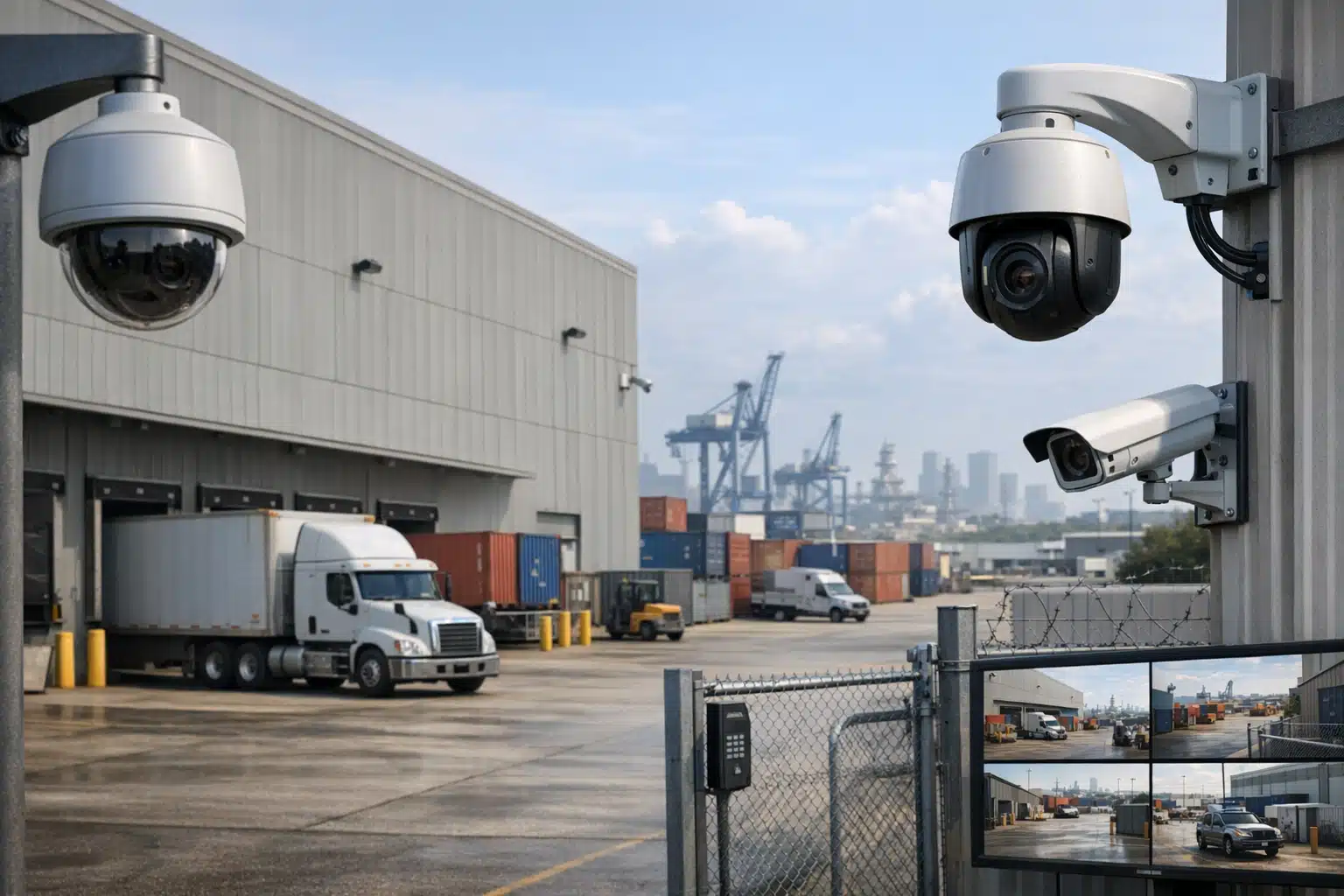
Houston warehouses lose millions each year to cargo theft, with Harris County ranking among the top metro areas nationally for freight crime. For distribution centers near the Port of Houston and along the I-10 corridor, warehouse security means protecting high-value inventory across sprawling, hard-to-patrol spaces. Remote surveillance changes how Houston operators defend those assets.
This post walks you step by step through building a remote-monitored warehouse security program. You will learn where to place cameras, how live monitoring stops theft in progress, and what Gulf Coast weather demands from your setup.
Why Warehouse Security in Houston Requires More Than Cameras
Houston’s warehouse districts sit at the center of Texas freight movement. Cargo flows constantly between the Port of Houston, rail yards, and inland distribution hubs in Katy and north Houston.
That volume attracts organized cargo theft crews. They target loaded trailers, electronics, and copper during off-hours when staffing drops to zero.
Recorded-only cameras do little against this. Footage helps police after a loss, but it does not stop the truck leaving your yard at 3 a.m.
Remote surveillance pairs live cameras with trained operators who watch feeds in real time. When someone breaches your perimeter, a monitoring agent sees it and acts within seconds.
The Houston-Specific Threats You Face
- Cargo and trailer theft near Port of Houston terminals and East End yards
- Copper and metal theft from HVAC units and electrical rooms
- After-hours break-ins at unstaffed distribution centers in Katy and Northwest Houston
- Hurricane-period looting when facilities sit empty during evacuations
- Insider shrinkage at loading docks during shift changes
How Remote Surveillance Protects Houston Warehouses
Remote surveillance connects your warehouse cameras to a staffed monitoring center. Agents watch live video and respond the moment a threat appears.
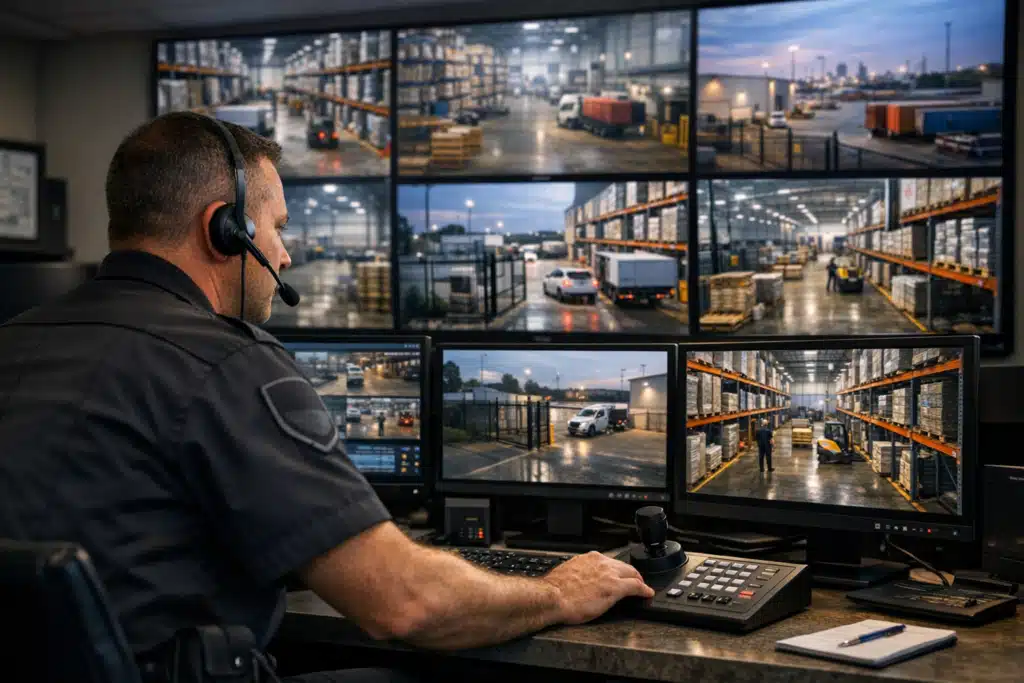
Here is how a typical intervention works at a Houston distribution site:
- Detection: Motion analytics flag a person crossing the fence line after hours.
- Verification: A live operator confirms the activity is a real intruder, not a stray dog or blowing debris.
- Deterrence: The operator triggers an on-site speaker and warns the trespasser by voice.
- Escalation: If the intruder stays, the agent dispatches Houston police with a live description.
- Documentation: The full event records for insurance and prosecution.
Voice-down warnings stop most intrusions before police arrive. A trespasser who hears his movements described by name of location rarely sticks around.
Why Live Monitoring Beats Guard-Only Coverage at Scale
A single guard cannot watch 200,000 square feet of warehouse at once. Blind spots form behind racking, trailers, and outbuildings.
Remote cameras cover every zone at the same time. One monitoring agent can oversee dozens of camera angles across your entire footprint.
For many Houston operators, remote surveillance combined with periodic guard patrols costs less than full guard staffing and covers more ground.
Building Your Warehouse Camera Coverage Plan
Effective warehouse security starts with camera placement. Map your site into zones and assign coverage to each one.
Perimeter and Access Points
Place cameras at every gate, fence corner, and vehicle entrance. Thermal or low-light cameras work best for dark yard edges.
At Port-area facilities, trailer staging lots need dedicated coverage. Thieves hook and pull loaded trailers in under two minutes.
Loading Docks and Bay Doors
Loading docks are the highest-loss zone in most warehouses. Position cameras to capture dock numbers, trailer plates, and worker activity.
This coverage deters internal theft during shift changes. It also settles disputes over damaged or missing freight.
Interior High-Value Areas
Cover electronics cages, pharmaceutical storage, and bonded inventory with tighter camera angles. These zones draw both outside crews and internal shrinkage.
Rooftop and Mechanical Areas
Copper thieves target rooftop HVAC and exterior electrical rooms. Add cameras overlooking roof access ladders and utility enclosures.
Preparing Warehouse Surveillance for Gulf Coast Hurricane Season
Hurricane season runs June through November along the Texas coast. Empty, evacuated warehouses become easy targets during and after storms.
Remote surveillance keeps watch when your staff cannot. Agents monitor your facility from a hardened offsite center far from the flood zone.
Follow these steps to storm-proof your warehouse monitoring:
- Install cameras rated for high wind and water intrusion at exterior points.
- Add battery and cellular backup so monitoring continues during power and internet loss.
- Mount critical cameras above expected flood lines based on your location’s history.
- Confirm your monitoring center has generator power and redundant connectivity.
- Pre-set evacuation protocols so agents know your site sits empty and escalate faster.
During Hurricane Harvey, many Houston warehouses flooded while owners could not reach them for days. Remote monitoring with cellular backup gives you eyes on the property throughout an evacuation.
Integrating Remote Surveillance With Your Existing Operations
Remote surveillance works alongside the access control and alarm systems you already run. Modern monitoring ties into one platform.
Access Control Integration
Link cameras to your gate and door readers. When a badge opens a dock door off-schedule, the agent gets a camera pop-up to verify.
Alarm Verification
Pair motion sensors with live video. This ends false-alarm fines from Houston police for unverified alerts.
Verified-response monitoring means police treat your call as a confirmed crime in progress. That shortens their response time measurably.
Analytics That Reduce Noise
Smart video analytics filter routine movement from real threats. Agents focus on people and vehicles, not raccoons or passing headlights.

 Posted on Google
What Houston Warehouse Operators Should Budget For
Costs depend on site size, camera count, and monitoring hours. A mid-size Katy distribution center differs from a small Clear Lake storage facility.
Plan your budget around these elements:
- Camera hardware and installation for perimeter, docks, and interior zones
- Monitoring plan priced by hours covered, with after-hours and weekend focus
- Connectivity and backup power for storm resilience
- Analytics licensing for motion and object detection
- Optional guard patrols for layered response
Many Houston operators cover only off-hours with live monitoring to control cost. Daytime staff handle on-site presence, and agents watch the empty building overnight.
Choosing a Remote Surveillance Partner in Houston
Pick a provider that knows Houston freight patterns and Gulf Coast weather. Local knowledge shapes smarter camera placement and faster police coordination.
Ask any potential partner these questions:
- Where is your monitoring center, and does it stay operational during hurricanes?
- How fast do agents respond to a verified intrusion?
- Do you coordinate directly with Houston police and Harris County dispatch?
- Can you integrate with my existing cameras and access control?
- What are your response records at warehouse and port-area sites?
Twin City Security Houston builds warehouse monitoring programs around local freight and weather risks. Our agents watch your facility, warn intruders by voice, and dispatch police with live detail.
Secure Your Houston Warehouse Today
Remote surveillance stops warehouse theft in progress, covers your full footprint, and watches through hurricane evacuations. For Houston operators near the Port, in Katy, or along I-10, it closes the gaps that cameras and guards alone leave open.
Contact Twin City Security Houston for a warehouse security assessment or monitoring quote. Call 832‑301‑9478, email Houston@Twincitysecurity.com, or visit https://www.twincitysecurityhouston.com.
Sources
Recent Posts