
The Importance of Security Patrols in Houston’s Gated Communities
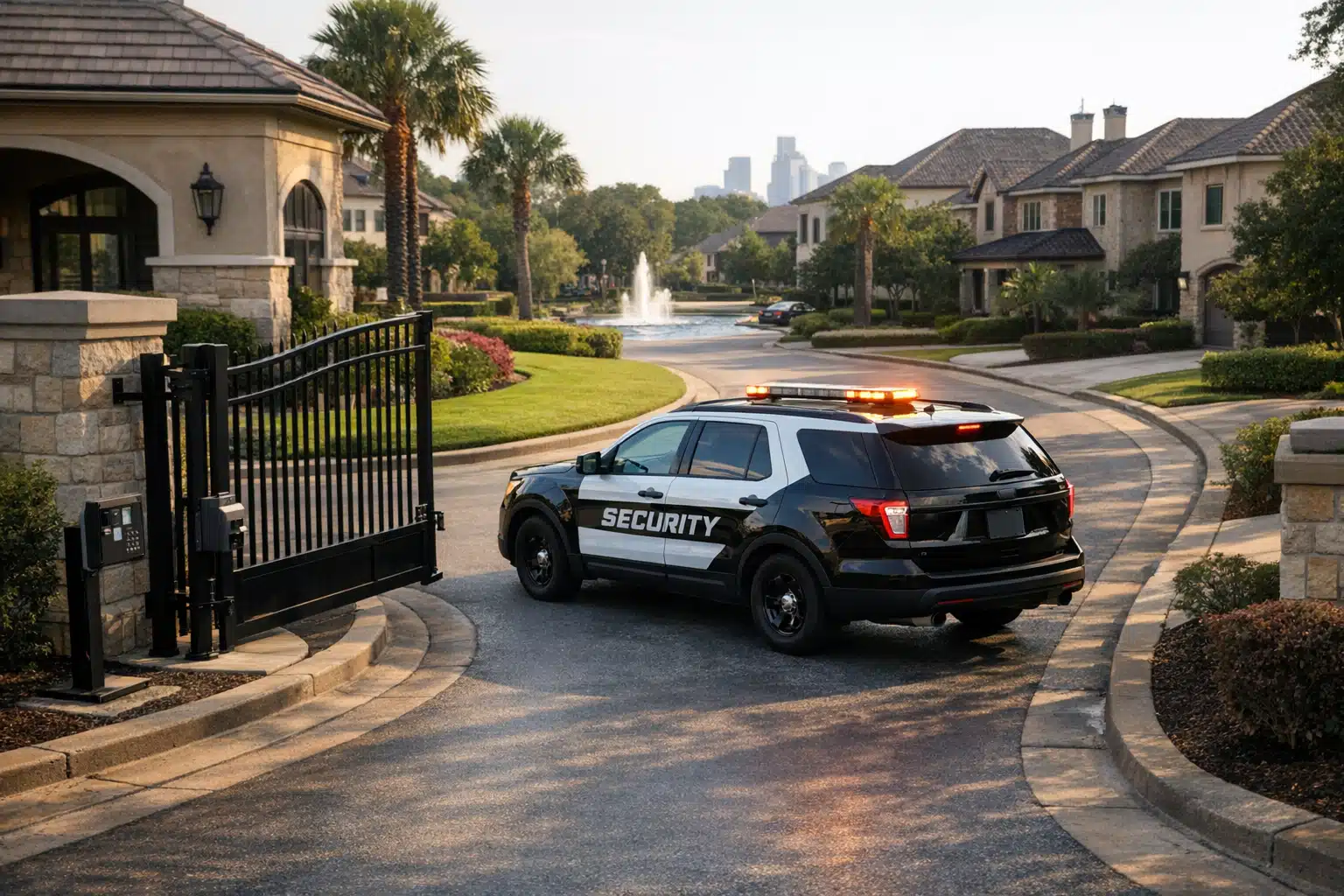
Why Gated Communities Still Need Security Patrols
A gate does not stop crime. It slows it down. Houston police data shows burglaries and vehicle thefts happen inside gated neighborhoods across Katy, Clear Lake, and the Energy Corridor every month.
Security patrols fill the gap between a locked gate and real protection. They move. They watch. They respond when a camera alone cannot.
This post explains why patrols matter for Houston gated communities. It covers the specific risks, the patrol methods that work, and how property managers choose the right coverage.
What a Gate Actually Protects Against
A gate controls one thing: vehicle entry at a single point. It does nothing once someone is inside the fence line.
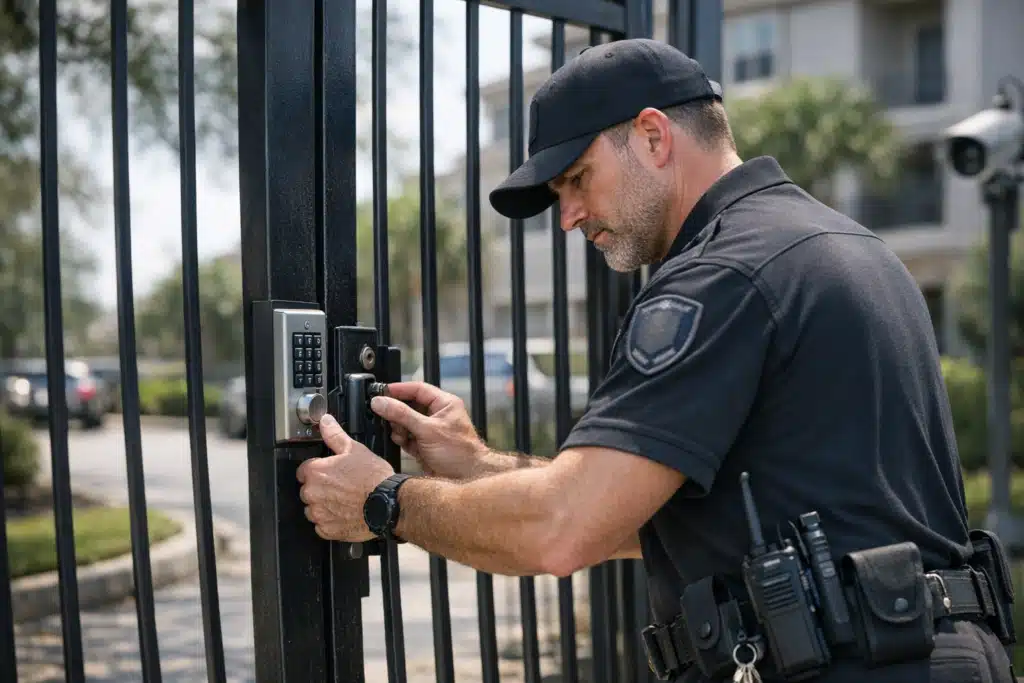
Many Houston gated communities share predictable weak spots:
- Tailgating — a car follows a resident through an open gate
- Pedestrian gaps — walk-up gates propped open or broken
- Perimeter fencing — fences backing onto drainage easements or bayous
- Delivery and contractor access — codes shared or stolen
- Visitor call boxes — tampered keypads and bypassed entry logs
A gate is a speed bump. A patrol closes the gaps the gate leaves open.
The Houston Flood Factor
Gulf Coast storms expose a problem gates ignore. During heavy rain, drainage easements behind many Katy and Clear Lake subdivisions flood and shift fencing.
Washed-out sections create open paths into the back of a community. Patrols spot damaged fencing fast and flag it before someone exploits it.
What Security Patrols Add That Cameras Cannot
Cameras record. Patrols intervene. Both matter, but only one puts a trained presence on the ground.
A patrol officer walking or driving a Houston community does four things a camera cannot:
- Checks physical conditions — tests gate motors, pedestrian locks, and lighting
- Responds in real time — approaches a suspicious vehicle before it acts
- Builds pattern knowledge — learns which cars and faces belong
- Documents incidents — writes reports that support police and insurance claims
A recorded burglary helps after the loss. A patrol stops the loss from happening.
Deterrence You Can See
Visible patrols change behavior. A marked vehicle moving on an irregular schedule signals that someone is watching.
Thieves pick easy targets. A community with roving patrols looks harder than the one two streets over with only a gate.
Patrol Methods That Work in Houston Communities
Different gated settings need different patrol styles. A 200-home subdivision in Katy has different needs than a high-rise condo near Clear Lake.
Roving Vehicle Patrols
Marked vehicles cover large footprints fast. They work for spread-out single-family communities with long perimeter roads.
Officers vary their routes and times. Predictable patterns let criminals plan around them, so randomized timing matters.
Foot Patrols
Officers on foot check what a vehicle misses. They test pedestrian gates, inspect dark walkways, and reach pool decks and mail rooms.
Foot patrols fit dense condo and townhome communities inside the Loop and near the Energy Corridor.
Combined Patrol and Remote Monitoring
Pairing on-site patrols with remote video surveillance covers more ground for less cost. Cameras watch entry points. Patrols respond when the monitoring team flags something.
This pairing works for communities that want 24-hour coverage without a guard at every gate. Twin City Security Houston builds this model for properties across Harris County.
How Patrols Support Houston Property Managers
Patrols protect residents. They protect property managers too.
Documentation matters when an incident reaches an HOA board or an insurer. Patrol logs show due diligence and reduce liability exposure.
Patrols give managers clear records on:
- Gate malfunctions and repair needs
- Trespass and loitering events
- Vandalism to common areas and amenities
- Parking and access violations
- Storm damage to fencing and lighting
A written patrol report answers the board question every manager dreads: “What are we paying for?”
Texas Licensing Matters
Texas regulates private security. The Texas Department of Public Safety Private Security Program licenses guard companies and officers.
Hire only licensed patrol providers. Unlicensed guards expose your HOA to liability and void insurance protections.

 Posted on Google
How to Choose Patrol Coverage for Your Community
Start with your actual risk, not a generic package. Match coverage to the hours and places where incidents happen.
Follow these steps to set up effective patrols:
- Map your weak points — list every gate, fence gap, and dark area
- Review incident history — pull HOA and police records from the past year
- Identify peak risk hours — most residential break-ins favor daytime and late night
- Set patrol frequency — more visits during high-risk windows
- Add randomized timing — break predictable patterns
- Combine patrols with cameras — cover entries with remote monitoring
- Require written reports — track every patrol and incident
A patrol plan built on your data beats a one-size template every time.
Questions to Ask a Patrol Provider
Before you sign, ask direct questions. The answers reveal whether a provider knows Houston communities.
- Are your officers licensed by Texas DPS?
- How do you randomize patrol timing?
- What reports do we receive, and how fast?
- How do officers respond during a storm or flood?
- Can you pair patrols with remote video monitoring?
The Cost of Skipping Patrols
A single burglary can cost a resident thousands and shake confidence across a community. Repeat incidents push residents to move and property values to slip.
Patrols cost less than most boards expect. Combined patrol and monitoring models stretch budgets further than full-time guards at every gate.
The real question is not whether patrols cost money. It is whether your community can afford the losses without them.
Conclusion
A gate controls one entry point, but security patrols protect the whole community behind it. Patrols close fence gaps, deter thieves, document incidents, and respond when cameras cannot. For Houston gated communities, that ground presence turns a locked gate into real protection.
Twin City Security Houston builds patrol and remote monitoring plans for communities across Harris County. Call 832‑301‑9478 or email Houston@Twincitysecurity.com for a Houston security assessment.
Sources
Recent Posts