
The Role of Security Guards in Protecting Houston’s Critical Infrastructure
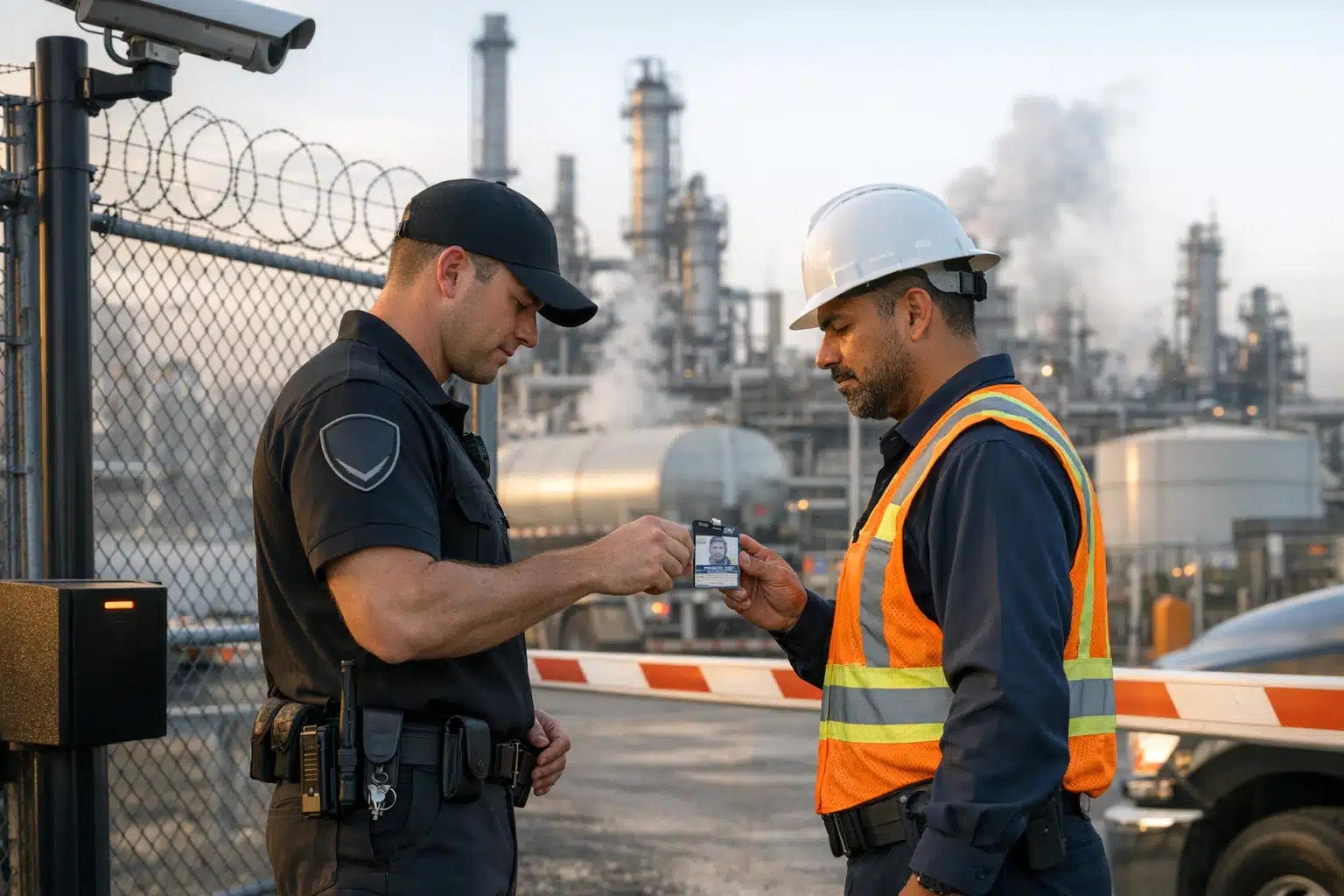
The Houston Ship Channel moves more than 240 million tons of cargo each year, making it one of the busiest ports in the United States. Refineries, chemical plants, and power substations sit within miles of dense residential zones. Security guards assigned to Houston’s critical infrastructure carry responsibilities that go far beyond checking badges at a gate. This post explains what those responsibilities involve, why they matter to facility operators, and how the right on-site team reduces real risk.
Why Critical Infrastructure Protection Matters in Houston
Houston holds the largest concentration of petrochemical assets in North America. A single disruption at a refinery or port terminal can ripple across national fuel supply and pricing.
The stakes make these sites targets. Copper theft, cargo diversion, trespassing, and sabotage all threaten operations here.
Critical infrastructure protection means guarding the physical assets that keep energy, water, and shipping running. In Houston, that list includes:
- Refineries and chemical plants along the Ship Channel
- Port of Houston container and bulk terminals
- Electrical substations and grid connection points
- Natural gas processing and storage facilities
- Water treatment and pipeline pump stations
Each site type carries its own threat profile. A guard force built for a retail center will not match the demands of a fuel storage terminal.
What Security Guards Do at Houston Energy Facilities
Energy facility security requires trained officers who understand hazardous environments. Guards here manage more than access control.
Access Control at High-Risk Sites
Guards verify every driver, contractor, and vehicle entering a plant. During a refinery turnaround, hundreds of contract workers arrive daily.
Officers check credentials against approved lists, log entries, and confirm safety certifications. One unverified badge can create both a security gap and a safety violation.
Perimeter Patrols and Threat Detection
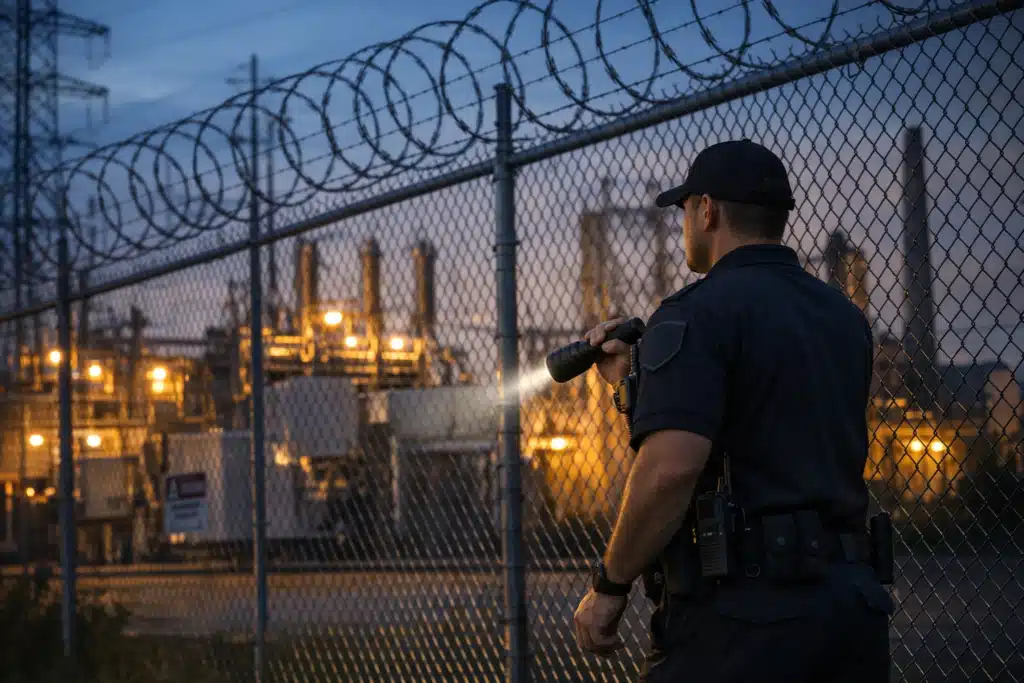
Fence lines at Ship Channel facilities can stretch for miles. Guards run scheduled and random patrols to spot cut fencing, tampered gates, and unauthorized activity.
Copper and metal theft remains a persistent problem at substations and idle equipment yards. Regular patrols cut these losses before they grow.
Emergency and Incident Response
Trained officers know evacuation routes, muster points, and shelter-in-place protocols. During a chemical release or fire, guards direct personnel and control site access for first responders.
This coordination matters when Houston Fire Department or hazmat teams arrive. A guard who knows the layout saves minutes that protect lives.
Security Guards and Port of Houston Operations
Port security carries federal weight. Facilities that handle cargo fall under the Maritime Transportation Security Act, enforced by the U.S. Coast Guard.
Guards working port terminals support compliance with these federal rules. Their duties include:
- Screening truck drivers and verifying TWIC credentials
- Monitoring restricted areas and cargo staging zones
- Documenting seal numbers and container movements
- Reporting suspicious activity to facility security officers
- Controlling access during heightened MARSEC levels
Cargo theft costs Gulf Coast shippers millions annually. On-site officers deter theft rings that target high-value freight moving inland from the docks.
Protecting Houston Facilities During Hurricane Season
Gulf Coast storms create windows of opportunity for theft and trespassing. When facilities evacuate ahead of a hurricane, empty sites become targets.
Hurricane Harvey showed what happens when infrastructure floods and access breaks down. Guards who remain or return quickly protect assets during the most exposed hours.
Storm Preparation Duties
Before landfall, guards help secure loose equipment, document site conditions, and confirm emergency contact chains. Photographic records support later insurance claims.
Post-Storm Site Protection
After the storm passes, officers control access as crews return. They prevent looting, verify contractor identities, and report structural damage to management.
Remote video surveillance backs up on-site teams when roads stay flooded. Cameras and monitoring keep eyes on assets when physical patrols face limits.
How Remote Video Surveillance Supports On-Site Guards
Cameras extend coverage across large Houston sites that no single patrol can watch at once. Live monitoring pairs technology with human judgment.
A monitored camera system offers clear advantages for infrastructure operators:
- Wide coverage across long perimeters and remote yards
- Faster response when operators spot activity and alert on-site guards
- Recorded evidence for law enforcement and insurance claims
- Deterrence from visible cameras and audio warnings
At a substation in Katy or a storage yard near Baytown, one guard plus remote monitoring covers ground that would require several patrols alone. The combination lowers cost and raises awareness.

 Posted on Google
Texas Licensing and Training Requirements
Texas regulates the security field through the Department of Public Safety Private Security Bureau. Every commissioned officer must meet state training and licensing standards.
For critical infrastructure work, operators should confirm their guard provider meets these baselines:
- State-issued security officer registration for all personnel
- Level III training for armed officers where required
- Background checks and drug screening on file
- Site-specific safety training for hazardous environments
Guards at petrochemical sites often need OSHA safety orientation and site-specific hazard training. Ask any provider how they prepare officers for these settings.
What Houston Operators Should Ask Before Hiring Security Guards
Choosing a guard force for infrastructure demands sharper questions than a standard property contract. Facility managers should ask:
- How do you train officers for hazardous or federally regulated sites?
- What is your response plan during a hurricane evacuation?
- Can you pair on-site guards with remote video monitoring?
- How do you document incidents for compliance and insurance?
- What experience do your officers have at energy or port facilities?
The answers reveal whether a provider grasps the difference between guarding a strip mall and guarding a fuel terminal. That difference protects your operation.
The Cost of Underprotecting Critical Infrastructure
An unguarded substation or idle construction yard invites theft within days. Copper losses, equipment damage, and downtime add up fast.
For regulated facilities, a security lapse can trigger penalties and lost contracts. Federal audits at port terminals leave no room for weak access control.
Trained security guards reduce these risks daily. Their presence deters intrusion, documents activity, and speeds response when trouble starts.
Conclusion
Houston’s refineries, port terminals, and power infrastructure depend on trained officers who understand federal rules, hazardous conditions, and Gulf Coast storm risks. Critical infrastructure protection combines skilled on-site guards with remote monitoring to cover large, high-value sites. The right team lowers theft, supports compliance, and protects operations year-round.
Twin City Security Houston provides on-site guards and remote video surveillance for energy facilities, port operations, and construction sites across the region. Call 832‑301‑9478, email Houston@Twincitysecurity.com, or visit https://www.twincitysecurityhouston.com for a Houston security assessment.
Sources
Recent Posts