
Understanding the Benefits of Mobile Surveillance Trailers for Houston Construction Sites
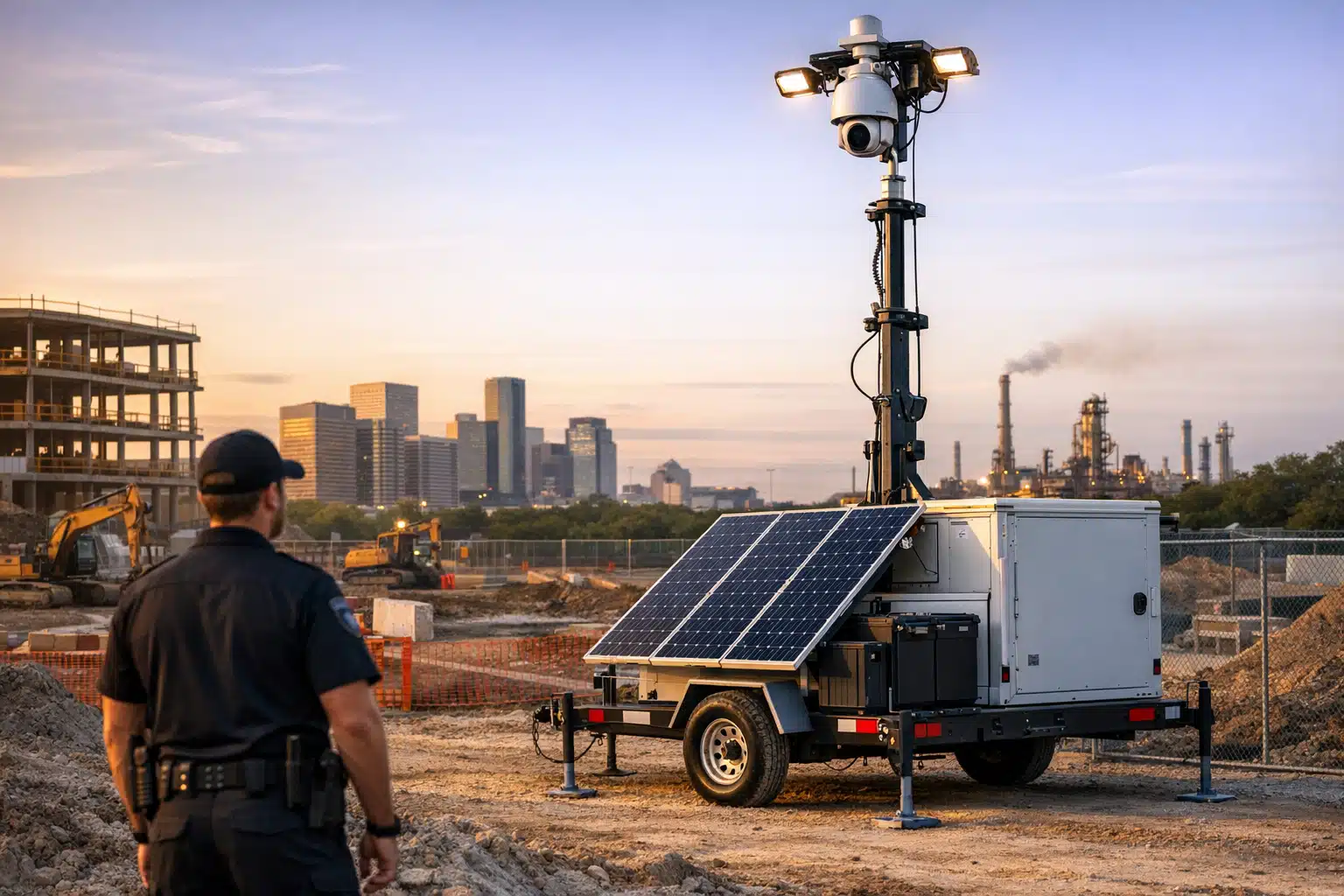
Why Houston Construction Sites Face Rising Theft Pressure
Construction theft costs the U.S. building sector roughly $1 billion each year, according to the National Equipment Register. Houston sites feel this pain acutely.
Copper wire, catalytic converters, generators, and heavy equipment vanish overnight from job sites across Katy, Cypress, and the Energy Corridor. Thieves know when crews leave and when payroll-funded materials arrive.
Mobile surveillance trailers give Houston builders a fast, flexible way to watch sites around the clock. This post explains how they work, why rapid deployment matters here, and what to weigh before renting one.
What Mobile Surveillance Trailers Are and How They Work
A mobile surveillance trailer is a self-contained camera tower mounted on a towable base. It records, monitors, and deters intruders without a permanent power hookup.
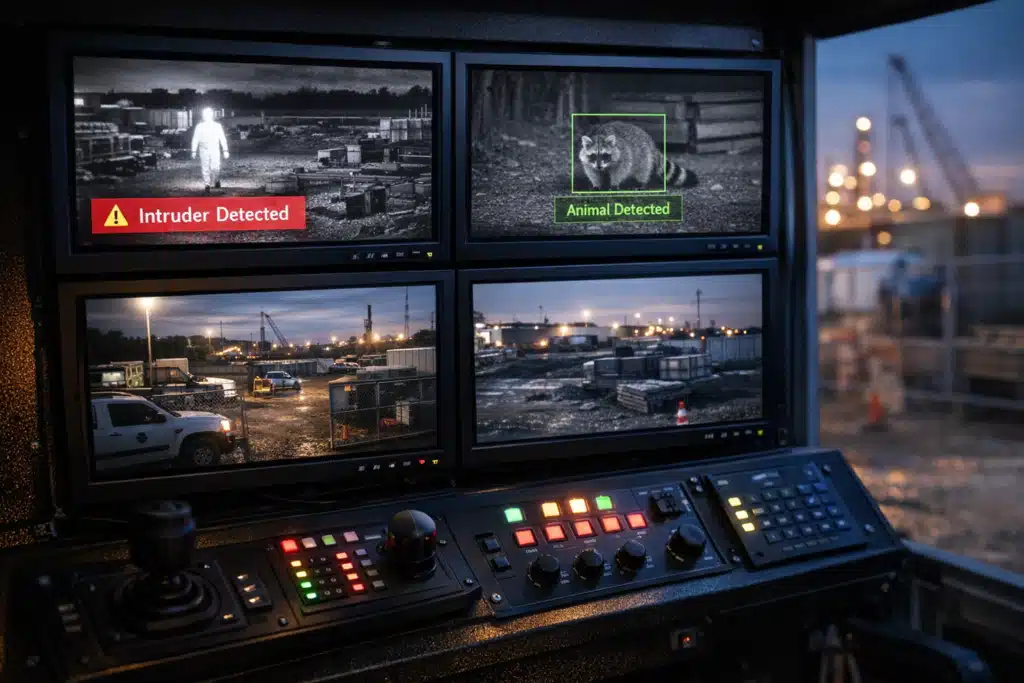
Most units combine several pieces of hardware into one platform:
- Pan-tilt-zoom (PTZ) cameras that cover wide areas and track movement
- Thermal and infrared imaging for zero-light detection at 2 a.m.
- Solar panels and battery banks that run without grid power
- Motion analytics that separate a raccoon from a trespasser
- Two-way speakers for live voice warnings
- Strobe lights and sirens triggered on intrusion
Video feeds route to a remote monitoring center. Trained operators watch alerts in real time and call Houston police when needed.
Live Monitoring Versus Passive Recording
A camera that only records helps after a crime. It rarely stops one.
Live-monitored trailers change the math. When an operator issues a voice warning by name and location, most intruders leave within seconds.
The Rapid Deployment Advantage for Houston Builders
Construction sites move fast. Grading starts one week, foundations pour the next, and the site layout shifts constantly.
Mobile surveillance trailers match that pace. A unit tows in and powers up the same day, no trenching or electrician required.
Rapid deployment matters most in three Houston scenarios:
- New site mobilization. Protect equipment on day one before fencing is even complete.
- Phased projects. Reposition the trailer as work shifts across a large parcel in Katy or Cypress.
- Storm season prep. Add coverage before a Gulf storm forces crews off-site for days.
A fixed camera system takes weeks to install. A trailer arrives before your next material delivery.
Covering Sites Without Reliable Power
Early-stage lots rarely have permanent power. Solar-powered trailers solve that problem outright.
Battery reserves keep cameras running during cloudy Gulf Coast stretches. That reliability keeps your construction site security intact even when the grid is not.
Where Mobile Trailers Fit Across Houston Job Sites
Different Houston projects face different risks. Trailers adapt to each one.
Energy Corridor and West Houston Commercial Builds
Large commercial builds store expensive HVAC units, wiring, and copper. Trailers positioned at material laydown yards deter after-hours theft.
Katy and Cypress Residential Developments
Spread-out subdivisions have long, exposed perimeters. One repositionable trailer covers multiple lots as phases open and close.
Port of Houston and Industrial Sites
Port-adjacent projects handle high-value cargo and equipment near heavy traffic. Thermal cameras track movement across dim, open ground where fixed lighting falls short.
Refinery and Energy Facility Turnarounds
Turnaround work brings hundreds of contractors and tons of temporary equipment. Trailers monitor access points and staging areas during the surge, then leave when the job ends.
How Trailers Reduce Theft, Liability, and Cost
The value of a trailer goes past stopping theft. It touches insurance, safety, and documentation.
Practical benefits Houston operators report:
- Lower theft losses on copper, tools, and fuel
- Reduced insurance claims and stronger claim evidence
- Fewer trespassing and liability incidents from unauthorized entry
- Documented site activity for disputes and OSHA questions
- Lower guard costs versus round-the-clock foot patrols
One trailer covers ground that several static guards cannot watch at once. That coverage runs every hour without breaks or shift gaps.
Trailers Versus On-Site Guards
Guards bring judgment and physical presence. Trailers bring constant vision and instant records.
Many Houston sites pair both. A guard handles gate access by day, and remote monitoring watches the perimeter overnight.

 Posted on Google
Choosing the Right Trailer Setup for Your Site
Not every trailer fits every project. Match the hardware to your risk profile.
Follow these steps to size your coverage:
- Map high-value zones. Mark laydown yards, fuel tanks, and equipment parking.
- Identify entry points. Note every gate, gap, and open perimeter line.
- Check camera range. Confirm each unit covers the distance your site demands.
- Verify power reserves. Ask about battery runtime during cloudy weeks.
- Confirm live monitoring. Choose active operators over recording-only plans.
- Plan repositioning. Set how quickly the trailer can move as phases change.
Questions to Ask Before You Rent
A good vendor answers these directly:
- How fast can a trailer deploy after I call?
- Are operators based locally and familiar with Houston response times?
- What happens when an intrusion alert triggers at 3 a.m.?
- Can I view live feeds from my phone?
Preparing Houston Sites for Hurricane Season
Gulf Coast storm season runs June through November. Job sites sit empty and exposed when crews evacuate.
Empty sites draw thieves who know no one is watching. Mobile surveillance trailers keep eyes on the property during those quiet, high-risk days.
Before a storm approaches, take these steps:
- Secure or remove loose equipment that wind could scatter
- Confirm the trailer’s battery reserve covers extended outages
- Verify remote monitoring stays active after evacuation
- Photograph the site layout for post-storm claims
When crews return, recorded footage shows exactly what happened while the site was unmanned.
Local Response Makes the Difference
A camera without fast follow-up is only a witness. Response speed decides whether a trailer stops loss or just films it.
Twin City Security Houston monitors sites with operators who know local police districts and access routes. That familiarity shortens the gap between an alert and an arrival.
We position trailers for builders across the Energy Corridor, Katy, Cypress, Clear Lake, and the Port of Houston. Each setup matches the site’s risk, layout, and phase schedule.
Conclusion
Mobile surveillance trailers give Houston construction sites fast, flexible protection that fixed systems cannot match. They deploy in hours, run on solar power, and cut theft losses across every project phase.
Ready to protect your site? Contact Twin City Security Houston at 832‑301‑9478 or Houston@Twincitysecurity.com for a site assessment and monitoring quote.
Sources
Recent Posts