
Key Considerations for Implementing Security at Houston’s Chemical Plants
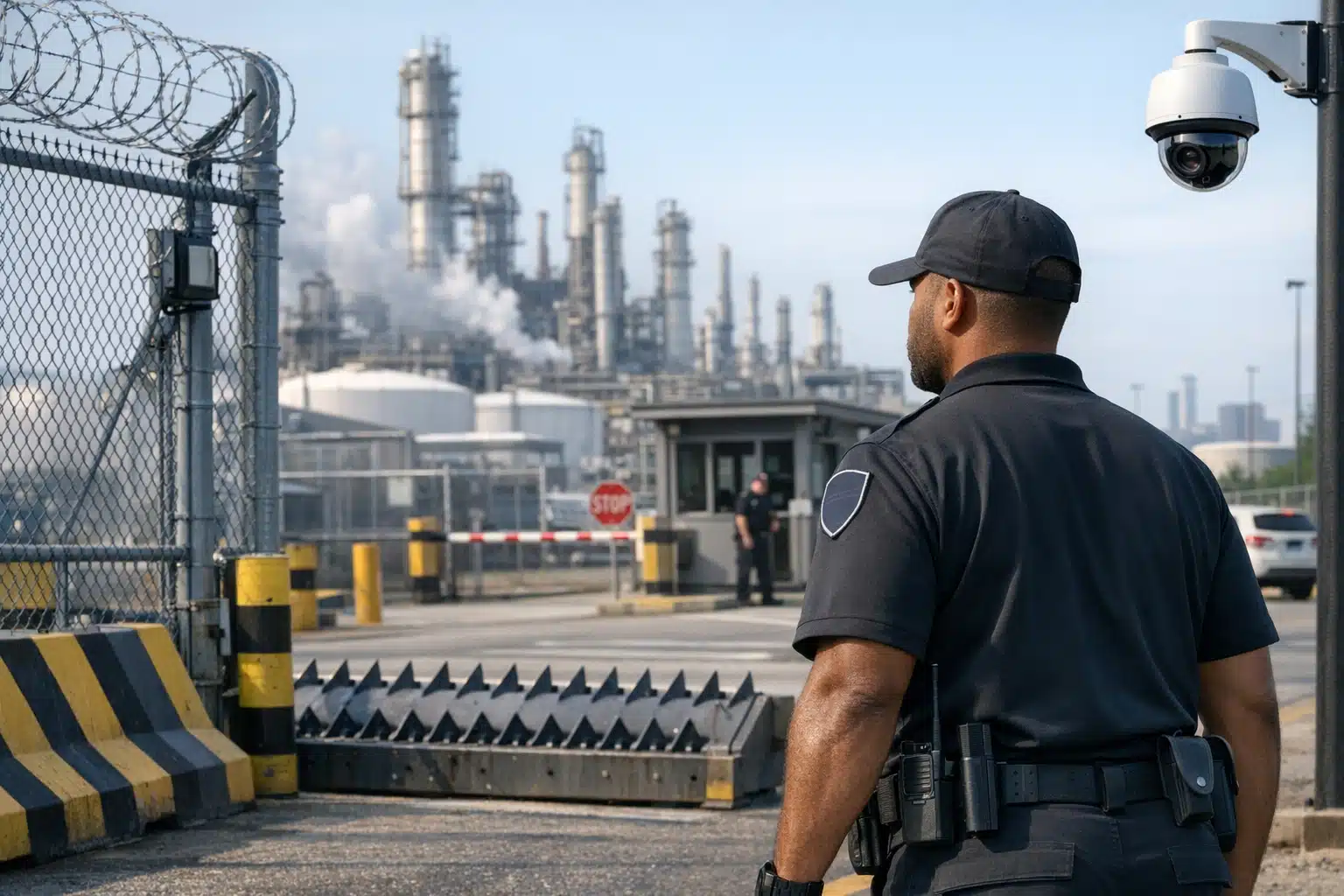
Implementing security at Houston's chemical plants involves addressing various threats such as industrial espionage and terrorism. Key considerations include developing specialized security protocols, conducting risk assessments, and ensuring compliance with regulatory standards to protect these critical facilities effectively.
Houston’s Ship Channel hosts over 200 petrochemical facilities that produce 40% of America’s base petrochemicals. These plants face security threats ranging from industrial espionage to terrorist attacks. Chemical plant security demands specialized protocols that go far beyond standard commercial protection.
The stakes are high. A security breach at a chemical facility can result in environmental disasters, regulatory shutdowns, and loss of life.
Regulatory Framework for Chemical Plant Security
The Chemical Facility Anti-Terrorism Standards (CFATS) program requires high-risk chemical facilities to implement strict security measures. Plants must identify chemicals of interest, assess security vulnerabilities, and develop site security plans.
Texas state regulations add another layer. The Texas Commission on Environmental Quality mandates specific security protocols for facilities handling hazardous substances. Houston area plants must comply with both federal CFATS requirements and state environmental protection standards.
CFATS Risk Tiering Process
Facilities receive risk tier assignments from 1 to 4 based on chemical inventories and potential consequences. Tier 1 facilities face the strictest requirements:
- Personnel surety programs with background checks and psychological evaluations
- Restricted area controls with multiple authentication factors
- Cyber security measures for control systems and networks
- Security force requirements with armed response capabilities
Physical Security Infrastructure Requirements
Chemical plants need layered physical security starting at the perimeter. The Department of Homeland Security requires facilities to establish clear security zones with different access levels.

Perimeter security forms the first line of defense. High-security facilities install anti-vehicle barriers rated to stop 15,000-pound trucks traveling at 50 mph. Fence systems must meet specific height requirements with intrusion detection sensors.
Access Control Systems
Multi-factor authentication protects sensitive areas. Modern systems combine:
- Biometric scanners for fingerprint and retinal identification
- Smart card readers with encrypted employee credentials
- Vehicle identification systems using RFID and license plate recognition
- Visitor management platforms with real-time background screening
Emergency lockdown capabilities allow security teams to seal facilities within seconds. This prevents unauthorized exit during incidents and stops external threats from entering.
Specialized Security Personnel Training
Chemical facility guards need training beyond standard security protocols. They must understand hazardous material properties, emergency response procedures, and regulatory requirements.
Houston industrial protection requires guards certified in HAZWOPER (Hazardous Waste Operations and Emergency Response). This 40-hour training covers chemical exposure risks, decontamination procedures, and emergency evacuation protocols.
Emergency Response Coordination
Security teams coordinate with local emergency responders during incidents. Guards must know how to:
- Activate emergency notification systems
- Implement shelter-in-place procedures
- Direct evacuation routes based on wind patterns
- Communicate with Harris County Office of Emergency Management
Houston’s industrial corridor requires specialized knowledge of mutual aid agreements between facilities. Security personnel coordinate response efforts across multiple plants when incidents affect neighboring operations.
Technology Integration for Enhanced Protection
Modern chemical plant security relies on integrated technology platforms. Video analytics detect unusual behavior patterns and unauthorized access attempts in real-time.
Thermal imaging cameras monitor perimeter areas during nighttime hours. These systems detect human presence up to 10 kilometers away, providing early warning of potential threats.
Drone Detection and Countermeasures
Chemical facilities face increasing drone threats. Unauthorized aircraft can conduct surveillance, transport explosive devices, or disrupt operations.
Radio frequency detection systems identify drone signals within a 5-kilometer radius. Counter-drone technology includes:
- RF jammers that disable drone communications
- Net capture systems for physical drone interdiction
- Laser systems that damage drone optical sensors
Cybersecurity for Operational Technology
Chemical plants rely on industrial control systems that manage production processes. These operational technology (OT) networks need protection from cyber threats that could cause equipment failures or chemical releases.
The 2021 Colonial Pipeline attack demonstrated how cyber incidents can shut down critical energy infrastructure. Chemical facilities implement network segmentation to isolate control systems from corporate networks.
Security Operations Center Integration
Physical and cyber security teams work from unified command centers. Security operations centers monitor:
- Network traffic for suspicious activity
- Process control system alerts
- Physical security sensor data
- Employee access patterns

 Posted on Google
Weather-Related Security Challenges
Houston’s location in Hurricane Alley creates unique security challenges. Chemical plants must maintain protection during severe weather events when normal security measures may be compromised.
Hurricane Harvey forced the evacuation of multiple petrochemical facilities along the Ship Channel. Security teams had to secure facilities while ensuring safe evacuation of personnel and hazardous materials.
Storm Preparation Protocols
Pre-storm security measures include:
- Securing or removing outdoor equipment that could become projectiles
- Installing backup power systems for security infrastructure
- Establishing off-site command centers for continued monitoring
- Coordinating with local law enforcement for post-storm patrols
Remote monitoring capabilities allow security teams to maintain surveillance even when facilities are evacuated. Satellite communication systems provide connectivity when terrestrial networks fail.
Vendor and Contractor Security Management
Chemical plants rely on numerous contractors for maintenance, construction, and specialized tasks. Each contractor represents a potential security vulnerability that requires careful management.
Contractor vetting processes include criminal background checks, terrorism database screening, and employment history verification. High-risk facilities require contractors to undergo the same security clearance process as permanent employees.
Escort and Supervision Requirements
Unescorted contractor access creates security risks. Facilities implement tiered escort requirements based on work location and security clearance level.
Electronic monitoring systems track contractor movements within facilities. RFID badges log entry and exit times for each secured area, creating audit trails for security review.
Incident Response and Business Continuity
Security incidents at chemical facilities can quickly escalate into major emergencies. Response plans must address simultaneous security threats and chemical hazards.
The 2019 KMCO plant explosion in Crosby highlighted the need for coordinated emergency response. Security teams evacuated personnel while managing facility access for emergency responders.
Business continuity planning addresses how facilities maintain operations during extended security incidents. This includes alternative production schedules, supply chain rerouting, and customer communication protocols.
Cost Considerations and Return on Investment
Chemical plant security represents a significant investment that must balance protection levels with operational efficiency. High-tier facilities may spend $5-10 million annually on security measures.
Risk assessments help facilities allocate security budgets effectively. Threat probability analysis identifies which security measures provide the greatest risk reduction per dollar invested.
Insurance considerations factor into security planning decisions. Facilities with robust security programs may qualify for reduced premiums on terrorism and liability coverage.
Implementing effective chemical plant security requires expertise in regulatory compliance, threat assessment, and emergency response coordination. The complex requirements demand specialized security providers who understand both chemical operations and federal regulations.
Twin City Security Houston has extensive experience protecting petrochemical facilities throughout the Houston Ship Channel. Our teams hold CFATS security clearances and HAZWOPER certifications required for chemical plant operations. Contact us at 832‑301‑9478 for a comprehensive security assessment of your facility.
Sources
- Department of Homeland Security – Chemical Facility Anti-Terrorism Standards
- Texas Commission on Environmental Quality – Risk Management Program
- OSHA – Hazardous Waste Operations and Emergency Response
- Harris County – Office of Emergency Management
Houston's chemical plants face significant security threats that require specialized protocols beyond standard protection measures. They must comply with federal and state regulations to prevent potential disasters and ensure safety.
- Over 200 petrochemical facilities in Houston produce 40% of America's base petrochemicals and are vulnerable to various security threats.
- The Chemical Facility Anti-Terrorism Standards mandate strict security measures, including risk assessments and personnel background checks.
- Facilities must implement advanced technology for security, including multi-factor authentication and drone detection systems to safeguard operations.
Recent Posts