
Adapting Security Measures for Houston’s Back-to-School Season
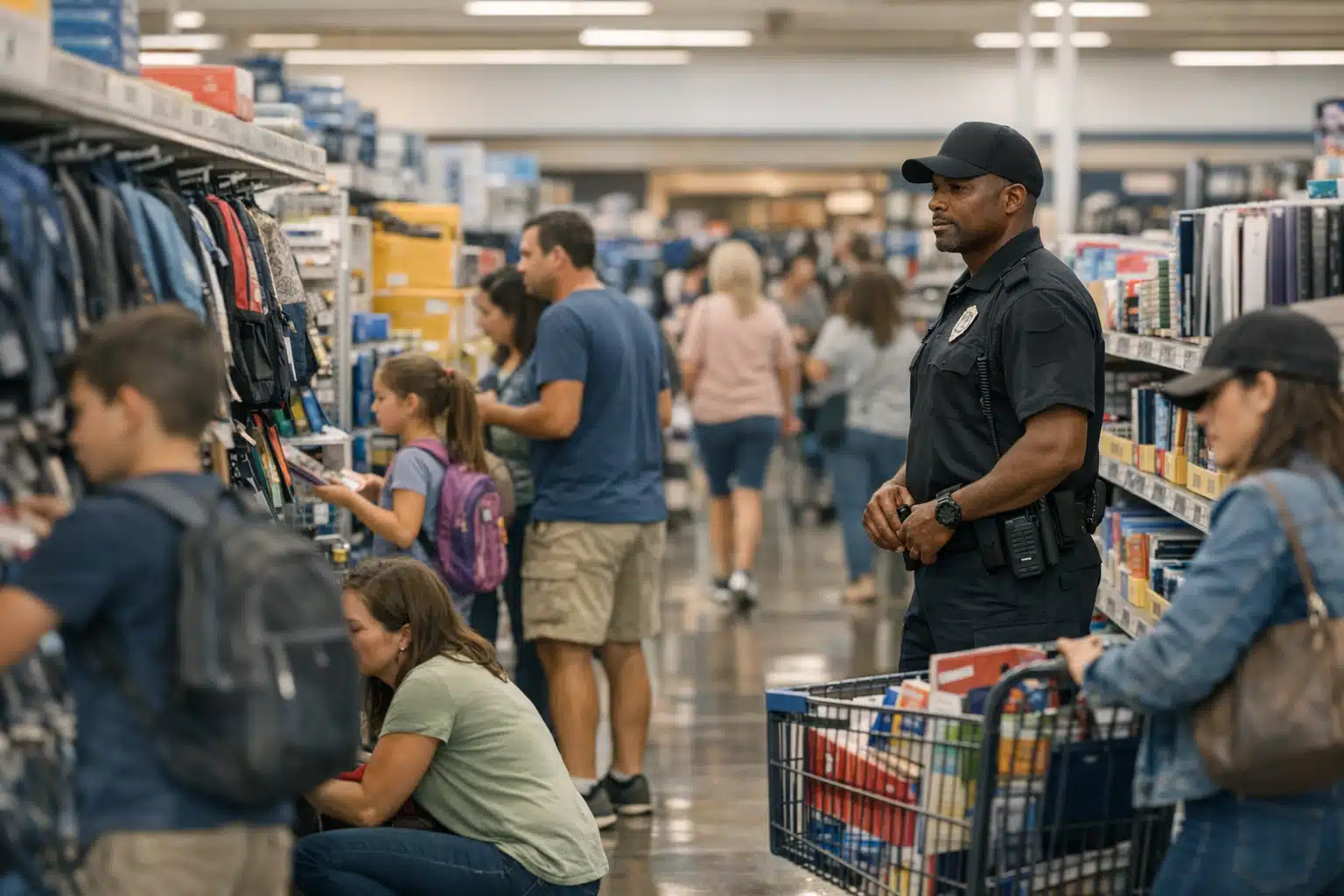
Why Houston Retail Theft Climbs Every August
Back-to-school shopping brings a spike in foot traffic to Houston retail centers each August. It also brings a measurable jump in shoplifting, organized retail crime, and parking lot incidents.
Retailers along Westheimer, in Katy, and near The Woodlands see the pattern every year. Crowded aisles and stretched staff create openings that thieves plan around.
Back-to-school security is not about adding random patrols. It is about matching your protection to the specific weeks, hours, and merchandise that draw the most theft.
This post breaks down where the risk concentrates, what Houston stores can do about it, and how on-site guards plus remote video work together during the busiest sales window of the summer.
When the Back-to-School Theft Window Actually Hits
The back-to-school shopping period in Texas runs from late July into early September. The Texas sales tax holiday, held the first weekend of August, marks the sharpest single spike.
During that tax-free weekend, Houston stores see traffic rival Black Friday. Thieves know staff attention gets pulled thin.
High-Risk Days and Hours
- Tax-free weekend (first weekend of August): Peak crowds, peak concealment theft.
- Weekday afternoons, 3 to 6 p.m.: Teenagers out of summer programs move in groups.
- Final two weeks before HISD start dates: Last-minute rush strains checkout lines.
- Weekend evenings: Reduced staffing at close creates parking lot exposure.
Knowing your busiest hours tells you when guards and monitoring earn their keep.
What Gets Stolen During Back-to-School Season
Certain merchandise draws repeat theft every August. Organized crews target items that resell fast online.
High-Theft Back-to-School Merchandise
- Electronics: Laptops, tablets, calculators, headphones, and chargers.
- Backpacks and branded apparel: Easy to conceal and carry out.
- Shoes: Name-brand sneakers moved in bulk by crews.
- Small consumables: Pens, markers, and supplies grabbed in handfuls.
Graphing calculators alone carry high per-unit value and resale demand. A single locked display case for that category cuts loss fast.
Houston Retail Security Steps for the Back-to-School Rush
Houston retail security during August starts with visible deterrence and ends with clean evidence when theft happens anyway. Follow these steps to reduce shrink before the tax-free weekend.
Step 1: Map Your Store’s Blind Spots
Walk your floor and note where cameras miss coverage. Corner fitting rooms, back aisles, and stockroom doors are common gaps.
Fitting rooms account for a large share of concealment theft. Assign a staff member to monitor entry counts during peak hours.
Step 2: Position Uniformed Guards at the Right Points
A uniformed guard near the entrance changes behavior on sight. Placement matters more than headcount.
- Station one guard at the primary entrance during peak hours.
- Rotate a second guard between electronics and apparel sections.
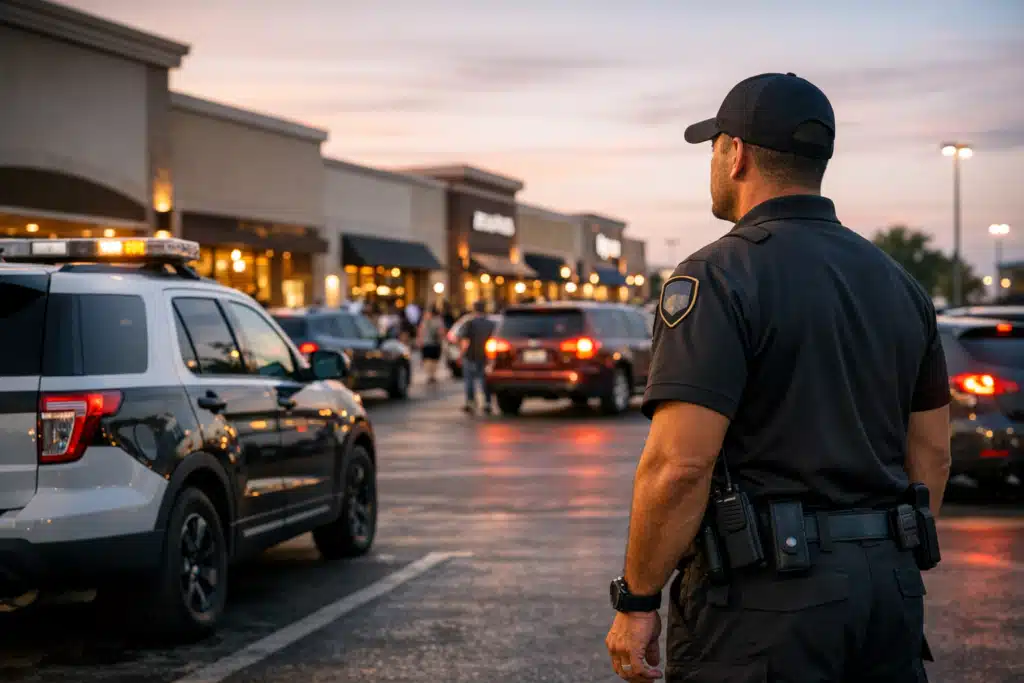
- Assign parking lot patrol during opening and closing shifts.
Guards also calm legitimate shoppers frustrated by crowds and lines.
Step 3: Add Remote Video Monitoring for After-Hours and Overflow
Remote video surveillance covers what guards cannot watch at once. Trained operators view live feeds and flag suspicious activity in real time.
For a Houston strip center with multiple tenants, one monitoring station watches every storefront. That coverage extends to loading docks and rear entrances after close.
Step 4: Coordinate With Neighboring Stores
Organized retail crews hit multiple stores in one shopping center on the same day. Shared alerts between tenants stop a crew before they reach the third store.
A group text among managers or a shared monitoring feed cuts crew mobility across a center.
Protecting Parking Lots During Peak Crowds
Parking lot crime rises with vehicle volume. Vehicle burglaries and cart-pushing merchandise theft climb every August in Houston.
Shoppers loaded with bags become targets walking to their cars. Guards and mobile patrol units reduce these incidents.
Parking Lot Protection Checklist
- Add lighting checks before the season starts; replace dead fixtures.
- Position mobile patrol during opening and closing windows.
- Point video coverage at cart corrals and exit lanes.
- Post visible signage stating the lot is monitored.
A well-lit, watched lot pushes crime to easier targets elsewhere.
How On-Site Guards and Remote Video Work Together
Guards and video monitoring cover different weaknesses. Combined, they close the gaps each leaves open.
Guards stop theft in progress and respond to incidents on foot. Video captures evidence, watches multiple zones, and extends coverage past staffed hours.
A Real Houston Scenario
A Katy retail center reported repeat electronics theft during last year’s tax-free weekend. A crew worked the store in pairs, one distracting staff while the other concealed items.
Adding a guard at the electronics section broke the pairing pattern. Remote video flagged the crew’s return two days later at a neighboring store.
Coordinated coverage turned a repeat loss into a documented case for police.

 Posted on Google
Staffing Levels That Match Houston Store Size
Right-sizing your coverage keeps costs sensible. Over-staffing wastes budget; under-staffing invites loss.
General Coverage Guidelines
- Small boutique (under 2,000 sq ft): One guard during peak hours; video after close.
- Mid-size store (2,000 to 10,000 sq ft): Two guards at peak plus continuous video.
- Big-box or anchor store: Multiple guards, dedicated electronics coverage, and monitored lot.
- Multi-tenant strip center: Shared mobile patrol plus centralized video monitoring.
A site assessment fine-tunes these numbers to your floor plan and theft history.
Texas Rules Every Houston Retailer Should Know
Security guards in Texas must hold licensing from the Texas Department of Public Safety. The Private Security Bureau regulates guard companies and personnel.
Hiring a licensed provider protects you from liability. Verify that any firm you hire carries current state licensing and insurance.
Detaining a suspected shoplifter carries legal limits. Trained guards know Texas shopkeeper detention rules and act within them, reducing your exposure to false imprisonment claims.
Planning Ahead for Next August
The stores with the lowest shrink plan their back-to-school coverage in June. Booking guard schedules early locks in trained personnel before demand peaks.
A pre-season walkthrough finds blind spots while there is time to fix them. Waiting until the tax-free weekend leaves you reacting instead of preventing.
Pre-Season Timeline
- June: Schedule a security assessment and identify coverage gaps.
- Early July: Book guard schedules and install any added cameras.
- Late July: Brief staff on high-theft items and loss reporting.
- August: Run full coverage through the tax-free weekend.
Preparation turns a stressful month into a controlled one.
Conclusion
Back-to-school security in Houston works when coverage matches the exact days, hours, and merchandise thieves target most. On-site guards deter and respond, and remote video watches the zones and hours guards cannot.
Twin City Security Houston builds coverage plans around your store size, location, and theft history. Call 832‑301‑9478, email Houston@Twincitysecurity.com, or visit https://www.twincitysecurityhouston.com for a Houston retail security assessment before the next tax-free weekend.
Sources
Recent Posts