
The Role of Security Technology in Enhancing Houston’s Apartment Complexes
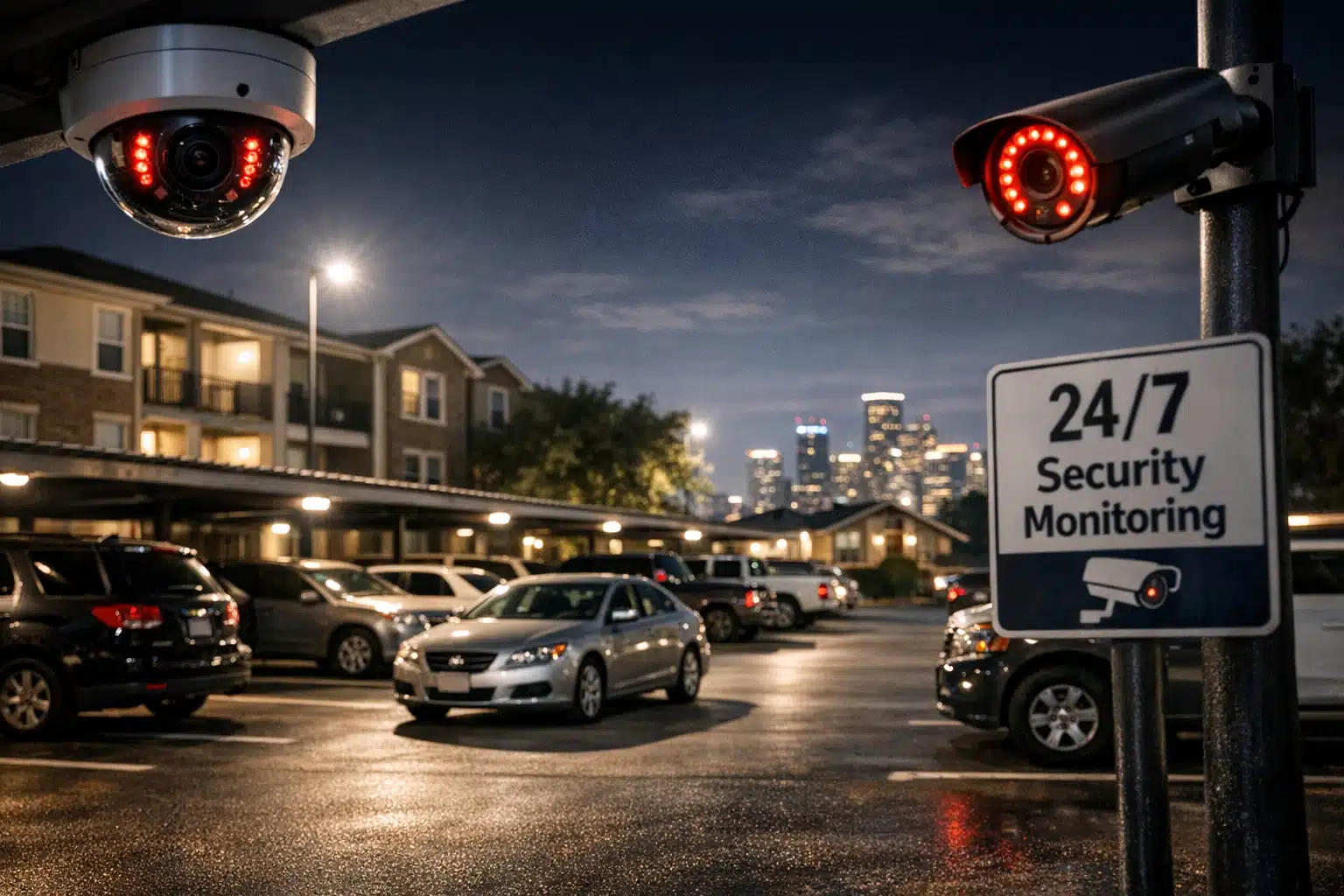
Houston recorded more than 100,000 property crime incidents in a single recent year, and apartment communities absorb a large share. Security technology now gives Houston property managers a way to reduce break-ins, package theft, and after-hours trespassing without hiring a guard for every gate. This post explains which tools reduce apartment crime, how they work together, and what Houston property managers should budget for.
The focus here is practical. You manage units in Midtown, Katy, or near the Energy Corridor. You want fewer incidents, lower liability, and residents who renew leases.
Why Apartment Security in Houston Demands More Than Cameras Alone
Apartment security fails when cameras only record after the crime happens. Footage helps police reports. It does not stop the theft.
Houston communities face specific pressures that generic camera setups ignore:
- Sprawling garden-style layouts with multiple unmonitored entry points
- Open parking lots where catalytic converter theft spikes overnight
- High tenant turnover that makes access control hard to manage
- Hurricane evacuations that leave properties empty for days
The answer is layered technology that detects, deters, and responds in real time. A camera that alerts a live agent stops a break-in. A camera that just records documents one.
The Detect-Deter-Respond Model
Effective apartment protection follows three stages:
- Detect — sensors and analytics flag movement in restricted zones
- Deter — audio warnings and lighting interrupt the intruder
- Respond — a live agent verifies and dispatches police or on-site staff
Each stage shrinks the window a criminal has to act.
Security Technology That Reduces Apartment Crime in Houston
Several tools carry the most weight for Houston residential properties. Here is how each one performs in the field.
Remote Video Monitoring With Live Agents
Remote monitoring puts trained agents behind your cameras during set hours. When a person crosses into a pool area at 2 a.m., the agent sees it and speaks through a loudspeaker.
A live voice saying “You are being recorded, police have been called” ends most trespassing fast. This costs far less than a guard stationed at every entrance.
For a mid-size Katy community, one monitoring package can cover the leasing office, pool, mail room, and parking rows at once.
License Plate Recognition at Gated Entries
License plate recognition logs every vehicle entering and leaving. For gated communities near Clear Lake or Sugar Land, this creates a searchable record.
If a resident reports a stolen vehicle, staff pull the plate log in seconds. The camera captures make, model, and time stamp automatically.
Smart Access Control for Amenities
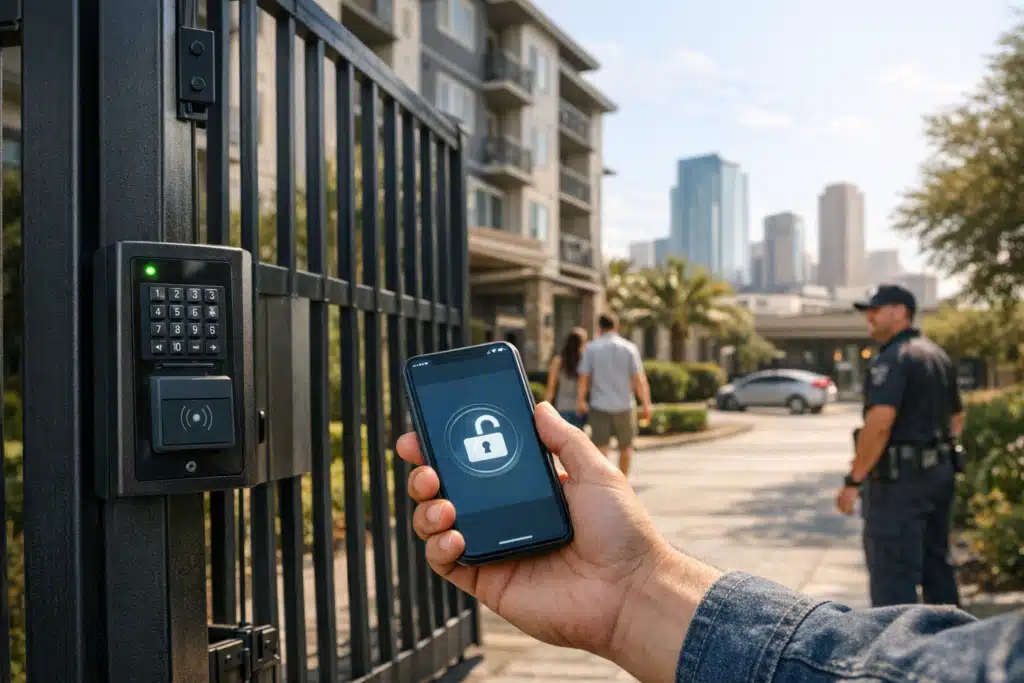
Key fobs and mobile credentials replace physical keys that get copied. When a tenant moves out, you deactivate their access instantly.
Access control protects gyms, pools, and package rooms. It also produces an audit trail showing who entered which space and when.
Motion-Activated Lighting and Analytics
Video analytics separate a raccoon from a person climbing a fence. This cuts false alarms that waste staff time and drain budgets.
Paired with motion lighting, dark corners of a parking garage become far less inviting to thieves.
Package Theft: A Houston Apartment Problem With a Technology Fix
Package theft ranks among the top complaints from Houston renters. Delivery volume keeps climbing, and open mail areas invite grabbing.
Property managers reduce these thefts with a focused setup:
- A monitored camera aimed at the package room entrance
- Access-controlled doors that require a resident credential
- Live agent alerts when someone lingers without entering
One flagged event and a loudspeaker warning stops a thief mid-reach. Residents notice, and lease renewals reflect it.
Hurricane Season and Empty-Property Monitoring
Gulf Coast storms force evacuations that leave apartment communities vacant. Vacant properties draw looters and vandals during power outages.
Remote monitoring keeps eyes on your property when staff cannot be there. Agents watch for forced entry, storm damage, and unauthorized access.
Set up a storm-season protocol before June:
- Confirm camera battery backups and cellular failover
- Extend monitoring hours during evacuation orders
- Create an agent contact list for on-call maintenance
- Document the property with timestamped footage before the storm
That pre-storm footage settles insurance disputes fast when damage claims follow.
What Houston Property Managers Should Budget
Cost depends on property size, camera count, and monitoring hours. A small 50-unit complex needs different coverage than a 400-unit Energy Corridor community.
Plan your budget around three cost drivers:
- Equipment — cameras, sensors, access readers, and installation
- Monitoring — priced by camera count and coverage hours
- Maintenance — lens cleaning, firmware updates, and repairs
Remote monitoring usually costs a fraction of round-the-clock on-site guards. Many Houston properties run a hybrid model: technology overnight, a guard during peak leasing hours.
How to Choose the Right Mix
Match the technology to your actual incident history. Pull your last 12 months of police reports and maintenance logs.
- Identify where and when incidents cluster
- Map camera coverage to those hot spots
- Add access control at the most-breached entry points
- Schedule live monitoring for your highest-risk hours
This data-first method prevents overspending on unneeded equipment.

 Posted on Google
Texas Rules Every Houston Property Manager Should Know
Security contractors in Texas answer to the Texas Department of Public Safety Private Security Bureau. Verify that your provider holds current state licensing before signing.
Camera placement also carries legal limits. Record common areas and entries, never interiors where tenants expect privacy.
A licensed local provider keeps your setup compliant and your footage admissible.
Why Local Knowledge Matters for Apartment Security
Houston crime patterns shift by neighborhood and season. A provider who works these ZIP codes knows which areas see overnight vehicle theft versus daytime package grabs.
Twin City Security Houston builds monitoring plans around Houston property realities. Coverage reflects local incident trends, weather risks, and the layout of your specific community.
Local response also means faster coordination with Houston police and your on-site staff.
Getting Started With a Property Assessment
Start with a walkthrough that maps your vulnerabilities. A good assessment covers entry points, lighting gaps, blind spots, and current camera performance.
From there, you receive a plan that matches your budget and risk profile. No guesswork, no oversold equipment.
Conclusion
Security technology reduces apartment crime in Houston when detection, deterrence, and live response work together. Remote monitoring, access control, and license plate recognition stop incidents that recorded-only cameras merely document. Local knowledge and Texas compliance turn a camera budget into measurable safety.
Contact Twin City Security Houston for an apartment security assessment or monitoring quote. Call 832‑301‑9478, email Houston@Twincitysecurity.com, or visit https://www.twincitysecurityhouston.com.
Sources
Recent Posts