
How to Safeguard Houston’s Construction Sites During Summer Heat
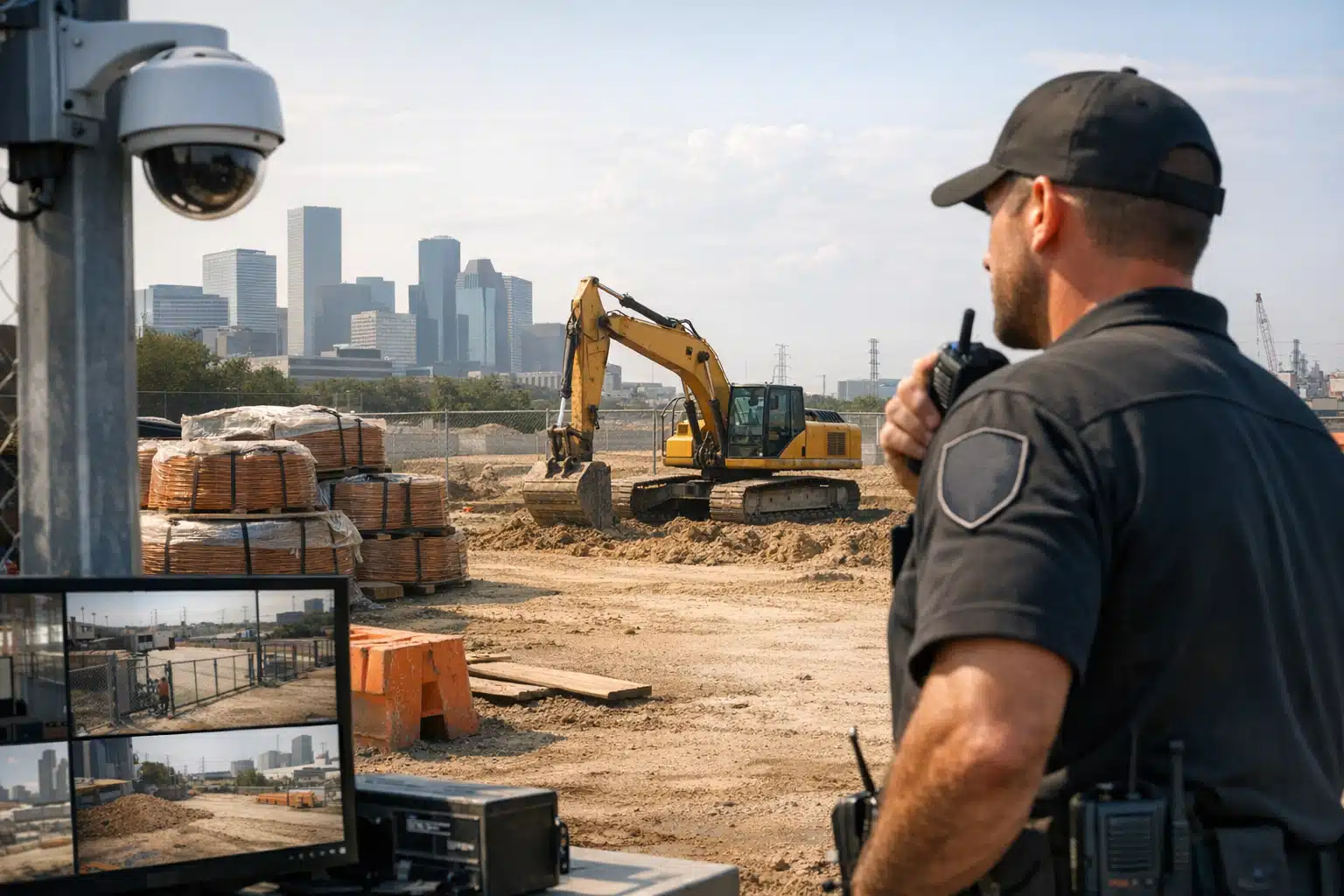
Why Houston Summers Raise the Stakes for Construction Sites
Houston construction theft climbs each summer, and the heat is part of the reason. Copper wire, catalytic converters, and diesel fuel disappear fastest between June and September.
Strong construction site security matters more when temperatures hit 100°F and crews cut hours to avoid midday sun. Empty sites and predictable schedules give thieves an opening.
This post covers heat-driven risks and how Houston builders protect sites from the Energy Corridor to the Port. You will find practical steps for equipment protection and summer theft prevention.
How Heat Changes the Threat on Houston Job Sites
Summer heat reshapes when and how theft happens. Crews start earlier and leave earlier, so sites sit unattended by mid-afternoon.
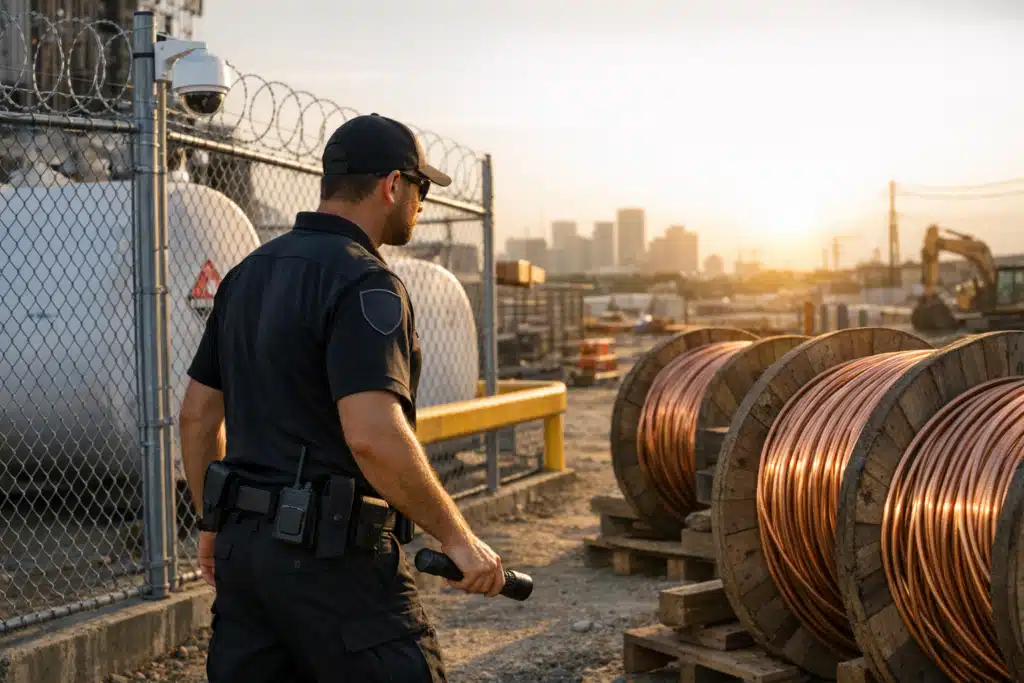
Longer daylight also lets criminals scout locations without cover of darkness. A parked excavator in Katy looks like an invitation when no one is around by 3 PM.
Heat-Driven Risks Specific to Summer
- Shorter work shifts leave sites empty for more hours each day.
- Fuel theft rises as diesel prices spike and tanks sit full.
- Equipment overheating masks tampering as normal shutdowns.
- Dehydrated, distracted crews miss small signs of intrusion.
- Vegetation and dust obscure cameras and sightlines.
Each of these grows worse during Houston’s July and August stretch. Planning around them cuts your loss risk sharply.
Construction Site Security Steps for Houston’s Hot Months
To protect your Houston construction site during summer, follow these steps in order. Each one addresses a heat-specific weakness that thieves target.
1. Lock Down the Afternoon Gap
Map the hours your site sits empty. If crews leave by 3 PM, you have an eight-hour daylight window with no eyes on assets.
Schedule roving patrols or remote monitoring to cover that gap. Thieves study crew habits, so vary your coverage times.
2. Secure Fuel and Copper First
Diesel and copper are the top two summer targets on Gulf Coast sites. Lock fuel tanks with tamper-proof caps and store spools inside secured containers.
Track fuel levels daily. A sudden drop after a hot weekend signals a problem worth reporting.
3. Deploy Heat-Rated Camera Systems
Standard cameras fail in Houston summers. Direct sun and 100°F heat push cheap units past their limits by midday.
Use weather-rated cameras with thermal imaging for after-dark coverage. Thermal sensors detect body heat even in dust and glare.
4. Keep Sightlines Clear
Summer growth blocks camera views fast along Houston bayous and lots. Trim vegetation weekly and reposition units after heavy rain.
Dust from dry sites also coats lenses. Assign someone to wipe cameras during morning walkthroughs.
5. Add Visible Deterrents
Signage, lighting, and marked patrols cut theft before it starts. Post signs stating that live video monitoring is active on site.
Motion-triggered lights and speaker warnings scare off scouts. Most thieves move on when a site announces its watch.
Remote Video Monitoring for Empty Summer Sites
Remote video monitoring fills the afternoon and overnight gaps that summer schedules create. Trained agents watch live feeds and respond in real time.
This works well for Houston sites where posting guards around the clock costs too much. Cameras cover the perimeter, and agents intervene only when needed.
How Remote Monitoring Stops Summer Theft
- Live agents watch feeds during unattended hours.
- Speaker warnings address intruders by location and appearance.
- Instant dispatch alerts Houston police or on-call patrols.
- Recorded footage supports insurance claims and prosecution.
A voice from a speaker telling a trespasser to leave a Clear Lake lot stops most attempts cold. Criminals want soft, silent targets.
On-Site Guards Still Matter for Large Houston Projects
On-site guards remain the strongest option for high-value energy and port projects. A refinery turnaround or Port of Houston expansion holds millions in equipment.
Guards check access points, verify vendor credentials, and respond fast. During summer, they need shade stations, water, and rotation to stay effective.
Keeping Guards Effective in Extreme Heat
- Provide shaded posts and cooling breaks every hour.
- Rotate positions to limit direct sun exposure.
- Supply water and electrolytes at each station.
- Adjust patrol routes to avoid peak-heat midday hours.
A heat-exhausted guard misses details. Protecting your team protects your site.

 Posted on Google
Texas Rules That Affect Your Security Plan
Texas licenses all contract security personnel through the Department of Public Safety. Any company you hire must hold a valid license under the Private Security Act.
Verify that guards carry proper credentials before they step on your site. Unlicensed personnel expose you to liability and voided insurance claims.
OSHA also requires heat illness prevention plans for outdoor workers. Your security staff falls under the same duty of care as your build crews.
Protecting Equipment From Both Theft and Heat Damage
Summer heat damages idle equipment and hides tampering. Machines left in full sun suffer fluid breakdown and battery failure.
Store portable tools and electronics in ventilated, locked containers. Park heavy equipment in tight clusters that are harder to load and haul.
End-of-Day Checklist for Houston Sites
- Lock fuel caps and log tank levels.
- Secure copper, wire, and small tools indoors.
- Remove keys from all machines.
- Cluster heavy equipment near cameras.
- Confirm monitoring coverage before the last crew leaves.
Run this list every day, not just Fridays. Weekday afternoons see steady theft during summer.
What Houston Builders Should Budget For
Security cost depends on site size, value, and hours of coverage. A small Katy residential site needs less than a Port of Houston terminal build.
Remote monitoring costs less than 24-hour guard coverage for most sites. Many Houston builders combine both: cameras for off-hours, guards for peak activity.
Loss from a single stolen excavator or copper haul often exceeds a season of protection. The math favors prevention.
Conclusion
Houston summers create predictable gaps that thieves target, from empty afternoon sites to fuel-filled tanks. Heat-rated cameras, remote monitoring, and well-supported guards close those gaps.
Twin City Security Houston builds site-specific plans for construction, energy, and port projects across the region. Call 832‑301‑9478 or email Houston@Twincitysecurity.com for a summer security assessment.
Sources
Recent Posts