
Evaluating Security Solutions for Houston’s High-Traffic Business Districts
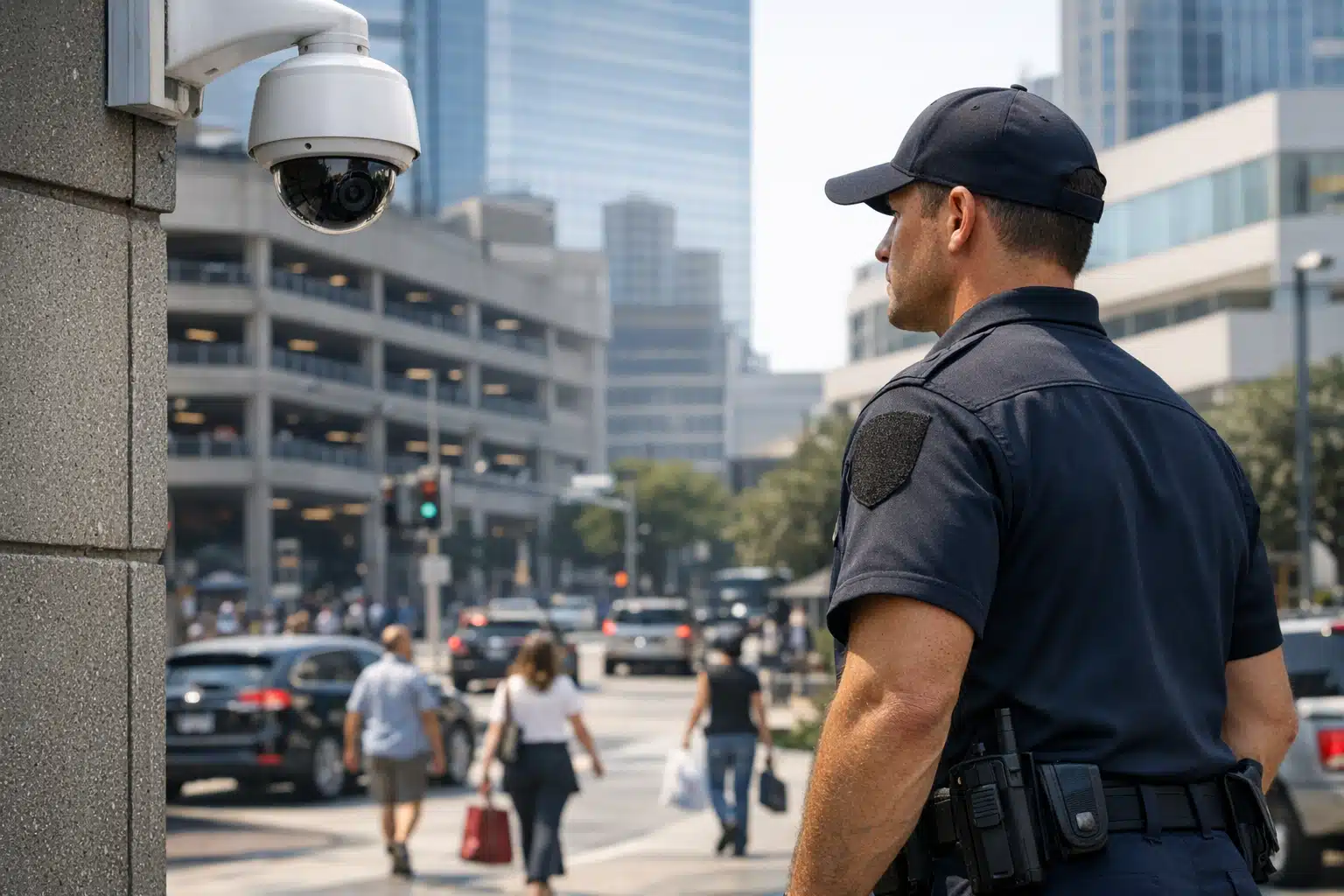
Why High-Traffic Houston Districts Need a Different Security Model
Houston recorded more than 100,000 property crimes in recent reporting years, and dense commercial corridors absorb a large share. Areas like the Galleria, Midtown, and Downtown see thousands of daily visitors.
That foot traffic creates cover for theft, loitering, and vehicle break-ins. Business district security in these zones must account for crowds, not just locked doors after hours.
This post breaks down how to evaluate security for a high-traffic Houston district. You will learn what to prioritize, what to ask vendors, and where common plans fall short.
What Makes Business District Security Harder in High-Foot-Traffic Zones
Traffic volume changes the math. A quiet warehouse off Beltway 8 has one problem: keeping people out. A retail center near the Galleria has the opposite problem.

You want customers in. You also want to spot the small percentage who come to steal, vandalize, or case the property.
Specific Challenges Houston Districts Face
- Vehicle crime in parking structures — Garages near Downtown and Midtown see frequent catalytic converter theft and smash-and-grab break-ins.
- Organized retail theft — Groups target multiple stores in one trip across centers in Rice Village and Uptown.
- Loitering and panhandling — Persistent activity near entrances pushes paying customers away.
- After-event surges — Districts near Toyota Center or Minute Maid Park get waves of late-night crowds.
- Delivery and rideshare congestion — Constant curbside activity hides unauthorized access and package theft.
A plan built for a fenced construction site will not hold up here. High-traffic zones need people and cameras working together.
How to Evaluate Security Solutions for a Houston Business District
Start with how people actually move across your property. Map the entrances, chokepoints, and blind spots before you price anything.
Step 1: Document Your Traffic Patterns
Track peak hours by day and season. A Galleria-area retailer peaks on weekends. A Downtown office tower peaks weekday mornings.
Your coverage should match these peaks. Paying for overnight guards when your risk window is 5 p.m. to 9 p.m. wastes budget.
Step 2: Identify Your Highest-Value Targets
List what thieves want and where it sits. Electronics, pharmacy stock, cash handling points, and parking areas rank high.
Place camera coverage and guard patrols around those points first. Spread resources evenly and you protect nothing well.
Step 3: Match the Method to the Risk
Different threats call for different responses:
- Visible deterrence — Uniformed guards at entrances reduce shoplifting and loitering during open hours.
- Remote video monitoring — Live operators watch garages and loading docks after close, with voice-down warnings.
- Access control — Badge or fob entry limits tower lobbies and tenant-only floors.
- License plate recognition — Cameras log vehicles in parking structures and flag repeat offenders.
Most high-traffic Houston districts need a mix. Guards cover the crowd; cameras cover the quiet hours.
On-Site Guards Versus Remote Video Monitoring
Both have a place. Choosing wrong costs money or leaves gaps.
When On-Site Guards Win
Guards work best where human judgment matters. A guard reads body language, de-escalates disputes, and directs crowds after an event.
They answer customer questions and respond to incidents in seconds. For a Midtown retail center on a Friday night, boots on the ground matter.
When Remote Monitoring Wins
Remote video covers large, empty spaces cost-effectively. One operator watches multiple garages and docks across a property.
Live operators issue voice warnings when someone enters a restricted area. Many intruders leave before any confrontation. For overnight parking structures, this cuts cost without cutting coverage.
The Combined Model
Most Houston districts benefit from both. Guards handle daytime foot traffic. Remote monitoring takes over after close.
Twin City Security Houston builds this handoff so coverage never drops between shifts.
Questions to Ask Before Hiring a Houston Security Provider
The right questions expose weak vendors fast. Ask these before signing:
- Are your guards licensed under Texas DPS? All Texas security personnel must hold proper state licensing.
- What is your guard-to-coverage ratio during peak hours? One guard for a six-acre center during rush is not coverage.
- How fast do remote operators respond to an alert? Response time should measure in seconds, not minutes.
- Can you adjust staffing for events or seasonal surges? Holiday shopping and sports nights change your risk.
- Do you provide incident reports and footage retention? You need documentation for insurance and law enforcement.
- What is your local response structure? A provider based in Houston reacts faster than one dispatching from out of state.
Vague answers signal trouble. Clear, specific answers signal a provider who has done the work.

 Posted on Google
Preparing Houston Business Districts for Gulf Coast Weather
Hurricane season runs June through November. High-traffic districts face looting risk and property damage during evacuations.
When a storm clears a district, empty storefronts become targets. Remote monitoring keeps eyes on property when guards cannot safely stay.
A Simple Storm Readiness Checklist
- Confirm camera systems have battery or generator backup.
- Set remote monitoring to cover post-evacuation hours.
- Document property condition with footage before the storm.
- Establish a contact chain for alerts during the event.
- Plan guard re-staffing for the hours after reopening.
Districts near Clear Lake and the Ship Channel face added flood and surge exposure. Plan for that terrain, not a generic script.
What Good Business District Security Costs to Get Wrong
Underfunding coverage shows up on your books. One organized retail theft hit can cost a center thousands in a single afternoon.
Repeated garage break-ins drive tenants and shoppers away. Vacancy and lost foot traffic cost far more than a staffed security plan.
Right-sized business district security protects revenue, not just inventory. The goal is keeping your district a place people want to visit.
Building a Plan That Fits Your Houston Property
No two districts carry the same risk profile. A Katy retail strip differs from a Downtown high-rise plaza.
Start with a walkthrough. A local assessment reveals the blind spots a template plan misses.
Twin City Security Houston builds coverage around your traffic, your targets, and your hours. That means guards where crowds gather and cameras where the property goes quiet.
Protect Your District With the Right Mix
Business district security in Houston works when guards and remote monitoring cover the right hours and the right spots. Match your plan to foot traffic, high-value targets, and Gulf Coast weather risk.
Twin City Security Houston provides local assessments and quotes built for your property. Call 832‑301‑9478, email Houston@Twincitysecurity.com, or visit https://www.twincitysecurityhouston.com to start.
Sources
Recent Posts