
Choosing Between On-Site Guards and Remote Monitoring for Your Houston Business
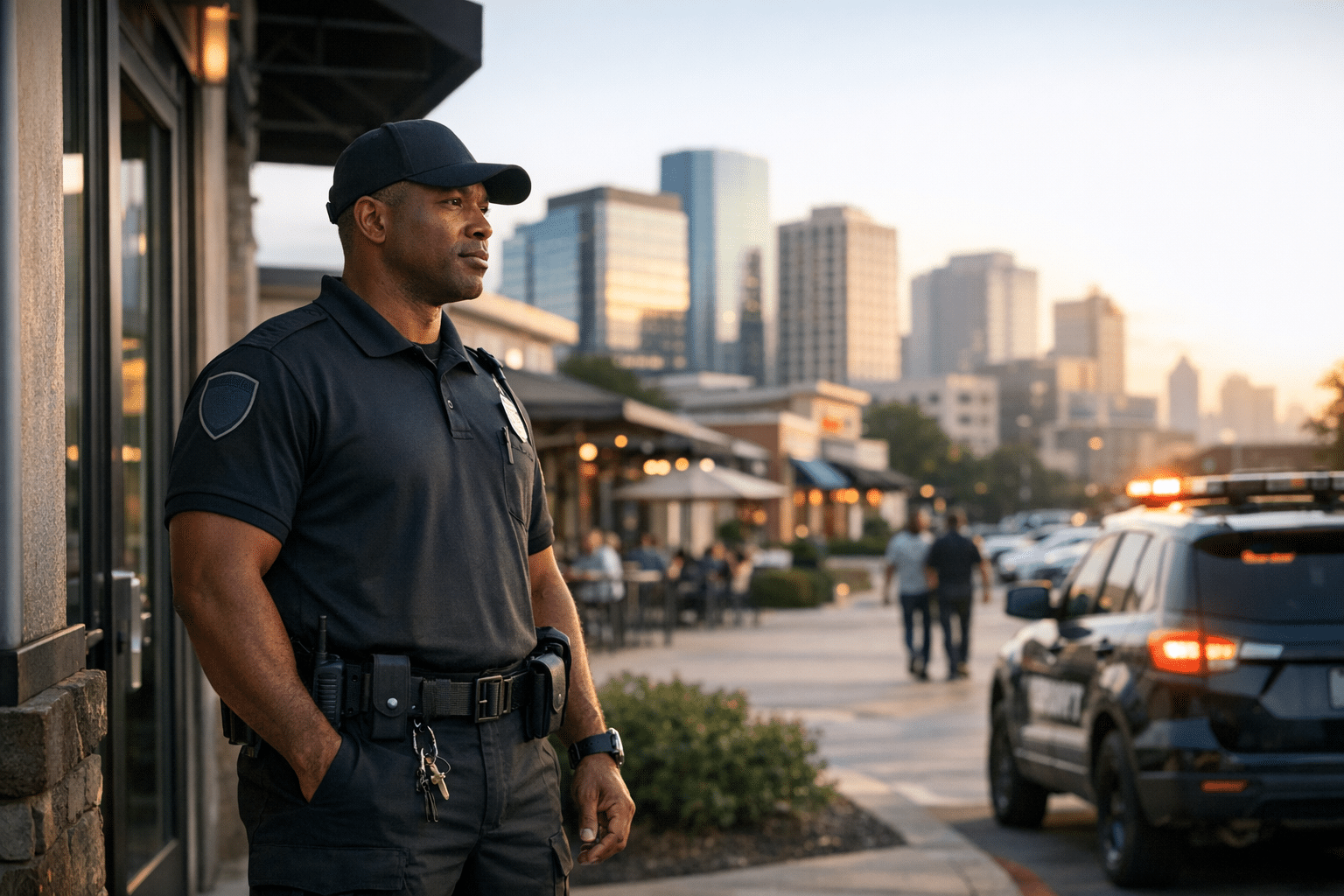
On-site guards provide physical presence and immediate response to incidents, while remote monitoring involves surveillance technology that allows for real-time observation and alerts. Businesses in Houston must weigh the benefits of personal interaction against the cost-effectiveness and technological advantages of remote systems to address their specific security needs.
Understanding Security Challenges for Houston Businesses
Houston business owners face unique security challenges that require careful consideration when choosing between on-site guards vs remote monitoring. Property crimes in Harris County increased 12% in 2023, with commercial break-ins particularly affecting the Energy Corridor and northwest Houston areas.
The decision between physical security personnel and remote surveillance technology depends on several factors. Your facility type, operating hours, budget constraints, and specific security risks all influence which approach works best.
Houston business security needs vary significantly across industries. Energy facilities require different protection than retail centers, while construction sites face distinct challenges from apartment communities.
On-Site Security Guards: Benefits and Applications
Physical security guards provide immediate response capabilities and human judgment that technology cannot replicate. They excel in situations requiring direct intervention or customer interaction.
Key Advantages of On-Site Guards
- Immediate response: Guards can address incidents instantly without waiting for law enforcement
- Deterrent effect: Visible security presence discourages criminal activity
- Customer service: Guards can assist visitors, control access, and provide directions
- Emergency response: Trained personnel can handle medical emergencies and evacuations
- Flexibility: Human guards adapt to unusual situations and make judgment calls
Best Applications for On-Site Guards in Houston
Certain Houston business environments particularly benefit from physical security presence. High-traffic retail locations in areas like The Galleria or Memorial City require guards for both security and customer assistance.
Energy facilities and refineries along the Ship Channel often combine guards with other security measures. These sites need personnel who understand industrial safety protocols and can coordinate with emergency responders.
Apartment communities in growing areas like Katy or The Woodlands use guards to control access and patrol grounds. Residents appreciate the visible security presence, especially during evening hours.
Remote Monitoring Systems: Technology-Driven Security Solutions
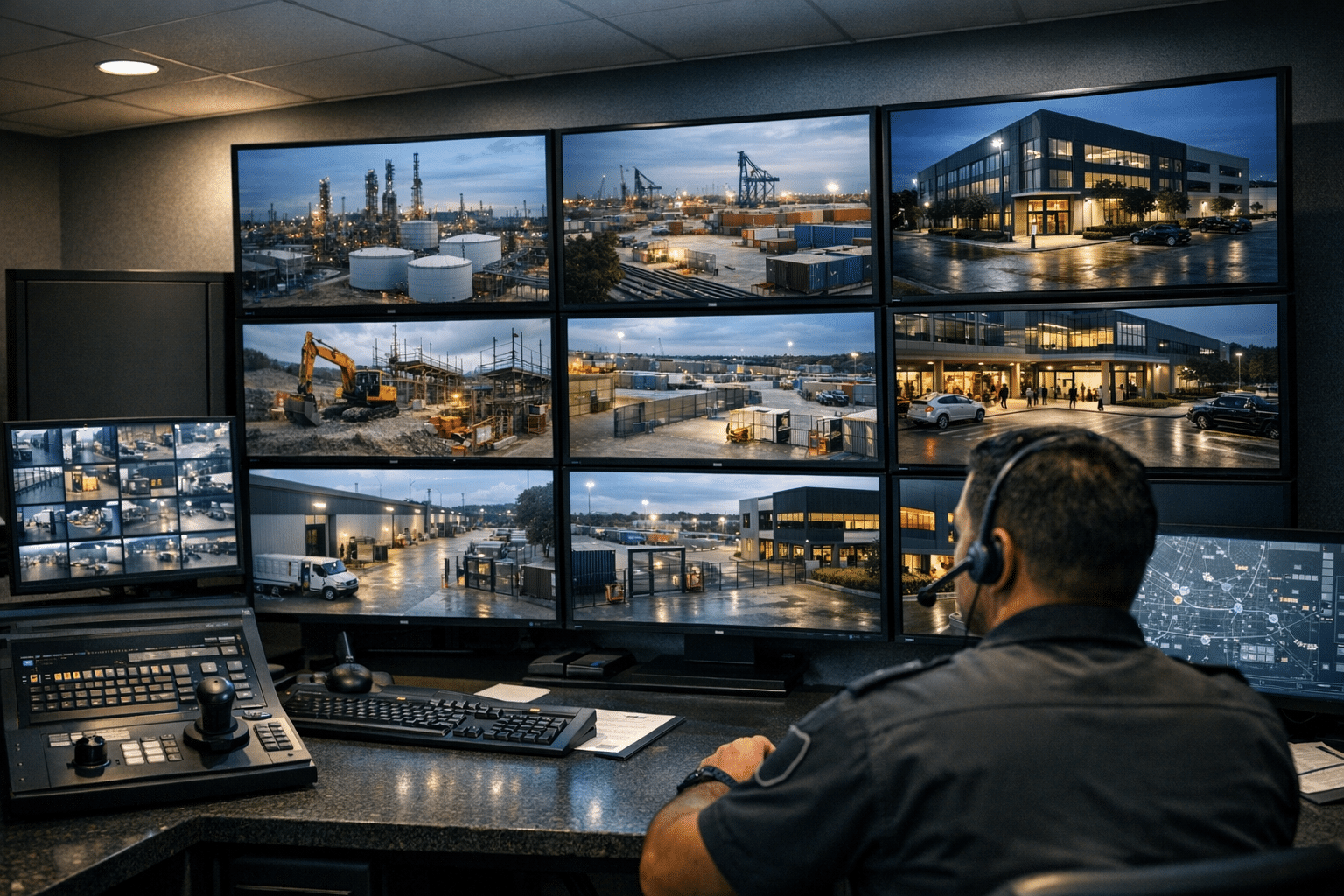
Remote video surveillance uses advanced cameras, sensors, and monitoring software to provide continuous security coverage. Professional monitoring centers watch multiple locations simultaneously, responding to alerts 24/7.
Remote Monitoring Capabilities
- 24/7 coverage: Continuous monitoring without breaks or shift changes
- Multiple locations: Monitor several sites from one central system
- Advanced detection: Motion sensors, thermal imaging, and AI-powered analytics
- Evidence collection: High-definition video recordings for investigations
- Weather resistance: Systems continue operating during Houston’s severe weather
Ideal Remote Monitoring Applications
Construction sites across Houston’s expanding suburbs benefit significantly from remote surveillance. These temporary locations need security but may not justify full-time guard costs.
Warehouse and distribution centers in areas like northwest Houston or near Bush Intercontinental Airport use remote monitoring effectively. Large facilities with multiple access points require comprehensive coverage that cameras provide efficiently.
Port of Houston operations often integrate remote monitoring with existing security infrastructure. The technology covers vast areas and provides detailed records of all activity.
Cost Analysis: On-Site Guards vs Remote Monitoring
Understanding the true costs of each security approach helps Houston business owners make informed decisions. Both options involve initial setup costs and ongoing operational expenses.
On-Site Guard Costs
Security guard services in Houston typically range from $15 to $25 per hour depending on experience level and certifications. Armed guards command higher rates than unarmed personnel.
Additional costs include uniform allowances, equipment, and training expenses. Benefits and insurance may apply for full-time positions, increasing total compensation costs.
A single guard position costs approximately $31,200 to $52,000 annually for 40-hour coverage. Around-the-clock protection requires multiple guards, significantly increasing expenses.
Remote Monitoring Expenses
Remote monitoring systems require initial equipment installation ranging from $5,000 to $25,000 depending on coverage area and camera quality. Professional installation ensures optimal placement and system integration.
Monthly monitoring fees typically range from $200 to $800 per location. This includes professional monitoring services, system maintenance, and technical support.
Long-term costs favor remote monitoring for many applications. After the initial investment, monthly expenses remain relatively stable compared to escalating labor costs.

 Posted on Google
Hybrid Security Approaches for Houston Businesses
Many Houston facilities combine both security methods to maximize protection while managing costs effectively. This approach leverages the strengths of each system.
Strategic Combination Methods
- Peak hour guards: Station guards during high-activity periods, use remote monitoring during off-hours
- Zone-based coverage: Guards patrol critical areas while cameras monitor perimeter and secondary locations
- Event-driven response: Remote monitoring triggers guard dispatch when incidents occur
- Seasonal adjustments: Increase guard presence during hurricane season or holiday periods
Energy facilities often use this hybrid model effectively. Guards handle access control and routine patrols while cameras provide comprehensive perimeter monitoring and evidence collection.
Retail centers may station guards at main entrances during business hours and rely on remote monitoring for parking areas and after-hours protection.
Special Considerations for Houston Security Planning
Houston’s unique environment creates specific security challenges that influence the choice between guards and remote monitoring. Weather, geography, and local crime patterns all factor into security planning.
Hurricane Season Preparedness
Gulf Coast hurricane season requires special security considerations from June through November. Remote monitoring systems need backup power and weather-resistant housing to maintain operation during storms.
Security guards may need evacuation during severe weather events, leaving facilities temporarily unprotected. Remote monitoring centers located outside storm paths can continue providing coverage.
Texas Regulatory Requirements
Security guard companies in Texas must maintain proper licensing through the Texas Department of Public Safety. Guards need individual licenses and ongoing training to remain compliant.
Remote monitoring equipment installation may require permits depending on the location and system complexity. Professional installers ensure compliance with local building codes and regulations.
Making the Right Choice for Your Houston Business
The decision between on-site guards vs remote monitoring depends on your specific security needs, budget constraints, and operational requirements. Consider these factors when evaluating options.
High-interaction businesses benefit more from guard services, while facilities needing comprehensive coverage favor remote monitoring. Budget-conscious operations may prefer remote systems’ lower long-term costs.
Location-specific factors matter significantly in Houston. Facilities in high-crime areas may need physical security presence, while remote locations might rely on surveillance technology effectively.
The most effective approach often combines both methods strategically. This provides comprehensive protection while managing costs and addressing specific operational needs.
Contact Twin City Security Houston at 832‑301‑9478 or Houston@Twincitysecurity.com to discuss your specific security requirements and receive a customized protection plan for your Houston business.
Sources
- Houston Police Department – Crime Statistics and Data
- Texas Department of Public Safety – Private Security Licensing
- U.S. Bureau of Labor Statistics – Security Guards Occupational Employment
Houston business owners face unique security challenges that influence their choice between on-site guards and remote monitoring. Factors such as facility type, operating hours, and specific risks play a crucial role in determining the best security approach.
- Property crimes in Harris County rose 12% in 2023, impacting commercial areas like the Energy Corridor. On-site guards provide immediate response and customer service, making them ideal for high-traffic locations. Remote monitoring offers 24/7 coverage and is cost-effective for temporary sites like construction areas.
- Understanding Security Challenges for Houston Businesses Houston business owners face [...] Understanding Security Challenges for Houston Businesses Houston business owners face unique security challenges that require careful consideration when choosing between on-site guards vs remote monitoring.
- Property crimes in Harris County increased 12% in 2023, with commercial break-ins particularly affecting the Energy Corridor and northwest Houston areas.
Recent Posts